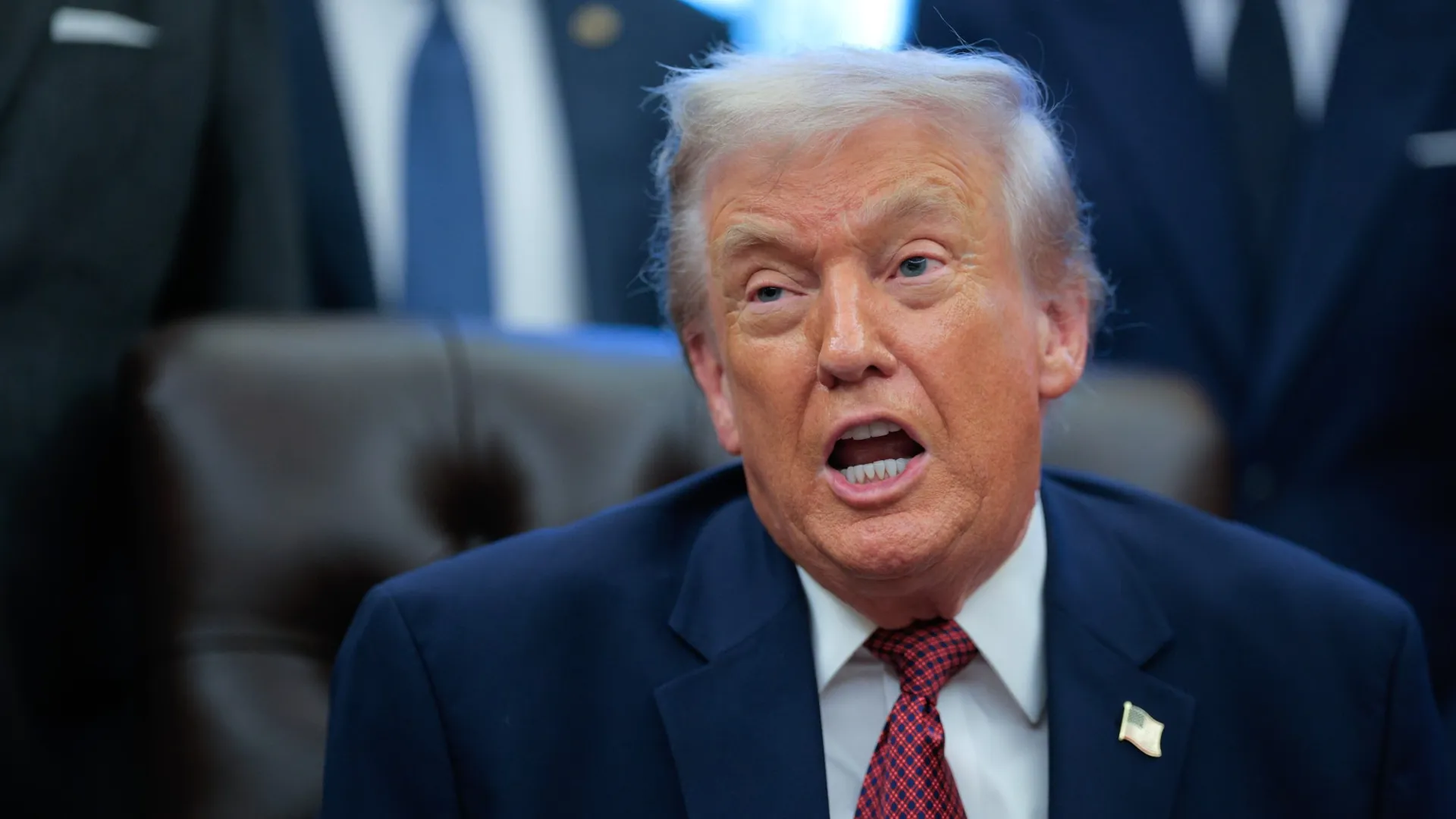
The growing ubiquity of artificial intelligence remains a divisive topic among the public, but the White House is fully leaning into the AI boom. President Donald Trump has announced the creation of a new AI-based ‘United States Tech Force’ that will seek to poach employees from the private sector to lure them to government jobs. But this initiative follows a year in which the Trump administration cut thousands of federal employees.
How will this program work?
The U.S. Tech Force will be a two-year program intended to “tackle the most complex and large-scale civic and defense challenges of our era,” according to the Tech Force website. The program will involve on-the-job training in the areas of “software engineering, artificial intelligence, cybersecurity, data analytics or technical project management.”
The program is set to partner with 28 major tech companies to accomplish this. Some of the most notable brands include Adobe, Amazon, Apple, Dell, Google, Nvidia, OpenAI and Oracle. It will aim to hire about 1,000 people to start, with salaries ranging from $130,000 to $195,000, said Office of Personnel Management Director Scott Kupor to reporters, though the Tech Force website states salaries will range from $150,000 to $200,000.
The Week
Escape your echo chamber. Get the facts behind the news, plus analysis from multiple perspectives.
SUBSCRIBE & SAVE
Sign up for The Week's Free Newsletters
Join more than 350,000 subscribers and keep yourself informed with a selection of The Week’s most interesting, enlightening and entertaining stories - plus daily puzzles.
Join more than 350,000 subscribers and keep yourself informed with a selection of The Week’s most interesting, enlightening and entertaining stories - plus daily puzzles.
Latest Videos FromThe Week US
What “sets the Tech Force apart from most federal positions is its accessibility,” said Fortune. Unlike most other jobs in the U.S. government, candidates for the Tech Force “need not hold traditional degrees or meet minimum experience thresholds,” though they must “demonstrate strong technical skills through work experience.” This differs from many other federal jobs, which “require a college degree with a certain major field of study or specific academic courses,” said the federal government’s employment website, USAJobs.
What next?
It is unclear how successful this program will be, given that the “government has long needed more tech workers, but that deficit most likely worsened this year, when an unknown number departed,” said The New York Times. This is largely due to players like Elon Musk, whose Department of Government Efficiency (DOGE) sought to hire tech workers but “made sweeping job cuts as well — including senior technologists in the Digital Service.” DOGE slashed about 260,000 total federal jobs through firings, buyouts or early retirement, according to Reuters.
DOGE also oversaw the elimination of key programs like 18F, a “digital services agency created in 2014 that developed software and technology products for various federal agencies and employed nearly 100 people,” said the Times. Trump’s new Tech Force is likely just an “effort to replace the more senior tech talent that DOGE had fired,” said Mathias Rechtzigel, a former government employee with the U.S. Digital Corps, to the Times. It is a “reaction to DOGE not going well.”
The administration has seemingly admitted that the purpose of Tech Force is to “address a technical and early career talent gap across the government,” said CNN. The government is looking to lure engineers away from private AI companies, which often offer “sizable salaries and other perks to attract top engineers and researchers.” Earlier in 2025, Trump also signed a set of “initiatives and policy recommendations that centered on growing U.S. AI infrastructure and scaling back regulation.”