Sign up to get Today’s Best Articles in your inbox
Join 350,000+ subscribers and keep yourself informed with a selection of
The Week’s most interesting, enlightening and entertaining stories - plus daily puzzles.
You are now subscribed
Your newsletter sign-up was successful
Want to add more newsletters?
An account already exists for this email address, please log in.
Why is Trump’s alleged strike on Venezuela shrouded in so much secrecy?
Trump’s comments have raised more questions than answers about what his administration is doing in the Southern Hemisphere
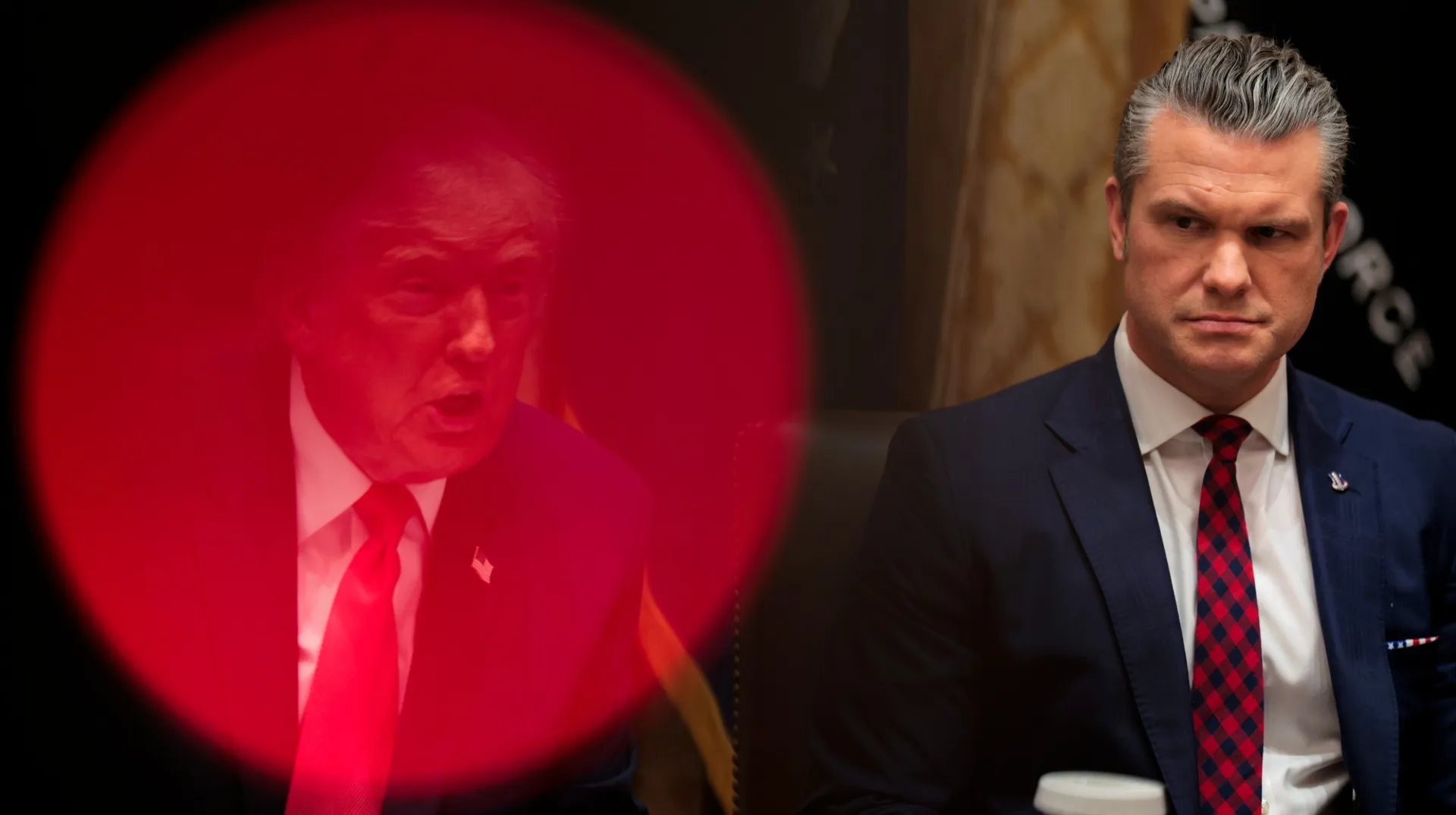
President Donald Trump let slip on Friday that his administration had “knocked out” a “big plant or a big facility where the ships come from” in Venezuela. It was an admission of sorts that the U.S. military had conducted its first land strike on Venezuelan soil. On Monday, he expanded on the announcement, saying the strike was on an “implementation area” for alleged drug smuggling.
Trump’s revelation, made during a radio interview with GOP billionaire donor John Catsimatidis, comes amid rising aggression toward the South American nation by the White House. The administration has bombed boats it claims are Venezuelan drug smuggling vessels in international waters. But unlike those strikes, which the White House has enthusiastically promoted across social media, the details of this alleged mainland attack have remained largely mysterious since Trump first raised the subject. Independent reports have identified the attack as a CIA drone strike with zero casualties, but the typically braggadocious Trump administration has been conspicuously tight-lipped.
What did the commentators say?
Both the White House and CIA “declined to comment” on Trump's ambiguous claims, while military officials “said they had no information to share” about the strike, The New York Times said. Neither the White House nor the intelligence community has officially confirmed subsequent reports that the attack was a CIA drone operation. The agency is "not known to have conducted strikes recently, leaving operations to the U.S. military," said the Times in a separate report. Similarly unclear was whether the drone allegedly used in the strike was “owned by the CIA or borrowed from the U.S. military.”
The Week
Escape your echo chamber. Get the facts behind the news, plus analysis from multiple perspectives.
Join more than 350,000 subscribers and keep yourself informed with a selection of The Week’s most interesting, enlightening and entertaining stories - plus daily puzzles.
Join more than 350,000 subscribers and keep yourself informed with a selection of The Week’s most interesting, enlightening and entertaining stories - plus daily puzzles.
Trump’s “vague comments” left “questions about which part of the U.S. government acted and what target was hit,” said Reuters. The president’s remarks also “set off swirling rumors” as many on social media speculated that a recent “explosion at an industrial zone” in the city of Maracaibo may have been the mysterious strikes, said USA Today. Chemical company Primazol, which had previously confirmed a warehouse fire corresponding to the mysterious explosion, said in a statement that it “categorically rejects” the insinuation.
Asked Monday whether his comments had been in reference to a military or intelligence community operation, Trump demurred. “I know exactly who it was, but I don’t want to say who it was,” he said. In October, Trump publicly confirmed he had directed the CIA to begin operations inside Venezuela in an “extraordinary and unprecedented acknowledgment” from a president, said NBC News. Speaking on condition of anonymity, one U.S. official “confirmed that the target was a ‘facility’” but refused to “disclose its location or if it was actually attacked by the U.S., much less destroyed,” said The Intercept.
The alleged drone strike is “largely symbolic,” another American official said to CNN, since it hit “just one of many port facilities used by drug traffickers” leaving Venezuela. The strike also “appeared to attract little to no attention, even inside the country, in real time.”
An attack on a Venezuelan mainland facility would “cross a red line” and could potentially prompt acts of self-defense from Venezuela, said Just Security Editor-in-Chief Ryan Goodman to Axios. Given those constraints, it may be covert to “minimize blowback from the international community, including our allies.”
Sign up to get Today’s Best Articles in your inbox
A free daily email with the day’s biggest news and analysis – and the best features from TheWeek.com
What next?
The White House has been “promising” land strikes on Venezuela “for weeks” as part of its “intensifying pressure campaign” against Venezuelan President Nicolas Maduro, said the Times. The administration’s boat strikes against alleged traffickers were “originally developed as part of a two-phase operation,” the second of which “was to include strikes on drug facilities in Venezuela.”
The U.S. currently has a “large force” deployed to the Caribbean, “including a carrier strike group, squadrons of fighter jets and an amphibious ready group carrying the 22nd Marine Expeditionary Unit,” said Task and Purpose. In addition to the 29 strikes on alleged drug smuggling vessels, the military has begun to “board and intercept oil tankers coming or going to Venezuela.”
Ultimately, it “should not be a mystery for days” to determine “whether or not their president has just bombed a new sovereign nation, without any declaration of war,” said Zeteo. Not in a “modern, free and truly democratic society.”
Rafi Schwartz has worked as a politics writer at The Week since 2022, where he covers elections, Congress and the White House. He was previously a contributing writer with Mic focusing largely on politics, a senior writer with Splinter News, a staff writer for Fusion's news lab, and the managing editor of Heeb Magazine, a Jewish life and culture publication. Rafi's work has appeared in Rolling Stone, GOOD and The Forward, among others.