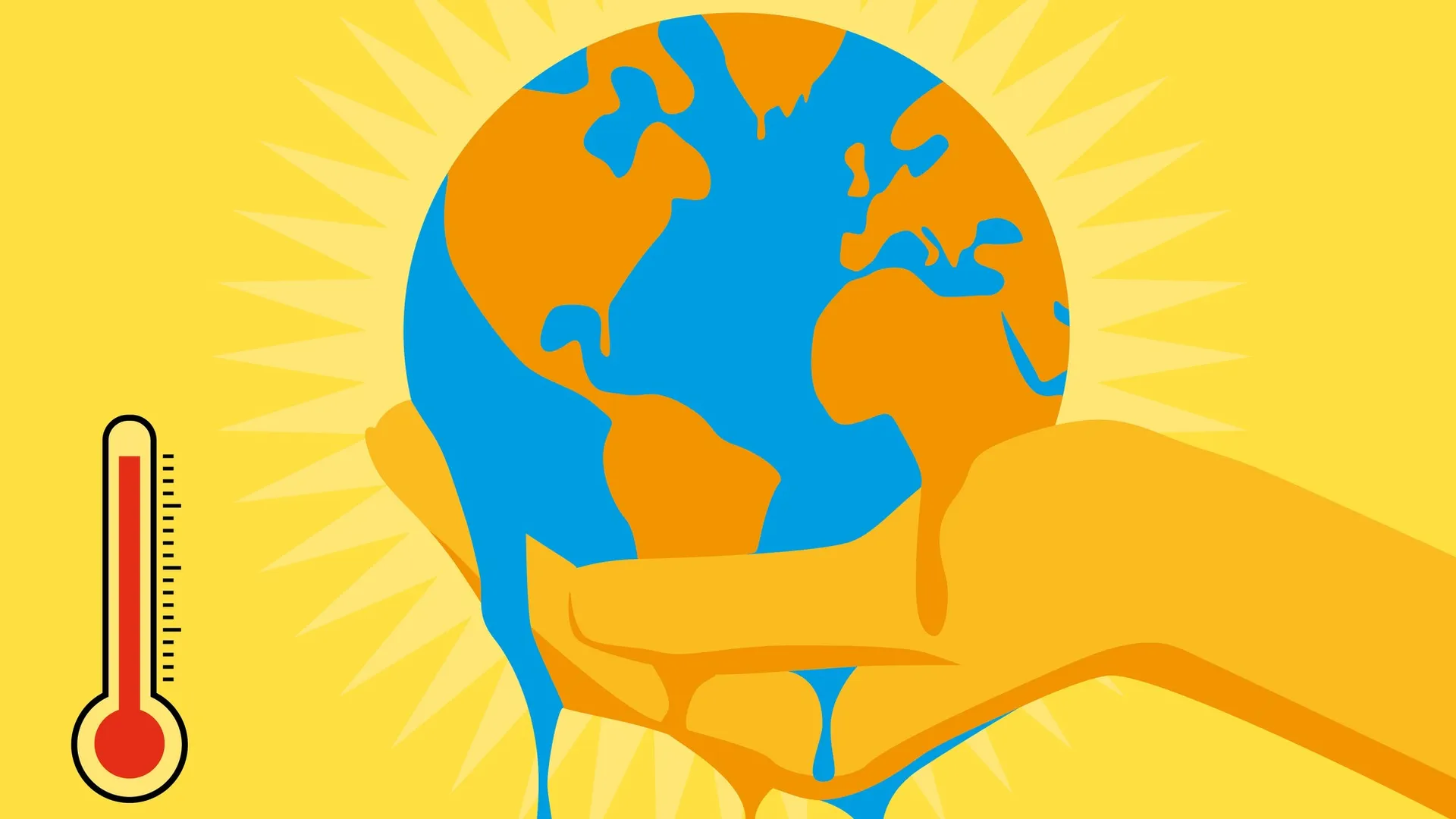
Our planet may be heading to a point of no return. Scientists predict that a domino effect of damage is on the horizon without intervention, including “hothouse” level warming. Climate change is likely to worsen, especially with relaxed emissions regulations, which will lead to irreparable harm to the ecosystem and human health.
What’s ‘hothouse’ warming?
Earth’s climate is “departing from the stable conditions that supported human civilization for millennia” and barreling toward several tipping points that could “commit the planet to a hothouse trajectory,” said an analysis published in the journal One Earth. “Most tipping interactions are destabilizing in nature,” and if “one element tips, it can trigger a cascade effect, pushing other systems past their thresholds.” The shift could “raise global temperatures, accelerate sea-level rise, release vast stores of carbon and destabilize ecosystems.”
In the hothouse trajectory, global temperature “stays significantly above the 4°C rise of current worst-case climate scenarios for thousands of years, driving a huge rise in sea level that drowns coastal cities,” said The Guardian. Unfortunately, progress toward this is “advancing faster than many scientists predicted,” said Christopher Wolf, a scientist at Terrestrial Ecosystems Research Associates and one of the authors of the analysis, to the outlet. “Policymakers and the public remain largely unaware of the risks posed by what would effectively be a point-of-no-return transition.”
What does the future hold?
Despite the warning, uncertainty remains. Scientists “do not yet know the exact thresholds for many tipping elements” or how “quickly tipping cascades might unfold,” said the analysis. Regardless, we “may be approaching a perilous threshold, with rapidly dwindling opportunities to prevent dangerous and unmanageable climate outcomes.”
The risks are higher as the Trump administration is working to roll back caps on carbon dioxide emissions. The added pollution could lead to “as many as 58,000 premature deaths and an increase of 37 million asthma attacks between now and 2055,” said The New York Times.
Time is of the essence now as the “boulder is going off over the edge of the cliff,” said Jillian Gregg, a study co-author and the CEO of Terrestrial Ecosystems Research Associates, to KLCC. “We are on this trajectory, and we don’t have recourse in how to get back.” |