The Week The Week
flag of US
US
flag of UK
UK
https://cdn.mos.cms.futurecdn.net/flexiimages/jacafc5zvs1692883516.jpg

SUBSCRIBE & SAVE

Less than $3 per week

Sign in
  • View Profile
  • Sign out
  • The Explainer
  • The Week Recommends
  • Newsletters
  • Cartoons
  • From the Magazine
  • The Week Junior
  • Student Offers
  • More
    • Politics
    • World News
    • Business
    • Health
    • Science
    • Food & Drink
    • Travel
    • Culture
    • History
    • Personal Finance
    • Puzzles
    • Photos
    • The Blend
    • All Categories
  • Newsletter sign up Newsletter
  • The Week Evening Review
    Classroom tech debate, a Spirit Airlines bailout, and Trump eponyms

     
    TODAY’S BIG QUESTION

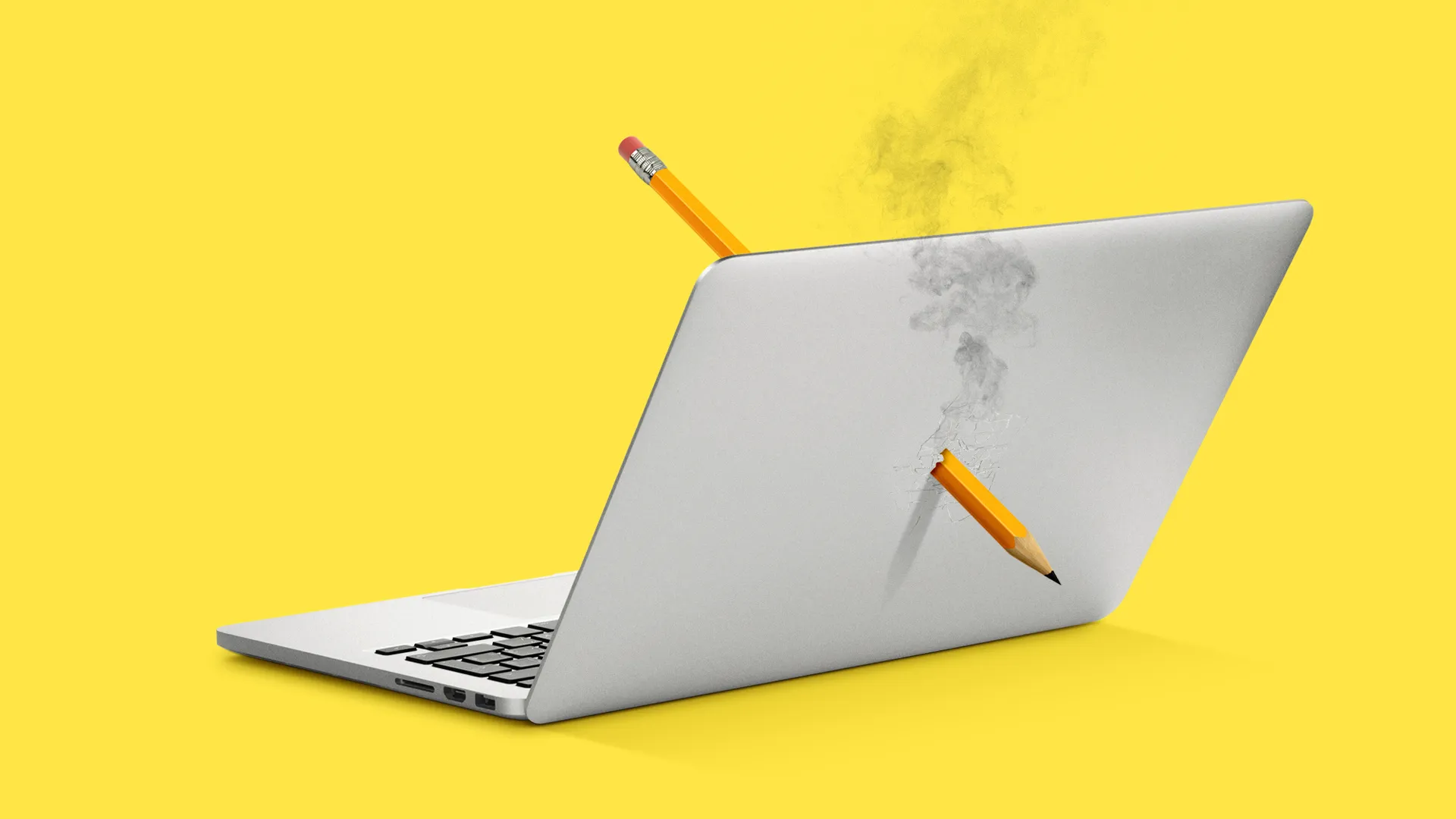
    How might the tech backlash change US education?

    More than a decade ago, U.S. schools started putting Chromebooks and iPads in the hands of young students. Now, parents are pushing back and demanding less screen time and more pen-and-paper work for their algorithm-addled kids. 

    Los Angeles parents are “fed up with schools loading up students with laptops and tablets,” said The New York Times. The L.A. school board last week passed new rules to “eliminate digital devices entirely through first grade and develop screen time limits for higher grades.” New York parents are asking for ChatGPT limits in schools, while Utah last month passed a law to let parents monitor their kids’ screen time on school devices. 

    Reducing screen time “isn’t as simple as hitting an off switch,” said Education Week. Tech is “infused into nearly every part” of K-12 education. Federally required reading and math assessments are “largely digital,” and digital learning management systems are “now staples” for school districts.

    What did the commentators say?
    Technology is “not the answer or the problem,” said Matthew Yglesias at Slow Boring. Companies once were “making a lot of unrealistic utopian promises” about the promise of Chromebooks and iPads in education, but those promises have fallen short. To educate students well, schools need “solid standards” and a curriculum “aligned with those standards.” Technology works when it’s also “aligned with those standards.” Schools have too often “signed up for too many apps” without a plan to “integrate them with each other or a curriculum.”

    Schools should “take stock, set goals and develop strategy around learning-tech use,” said Meredith Coffey at Education Next. Educators frequently buy hardware and software “regardless of its relevance to their students’ needs.” And they should instead “pursue solutions, not shiny objects,” by focusing on “evidence-based tools that align with defined goals.” 

    What next?
    Education debates can often turn partisan, but conservative parents and liberal teachers' unions have become “unlikely allies” to fight against tech in schools, said NBC News. This “cuts across partisan lines in a way that I haven’t seen in a long time,” said Corey DeAngelis, of The Heritage Foundation, to the outlet. 


    QUOTE OF THE DAY

    ‘The blockade is somewhat more effective than the bombing. They are choking like a stuffed pig. And it’s going to be worse for them.’

    Trump to Axios on why he’s refusing Iran’s proposal to open the Strait of Hormuz and lift the blockade until the regime agrees to address U.S. concerns about its nuclear program. He won’t lift the blockade because “I don’t want them to have a nuclear weapon,” he added.


    talking points

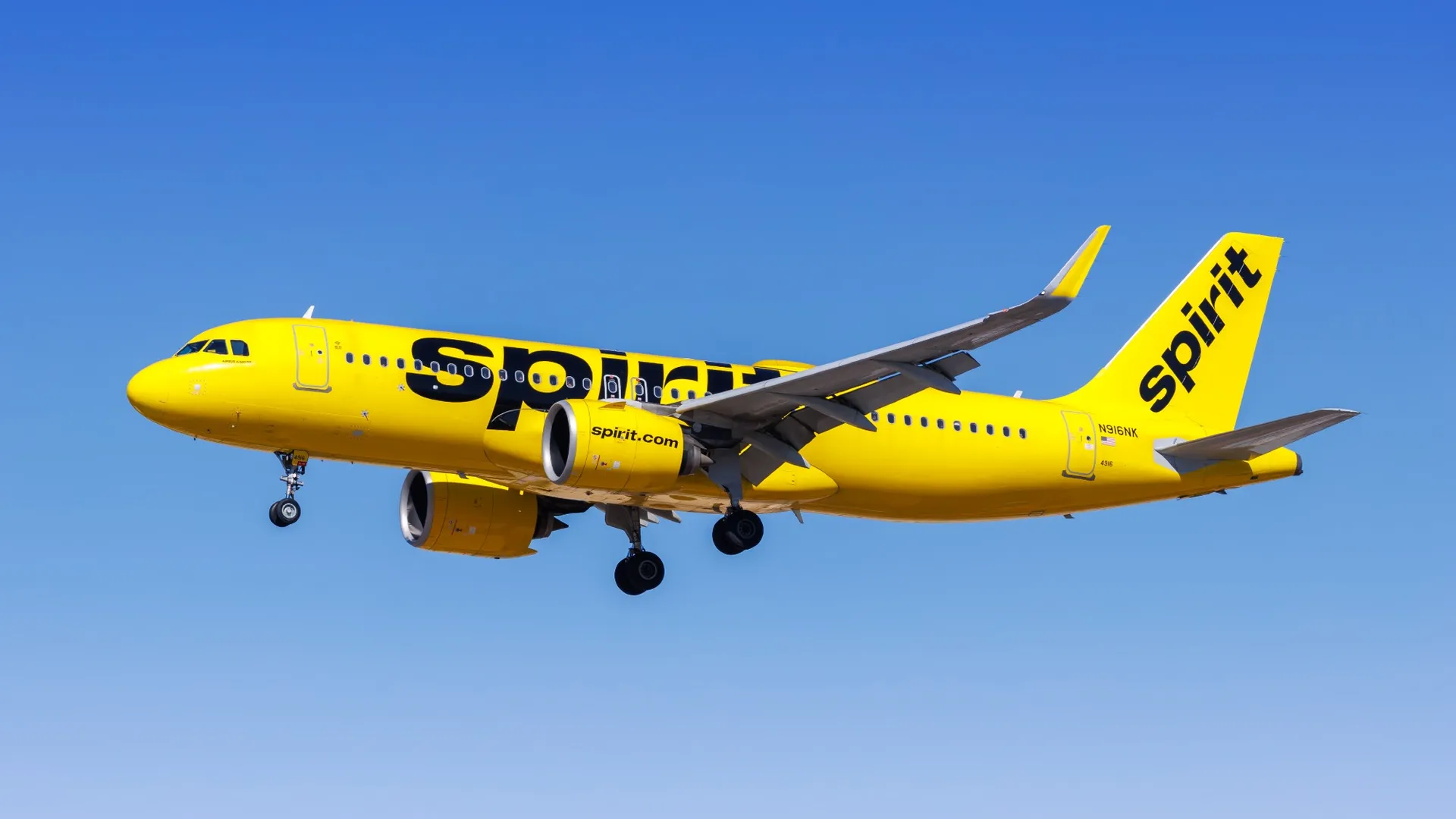
    Should the government save Spirit Airlines?

    No-frills carrier Spirit Airlines, which employs 14,000 people, is bankrupt. Now, President Donald Trump is mulling a takeover of the company. But there’s hesitation in his cabinet and among the president’s free-market fellow Republicans. There has been “a lot of money thrown at Spirit, and they haven’t found their way into profitability,” said Transportation Secretary Sean Duffy to Reuters. 

    The possible deal would give the airline $500 million in cash in exchange for a 90% government stake in the business. That would “mark a renewal of a bailout strategy” the government pursued following the 2008 financial crisis, in which the feds owned pieces of “too big to fail” companies such as General Motors and Chrysler, said Axios.

    Moral obligation vs. ‘market discipline’
    The federal government “has to save Spirit Airlines,” said Kyle Stewart at Live and Let’s Fly. The Justice Department sued to block a merger between Spirit and JetBlue in 2022, arguing that the “Spirit effect” forced other airlines to lower fares to be competitive. And Spirit did make air travel “possible for people who otherwise could not afford it.” But that created a moral obligation for the government. It kept Spirit from selling itself, which means it “cannot shrug” now that the airline is floundering.

    The Justice Department made the “wrong decision” blocking the 2022 merger, said Ben Schlappig at One Mile at a Time. The government’s intervention “failed to take into account that Spirit no longer had a viable business model.” But the “bad merger idea” probably would have failed, given that JetBlue is also currently stumbling. Beyond that, Spirit’s current rate of spending means it would likely burn through $500 million in “a matter of months.” 

    “There’s no economic justification for the government to save Spirit Airlines,” said The Wall Street Journal. Letting the company fail “would be a useful lesson in market discipline.”

    ‘Fundamentally flawed’
    An infusion of government cash might not save an airline that has been on “life support for years,” said CNN. Spirit and other discount carriers “continued to lose money” after the pandemic. And the company’s business is “fundamentally flawed,” said United CEO Scott Kirby to the outlet.


    Statistic of the day

    1992: The last time four Federal Open Market Committee members dissented, before the recent 8-4 split vote at yesterday’s Federal Reserve meeting to keep interest rates steady. Policymakers “grappled with the policy impact of persistent inflation and awaited a looming leadership transition at the central bank,” said CNBC. The meeting was Jerome Powell’s last as chair.


    in the spotlight

    The many things leaders have offered to name after Trump

    President Donald Trump has long understood the power of a brand name — specifically his. And as world leaders flatter and impress upon him the merits of their prospective partnerships, his very name has become a global currency for appealing to his ego. Recently, Ukraine offered to name an embattled area of its Donbas region “Donnyland.” But this is only the latest in a list of international Trump-titled pitches.

    ‘Fort Trump’
    First suggested publicly by then-President Andrzej Duda of Poland during a 2018 White House visit, plans for a $2 billion Fort Trump military base ultimately fizzled before they were resurrected in the first year of Trump’s second term. Defense Secretary Pete Hegseth “talked about the fact that I hope that Fort Trump, which we talked about” during Trump’s first term, will “really be established,” said Duda to The Associated Press after a series of Warsaw meetings with American officials in 2025.

    ‘Trump Promenade’ 
    Trump is “Israel’s best friend ever,” said Israeli Prime Minister Benjamin Netanyahu at a 2025 groundbreaking ceremony for a seaside promenade in the president’s honor in the central Israeli city of Bat Yam. The idea “originated from Trump’s idea to turn the Gaza Strip into beachfront property,” said The Jerusalem Post. 

    ‘Trump Route for International Peace and Prosperity’
    A key feature of a fragile brokered peace between Azerbaijan and Armenia, the Trump Route for International Peace and Prosperity “promises to become a vital connectivity link between Europe and Asia” that “could go down” as one of Trump’s “most impressive foreign policy achievements” since reelection, said the Atlantic Council. The project’s name was a “concession” sure to “delight” Trump, said CNN, as the president sought to “brand himself in his first six months in office as a global peacemaker.” 

    Read more


    Good day 🙊

    … for sportsmanship. Soccer players who cover their mouths to mask discriminatory speech on the field will be sanctioned with a red card at the World Cup, after a vote by FIFA’s rule-makers. The association’s president, Gianni Infantino, pushed for the vote following the abuse of Real Madrid’s Vinicius Júnior that went unpunished during a Champions League match.


    Bad day 🪪

    … for California immigrants. The Golden State will share information about driver’s license holders with the nonprofit American Association of Motor Vehicle Administrators, including immigrants who “do not have legal authorization to live in the U.S.,” said CalMatters. California is breaking a promise made a decade ago when it began issuing licenses to unauthorized immigrants, according to advocates.


    Picture of the day

    Sit. Stay. 

    A 28-foot statue of Nipper sits atop a warehouse in Albany, New York. The dog has been a source of local pride for almost seven decades, but now its fate is uncertain, as the vacant building has been “marked by a red placard” to indicate it’s unsafe, said The Associated Press.
    Ted Shaffrey / AP Photo


    Puzzles

    Daily sudoku

    Challenge yourself with The Week’s daily sudoku, part of our puzzles section, which also includes guess the number

    Play here


    The Week recommends

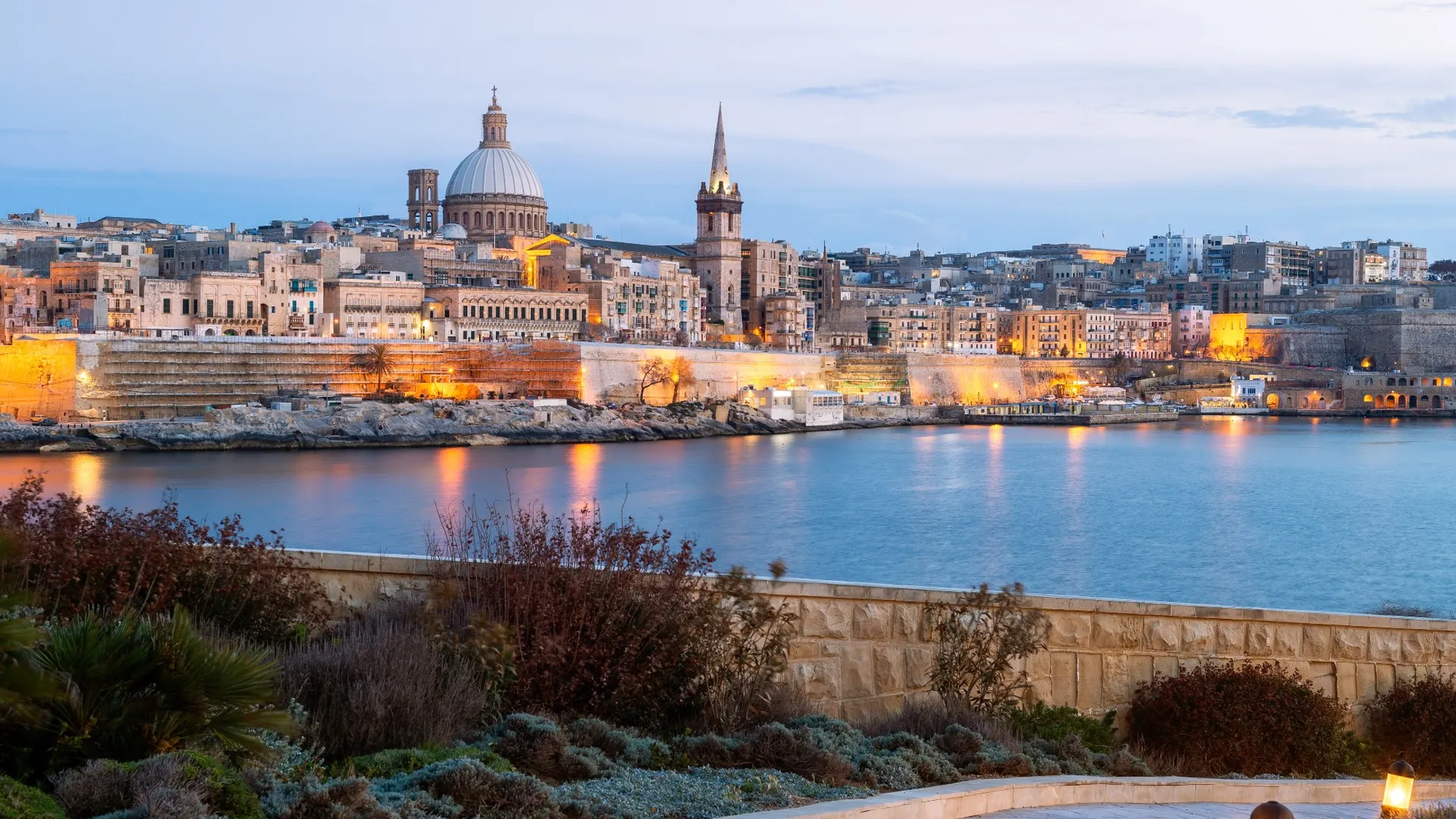
    Malta: striking landmarks, ancient history and clear waters

    Malta’s 300 days of sunshine a year draw visitors, but there’s much more to this island between Sicily and North Africa than optimal weather. Its history isn’t tucked away in corners but on full display in landmarks like St. John’s Co-Cathedral and the Megalithic Temples of Malta. Plus, natural beauty shines along the rugged coastline and in the sparkling, clear waters.

    Maltese fare
    Malta’s location between North Africa and Italy plays a major role in its cuisine. Dishes feature Arabic spice blends, touches of “Sicilian comfort” and a bit of “French flair,” said Broadsheet. One Maltese staple is the pastizzi, a golden flaky pastry often filled with ricotta or peas that’s best served “straight from the oven” and “eaten with your hands.”

    Stone wonders
    Some of the world’s oldest free-standing stone buildings can be found in Malta. Among the most notable are the Megalithic Temples of Malta, constructed more than 5,000 years ago. They are “remarkable for their diversity of form and decoration,” and the Hagar Qim, Mnajdra and Tarxien temples are “unique architectural masterpieces” due to the “limited resources available to their builders,” said UNESCO.

    Turquoise waters
    Divers and snorkelers love Malta for its coves, accessible wrecks and crystalline water with high visibility. A top spot to visit is the “picturesque” Ghar Lapsi, a bay known to have “some of the best reef life on the island,” said Lonely Planet, with boat and shore dives arranged for all skill levels.

    Read more


    Poll watch

    Just 15% of young Americans trust the government to do the right thing all or most of the time — the “lowest recorded level in more than a quarter-century of polling,” according to Harvard’s Institute of Politics Youth Poll survey of 2,000 18- to 29-year-olds. Only 13% believe the country is headed in the right direction.


    INSTANT OPINION

    Today’s best commentary

    ‘Hedging is the new normal’
    Suzanne Nossel at Foreign Policy
    We are “living in a new world of hedgers,” says Suzanne Nossel. The “shocks of the last several years” have “upended how nations approach international affairs.” The “smooth flows of a globalized and rules-based world have clotted into uncertainty, forcing states to find new pathways for trade, diplomacy, resource extraction and defense cooperation.” Countries are “no longer hedging within a system that’s episodically volatile but out of a recognition that there no longer is much of a system at all.”

    ‘California should reconsider its rush to regulate e-bikes’
    Stephen Zoepf at the San Francisco Chronicle
    Because e-bikes “fall into a convoluted mix of transportation policies, they remain contentious and unable to fulfill their potential,” says Stephen Zoepf. Americans have “treated small, powered two-wheelers as recreational devices for far too long,” and making them “illegal altogether means that e-bike commuters, merely acting in self-preservation, can find themselves treated like hooligans.” While cars and trucks “continue to get bigger and more powerful, those outside them are being killed at nearly record-high rates.”

    ‘AI companies are just companies’
    Robert Armstrong at the Financial Times
    AI proponents “wave off the notion that the technology will lead to mass unemployment,” while “doomers respond that, in the case of AI, we are not the drivers; we are the horses,” says Robert Armstrong. This “back-and-forth highlights the idea that AI is unlike all the technologies that went before, with greater complexity, greater upsides and greater risks — for labor, cybersecurity, national defense, mental health and so on.” So those “controlling it have special responsibilities.”


    WORD OF THE DAY

    thigmotaxis

    An organism’s tendency to be close to walls, objects or animals and avoid open spaces. Sea lions are known for being thigmotactic, and cuddly Chonkers, a 2,000-pound Steller sea lion capturing public attention for his remarkable size, has been doing just that to the dismay of his fellow and much smaller sea lions at San Francisco’s Pier 39.


    Evening Review was written and edited by Theara Coleman, Nadia Croes, Catherine Garcia, Scott Hocker, Anya Jaremko-Greenwold, Justin Klawans, Joel Mathis and Rafi Schwartz, with illustrations by Stephen Kelly.

    Image credits, from top:  Illustration by Stephen P. Kelly / Getty Images; Boarding1Now / Getty Images; Amir Levy / Getty Images; joe daniel price / Getty Images
     

    Recent editions

    • Morning Report

      Supreme Court curbs Black voting power

    • Evening Review

      FIFA is floundering

    • Morning Report

      The king's speech

    VIEW ALL
    TheWeek
    • About Us
    • Contact Future's experts
    • Terms and Conditions
    • Privacy Policy
    • Cookie Policy
    • Advertise With Us
    • FAQ
    Add as a preferred source on Google Add as a preferred source on Google

    The Week is part of Future US Inc, an international media group and leading digital publisher. Visit our corporate site.

    © Future US, Inc. Full 7th Floor, 130 West 42nd Street, New York, NY 10036.