The Week The Week
flag of US
US
flag of UK
UK
https://cdn.mos.cms.futurecdn.net/flexiimages/jacafc5zvs1692883516.jpg

SUBSCRIBE & SAVE

Less than $3 per week

Sign in
  • View Profile
  • Sign out
  • The Explainer
  • The Week Recommends
  • Newsletters
  • Cartoons
  • From the Magazine
  • The Week Junior
  • Student Offers
  • More
    • Politics
    • World News
    • Business
    • Health
    • Science
    • Food & Drink
    • Travel
    • Culture
    • History
    • Personal Finance
    • Puzzles
    • Photos
    • The Blend
    • All Categories
  • Newsletter sign up Newsletter
  • The Week Evening Review
    Ukraine going it alone, the Abraham Accords, and a nationwide ‘reading recession’

     
    TODAY’S BIG QUESTION

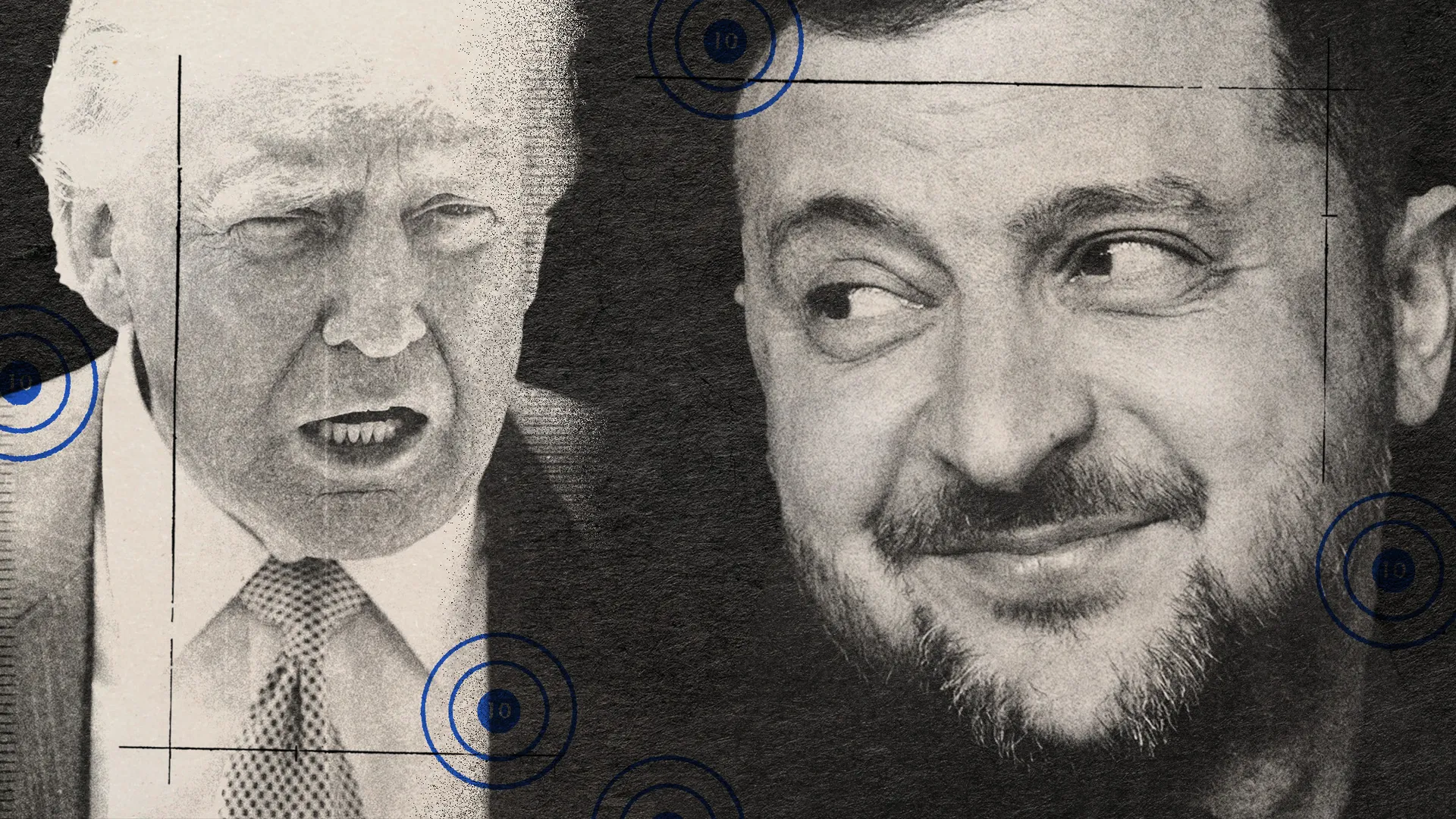
    Does Ukraine need US help anymore?

    Ukraine in recent months has slowed Russia’s invasion to a near-halt and forced Moscow to ramp up its own security measures. Kyiv’s homegrown drone technology and techniques are now in demand around the world. And these accomplishments have come despite diminished U.S. support for Ukraine’s warfighting efforts.

    What did the commentators say?
    The fight against Russia is “going better than you think,” said Vox. Kyiv still relies on the “fickle U.S. government” for Patriot missiles and battlefield intelligence, but Ukrainian leaders have “more confidence” in their ability to withstand the invasion than before. They believe Ukraine “no longer needs the United States as much,” said The New York Times.

    Ukraine “has finally given up” on President Donald Trump, said Phillips Payson O’Brien at The Atlantic. President Volodymyr Zelenskyy is “aggressively seeking new diplomatic and military partners” and has sent drones to strike Russian oil facilities despite U.S. warnings against doing so. American leaders have “reduced what little weaponry” they were sending to Ukraine and pressured Zelenskyy to cede territory in exchange for peace. 

    It’s “significant” that Ukraine is “reversing the trend” of Russia’s progress in the war, said The Wall Street Journal in an editorial. One sign is that Russian President Vladimir Putin scaled back his country’s Victory Day parade in early May out of apparent fears of a Ukrainian drone strike. 

    The war will not end unless Ukraine inflicts a “decisive defeat” on Russia that poses a “direct threat to Putin’s regime,” said Andrew A. Michta at 19FortyFive. Putin’s military is “well positioned to continue” thanks to the backing of China’s industrial might and money flowing in from oil sales. 

    What next?
    The U.S. is now looking to Ukraine for help in the war against Iran. The two sides this month signed an agreement to potentially “export military technology to the U.S.” and manufacture Ukranian-designed drones in the U.S., said CBS News. Kyiv has “sent drone interceptors and pilots to the Middle East” to defend Saudi Arabia, Qatar and the United Arab Emirates against Iranian attacks. 

    Ukraine is a “hub for drone innovation,” said the Financial Times. That’s expertise the U.S. now needs.


    Statistic of the day

    19.5 million: The number of people in Sudan facing acute hunger amid the nation’s ongoing war, according to the U.N.-backed Integrated Food Security Phase Classification. Though this is lower than the 21.2 million estimate from last year, it still represents over 40% of Sudan’s population. 


    the explainer

    The UAE, Iran and the Abraham Accords 2.0

    The United Arab Emirates denied last week Benjamin Netanyahu’s claim that he made a secret trip to the Gulf state during the Iran war to meet its president, Sheikh Mohamed bin Zayed Al Nahyan. But reports that the UAE has carried out its own strikes on Iran have renewed scrutiny of the Abraham Accords.

    What are the Abraham Accords?
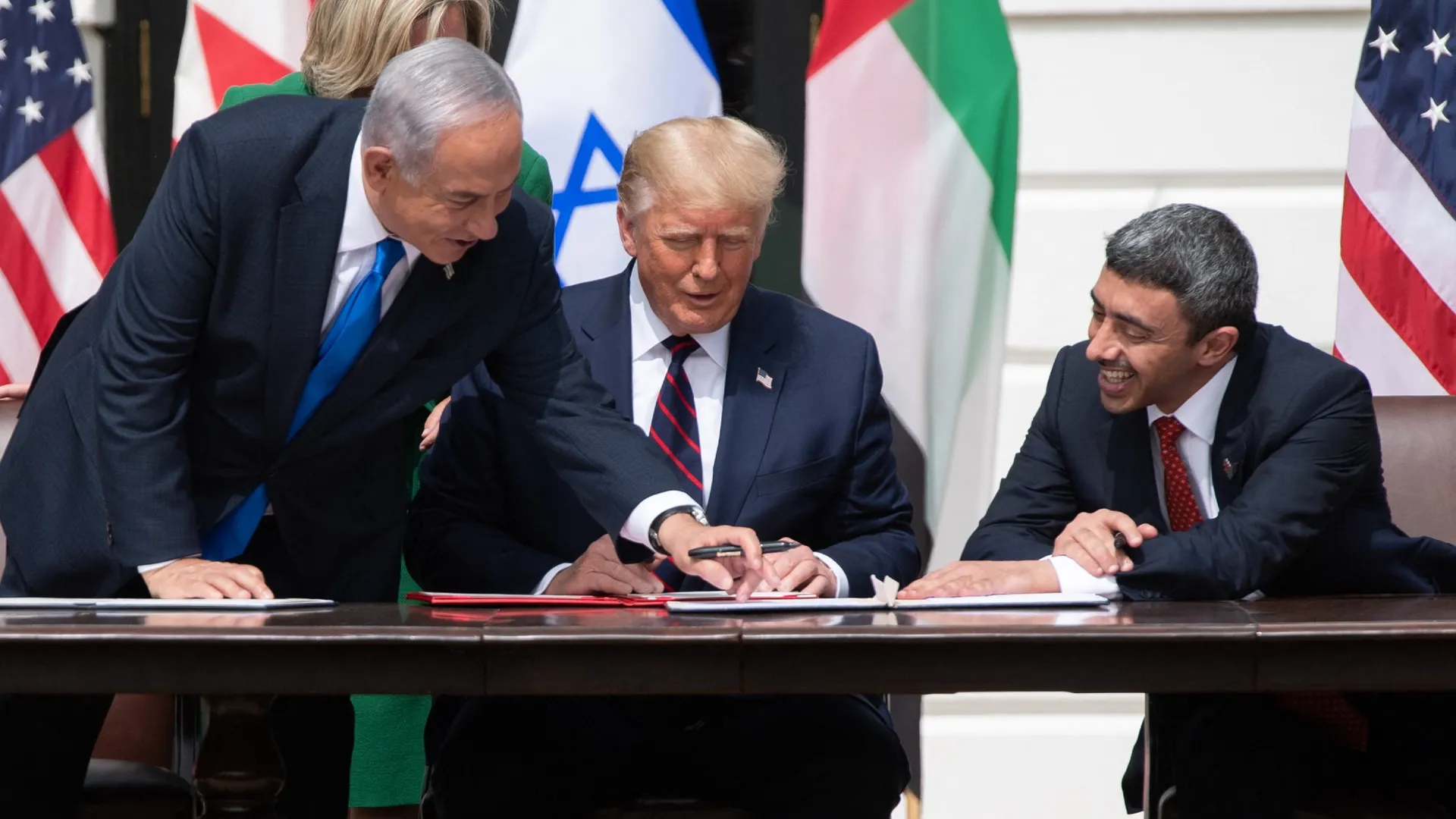
    This series of peace and cooperation agreements normalized relations between Israel and several Arab neighbors. The UAE and Bahrain signed the initial agreements, mediated by the U.S. on Sept. 15, 2020. And three months later, Sudan and Morocco joined the pact.

    The UAE and Bahrain saw the Accords as strategically useful, but Arab public opinion remains strongly pro-Palestinian and opposed to closer relations with Israel. The Gaza war only exacerbated this, and then the Iran war created a sense that Israel was dragging the region into further instability.

    Tehran’s “narrative” became that it could target countries that had signed the Accords “at will,” said The Jerusalem Post. This reinforced fears in Saudi Arabia, in particular, that alignment with Israel could make the kingdom a target.

    Arab governments face a dilemma. Maintaining ties with Israel and its key ally, the U.S., risks a domestic backlash, but breaking ties could damage their security and economic interests.

    How might they be updated?
    The original vision of the Abraham Accords — an expanding, economically integrated bloc across the Middle East — has become a significantly weaker prospect. Future agreements could involve cooler normalization, selective security cooperation and a slower expansion.

    The rise of China has also encouraged players to consider other options. Expanding and strengthening the Accords creates a “network rooted in shared security interests and American sponsorship,” said conservative think tank the Hudson Institute. But Beijing has “spent the better part of two decades cultivating Middle Eastern influence,” with infrastructure finance, arms sales and “diplomatic mediation.”

    What would an update look like?
    The Accords have “demonstrated resilience,” despite the “turbulence” of the recent years, including “growing criticism of Israel,” said Roy Binyamini, a former National Security Council official, at Ynet.

    The U.S. and its Accords partners could offer a “vision for regional stability, economic growth, inter-faith tolerance and the containment of extremist influences.” Meanwhile, Israel could “leverage its experience” to help regional partners in “strengthening civilian defense systems.”


    QUOTE OF THE DAY

    ‘The status quo is hurting us all. The longer the strait is closed, the more we try to pursue a deal that never happens, the stronger Iran gets.’

    Sen. Lindsey Graham (R-S.C.) on “Meet the Press” about the Iran war. The average price of gas in the U.S. is up 51% since the conflict started, but Graham is confident gas prices “will come down,” he added. 


    in the spotlight

    US students are in a ‘reading recession’

    Reading test scores have been on the decline since the mid-2010s, then the pandemic made recovery that much more difficult. And the proliferation of screens, student absenteeism and a push away from phonics-based teaching has further led to the reduction in scores.

    Contributing factors 
    The U.S. entered a “learning recession” in 2013 as “student progress in math and reading stalled and began to decline,” said Education Scorecard. Reading scores were “down last year in 83% of school districts where data was available,” while “math scores were down in 70%,” compared to a decade ago, said The New York Times. And these declines have “affected both rich and poor districts and crossed racial and geographic divides.”

    The reduced scores “coincided with a dismantling of test-based accountability in schools and a dramatic rise in social media use among young people,” said Education Scorecard. While it “remains unclear whether and how much each factor caused the decline in scores, both are likely candidates.” 

    For years, schools “taught reading using approaches that deemphasized phonics and encouraged strategies such as guessing words based on context clues,” said The Associated Press. And the pandemic “accelerated learning declines, especially for the poorest students,” said the Times. 

    Over the past decade, screen time has also increased exponentially. There’s “no question” that “swiping has decreased students’ focus and persistence,” said the Times, and “time on devices has displaced time spent reading or studying.”

    Little recovery
    “Scores inched upward in reading last year and have climbed more steadily in math since 2022,” said the Times. But they have been “nowhere near enough to make up for lost ground.” 

    The country has also seen a U-shaped recovery, which suggests the “middle has been left behind,” said Education Scorecard. There have been “larger improvements among the highest-income and the lowest-income school districts in the country,” while “middle-income districts (those with between 30% and 70% of students receiving federally subsidized lunches) have seen the least improvement on average.” 


    Good day 👩‍🏭

    … for women in trades. Mikala Sposito, a 21-year-old from Dexter, Michigan, will be the first woman to represent the U.S. in welding at the upcoming 48th WorldSkills, the Olympics of skilled trades, in Shanghai, China. Sposito practices welding about 80 hours a week at her local community college, according to The Associated Press.


    Bad day 🥱

    … for tired teens. Only 22% of teenagers are sleeping at least seven hours nightly, according to a study in the journal Pediatrics. And the racial disparity in sleep health is widening, with Black and Latino adolescents more likely to get insufficient sleep compared to their white counterparts. 


    Picture of the day

    Down for the count

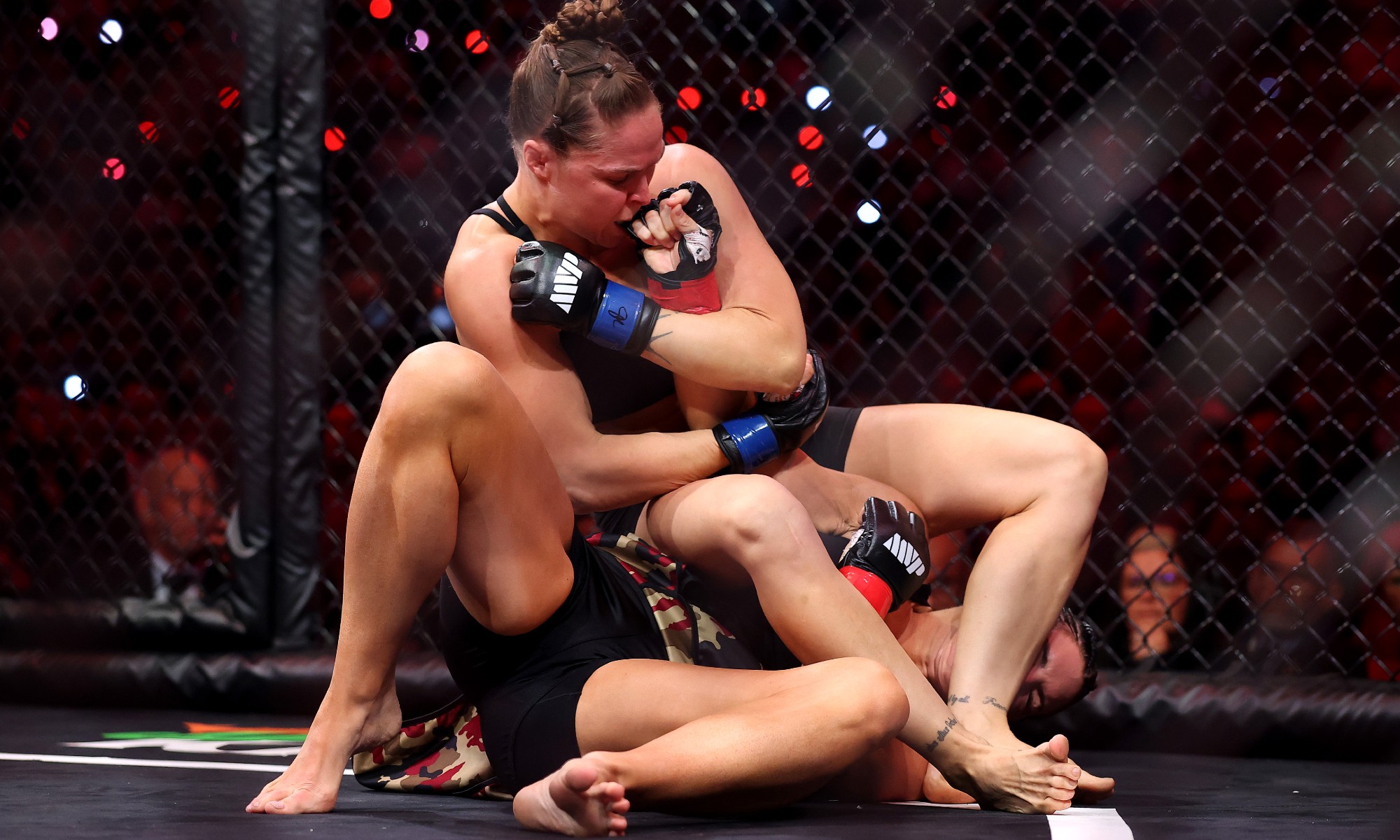
    Ronda Rousey defeats Gina Carano with her signature armbar move just 17 seconds into their mixed martial arts match. The headline fight of Netflix’s broadcast at Intuit Dome in Inglewood, California, brought “Rowdy” Rousey, 39, for her first fight in a decade.
    Sarah Stier / Netflix / Getty Images


    Puzzles

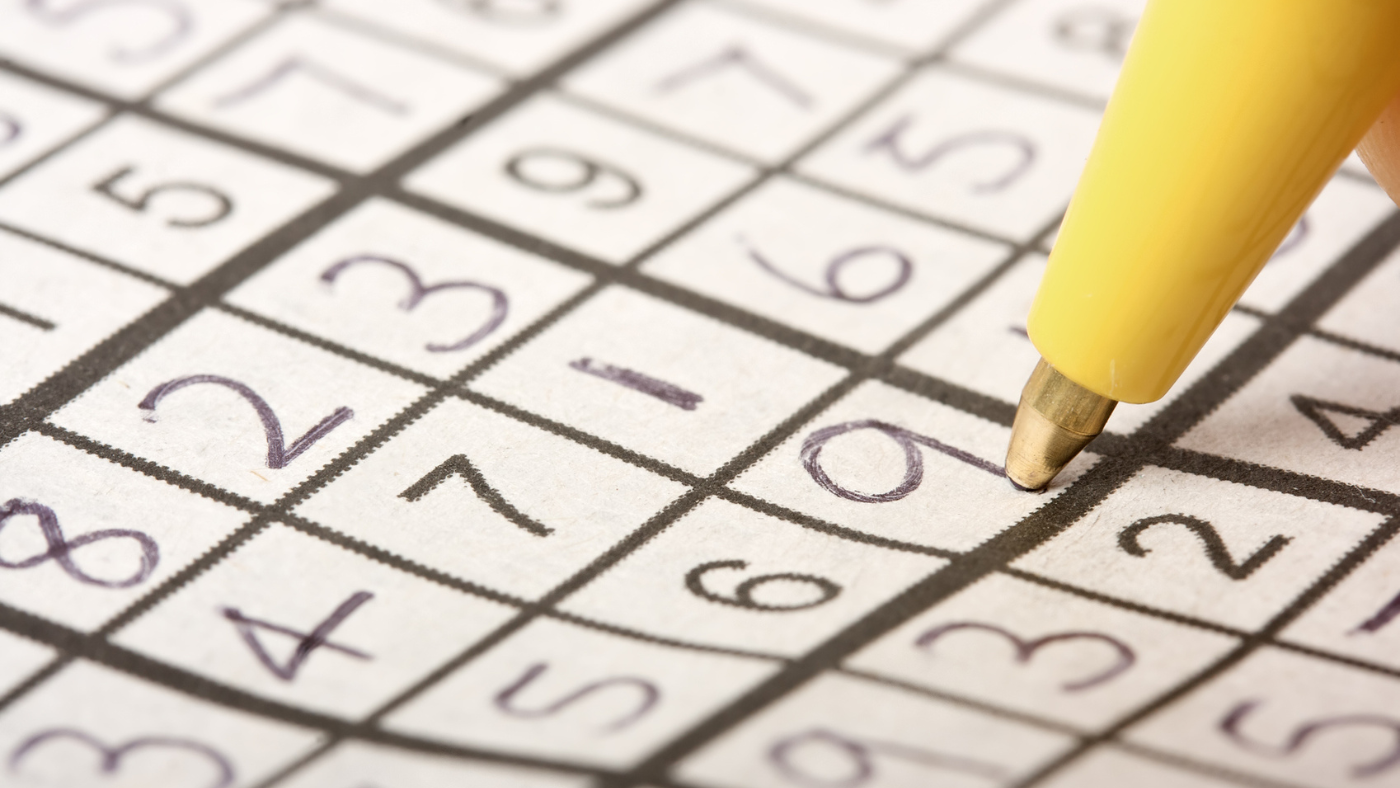
    Daily sudoku

    Challenge yourself with The Week’s daily sudoku, part of our puzzles section, which also includes guess the number

    Play here


    The Week recommends

    The best food markets in the world

    Food markets are a gift for travelers. Many of the tastes and flavors of a region are conveniently in one spot, the produce is often as fresh as it gets, and you can meet the farmers, butchers, cheesemakers, fishmongers and chefs. These markets offer visitors a crash course in their region’s local cuisine, one delicious stall at a time.

    Borough Market, London
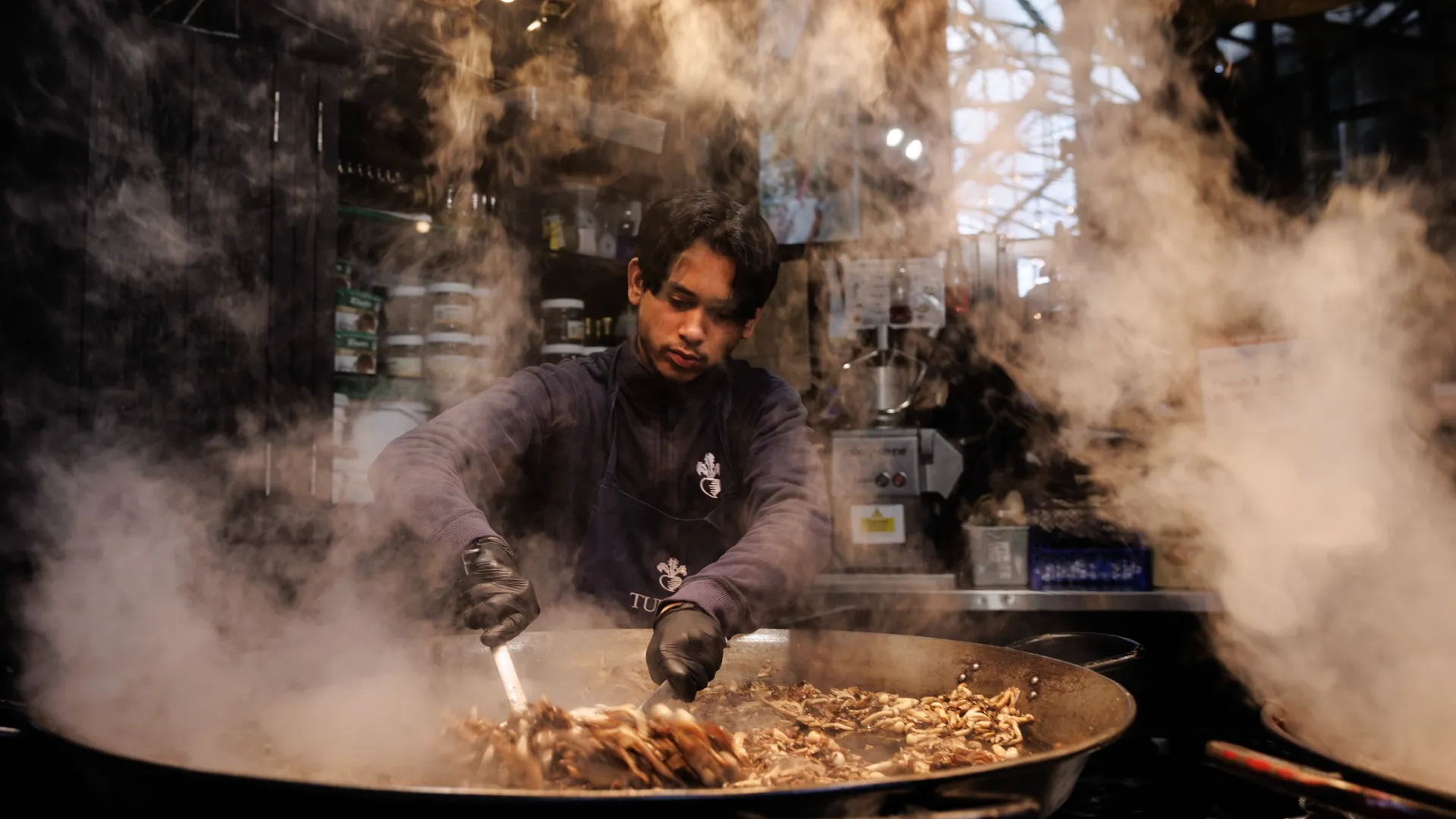
    The “sprawling” Borough Market (pictured above) was established in 1756, making it the “mother of all artisan foodie markets in London,” said Time Out. You can stroll by more than100 stalls. You won’t want to miss bites of soft cheese, flaky pastries and fresh fruit. 

    Chatuchak Market, Bangkok
    Adventure awaits at the gigantic Chatuchak Market. There’s no way to see it all — there are a “whopping” 15,000 stalls across 35 acres — but what you do experience will be memorable, said Food & Wine. The weekend market sells just about everything and is split into 26 sections.
    If you go with a group, try to stay together, as the market is so big that “even locals get lost.”

    Granville Island Public Market, Vancouver
    Once an industrial area, Granville Island has transformed over the years into a “paradise” of “incredible” food with the Public Market the “star of the show,” said Vancouver Magazine. For a more substantial meal, sit down at Sen Pad Thai, where chef Angus An takes Thailand’s most famous dishes and “absolutely knocks each familiar favorite out of the park.”

    Read more


    Poll watch

    Over two-fifths of Democrats (45%) support the party redrawing its own maps to increase Democratic congressional seats, even if it means reducing the number of Black-majority districts, according to a Politico survey. Only 32% of the 837 Democrats polled say protecting Black districts should be prioritized over gaining more seats. 


    INSTANT OPINION

    Today’s best commentary

    ‘Trump says he can do “anything I want” to the island. It doesn’t belong to him.’
    The Guardian editorial board
    In Cuba, the U.S. wants “economic reform, the closure of Chinese and Russian intelligence posts, and reportedly the removal of President Miguel Díaz‑Canel,” which would “reinforce the administration’s message that it controls the Americas,” says The Guardian editorial board. Cuba’s “highly educated population is ripe for change that would allow older generations dignity and give younger ones opportunity.” Instead, they appear to “face ongoing collapse.” Trump “talks of ‘taking’ Cuba. But it belongs to the Cuban people.”

    ‘Class warfare is smoldering in America, and it’s about to catch fire’
    Austin Sarat at The Hill
    In April, an arsonist set fire to a warehouse “used by a major corporation in Los Angeles,” which “should be a wake-up call to political leaders that they urgently need to address the growing despair felt by many Americans,” says Austin Sarat. Some seem to have “gotten the message.” But at the “national level, unfortunately, all signs are pointing in the opposite direction.” The arsonist “channeled the feelings of millions of Americans who have been mistreated.”

    ‘The meme-stock economy is coming for your 401(k)’
    Nitish Pahwa at Slate
    If Americans “already thought the stock market’s booming reactions to this geopolitically chaotic economic moment were irrational, well, it’s about to get much more surreal,” says Nitish Pahwa. Investors are “looking to what may become the biggest IPOs in history, courtesy of artificial intelligence.” The “incoming IPO wave is rewriting stock market rules in real time so that companies can attract massive public investment with fewer safeguards, less transparency and more risk pushed onto ordinary investors.”


    WORD OF THE DAY

    interstitium

    A network of interconnected fluid-filled spaces in and underneath the skin and between and around the human body’s organs. Discovered in a study from the University of Pennsylvania, the interstitium lines up with the traditional pathways of Chinese acupuncture, providing insight into similarities between Western and Eastern medicine, and has broken “accepted anatomical boundaries,” said The New York Times. 


    Evening Review was written and edited by Theara Coleman, Nadia Croes, Catherine Garcia, Scott Hocker, Anya Jaremko-Greenwold, Justin Klawans, Joel Mathis, Chas Newkey-Burden and Devika Rao, with illustrations by Julia Wytrazek.

    Image credits, from top: Illustration by Julia Wytrazek / Getty Images; Saul Loeb / AFP via Getty Images; Javier Zayas Photography / Getty Images; Dan Kitwood / Getty Images
     

    Recent editions

    • Morning Report

      Trump pushes out another GOP foe

    • Sunday Shortlist

      Twin vengeance

    • Saturday Wrap

      Is this the new Covid?

    VIEW ALL
    TheWeek
    • About Us
    • Contact Future's experts
    • Terms and Conditions
    • Privacy Policy
    • Cookie Policy
    • Advertise With Us
    • FAQ
    Add as a preferred source on Google Add as a preferred source on Google

    The Week is part of Future US Inc, an international media group and leading digital publisher. Visit our corporate site.

    © Future US, Inc. Full 7th Floor, 130 West 42nd Street, New York, NY 10036.