The Week The Week
flag of US
US
flag of UK
UK
https://cdn.mos.cms.futurecdn.net/flexiimages/jacafc5zvs1692883516.jpg

SUBSCRIBE & SAVE

Less than $3 per week

Sign in
  • View Profile
  • Sign out
  • The Explainer
  • The Week Recommends
  • Newsletters
  • Cartoons
  • From the Magazine
  • The Week Junior
  • Student Offers
  • More
    • Politics
    • World News
    • Business
    • Health
    • Science
    • Food & Drink
    • Travel
    • Culture
    • History
    • Personal Finance
    • Puzzles
    • Photos
    • The Blend
    • All Categories
  • Newsletter sign up Newsletter
  • The Week Evening Review
    UAE in Sudan, the ‘60 Minutes’ shakeup, and Scottish independence

     
    the explainer

    UAE denies role in Sudan genocide as evidence grows

    Colombian mercenary troops trained on United Arab Emirates (UAE) bases participated in atrocities committed by the rebel Rapid Support Forces (RSF) paramilitary group during the ongoing Sudanese civil war, according to reports from the nonprofits Human Rights Watch and Conflict Insight Group last month. Abu Dhabi security company Global Security Services Group hired “hundreds of Colombian private military contractors” who allegedly aided the RSF’s assault on the North Darfur capital of El Fasher, where rebels “took over the city and committed widespread killings and rape,” said Human Rights Watch. The UAE has denied the reports, as rights groups call for further investigations and action.

    What links the UAE with Colombian mercenaries?
    HRW’s report indicates the UAE is “financially and militarily aiding the Rapid Support Forces” that stand accused of committing “war crimes, crimes against humanity, and genocide,” said The Associated Press. The report alleges “hundreds” of Colombian mercenaries were “trained by Emirati nationals at a military base” outside Abu Dhabi “before being deployed to Sudan to fight alongside the RSF.”

    The UAE has “long denied supporting the RSF,” said the BBC. The Conflict Insight Group’s report is the “first research where we can prove UAE involvement,” said director Justin Lynch to the outlet. The investigation used data “obtained from tracking the mobile phones of the Colombian fighters,” said the BBC. 

    The deployment of Colombian mercenaries is part of a “broader pattern” for Abu Dhabi, said Joey Shea, a researcher at Human Rights Watch, to Democracy Now. The UAE has been “intervening in neighboring conflicts for over a decade” to “project its political and economic influence abroad.”

    Will there be consequences?
    “Evidence collected” by humanitarian groups shows “UAE-supported mercenaries from Colombia in and around El Fasher as the town fell,” said the nonprofit Refugees International. The reports suggest the UAE backed “enhanced drone capabilities that helped the RSF to carry out deadly attacks on civilians.” 

    Refugees International has called for “immediate accountability,” asking that “prominent companies and organizations like the NBA, Disney and Warner Bros.” stop their business with the UAE “until it has ended its armed support for the RSF.” This week, the U.K.’s Sky News ended its participation in a joint TV news venture with the UAE.


    QUOTE OF THE DAY

    ‘You’re not talking to Bambi’s baby brother here. Saying you’re going to follow a court order doesn’t tell me anything. You have to follow the court order.’

    Sen. John Kennedy (R-La.) to CNN on why the Trump administration needs to “definitively” say it’s not moving forward with the controversial $1.8 billion “anti-weaponization” fund after the Justice Department said it would abide by a court order temporarily blocking the effort


    IN THE SPOTLIGHT

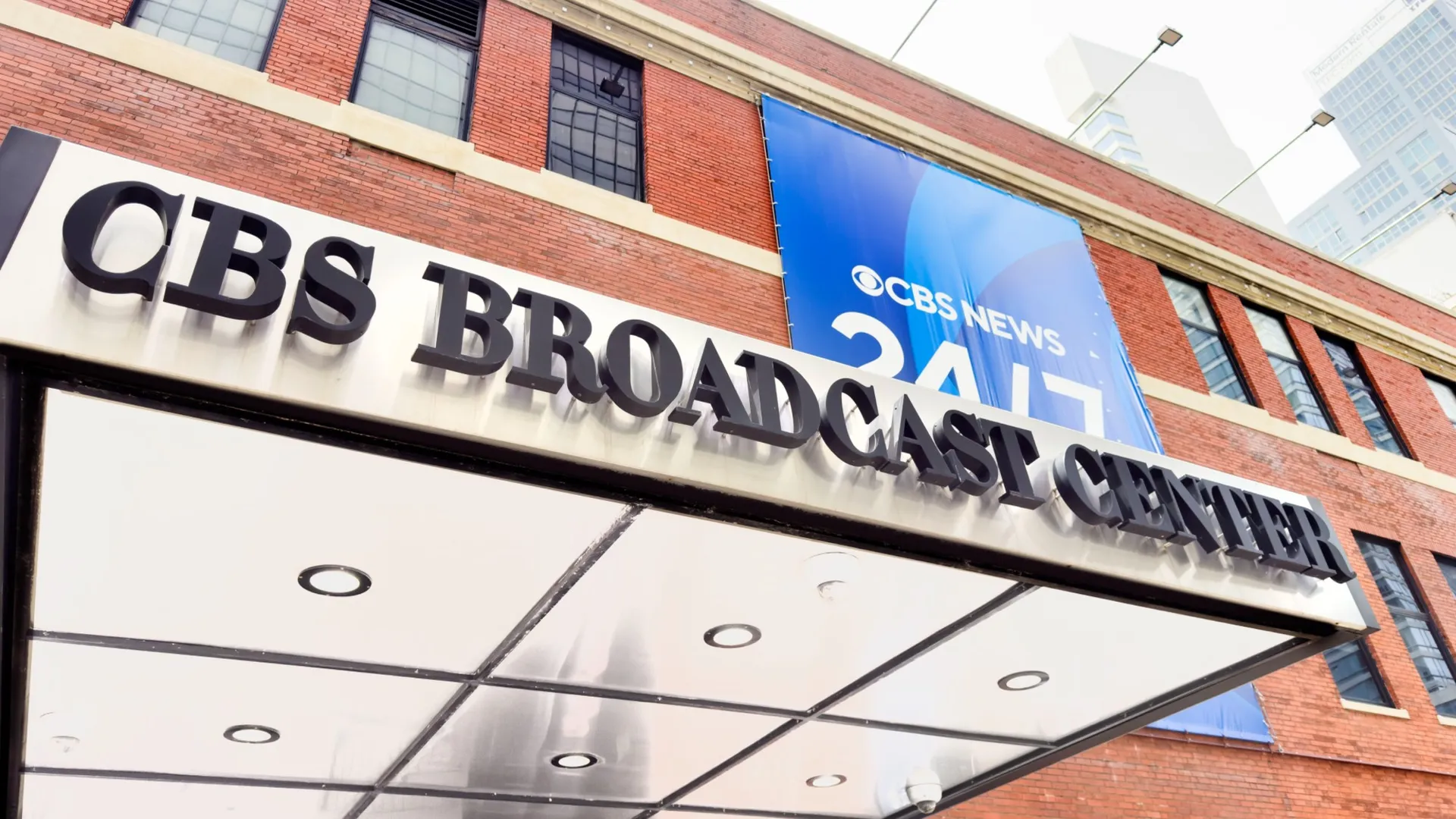
    How the new ‘60 Minutes’ boss could change the iconic show

    One of the most storied news franchises in history has a fresh leader, as CBS News names journalist Nick Bilton the executive producer of “60 Minutes.” Bilton’s significant experience as a reporter likely made him an appealing choice for CBS News Editor-in-Chief Bari Weiss. But others at the program are questioning how Bilton, who has never worked in television news, will run the institution.

    ‘Outside traditional broadcast news’
    Bilton wants to ensure that “‘holding people to account’ and ‘investigative journalism’ remain core principles” of “60 Minutes” under his watch, he said to The Hollywood Reporter. But there may also be opportunities for “some of that kind of gonzo journalism stuff” that Bilton is personally known for. 

    These changes are “built around extending ‘60 Minutes’ to the places where consumers primarily get their news,” said Bilton to the outlet. There will be an “emphasis on experimenting with new voices from outside traditional broadcast news,” said The New York Times. 

    This all comes amid a larger shift at CBS News. In addition to hiring Bilton, Weiss “fired Cecilia Vega, the program’s first Latina correspondent, and Sharyn Alfonsi, whose segment on torture in Salvadoran prisons was pulled off the air abruptly last year,” said the Times.

    ‘Fear what comes next’
    Many are wary of what these changes mean for the program’s longstanding legacy of groundbreaking journalism. Particular criticism was levied at Bilton, a “credulous dope” whose 2015 article for The New York Times was “so factually f--ked it now contains a 203-word editor’s note and a 98-word correction,” said Defector.

    Weiss’ changes will “probably generate heat from the staff of ‘60 Minutes,’” who are fiercely loyal to prior Executive Producer Tanya Simon, said The Guardian. Some are cautious of the direction “60 Minutes” could be headed. “I very much fear what comes next,” said Vega in a statement after her ousting.

    Others have been even more blunt, including longtime “60 Minutes” correspondent Scott Pelley. “‘She’s murdering ‘60 Minutes,’” he said of Weiss in a heated meeting with Bilton, according to numerous sources. “She does not love this place. She was brought in to kill it and is doing exactly that.”


    Statistic of the day

    45: The number of Truth Social posts Trump made in the span of an hour last night, with the majority consisting of endorsements for MAGA Republicans in elections nationwide. He also hurled insults at his political adversaries, including New York County District Attorney Alvin Bragg, who brought multiple felony charges against the president in New York City.


    talking points

    Scottish independence: try, try again?

    The U.K. government last week rejected a call from Scotland’s devolved parliament for a new Scottish independence referendum 12 years after the last one failed, and the U.K. says there’s no nationwide consensus for another vote. Scotland’s parliament has nevertheless voted for the ability to run another ballot on the thorny proposition. Is another clash in the offing, or are Scotland’s dreams of independence dead for now?

    ‘Important motivator’
    Earlier this year, 47% of the 2,136 Scots said they would vote yes to independence, while 44% said they would vote no, with 8% undecided, in a survey by BBC Scotland and Savanta. Although just a “snapshot,” this is “in line with the polling trend,” said the BBC. But there’s “another consideration”: Only 13% of those polled ranked independence as a “top three priority” for Scotland, trailing the cost of living (62%), the NHS (50%) and the economy (31%).

    Independence remains an “important motivator for some voters,” but it “does not feel as potent an issue” as it has in the past, said the BBC. That said, independence is “significantly more popular” than the SNP, the main nationalist party.

    ‘SNP fights for Scotland’
    Although last week’s vote was “largely symbolic,” it “highlights how Scotland’s constitutional future has returned to the core of British politics,” said Bloomberg. The SNP may have fallen short of an overall majority in the recent elections to the Scottish Parliament, but with the left-wing Green Party, it has still secured its “largest ever pro-independence majority.” That the SNP secured a fifth consecutive election victory despite its “patchy record on public service delivery” and “bouts of internal warfare,” as well as an embezzlement scandal, reflects the “independence aspirations among half the population and the sense that the SNP fights for Scotland,” said the Financial Times.

    The SNP doesn’t “have to be good”; it just has to “be Scottish,” said Andy Maciver, of PR consultancy Message Matters, to the outlet. But to build support for independence above 50%, the party will need to restore faith in its competence. The prospect of  Nigel Farage of the U.K.’s right-wing Reform Party as prime minister could help. “They need people to run away from the rain in Westminster and toward the sun” in Scotland’s parliament.


    Good day 🗡️

    … for British knighthood. Sir Idris Elba has been knighted by King Charles at Windsor Castle. The actor received the honor today for his service to young people at the Elba Hope Foundation, which “supports community empowerment, education, youth advocacy and sustainable development,” said the BBC.


    Bad day 📰

    … for press freedom. The Defense Department has barred journalists from accessing the Pentagon press office, redesignating it a secure area for handling classified information and suggesting that reporters instead meet with the “public affairs officers who have traditionally answered their questions,” said The Washington Post. Reporters are already barred from the building, as “litigation over the agency’s press rules continues.” 


    Picture of the day

    Twice in a May moon

    A rare blue moon rises over the Temple of Poseidon at Cape Sounion, Greece. The phenomenon refers to a second full moon in one calendar month. Despite its name, a blue moon usually appears orange when it rises.
    Xinhua/Shutterstock


    Puzzles

    Daily sudoku

    Challenge yourself with The Week’s daily sudoku, part of our puzzles section, which also includes guess the number

    Play here


    The Week recommends

    Spielberg returns! Inside June’s new movies.

    While much has changed about the film industry in recent years, the presence of a sci-fi blockbuster like director Steven Spielberg’s “Disclosure Day” early in the summer season feels like a throwback. The buzzy tentpole will be joined by several other intriguing, if less hyped, films this month in theaters, including a talky dinner party drama and a queer horror fable.

    ‘Disclosure Day’
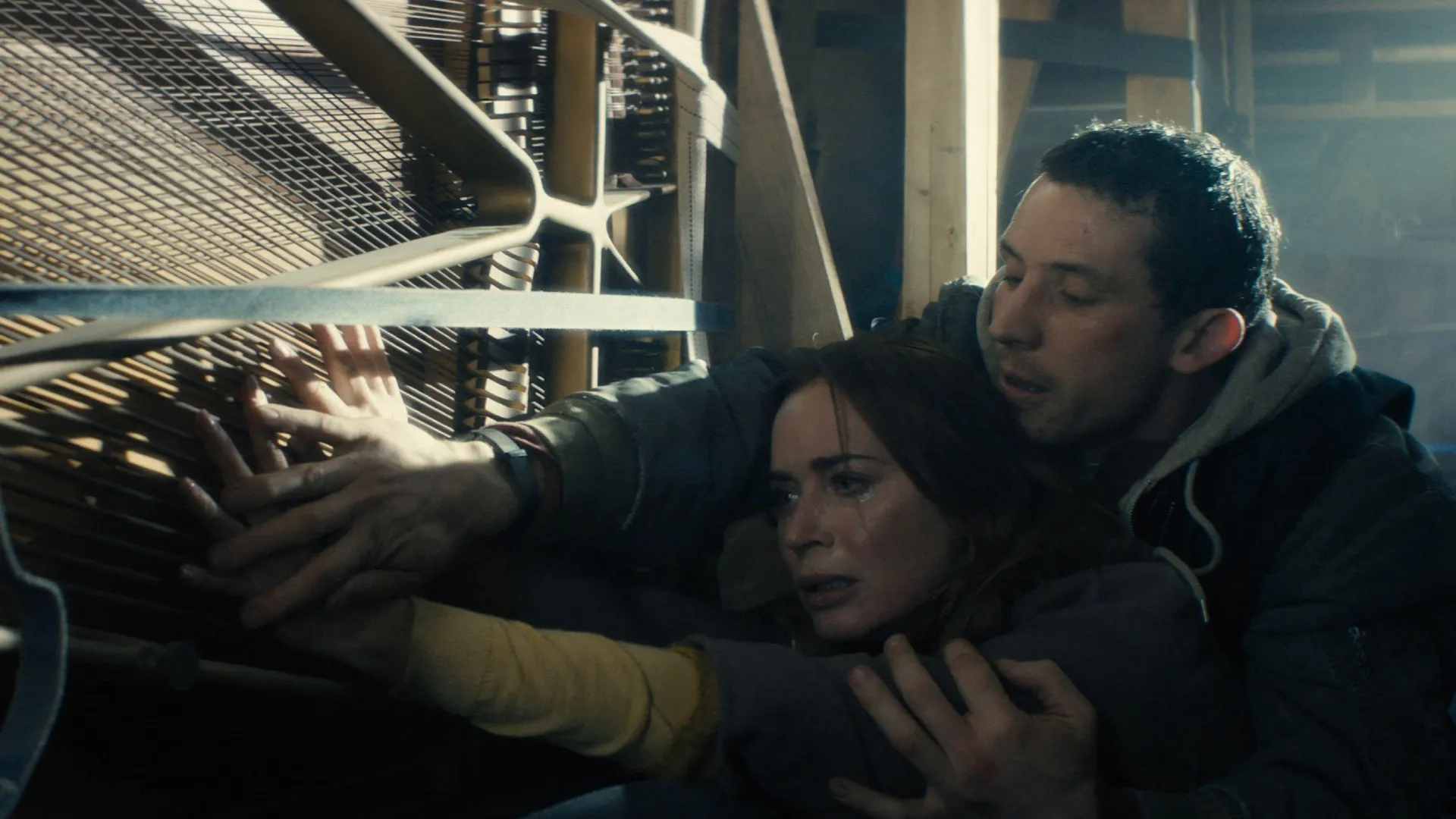
    Hollywood legend Steven Spielberg will turn 80 this December but seems in no hurry to slow down. “Disclosure Day” (pictured above) looks like his most ambitious science-fiction project since 2005’s “War of the Worlds.” It’s a “dense roller coaster ride blending chase film, love story and mystery, all wrapped in sci-fi wonder” that represents Spielberg’s “best film in 20 years,” said Germain Lussier of Gizmodo on X. (in theaters June 12)

    ‘Leviticus’
    Director Adrian Chiarella’s first feature is an unusually poignant horror story set in rural Australia, where teenagers Naim and Ryan begin a halting romance. Then a local preacher curses the boys with a demon that takes the shape of whoever they desire the most. The demon “vividly visualizes” the church’s project of “converting desire into shame,” said Marshall Shaffer at Slant. (in theaters June 19)

    ‘The Invite’
    In director Olivia Wilde’s first feature since the divisive “Don’t Worry Darling,” a pair’s moribund marriage is stress-tested when they invite their glamorous upstairs neighbors over for dinner. The characters’ “interplay yields an entertaining, at times crackling evening that tries for a bittersweet note,” said Nicolas Rapold at Sight and Sound. (in theaters June 26)

    Read more


    Poll watch

    A majority of Americans (65%) oppose ICE agents being stationed at U.S. stadiums during the World Cup, according to a Washington Post-University of Maryland survey of 1,030 adults. About 7 in 10 Republicans support the idea, while approximately 7 in 10 independents and over 9 in 10 Democrats oppose it.


    INSTANT OPINION

    Today’s best commentary

    ‘Turkey’s democratic crisis is becoming a security crisis’
    Ozgur Ozel at Newsweek
    For “years, discussions about Turkey’s democratic decline were largely confined to the language of human rights, constitutional law and domestic politics,” and “international observers viewed the erosion of democratic institutions as a troubling but primarily internal matter,” says Ozgur Ozel. Now, Turkey’s “democratic crisis has evolved into something much larger.” It’s “becoming a security crisis with implications far beyond our borders.” The “reason is simple: Turkey is too strategically important to become politically unstable.”

    ‘How did Spain’s unemployment rate converge with Finland’s?’
    Sarah O’Connor at the Financial Times
    A “decade ago, hardly anyone would have predicted that the unemployment rate in Spain, long plagued by chronically high joblessness, would converge with Finland’s,” says Sarah O’Connor. But that’s “what has happened this year, with unemployment in both countries now roughly 10%.” Is this a story of “Spanish policymakers’ success or Finnish policymakers’ failure? Well, to some extent both.” But it’s also a story about “how much in economic policymaking depends on factors beyond governments’ control.”

    ‘AI chatbots have a Romance language problem’
    Adam Aleksic at The Washington Post
    People “use more Latin terms when we want to speak formally or authoritatively; we will use Germanic words to sound crass or casual,” and AI chatbots have also “inherited this proclivity,” says Adam Aleksic. AI researchers have found “consistent favoritism for words coming from Latin and French over those with Germanic etymologies.” People could therefore be “hoodwinked by prestige language, convinced that an AI model is saying something profound simply because it’s using French words like ‘profound.’”


    WORD OF THE DAY

    macrophage

    A specialized white blood cell of the immune system. Many migratory animals use magnetic cues from inside Earth to orient themselves. But exactly how they do this has been a mystery until now. Macrophages that build up in the liver become sensitive to magnets after accumulating iron from red blood cells and act as an internal compass, according to a study published in Science.


    Evening Review was written and edited by Theara Coleman, Nadia Croes, David Faris, Scott Hocker, Anya Jaremko-Greenwold, Justin Klawans and Rafi Schwartz, with illustrations by Julia Wytrazek.

    Image credits, from top: Illustration by Julia Wytrazek / Getty Images; Jeff J Mitchell / Getty Images; Plexi Images / GHI / UCG / Universal Images Group / Getty Images; Collection Christophel / Universal Pictures / Amblin Entertainment / Alamy
     

    Recent editions

    • Morning Report

      Trump’s $1.8B ‘anti-weaponization’ fund falters

    • Evening Review

      Russia expanding the conflict

    • Morning Report

      Israel pushes further into Lebanon, seizes castle

    VIEW ALL
    TheWeek
    • About Us
    • Contact Future's experts
    • Terms and Conditions
    • Privacy Policy
    • Cookie Policy
    • Advertise With Us
    • FAQ
    Add as a preferred source on Google Add as a preferred source on Google

    The Week is part of Future US Inc, an international media group and leading digital publisher. Visit our corporate site.

    © Future US, Inc. Full 7th Floor, 130 West 42nd Street, New York, NY 10036.