The Week The Week
flag of US
US
flag of UK
UK
https://cdn.mos.cms.futurecdn.net/flexiimages/jacafc5zvs1692883516.jpg

SUBSCRIBE & SAVE

Less than $3 per week

Sign in
  • View Profile
  • Sign out
  • The Explainer
  • The Week Recommends
  • Newsletters
  • Cartoons
  • From the Magazine
  • The Week Junior
  • Student Offers
  • More
    • Politics
    • World News
    • Business
    • Health
    • Science
    • Food & Drink
    • Travel
    • Culture
    • History
    • Personal Finance
    • Puzzles
    • Photos
    • The Blend
    • All Categories
  • Newsletter sign up Newsletter
  • The Week Evening Review
    LGBTQ+ rights during Trump, in-home AI data centers, and the controversial Bill Pulte

     
    TODAY’S BIG QUESTION

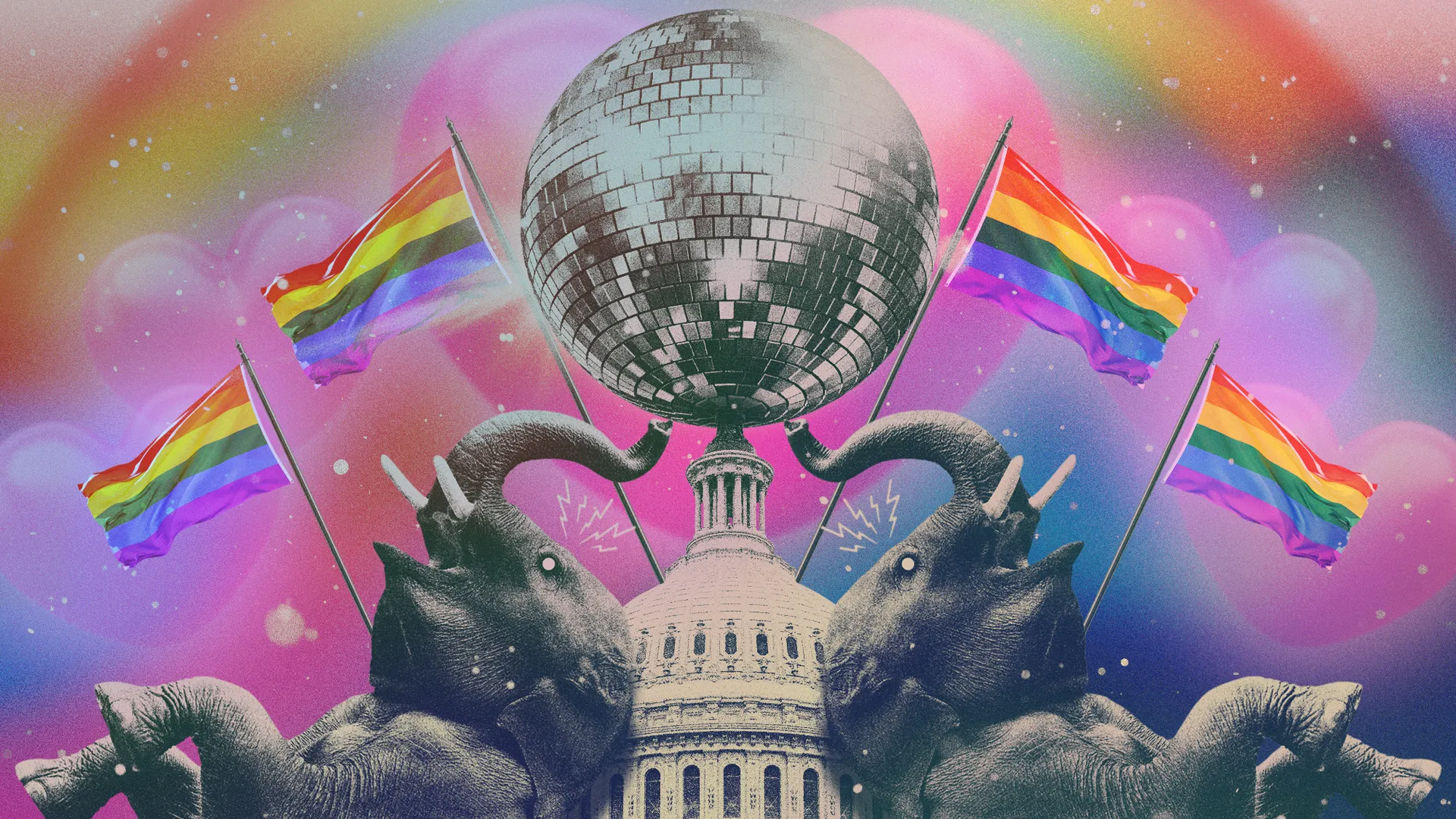
    How has the GOP’s LGBTQ+ stance shifted with Trump?

    As Pride Month begins in the U.S., numerous Republican governors have “bestowed alternative titles” for Pride Month that “both supporters and opponents view as counterprogramming,” said The Associated Press. But this is just one of several ways the current Republican Party’s stance on LGBTQ+ rights has revealed itself during President Donald Trump’s time in office.

    What did the commentators say?
    Indiana and Tennessee have “rebranded June as Nuclear Family Month to celebrate units made up of ‘one husband, one wife and any biological, adopted or fostered children,’” said The Associated Press. And Alabama has named June Strong Families Month, with a “proclamation” that says “fathers are the head of the household.” This “contest over the month of June reflects decadeslong culture war questions, exacerbated by partisan polarization,” said Deseret News. 

    The current White House has also attempted to “enact a nationwide ban on transgender girls participating in girls’ sports,” expel transgender servicemembers from the military, and prevent “transgender Americans from having their gender on their passport,” said Roll Call. While both of Trump’s presidencies have been defined by anti-LGTBQ+ stances, his second-term efforts are “more far-reaching and extreme than those he put in place during his first term,” said The 19th. 

    Civil rights groups pushed back against Trump’s anti-trans executive orders during his first term. But the courts are “not as friendly as they once were,” said Mike Zamore, the national director of policy and governmental affairs at the American Civil Liberties Union, to The 19th.

    What next?
    The GOP ramp-up against the LGBTQ+ movement is likely here to stay. “Every Democratic president since Bill Clinton in 1999 has signed a Pride proclamation each year, and no Republican president has,” said the AP. 

    Public views on the legalization of same-sex marriage are also changing, which is “largely because more Republicans oppose them” now than before Trump retook office, said the AP. Approval of “same-sex marriage, moral acceptance of gay and lesbian relations, and endorsement of gender changes are all down from peaks reached in the early 2020s,” according to a recent Gallup survey. 


    QUOTE OF THE DAY

    ‘In that part of the world, ceasefire is when you are shooting in a more moderate manner.’

    Trump to a reporter in the Oval Office, referring to Iran after being asked how he would define the word “ceasefire.” ​“It’s not bad,” he added. But a “ceasefire there is much different than a ceasefire in other parts of the world.”


    the explainer

    The next AI data center could be in your own home

    With many Americans opposing the construction of giant AI data centers in their neighborhoods, some tech companies are proposing an unconventional solution: attaching mini data centers directly to people’s houses. At least one major startup backed by Nvidia is looking into this prospect, though it will likely prove controversial.

    How would these mini data centers work?
    People typically associate data centers with big buildings churning out massive quantities of AI datasets. But the home version would be a “unit about the size of an air conditioner mounted in the side yard,” said Scientific American. It could perform “artificial intelligence tasks, drawing power from your home’s energy supply” and theoretically “earning you discounted electricity and internet in exchange.”

    Span, an electrical panel startup, recently began manufacturing these types of units in partnership with Nvidia. Its mini data centers would be “less of a financial burden on residents” and “have a potentially lower ecological footprint than warehouse data centers,” according to the company, said Fortune. Span’s units are also quiet, thereby “mitigating the problem of noise pollution that has drawn the ire of residents of areas with nearby warehouse data centers.”

    Industry experts hope the home models like those proposed by Span could help alleviate the financial and energy constraints created by large buildings. A typical AI data center “consumes as much electricity as 100,000 households,” according to the International Energy Agency. Instead of “building a single large data center that requires its own substation upgrade or on-site gas turbines,” the AI “spreads compute across thousands of homes that are already connected to the grid,” said Scientific American.

    What has the reaction been?
    Creating more energy-friendly data centers is a “cool idea on paper, but it’s almost completely unproven in real-world use,” said Fast Company. And even if the home data centers took off, the “main point of resistance” is the fact that these centers will result in “higher electric bills for everyone in the area,” even if they are at people’s homes. 

    “Distributed power generation has been around for years,” said The Arizona Republic. But it has never been “harnessed at the scale needed for feeding data centers.”


    Statistic of the day

    $80 million: The amount in stocks Alphabet plans to raise to fund its AI infrastructure investments, according to the Google parent company. The landmark share sale is “one of the largest equity raisings ever,” said The Financial Times, and marks a turning point for companies embarking on an “unprecedented spending spree to build the infrastructure powering AI.”


    in the spotlight

    Bill Pulte: Trump enforcer turned spy chief 

    President Donald Trump’s pick to lead the Office of the Director of National Intelligence (DNI) has no known national security experience. But the new interim intelligence director, Bill Pulte, does have a history of going after Trump’s rivals. And this combination is raising alarms in Congress.

    The 38-year-old Pulte is an “unusual selection” to be the interim intelligence chief following Tulsi Gabbard’s resignation, said The Hill. Before leading the Federal Housing Finance Agency under Trump, he owned a construction company and private equity firm and has “no high-level national security experience.” The nominee has “deep experience managing the most sensitive matters in America,” said Trump, per The Hill. 

    ‘Vocal attack dog’
    “Everybody hates Bill Pulte,” said The New Republic. That may not be entirely correct — Trump is clearly a fan — but Pulte has a knack for inspiring bipartisan revulsion even within Trump’s own cabinet. At a 2025 event involving White House officials, Treasury Secretary Scott Bessent told Pulte he was “going to kick his ass,” according to Bessent’s testimony in a Senate hearing this week, per CBS News.

    Pulte’s willingness to scrap with Trump’s enemies both online and through official channels has earned him a reputation as a “vocal attack dog,” said The Washington Times. But his dearth of national security credentials may be a challenge. The law that created DNI says the director “shall have extensive national security experience.”

    ‘Senate GOP rebellion’
    Trump’s announcement prompted pushback from Democrats. Pulte’s willingness to investigate the president’s enemies demonstrates he “can’t be entrusted to protect our national security,” said Senate Minority Leader Chuck Schumer (D-N.Y.), per Roll Call.

    The pick has also prompted a “Senate GOP rebellion,” said Axios. Pushback is coming from Thune, along with Sens. Mitch McConnell (R-Ky.), Thom Tillis (R-N.C.) and John Cornyn (R-Texas). So Pulte might not have the support to get Senate confirmation for the long term.

    Senate Democrats may tank efforts to “renew a powerful surveillance program” over the Pulte pick, said The Guardian. Reapproval of the Foreign Intelligence Surveillance Act has an even more difficult path forward, said Sen. Mark Warner (D-Va.) to NPR, as long as “someone with no intelligence background” and a “record of misusing private information” is in the running to lead DNI.


    Good day 💉

    … for disease control. Three vaccines are being developed to tackle the outbreak of the Bundibugyo strain of Ebola in Uganda and the Democratic Republic of Congo. Research by the International Aids Vaccine Initiative, the University of Oxford, and pharma company Moderna is being “urgently accelerated toward clinical trials,” according to the Coalition for Epidemic Preparedness Innovations.


    Bad day 👴🏽

    … for federal employment. Trump has signed an executive order reclassifying about 8,000 senior federal workers to make it “easier to fire them for any reason,” despite criticism that the move would “politicize the civil service,” said The Washington Post. The new classification mostly affects “senior employees who deal directly with policy decisions.”


    Picture of the day

    Head in the clouds

    Visitors lose themselves in “Cloud #07156,” an immersive “fog sculpture” by Japanese artist Fujiko Nakaya, in the circular Rotunda of the Bourse de Commerce in Paris. The installation uses high-pressure pumps and custom nozzles to release water into the air as a shifting mist.
    Stephane de Sakutin / AFP / Getty Images


    Puzzles

    Daily sudoku

    Challenge yourself with The Week’s daily sudoku, part of our puzzles section, which also includes guess the number

    Play here


    The Week recommends

    Tap into the health benefits of ‘grandma hobbies’

    With more people looking to unplug from the digital world, analog “grandma hobbies” are making a comeback. Crafting activities like crocheting, baking, painting and knitting are especially popular among young people looking for a way to slow down. And they have been shown to help with mental health issues such as depression and anxiety. Here’s how to get your granny on.

    Let go of perfectionism
    Grandma hobbies are therapeutic because they allow us to make mistakes and focus on the joy of creating. Amid the pressure to “constantly hustle and be productive,” they offer a “refreshing pressure-free way to achieve fulfillment and well-being,” said Forbes. And they remind you that “time spent doing something slow, quiet and meaningful is not wasted; rather, it’s restorative.”

    Embrace taking a break from the digital world
    It’s hard to “doomscroll while embroidering,” said Verywell Mind. Crafts offer an “immersive experience that pulls us out of the (often addictive) digital world.” And picking up a “crochet hook, a paint brush or a bread recipe reconnects you with simple, sensory pleasures,” said Emily Sharp, an art therapist, to Verywell Mind. 

    Don’t forget community
    You can obviously do these hobbies alone, but there’s a lot to be gained from doing them with other like-minded people. If possible, “learn from someone who already does it,” said Shelly Dar, a mental health and well-being specialist, to The Good Trade. These hobbies are “always meant to be passed hand to hand, and that exchange is part of the healing.”

    Read more


    WORD OF THE DAY

    kirpan

    A ceremonial sword or dagger worn by initiated Sikhs. The U.K.’s Sikh community has rejected calls to be stripped of the right to carry a kirpan as outrage grows over a December stabbing death in Southampton. A Sikh man named Vickrum Singh Digwa, 23, killed Henry Nowak, 18, and was given a life sentence on Tuesday.


    Poll watch

    One-third of American video game industry workers have been laid off in the last two years, according to a survey in the Game Developers Conference’s 2026 State of the Game Industry Report. Of the 2,300 professionals polled, two-thirds at major big-budget studios had layoffs compared to one-third of people working at small or indie studios.


    INSTANT OPINION

    Today’s best commentary

    ‘Texas is America Inc.’s new center of gravity’
    The Economist
    Texas is “establishing itself as America Inc.’s new center of gravity,” as “no state receives more business investment or is adding more people to its population,” says The Economist. The state’s “appeal to yuppies is also growing,” and it seems there’s “no part of America with which Texas is not competing.” Texas’ cultural “ascendancy” is “making it easier for firms to convince workers to move there,” though “cultivating homegrown talent is a big part of Texas’ economic plan.”

    ‘What a week in the hospital showed me about our broken healthcare system’
    Gregg Gonsalves at The Nation
    A successful surgery happened “thanks to the miracles of modern medicine,” but it was “no thanks to modern American healthcare,” which is “fundamentally broken,” says Gregg Gonsalves. The system is “sclerotic, and trying to get appointments, even for things I have been told are urgent, is a challenge.” This is a “cry for help that goes unheard and unaddressed year after year.” The “rot deepens in the day-to-day foundation of American medicine, at the level of the physician-patient interface.”

    ‘Why gambling won’t ruin sports’
    David Bockino at The Boston Globe
    Even the “most vocal critics of widespread legalization concede that gambling has always been part of American sports,” says David Bockino. Gambling wasn’t an “inconvenient intrusion upon the nascent American sports industry but rather an essential catalyst — perhaps the essential catalyst — for nearly every major American sport.” This “revelation also suggests that our current sports betting mania isn’t the result of a national attitudinal shift.” People have “always wanted to bet on stuff, especially young people.”


    Evening Review was written and edited by Theara Coleman, Nadia Croes, Scott Hocker, Anya Jaremko-Greenwold, Justin Klawans and Joel Mathis, with illustrations by Stephen Kelly and Julia Wytrazek.

    Image credits, from top: Illustration by Stephen P. Kelly / Shutterstock / Getty Images; Span; Bonnie Cash / UPI / Bloomberg / Getty Images; Illustration by Julia Wytrazek / Getty Images
     

    Recent editions

    • Morning Report

      House backs Ukraine over GOP objections

    • Evening Review

      China-EU trade war looms

    • Morning Report

      House rebuffs Trump on Iran

    VIEW ALL
    TheWeek
    • About Us
    • Contact Future's experts
    • Terms and Conditions
    • Privacy Policy
    • Cookie Policy
    • Advertise With Us
    • FAQ
    Add as a preferred source on Google Add as a preferred source on Google

    The Week is part of Future US Inc, an international media group and leading digital publisher. Visit our corporate site.

    © Future US, Inc. Full 7th Floor, 130 West 42nd Street, New York, NY 10036.