The Week The Week
flag of US
US
flag of UK
UK
https://cdn.mos.cms.futurecdn.net/flexiimages/jacafc5zvs1692883516.jpg

SUBSCRIBE & SAVE

Less than $3 per week

Sign in
  • View Profile
  • Sign out
  • The Explainer
  • The Week Recommends
  • Newsletters
  • Cartoons
  • From the Magazine
  • The Week Junior
  • Student Offers
  • More
    • Politics
    • World News
    • Business
    • Health
    • Science
    • Food & Drink
    • Travel
    • Culture
    • History
    • Personal Finance
    • Puzzles
    • Photos
    • The Blend
    • All Categories
  • Newsletter sign up Newsletter
  • The Week Evening Review
    The post-Iran economy, an ocean monitoring system under siege, and the summer of whimsy

     
    talking points

    What will the post-Iran economy look like?

    The war against Iran upended the global economy and sent prices soaring. What happens now that a fragile peace has arrived?

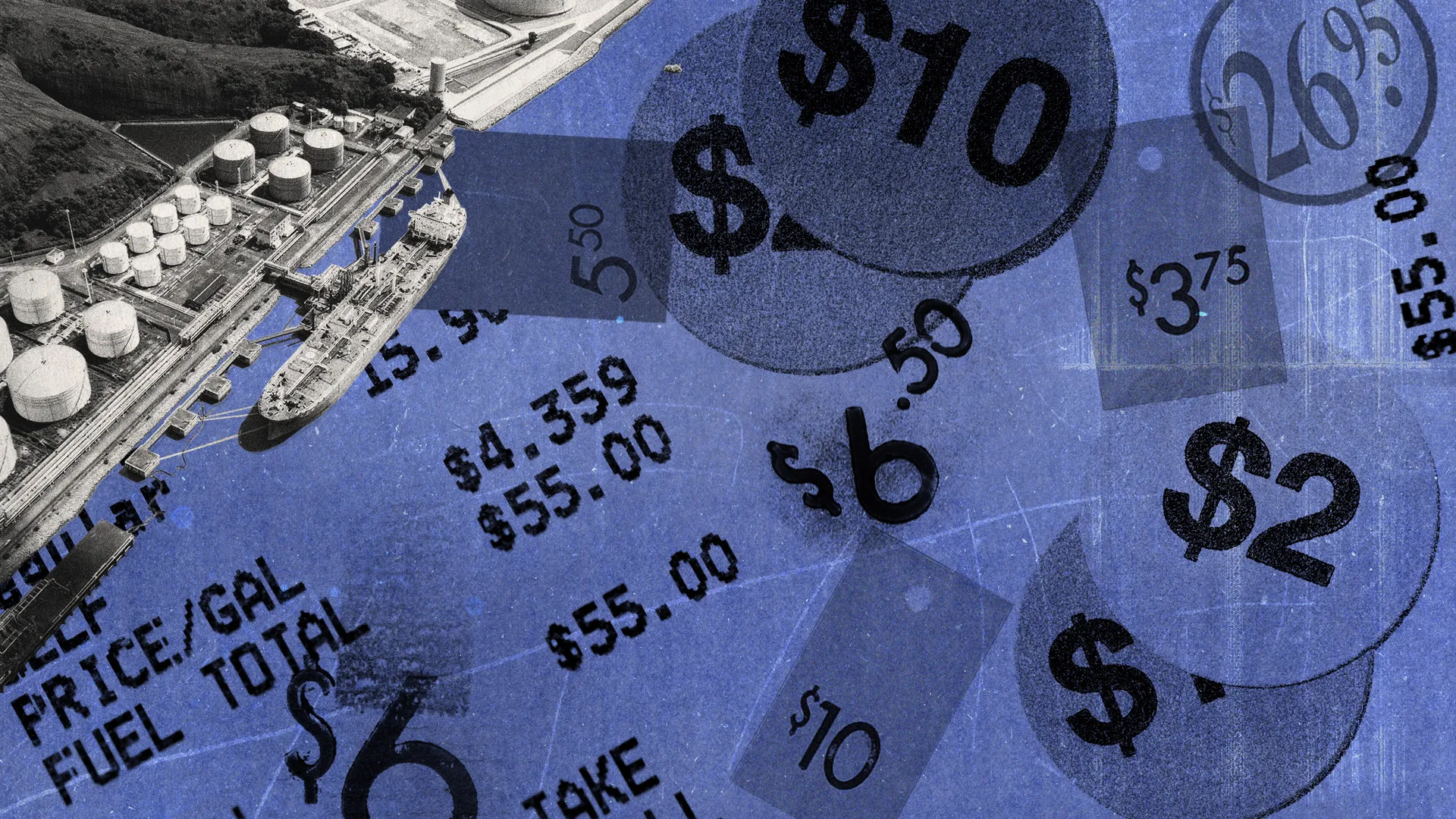
    Higher prices will “likely outlast the Iran war,” said The Associated Press. Fuel and food costs will come down slowly, airline tickets will stay pricey, and shipping costs will remain elevated as supply chain kinks are repaired after the Strait of Hormuz is reopened.

    Rebuilding ‘could take years’
    The war “permanently altered” the global economy, said Patricia Cohen at The New York Times. Many countries discovered their “profound vulnerability” to shocks from relying on imported oil for energy supply, sparking a long-term “transition to renewables like solar and wind, as well as nuclear power.” And China is “poised to benefit most” from that shift. 

    More broadly, the world economy has been “kicked onto a path of slower growth and higher prices,” said Cohen. Countries and businesses will not “simply pick up where they left off before the U.S. and Israel began bombing Iran.”

    President Donald Trump long promised that oil prices would “drop like a rock” after the war ended. But that will be a “difficult promise for Trump to keep,” as the oil industry is experiencing “extraordinary practical challenges” to restoring disrupted supply chains, said David Goldman at CNN. Tankers transiting the Strait of Hormuz face a “bottleneck” after Iran mined the passageway. Gulf States will also need time to restart wells shut off during the war because there was no way to export the oil. And rebuilding oil facilities damaged by attacks “could take years.”

    This marks a “new era of U.S. inequality,” said Matt Peterson at CNBC. The conflict heightened an “already historic disconnect” between Americans who “share in the affluence” generated by AI-driven stock market gains and “those who can’t.”

    Volatility ‘already baked in’
    It “may be too late” for Republicans to benefit from lower gas prices they hope will result from the new peace, said Politico. GOP officials fear that “voter perceptions of a sour economy are already baked in” to the midterm elections outlook, as price volatility is “expected to last beyond the summer months” and into campaign season.


    QUOTE OF THE DAY

    ‘He was in a hotel, and I met him. And we fell in love, deeply in love. And he didn’t even want to see Hillary.’

    Trump, while sitting with Egyptian President Abdel Fattah el-Sisi at the G7 summit in France, on their first meeting when he ran against Hillary Clinton in 2016. “We had great chemistry, and I stayed twice as long as I was supposed to,” he added.


    today’s big question

    Why is Trump’s threat to ocean monitoring so monumental?

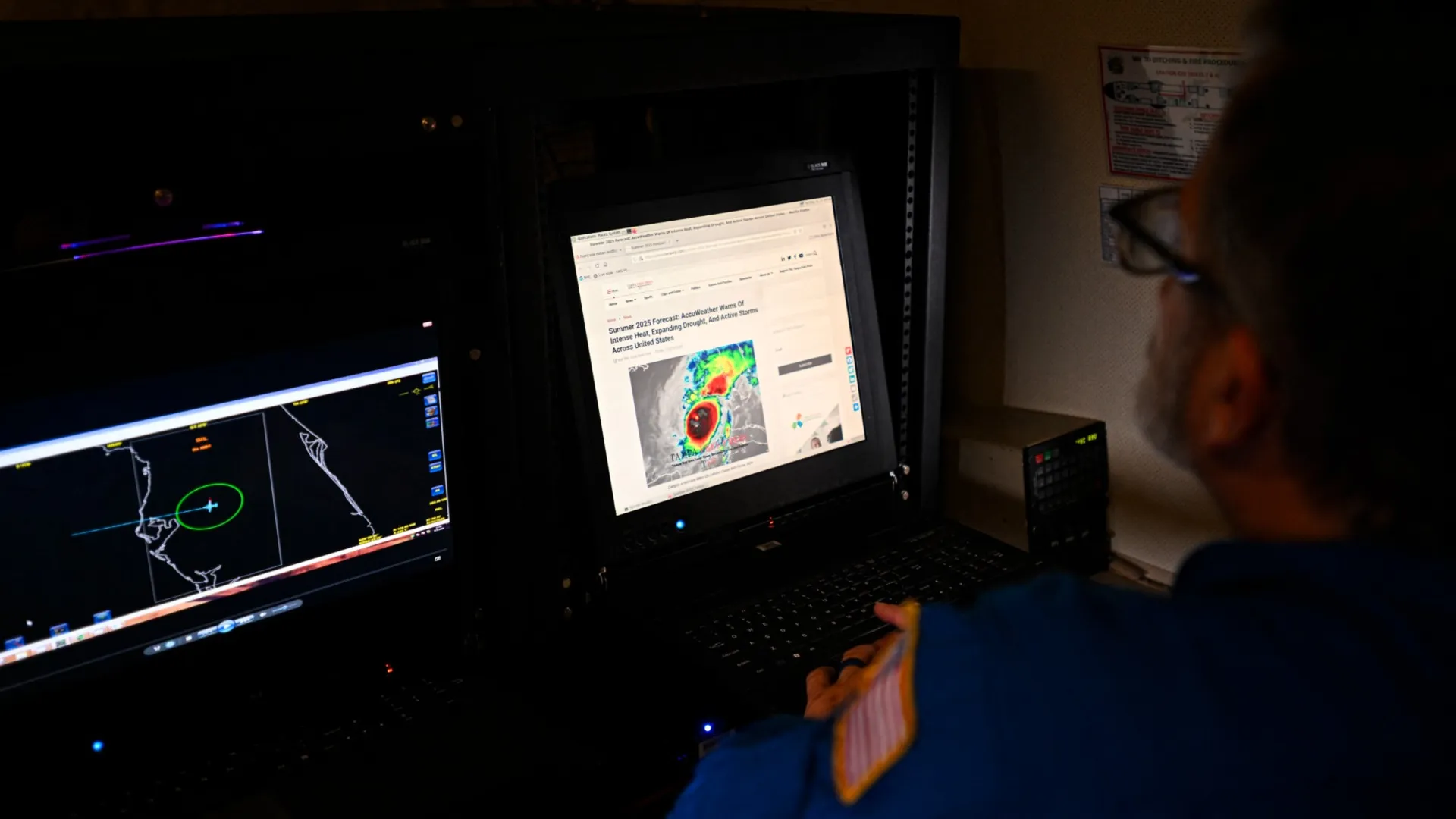
    On Monday, a bipartisan group of U.S. senators delivered a letter to the National Science Foundation urging Acting Director Brian Stone to “reverse course” on a Trump administration plan to dismantle the “vital” Ocean Observatories Initiative. Composed of “over 900 unique deep-sea buoys and other instruments,” the OOI “provides insights into changing ecosystem conditions and extreme weather events,” said the group. The administration’s plan threatens the “safety of our coastal communities” and undermines the U.S.’s “ability to monitor coastal environments, marine currents and extreme weather events.”

    What did the commentators say?
    The National Science Foundation’s order to remove OOI equipment from coastal waters off Alaska, North Carolina and Washington came with “no warning and no scientific review” last month, said The Associated Press. The program had been “slated to run another 15 to 20 years.” 

    Pulling back now “reflects the further lack of understanding that the current administration has of scientific value and scientific merit,” said Craig McLean, the acting chief scientist at the National Oceanic and Atmospheric Administration during the first Trump term, to The New York Times. Dismantling the OOI pushes the U.S. “back yet again into a rear seat in global scientific leadership.” OOI data on “waves, currents, salinity, the soundscape for marine mammals, carbon dioxide levels, alkalinity and more” has been a “godsend to public researchers, hazard planners and private companies alike,” said The Bulwark. 

    The plan to shutter the OOI was originally “laid out by conservative strategist the Heritage Foundation,” said Oceanographic Magazine. The group’s Project 2025 authors “explicitly targeted the network” for its contributions to climate change research. This “marks another step” in Trump’s “rollback of science and climate initiatives,” said The Guardian.

    What next?
    The National Science Foundation should respect “congressional intent and legal direction,” which is “clearly to maintain the operation of this cost-effective research system,” said the bipartisan Senate group in its letter. The foundation must “cease this expensive, destructive, and, crucially, illegal action at once,” said a separate group of Democrats in a letter signed by members of the House Committee on Science, Space, and Technology and the House Committee on Natural Resources.


    Statistic of the day

    900 lbs.: The weight of the “America250” time capsule that will be buried at Philadelphia’s Independence National Historical Park on the Fourth of July to mark the semiquincentennial. The stainless-steel cylinder will be filled with items from each of the 50 states, including letters, records, a Coca-Cola bottle and an iPhone 17 Pro Max, and will be opened in 2276. 


    in the spotlight

    Why everyone is embracing whimsy this summer

    Two years ago, it was brat summer. This summer, everyone is wrapping themselves in a new trend: whimsy. From dopamine-spiking decor to more bright kid-like clothes, adults are romanticizing the smallest aspects of their lives and fully running with a lighthearted outlook.

    ‘Childlike joy’
    The word “whimsy” and the vibe associated with it are “having a moment,” thanks to Gen Z and millennials who have “recast the word to characterize a lifestyle that blends playfulness, spontaneity and being present,” said The New York Times. Searches on Etsy for “whimsical jewelry,” “whimsical decor” and “whimsy-related items” were each up by at least 50% from last year.

    Shoppers use whimsy as a “form of everyday escapism, seeking out pieces that feel personal, playful and a little unexpected to make everyday life more extraordinary,” said Dayna Isom Johnson, Etsy’s trend expert, to the Times. The whimsy craze has an “emphasis on offline activities” that parallels a “movement by young people who are leaving behind smartphones and screens,”said the outlet.

    Whimsy is “easier to recognize than to translate," said NSS magazine. For those who relish it, being whimsical means “reconnecting with what as children seemed natural: to be amazed, to invent, to celebrate even the smallest things.”

    Chasing authenticity
    Whimsy devotees see it as a “response to compounding anxieties over a series of stressors, including a challenging economy, multiple wars and a volatile presidency,” said the Times. No one can control “what our leaders are doing,” but you can control “what kind of mug you are going to choose, what cute outfit you are going to wear, and what beautiful thing you can do in your morning,” said podcaster Liz Plank to the Times.

    With how swiftly the trend cycle swerves, the whimsical moment may not last. Still, when whimsy is “understood in its purest, most spontaneous and curious sense,” it can be read as an “attempt to withdraw from the pressure of constant consumption, choosing to live with more freedom,” said NSS magazine. A whimsical life can be a “small form of everyday resistance.”


    Good day 🤳

    … for taking selfies. Harvard University medical researchers are developing an algorithmic tool dubbed FaceAge that uses digital photographs of patients to improve screening and treatment outcomes for cancer, said The Harvard Gazette. The team has conducted two studies exploring whether “one’s biological age can vary from one’s chronological age” and whether that difference can be “clinically meaningful.” 


    Bad day 🇨🇦

    … for seeking citizenship. Canada has suspended recently issued citizenship for those who became eligible under a law that includes people around the world of Canadian descent. They had to return the citizenship certificates pending a review of “whether some applicants provided enough documentation to prove their family ties,” said the CBC.


    Picture of the day

    Against the draft

    Ultra-Orthodox Jewish men protest against military recruitment and call for the release of detained draft resisters outside a military prison near Kfar Yona, Israel. Military service is compulsory in Israel, though ultra-Orthodox citizens are awarded exemptions that are now under threat as the military faces shortages.
    Ariel Schalit / AP Photo


    Puzzles

    Daily sudoku

    Challenge yourself with The Week’s daily sudoku, part of our puzzles section, which also includes guess the number

    Play here


    The Week recommends

    Raise your hands for these summer concerts

    The warm weather is finally here. And with summer’s arrival comes a slew of tours to enjoy as the season’s live performances get underway.

    Ariana Grande
    The pop superstar has embarked on her “Eternal Sunshine” tour. It may be the last chance to see Grande on a concert stage for a while. “I do know that I’m very excited to do this small tour, but I think it might not happen again for a long, long, long, long time,” she said last year on Amy Poehler’s Good Hang podcast. (through September)

    BTS
    There’s no arguing that BTS (pictured above) is one of the world’s biggest bands, and the K-pop group’s loyal fans can now catch the group on the road during its “Ariang” world tour. The massive events, in support of BTS’ 2026 album of the same name, span seven continents over nearly an entire year and feature a “360-degree, in-the-round stage design — a first for a K-pop stadium tour,” said concert promoter Live Nation. (through March 2027)

    De La Soul
    Hip-hop enthusiasts have a chance to see these legends live on an ongoing concert tour, with shows on several continents. De La Soul has undergone a metamorphosis in recent years as in “many ways one of the most influential groups in hip-hop is new. The duties have been reassessed,” and the “focus has shifted,” said NPR. (through October)

    Read more


    Poll watch

    Among potential Democratic primary voters, 47% would like to see the Democratic Party move toward the “center,” according to a New York Times / Sienna survey. Of the 1,507 adults polled, 28% want the party to move to the left, and 19% want it to stay put. Nearly half view socialism favorably, and 22% view it unfavorably. 


    INSTANT OPINION

    Today’s best commentary

    ‘Tech’s private subsea cables are a threat to everyone else’
    Elisabeth Braw at the Financial Times
    For “decades, the world’s undersea cables have been owned by various companies,” but now U.S. “tech giants are installing their own cables, primarily for their own data traffic,” says Elisabeth Braw. This “risks creating a two-tier system on the seabed and dangerous dependencies” on the U.S. Traditional cable owners will “continue to transport general traffic, while hyperscalers will transport their own.” It’s like “asking locals to look after a road open to all while a few rich citizens operate their own.”

    ‘What the proposed merger of Paramount and Warner Bros. means for Atlanta’
    Jennifer Porst and Kate Fortmueller at The Atlanta Journal-Constitution
    Paramount’s “proposed acquisition of Warner Bros. Discovery threatens to reverse Atlanta’s fortunes and prominent position in the media and cultural industry,” say Jennifer Porst and Kate Fortmueller. Beyond the “loss of corporate media jobs and the radical alteration of the physical spaces” in Georgia, consolidation “threatens the vibrant production culture and health of soundstages” that Atlanta has been “developing over the past 20 years.” It’s “time to pay more attention to monopolies, protect workers and challenge anti-consumer practices.”

    ‘We are all looksmaxxers’
    Renée Graham at The Boston Globe
    “Famous or not, we are all, in our own ways, looksmaxxers,” says Renée Graham. The term “originated in the misogynistic bowels of social media, where young men believe that achieving their idea of physical perfection will attract more women.” But “even those who would never consider whacking their jawline or cheekbones with a metal tool still take what measures they deem necessary to look their best,” such as “veneers for their teeth, hair transplants and weaves, and increasingly available weight-loss drugs.”


    WORD OF THE DAY

    punktlichkeit

    German for “punctuality,” which has been eluding Germany’s state rail company Deutsche Bahn. Despite German railways’ reputation for Teutonic efficiency, only 60% of the country’s long-distance trains arrived on time last year. Chancellor Friedrich Merz’s government has committed $115 billion to a complete overhaul of the aging rail infrastructure.


    Evening Review was written and edited by Theara Coleman, Nadia Croes, Scott Hocker, Anya Jaremko-Greenwold, Justin Klawans, Joel Mathis and Rafi Schwartz, with illustrations by Julia Wytrazek.

    Image credits, from top: Illustration by Julia Wytrazek / Getty Images; Miguel J. Rodriguez Carrillo / AFP / Getty Images; Tara Moore / Getty Images; Kim Min-Hee / Pool / Getty Images
     

    Recent editions

    • Morning Report

      Georgia GOP deals Trump a win, loss

    • Evening Review

      Are iPhones to blame for the baby decline?

    • Morning Report

      ‘Secret’ Iran deal faces scrutiny

    VIEW ALL
    TheWeek
    • About Us
    • Contact Future's experts
    • Terms and Conditions
    • Privacy Policy
    • Cookie Policy
    • Advertise With Us
    • FAQ
    Add as a preferred source on Google Add as a preferred source on Google

    The Week is part of Future US Inc, an international media group and leading digital publisher. Visit our corporate site.

    © Future US, Inc. Full 7th Floor, 130 West 42nd Street, New York, NY 10036.