The Week The Week
flag of US
US
flag of UK
UK
https://cdn.mos.cms.futurecdn.net/flexiimages/jacafc5zvs1692883516.jpg

SUBSCRIBE & SAVE

Less than $3 per week

Sign in
  • View Profile
  • Sign out
  • The Explainer
  • The Week Recommends
  • Newsletters
  • Cartoons
  • From the Magazine
  • The Week Junior
  • More
    • Politics
    • World News
    • Business
    • Health
    • Science
    • Food & Drink
    • Travel
    • Culture
    • History
    • Personal Finance
    • Puzzles
    • Photos
    • The Blend
    • All Categories
  • Newsletter sign up Newsletter
  • The Week Evening Review
    Existential AI fears, the Iran not-war, and the threat of The Com

     
    talking points

    Will AI end humanity? 

    Artificial intelligence developers are expressing concern that AI could destroy humanity in the next few years, and industry leaders are calling for a slowdown in its development. Congress, however, seems uncertain what role it should play in reining in the onrushing technology.

    ‘It could kill us all’
    AI researchers believe now is “crunch time for humanity,” said Jacob Coxon to Wired. (Coxon recently resigned from a short stint at Anthropic, following several years at OpenAI.) Workers at the companies building artificial intelligence “earnestly believe that it could kill us all by the end of the decade,” he said on X. Such warnings present AI companies with a “dilemma,” said Axios: “Slow down and risk falling behind, or press ahead and risk losing control.”

    Coxon’s alarm is “part of a wave of warnings about unchecked AI systems,” said Ian Prasad Philbrick at Slate. The trend raises the question of why companies like Anthropic and OpenAI do not slow their work on increasingly capable models. Some developers have “talked themselves into continuing,” believing that their less-conscientious industry colleagues will otherwise have the playing field to themselves. 

    The warnings “merit a certain skepticism,” said The Washington Post in an editorial. (The Post is owned by Jeff Bezos, who co-founded the Prometheus AI lab in 2025.) The people working closely with artificial intelligence do not have “special knowledge of what machines that do not yet exist will someday become.” And they can’t say how “society will adapt to the challenge.” 

    ‘Monumental human stupidity’
    Coxon’s concerns are “unpersuasive,” said Thomas Claburn at The Register. A “Skynet scenario” would “require monumental human stupidity” in the face of superintelligence. But new laws should be enacted to “put executives in jail when their models do harm.”

    Congress “won’t lead the charge” on regulating AI, said Axios. Guardrails are needed, but “we have got to make sure that we don’t lose our edge in the global competition on this with China,” said House Speaker Mike Johnson on NBC’s “Meet the Press.” 

    President Donald Trump is also hesitant to act. Artificial intelligence is “going to be more good than bad,” he said to reporters, per The Associated Press.


    QUOTE OF THE DAY

    ‘You’ve got a con artist who has put in the White House another con artist, and they just keep running bigger and bigger cons.’

    “Musk” documentary filmmaker Alex Gibney, in a keynote address at the Toronto International Film Festival, on Elon Musk and Trump’s unchecked exploitation of financial markets because there’s “no Department of Justice or FBI to tell them to do otherwise.” 


    IN THE SPOTLIGHT

    Republicans recast Iran to fit a shifting agenda

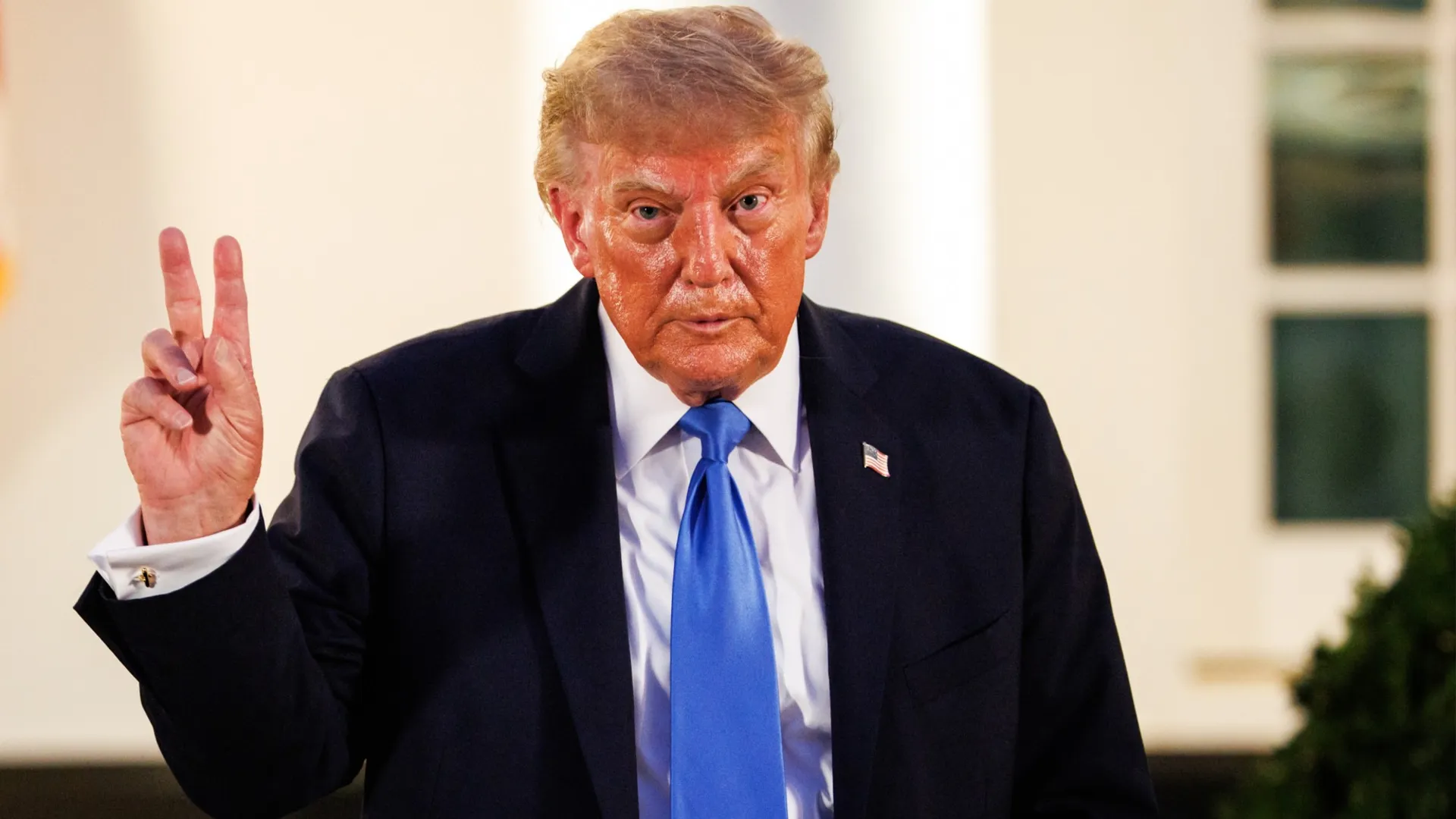
    It has been more than six months since U.S. missiles first struck Iranian targets in what has become the defining foreign policy crisis of the second Trump administration. Less defining is the language the White House has used to describe what’s taking place between the U.S. and the Islamic Republic of Iran. While President Trump often refers to the violence in bombastic terms, other members of his administration have avoided calling the ongoing missile firings part of a larger “war.” 

    ‘Small potatoes for us’
    Vice President JD Vance argued this month that the “current hostilities shouldn’t even be called a war,” since “‘active combat operations’ ended months ago,” said CNN. His claim came “despite three consecutive days” in which the U.S. and Iran exchanged fire. “I can understand what he’s saying,” said Trump during an Oval Office press scrum. “I call it a military conflict because it’s small potatoes for us.”

    Americans have been “getting conflicting messages from the Trump administration and congressional leaders” about what, exactly, to call the violence, said FactCheck. Given that Congress hasn’t officially declared it as such, “if political leaders were to say that this is a war, they would also be acknowledging that the administration’s actions were unconstitutional,” said Stephanie Savell, the director of Brown University’s Costs of War project, to the outlet. 

    White House officials have “downplayed the scale of the conflict” in the “apparent hope that it will recede from the headlines,” said The Atlantic. But hostilities have “already lasted far longer than the president’s initial predictions of victory within a few weeks.”

    ‘Just playing to his base’
    Trump has “contradicted himself and his own Cabinet” in his assessments of the conflict, said the Los Angeles Times. The evolving language is part of an effort to “control the narrative.” 

    The president’s more bellicose rhetoric, like when he repeatedly refers to a “war” with Iran, is being used to “save face for the quagmire he has put himself and Republicans in” ahead of the midterms, said Khaled Elgindy, a senior research fellow at the Quincy Institute for Responsible Statecraft, to The New York Times. The wartime language is “just playing to his base, whether it’s true or not.”


    Statistic of the day

    0.6 miles: The length of a new road bridge built over the Tumen River connecting Russia and North Korea across the narrow stretch of border between the two countries. The bridge is “creating a new physical link between the two countries as they expand cooperation,” said The Associated Press.


    THE EXPLAINER

    The Com and a rise in nihilistic extremism

    Hundreds of arrests across dozens of countries have been linked to The Com, an online community of predominantly young men who carry out acts termed nihilistic violent extremism, or NVE. It’s violence “for the sake of violence,” said EU counterterrorism coordinator Bartjan Wegter to The Associated Press. There’s “not a direct link with ideology.” 

    What’s ‘nihilistic violent extremism’?
    These violent acts lack an “ideological motivation” and are “driven by a misanthropic worldview,” said the Institute for Strategic Dialogue, a think tank dedicated to combating extremism. Communities such as The Com (short for The Community) form a “decentralized web of chats, forums and channels characterized by support for violence” but with “no specific political, ideological or religious goal.”

    Only some factions have adopted extreme right-wing beliefs. The tactics and resultant harms of nihilistic extremists “often mirror those of ideologically motivated extremist networks,” with “some overlap” of “digital ecosystems, activities and cultural references,” said the institute.

    This is violence as a “means of asserting oneself,” said Wegter to the AP. It’s a “means of gaining status in those online communities.”

    How do these networks recruit and operate?
    The Com encourages and engages in cybercrime, extortion and violence. Largely made up of young, male native-English-language speakers, members range from “11-year-olds trying to hack Minecraft to people in their mid-20s targeting vulnerable kids online,” said Aiden Sinnott, a principal threat researcher at cybersecurity firm Sophos, to The Guardian. Communicating via encrypted platforms such as Discord and Telegram, the networks serve as a pipeline where “older members of The Com contact kids and try to get them to commit increasingly sophisticated acts of criminality.”

    Activities are split into three subsets. Hacker Com includes groups such as Scattered Spider, linked to some massive data breaches of retailers last year. In Real Life Com phones in fake bomb threats to schools, offers violence-as-a-service contracts and is associated with a spate of random stabbings over the last year. And Extortion Com coerces young people into sharing or live-streaming acts of self-harm, sexually explicit behavior or even suicide.

    What’s being done?
    Researchers at West Point’s Combating Terrorism Center have identified at least 295 arrests across 33 countries linked to The Com. And over the summer, investigators from nine countries participated in “Referral Action Days” to disrupt the online ecosystem, limit propaganda dissemination and find new investigative leads, including identifying about 4,340 web addresses linked to The Com.


    Good day 🎤

    … for fulfilling dreams. Celine Dion has made her way back to the stage after years “battling a rare neurological disorder,” with a “sold-out concert in Paris,” said CBS News. The Canadian singer opened her first full concert in six years with her French-language ballad “On Ne Change Pas” (“One Doesn’t Change”), singing to a crowd of “30,000 enthralled fans.”


    Bad day 📉

    … for staying in the black. Officials at the John F. Kennedy Center for the Performing Arts claim that adding the president’s name to its facade for fundraising efforts may be the only way to avoid imminent “fiscal collapse,” according to documents obtained by The Washington Post. The center could fail to cover payroll or maintenance “within a matter of weeks,” said the documents.


    Picture of the day

    Massive turnout

    Supporters of the Kenyan opposition Linda Mwananchi (Protect Citizens) coalition gather at a rally in Nairobi. Edwin Sifuna, who’s challenging President William Ruto in the 2027 election, is “building support by tapping into public anger over corruption and political violence,” said AFP.

    Luis Tato / AFP / Getty Images


    Puzzles

    Daily sudoku

    Challenge yourself with The Week’s daily sudoku, part of our puzzles section, which also includes guess the number

    Play here


    The Week recommends

    The best psychological thrillers of all time

    The best movies in this genre use their characters’ paranoia and uncertainty to create similar feelings of dread and doubt in their viewers. These classics skillfully keep audiences guessing while depicting different kinds of waking nightmares, making the protagonists’ traumas our own for a few entertaining hours.

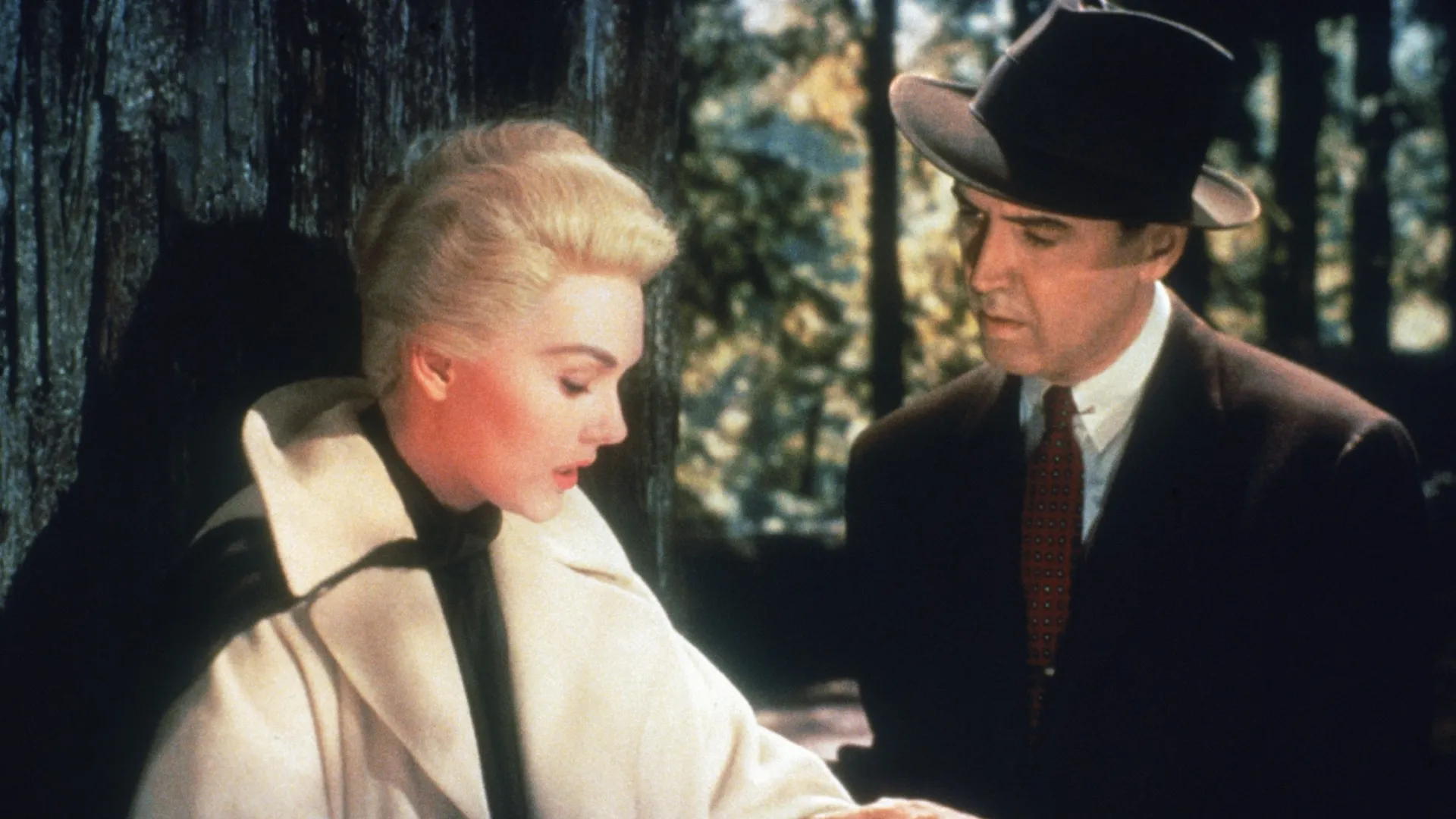
    ‘Vertigo’ (1958)
    Possibly the best-known and beloved of director Alfred Hitchcock’s library of psychological thrillers, “Vertigo” (pictured above) is both a literal rendering of the main character’s syndrome and a description of what you feel as you watch the film. A “strange, drifty, hallucinatory romance,” it keeps “bringing us back to the same places, turning us in relentlessly on ourselves,” said Terrence Rafferty at The New York Times. (Prime Video)

    ‘Mulholland Drive’ (2001)
    Director David Lynch’s audacious, trippy landmark is like two movies in one, with the plots looping and falling in on themselves. The film asks viewers to “interrogate ourselves, again and again, in search of some kind of absolution,” said Suzanne Enzerink at the Los Angeles Review of Books. (Prime Video)

    ‘Watcher’ (2022)
    In this slow burn, a young woman struggles to figure out what to do with herself when she moves with her husband to Bucharest, where there’s a serial killer on the loose. The movie makes viewers “just as anxious as Julia, staring into the faces of every man that walks by,” and stands as “one of the best thrillers of this style to come out in decades,” said Stephen Rosenberg at Horror Geek Life. (AMC+)

    Read more


    Poll watch

    Most Black Americans (60%) don’t trust that the food they buy in grocery stores is safe, according to a survey of 1,249 Black U.S. adults. Rising grocery prices are “pushing families toward cheaper, less nutritious options,” said New York Amsterdam News. About 3 out of 4 believe prices for healthy foods need to be lowered. 


    INSTANT OPINION

    Today’s best commentary

    ‘Vance’s childcare plan pits parents against each other’
    Mary Ellen Klas at Bloomberg
    “Should the federal government give subsidies to parents who stay home to care for their young kids? Absolutely,” says Mary Ellen Klas. “Should it also subsidize childcare for working parents? For sure. This shouldn’t be an either-or question,” but the Trump administration’s “new childcare subsidy plan” would “force working parents” to “compete with married at-home parents for the same pool of funds.” To “meet parents’ affordability needs,” the government must “recognize that families have diverse childcare needs.”

    ‘The US right still paints Muslims as the enemy. But they are fighting for a brighter future for Americans.’
    Nesrine Malik at The Guardian
    “Members of a diaspora of Muslim background are breaking through and accumulating, as New York magazine says, ‘clout,’” says Nesrine Malik. New York City Mayor Zohran Mamdani is “both the expression of that cohort and the catalyst of its recognition as an emerging force. They care deeply for their local communities but also for those in Gaza and beyond.” At the same time, the “Islamophobia that began in 2001 has only further burrowed into the fabric of American society.”

    ‘Elon Musk is reusing Trump’s anti-trans strategy. It’s unlikely to work.’
    Paul Waldman at MS NOW
    Musk is “spending at least $100 million on the midterm elections to support the Republican Party,” says Paul Waldman, employing a “barrage of ads targeting Democrats for not being sufficiently supportive of discrimination against transgender Americans.” But these efforts will “probably fail.” As for how Democrats should respond? “Frightened hedging won’t work. When Democrats say, ‘I support trans rights, but I also have concerns,’” it only reinforces the “idea that they are weak and unprincipled.”


    WORD OF THE DAY

    DivorceTok

    A growing category of social media content that “delves into marital woes,” said The Associated Press. Creators are challenging the “stigma” surrounding relationship breakdowns by sharing “unvarnished divorce stories,” providing an online space in which people can “relate and reflect on their own experiences and emotions.”


    Evening Review was written and edited by Theara Coleman, Nadia Croes, David Faris, Scott Hocker, Anya Jaremko-Greenwold, Joel Mathis and Rafi Schwartz, with illustrations by Stephen Kelly.

    Image credits, from top: Illustration by Stephen P. Kelly / Getty Images; Samuel Corum / Sipa / Bloomberg / Getty Images; Illustration by Stephen P. Kelly / Getty Images; Archive Photos / Getty Images
     

    Recent editions

    • Morning Report

      Trump’s diesel pain blame game

    • Sunday Shortlist

      Ridley Scott’s post-apocalyptic drama

    • Saturday Wrap

      A new forever war?

    VIEW ALL
    TheWeek
    • About Us
    • Contact Future's experts
    • Terms and Conditions
    • Privacy Policy
    • Cookie Policy
    • Advertise With Us
    • FAQ
    Add as a preferred source on Google Add as a preferred source on Google

    The Week is part of Future US Inc, an international media group and leading digital publisher. Visit our corporate site.

    © Future US, Inc. Full 7th Floor, 130 West 42nd Street, New York, NY 10036.