Sign up to get Today’s Best Articles in your inbox
Join 350,000+ subscribers and keep yourself informed with a selection of
The Week’s most interesting, enlightening and entertaining stories - plus daily puzzles.
You are now subscribed
Your newsletter sign-up was successful
Want to add more newsletters?
An account already exists for this email address, please log in.
The 9 best psychological thrillers of all time
Gaslighting, paranoia and unreliable narrators are common themes in some of the best cinematic mind-benders
The best psychological thrillers use their characters’ paranoia and uncertainty to create similar feelings of dread and doubt in their viewers. These nine classics skillfully keep audiences guessing while depicting different kinds of waking nightmares, making the protagonists’ traumas our own for a few entertaining hours.
‘Rear Window’ (1954)
Endlessly imitated but rarely, if ever, equaled, director Alfred Hitchcock’s “Rear Window” stars James “Jimmy” Stewart as Jeff, a photographer laid up with a broken leg trying to pass the time people-watching from his window during a stifling New York City summer. One night after hearing a woman scream and the sound of breaking glass, Jeff notices his neighbor, Lars Thorwald, behaving strangely.
When Thorwald’s wife is nowhere to be seen the next day, Jeff is convinced that Thorwald murdered and dismembered her. Jeff enlists his nurse, Stella (Thelma Ritter), and his girlfriend, Lisa (Grace Kelly), to help confirm his suspicions. “Witty, suspenseful, sad, funny and wise,” it is “at once accessible to a mass audience and deep enough to be worth dozens of reviewings and critical analyses,” said Kim Newman at Empire. (Prime Video)
The Week
Escape your echo chamber. Get the facts behind the news, plus analysis from multiple perspectives.
Join more than 350,000 subscribers and keep yourself informed with a selection of The Week’s most interesting, enlightening and entertaining stories - plus daily puzzles.
Join more than 350,000 subscribers and keep yourself informed with a selection of The Week’s most interesting, enlightening and entertaining stories - plus daily puzzles.
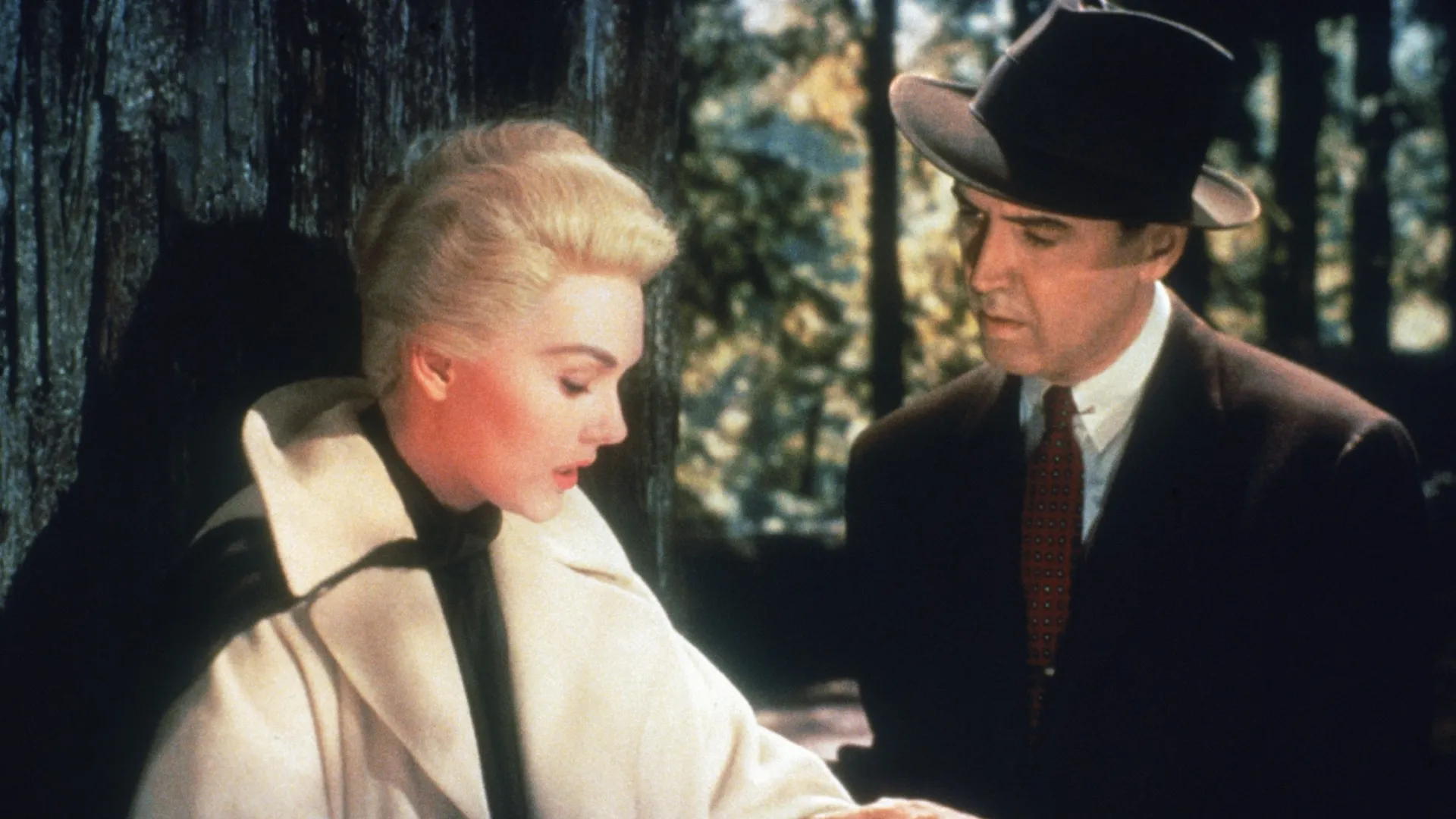
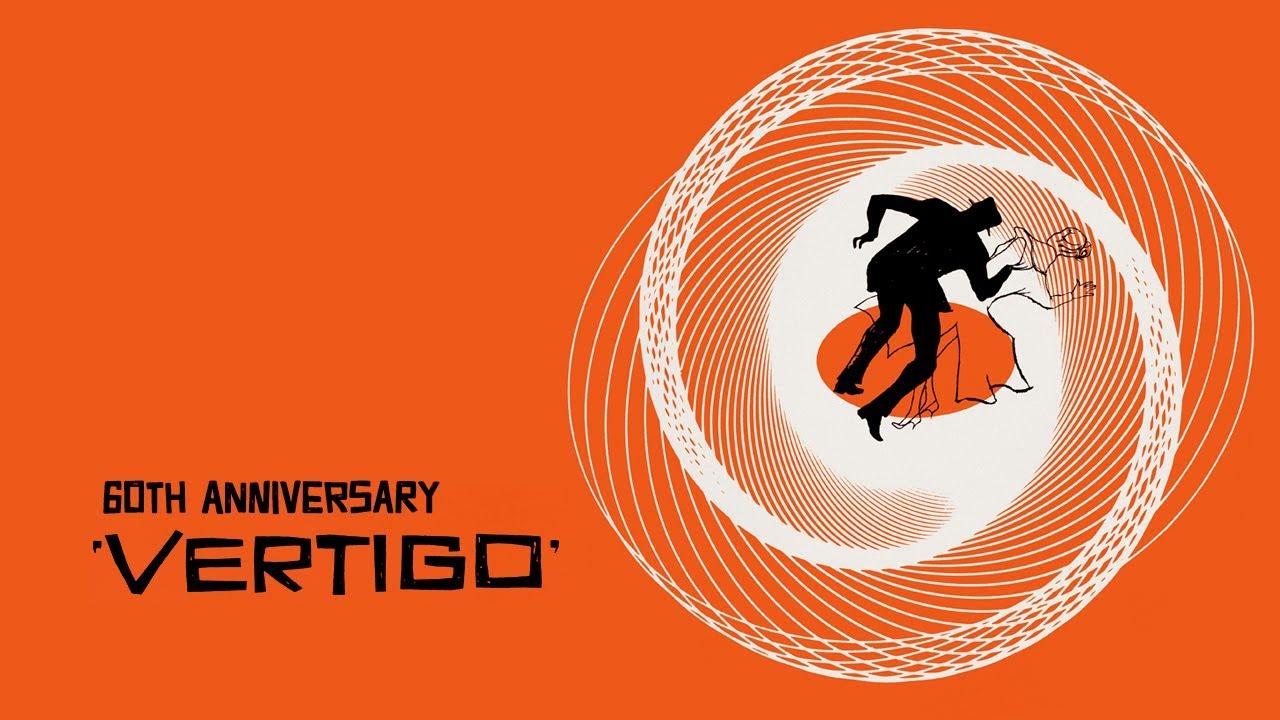
Possibly the best-known and beloved of director Alfred Hitchcock’s library of psychological thrillers, “Vertigo” is both a literal rendering of the main character’s syndrome as well as a description of what you feel as you watch the film. Jimmy Stewart plays Scottie Ferguson, a retired detective with a well-earned fear of heights, who is hired by Gavin Elster (Tom Helmore) to surveil Elster’s wife, Madeleine (Kim Novak), who Ferguson instead falls for.
After she jumps to her death in front of him, Scottie sees a woman who looks just like her, making him question his sanity and reality itself. A “strange, drifty, hallucinatory romance,” it “keeps “bringing us back to the same places, turning us in relentlessly on ourselves,” said Terrence Rafferty at The New York Times.(Prime Video)
‘Jacob’s Ladder’ (1990)
JACOB'S LADDER | New Trailer | STUDIOCANAL - YouTube
Tim Robbins is Jacob Singer, a Vietnam veteran and postal worker who lives with his girlfriend, Jezzie (Elizabeth Peña), in mid-1970s New York City. When he begins to experience hallucinations and seemingly unexplainable phenomena (like being told by his VA clinic that they have no record of him being a patient), he comes to believe that a haunting memory from the war might help explain the strange things occurring around him.
This disturbing film was prescient in its deployment of trauma as a plot device in psychological thrillers as well as a unique entry in the anti-war canon. Director Adrian Lyne’s movie “enters into the hallucinations of a desperate mind and lives there,” while it “evokes a paranoid-schizophrenic state as effectively as any film I have ever seen,” said Roger Ebert at the time. (Paramount+)
Sign up to get Today’s Best Articles in your inbox
A free daily email with the day’s biggest news and analysis – and the best features from TheWeek.com
‘Open Your Eyes’ (1997)
Memory, or the absence thereof, plays a prominent role in so many of the most effective psychological thrillers, including director Alejandro Amenábar’s “Open Your Eyes,” which was remade in the U.S. as “Vanilla Sky.” After he meets Sofía (Penélope Cruz in her breakout role) at a party, César (Eduardo Noriega) is disfigured in a car crash that kills his ex-girlfriend, Nuria (Najwa Nimri).
Sofía can’t bear to see him, and during one evening of self-medication, he awakes into what appears to be a different reality, with his good looks restored and an adoring Sofía at his side. Which reality is the real one? This is an “ambitiously complex, disturbing and terrific-looking thriller” whose “nightmarish, demanding plot giddily leaps from past to present, from fantasy to reality and back again,” said Jonathan Holland at Variety. (HBO Max)
‘Memento’ (2000)
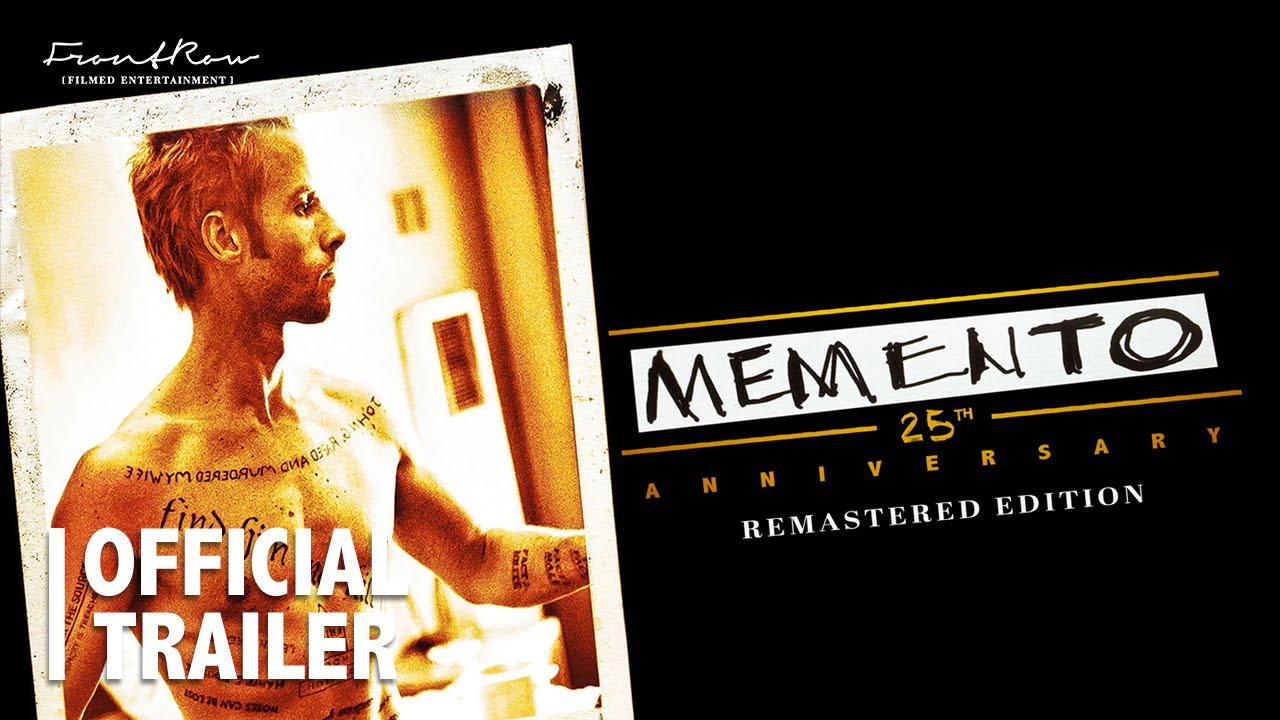
Christopher Nolan's MEMENTO 25th Anniversary Re-Release | Official Trailer | In Cinemas now - YouTube
The twisty, mind-bending hit that began director Christopher Nolan’s journey to Hollywood royalty, “Memento” stars Guy Pearce as Leonard, a man whose difficulty forming new memories means that he has to scribble notes on his skin and mirrors. While looking for his wife’s killer, he gets involved with Natalie (Carrie-Anne Moss), a bartender who may be helping or manipulating him. Teddy (Joe Pantoliano) is a cop with his own agenda.
Told in reverse chronological order, “Memento” is more than its central gimmick. Nolan’s “neo-noir puzzle box plays like one of the key artworks of the 21st century, predicting an era where reality is more a personal, selective construct of comforting biases than a widely agreed-upon set of facts,” said Scott Tobias at The Guardian. (Netflix)
‘Mulholland Drive’ (2001)
MULHOLLAND DRIVE Official 4K Restoration Trailer (2017) Naomi Watts, David Lynch Thriller Movie HD - YouTube
Director David Lynch’s audacious, trippy classic is like two movies in one. You think you’re watching a dreamlike story about an aspiring actress named Betty (Naomi Watts), who helps and falls in love with Rita (Laura Harring) after a car wreck leaves her with amnesia.
But the plot loops and falls in on itself, rendering the dreamlike first half open to interpretation, and leaving viewers to sort through its many possible explanations. A film that offers “certain truths about the grotesque desires at the heart of the American project,” it simultaneously asks viewers to “interrogate ourselves, again and again, in search of some kind of absolution,” said Suzanne Enzerink at the Los Angeles Review of Books. (Prime Video)
‘Caché’ (2005)
Caché – French trailer with English subtitles - YouTube
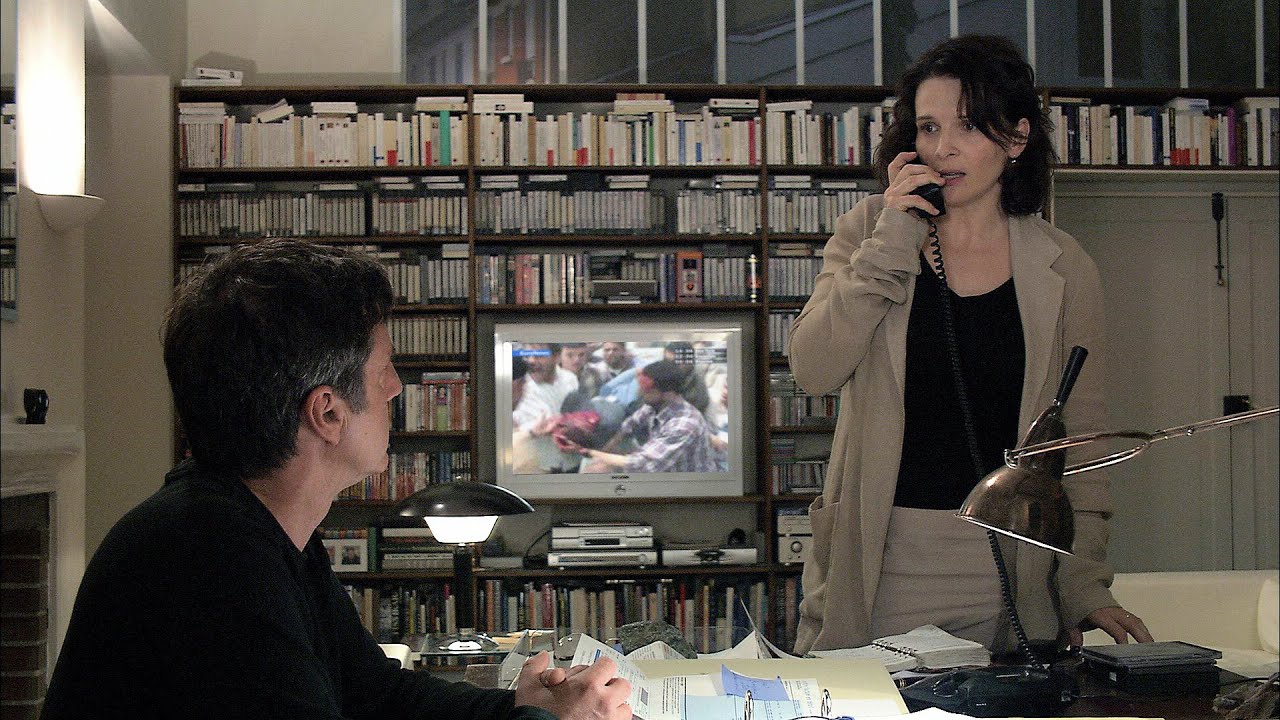
Anne and Georges Laurent (Juliette Binoche and Daniel Auteuil) are comfortable Parisians who begin receiving videotapes of the house they share with their teenage son, Pierrot (Lester Makedonsky), being surveilled. Then more arrive, with increasing menace, turning husband and wife against one another and leading to inevitable revelations, both about an incident from Georges’ childhood as well as France’ brutal colonial past. Renowned director Michael Haneke brilliantly “transforms the viewer into both the author and the participant” in its central mystery and the film stands as an “astounding unification of form and content,” said Brian Eggert at Deep Focus Review. (Prime Video)
‘Black Swan’ (2010)
BLACK SWAN | Official Trailer | FOX Searchlight - YouTube
Natalie Portman is Nina Sayers, an obsessively dedicated ballerina who wins the role as the lead in Tchaikovsky's Swan Lake for the New York City Ballet after the aging Beth (Winona Ryder) is forced into retirement. But she faces a new rival in the mysterious Lily (Mila Kunis), who triggers hallucinations, jealousy and desire in Nina.
Director Darren Aronofsky’s chilly mind-bender is mesmerizing, terrifying and perplexing in equal measure. A “witchy brew of madness and cunning,” it moves deftly between being “deadly serious, downright goofy and by turns shocking, funny and touching,” said Manohla Dargis at The New York Times. (Prime Video)
In this slow burn, Maika Monroe is Julia, a young woman struggling to figure out what to do with herself when she moves with her husband, Francis (Karl Glusman), to the Romanian capital of Bucharest, where there is a serial killer on the loose. Convinced that a neighbor is stalking her, she tries in vain to convince Francis, and the police, that she is in danger.
Director Chloe Okuno builds an atmosphere of dread, keeps the audience guessing and subtly underlines the film’s message about gaslighting and misogyny. It makes viewers “just as anxious as Julia, staring into the faces of every man that walks by,” and stands as “one of the best thrillers of this style to come out in decades,” said Stephen Rosenberg at Horror Geek Life. (AMC+)
David Faris is a professor of political science at Roosevelt University and the author of "It's Time to Fight Dirty: How Democrats Can Build a Lasting Majority in American Politics." He's a frequent contributor to Newsweek and Slate, and his work has appeared in The Washington Post, The New Republic and The Nation, among others.