The Week The Week
flag of US
US
flag of UK
UK
https://cdn.mos.cms.futurecdn.net/flexiimages/jacafc5zvs1692883516.jpg

SUBSCRIBE & SAVE

Less than $3 per week

Sign in
  • View Profile
  • Sign out
  • The Explainer
  • The Week Recommends
  • Newsletters
  • Cartoons
  • From the Magazine
  • The Week Junior
  • More
    • Politics
    • World News
    • Business
    • Health
    • Science
    • Food & Drink
    • Travel
    • Culture
    • History
    • Personal Finance
    • Puzzles
    • Photos
    • The Blend
    • All Categories
  • Newsletter sign up Newsletter
  • The Week Evening Review
    Carney’s EU courtship, the Democrats’ faith-based strategy, and a Sydney Sweeney ad 

     
    in the spotlight

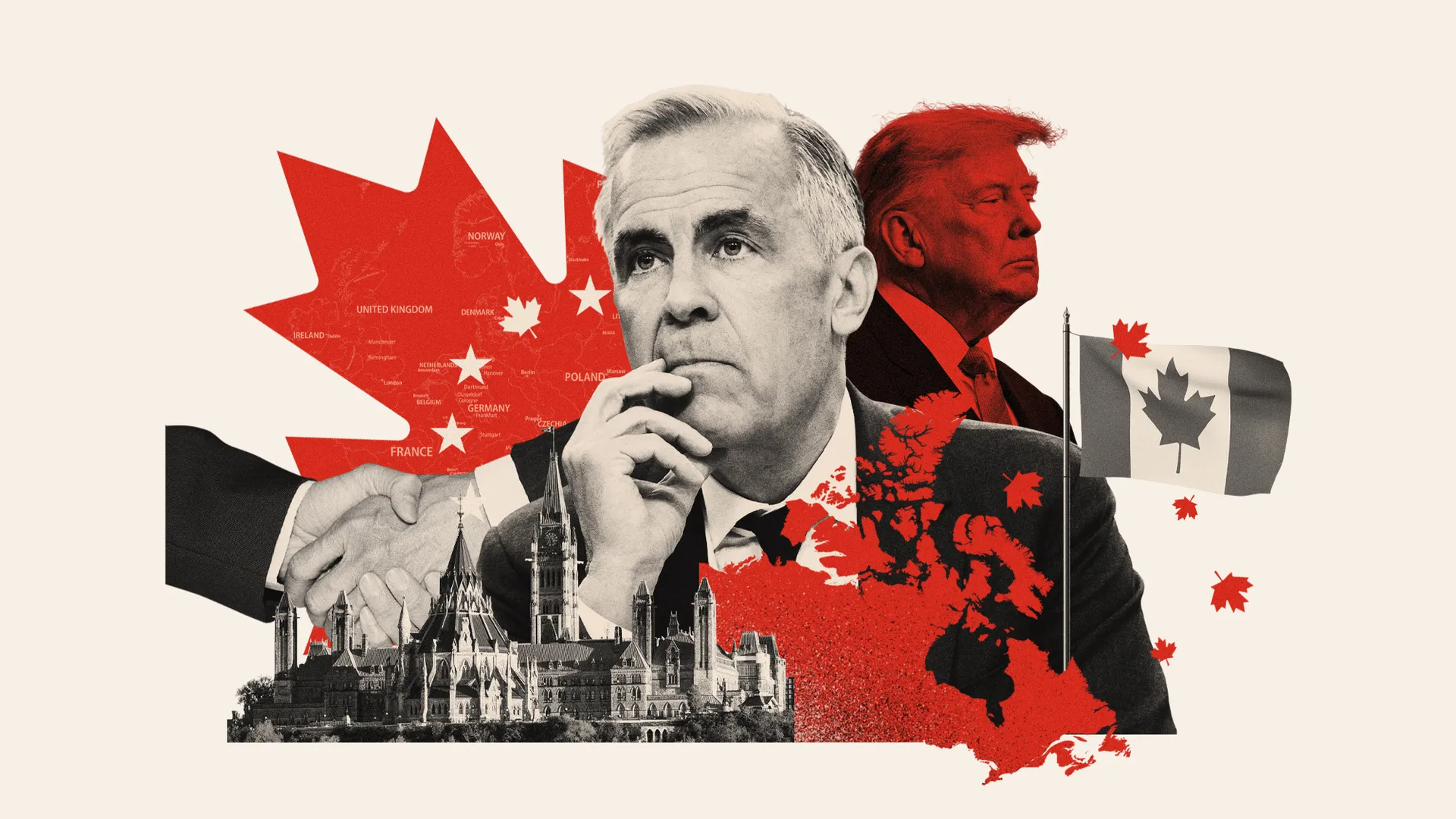
    Canada begins its post-US pivot

    President Donald Trump’s increased aggression toward the U.S.’s northern neighbor has convinced many in Canada that their national interests lie elsewhere. Despite Canada sharing geographic, cultural and historic ties with the U.S., Canadian officials are turning to other international outlets, like the European Union, to wean themselves off the U.S.’s turbulent sphere of influence.

    Pursuing a ‘unique alliance’ 
    With the U.S. and Canada “embroiled in the worst bilateral trade war in their modern history,” Canadian Prime Minister Mark Carney has pushed to “take Canada’s relationship with the EU to the next level,” said The Wall Street Journal. He’s “matchmaking a shotgun marriage to offset the pain of its divorce” with the U.S.

    Talks between Canada and the EU have focused on “easing the movement of goods, services and specialized workers in critical sectors, including energy, artificial intelligence, defense and critical minerals,” said The Independent. The two bodies are also exploring “cooperation on subsea cables, cloud storage, data centers, satellite networks and infrastructure to export Canadian energy to Europe.”

    “We are not looking to become a member of the European Union,” said Carney to reporters this past weekend, per The Globe and Mail. “We are looking” for a “unique alliance” between Canada and the EU.

    ‘Cozying up is a no-brainer’
    Talks of Canada joining the EU as a full member-state are “more meme than reality,” said Bloomberg. But the apparent “openness to talks” has driven “justified enthusiasm among the Ottawa and Brussels crowds.” The “logic of cozying up is a no-brainer,” as Canada works to “diversify trade away from its southern border” and the EU hopes to benefit from Canada’s “vast reserves of energy and minerals.”

    Carney is looking to “build an alliance of liberal powers” that are “committed to the multilateral order thrown into chaos” by Trump, said the Financial Times. He may next “show commitment to European allies” by potentially contributing to the EU-led Ukraine Support Loan. Canada and the EU are “creating a framework for what it “actually means to be a ‘trusted partner’ in the context of economic security,” said Canada EU Trade and Investment Association President Mark Camilleri to the outlet.


    Statistic of the day

    $2.8 billion: The cost of the arms deal the Trump administration has signed off on with Israel, including 40,000 one-ton bombs, one of the largest deliveries of U.S. munitions to the country. The weapons have attracted international criticism because of the civilian casualties caused by their use in densely populated areas of Gaza and Lebanon.


    today’s big question

    Can faith-based politics help Democrats win the midterms?

    Republicans have usually claimed the faith mantle in U.S. politics. But this year’s midterm elections are developing along a different path, with Democrats like James Talarico in Texas and Adam Hamilton in Kansas highlighting their religious bona fides on the campaign trail.

    What did the commentators say?
    “Faith is back in Democratic politics,” said Jim Wallis at Religion News Service. A new generation of “faith-forward” candidates is “reclaiming religion” as a “moral framework for public service.” They talk of faith with “authenticity instead of apology.” And there might be broad benefits to the movement. Faith may be “our last line of defense in saving, and then restoring, our democracy.”

    Democratic Socialists have received a lot of attention this campaign cycle, but “Democratic Christians may prove more influential this November,” said Bill McKibben at The New Yorker. Candidates like Talarico and Hamilton are leading a “resurgence of the once dominant and long-dormant mainline Protestant tradition” in Democratic politics. 

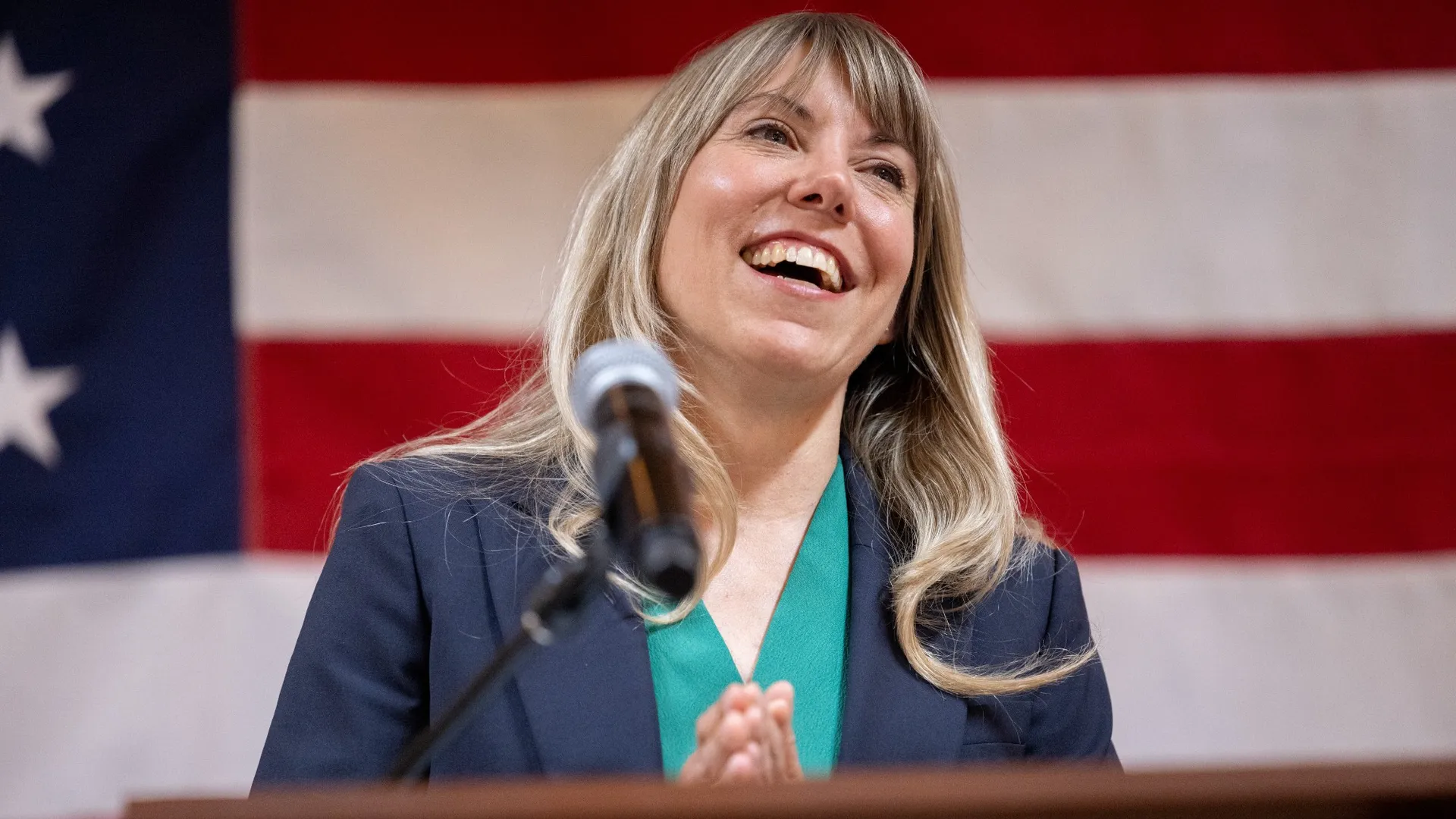
    Other faith-centric Democrats in this year’s midterm elections include Iowa’s Sarah Trone Garriott (pictured above), a Lutheran minister, and Arkansas’ Robb Ryerse, an evangelical pastor. Iowa’s Rob Sand is not a pastor, but his campaign has featured messaging about “how his faith is deeply woven into his public service,” said Doug Pagitt, of the nonprofit Vote Common Good, at The Hill.

    Democratic efforts to “reclaim God” are “unlikely to succeed” unless the party moves toward the center, said Eric Teetsel at The Washington Post. Today’s progressive Christians are “not reaching out to religious voters by taking a more moderate stance” on transgender rights or euthanasia. Trump is problematic, but he has been able to “achieve reasonable policy wins consistent with a Christian understanding of the good.”

    What next?
    Republicans are pushing back. Democratic candidates “don’t profess the true gospel of Jesus Christ,” said Iowa congressional candidate Joe Mitchell at July’s Family Leadership Summit, per Religion News Service. 

    Democrats also have to figure out how to speak the language of faith without alienating secular voters, said ABC News. Some candidates “do it better than others,” said David Campbell, of the University of Notre Dame, to the network. 


    QUOTE OF THE DAY

    ‘If you are gonna create Frankenstein, don’t come to the government and say we need regulation.’

    Vice President JD Vance, at an artificial intelligence summit in Los Angeles, on Anthropic co-founder Dario Amodei’s calls for Washington, D.C., to regulate AI. Tech bosses should instead “look inward,” and when companies need the tools to fight back against their creations, “give them those tools,” he added. 


    talking points

    Uproar over the Sydney Sweeney sports betting advertisement

    More than a year after courting controversy with an American Eagle ad, actor Sydney Sweeney is facing another firestorm for a racy campaign in which she appears in various states of undress. Posing for the sports trading app Novig, she has stirred a debate regarding oversexualization in the advertising world.

    ‘Kick in the face’
    Australian Olympic swimmer Ariarne Titmus posted on Instagram that she could not keep her “mouth shut” upon seeing the ad, per the Sydney Morning Herald. Not only is Sweeney’s ad a “kick in the face to every woman who has dedicated her life to perfecting her craft,” said Titmus, but also to every woman who enjoys sports for “teamwork, friendship, dedication, excellence, unity.” 

    This is “already a male-dominated field” where women are “constantly having to prove why we belong,” said Marissa Womack, the manager of game day promotions and programming for a minor league baseball team, on TikTok, per The Hollywood Reporter. When the “only representation is sexualization,” you see “less and less young women wanting to pursue this.”

    The controversy is about “more than one advertisement,” said Vivienne Lewis, a clinical psychologist, at The Conversation. It “raises a bigger issue” about the “attention we give to what women look like” rather than “who they are and what they can do.” 

    ‘Hardly an unusual strategy’
    Not to be a “crazed optimist,” said Marina Hyde at The Guardian, but women’s sports feel a “whole lot bigger and stronger and more compelling” than whether Sweeney “did or didn’t get her tits out for a gambling ad.” Alternatively, people could “focus on the gambling bit rather than the woman advertising it,” as “gambling wrecks a lot more lives than Sydney Sweeney.”

    We all know “exactly what Sweeney was doing,” said advertising copywriter Paul Burke at The Spectator. She was “selling a sports betting app.” She did not “pretend that she was an elite athlete” or “decry the great talent, strength and sacrifice involved in becoming one.” 

    Novig’s decision to cast Sweeney is “savvy,” said Burke. Her “provocative performance,” building on last year’s “denim-based outrage,” does “appeal to the people most likely to download this app.” This is “hardly an unusual strategy.”


    Good day 📚

    … for reading anything. Regardless of what you read, reading for pleasure may lower the risk of dementia by up to a third, according to a review of research by the University of Cambridge. It’s “never too late to start” reading, which can be beneficial “throughout our lives and into old age,” said Cambridge researcher Barbara Sahakian.


    Bad day 💡

    … for night lights. Even low levels of light during sleep could pose a higher risk to your heart, according to a study published in the European Heart Journal. People who have been exposed to more than 3 lux of light at night, the equivalent of moonlight or light shining beneath a closed door, experience changes in the shape and function of the heart muscle.


    Picture of the day

    Turning over a new leaf

    Dancers perform at the Thom Browne spring 2027 show during New York Fashion Week. Inspired by the children’s film “A Bug’s Life,” The Shed arts space was transformed into a “dark garden replete with giant leaves, huge daffodils and a glamorous cocoon at the center of it all,” said W magazine.
    Taylor Hill / Getty Images


    Puzzles

    Daily sudoku

    Challenge yourself with The Week’s daily sudoku, part of our puzzles section, which also includes guess the number

    Play here


    The Week recommends

    The best historical fiction books of all time

    The modern history of civilization provides ample, almost endless, inspiration for writers, who can draw on both well-known and obscure figures and events to build dazzling narratives. From classic works to recent and more structurally daring standouts, historical fiction remains one of the most popular forms of writing.

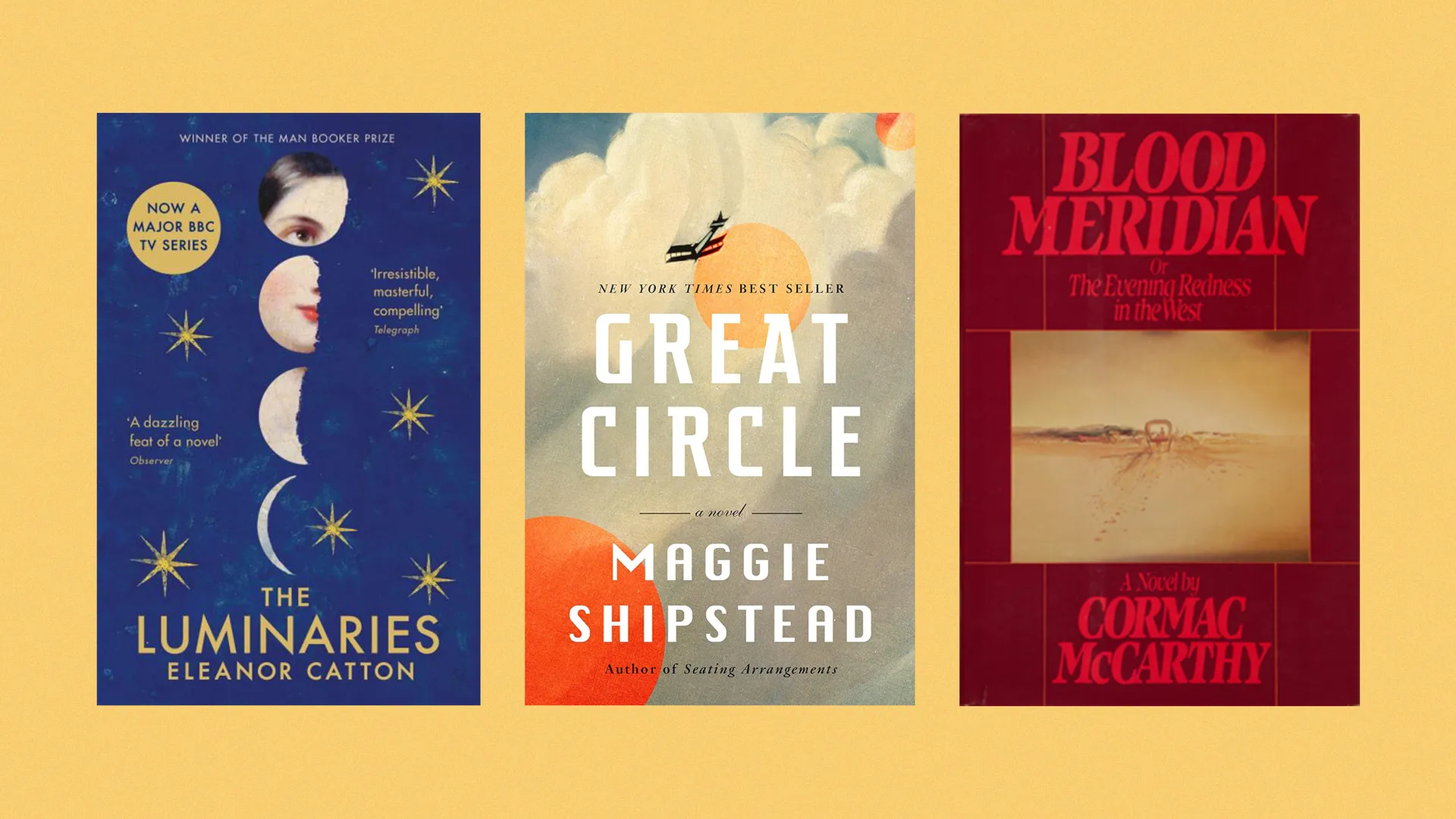
    ‘Blood Meridian’ (1985)
    The Kid is an illiterate 14-year-old runaway with a “taste for mindless violence” who gets swept up in the gruesome rampage of the Glanton gang during the 1840s. This “extraordinary poetic” novel by Cormac McCarthy serves as an “exploration, at times explicitly philosophical, of the relationship between culture and violence,” said Andrew Hislop at the Times Literary Supplement.

    ‘The Luminaries’ (2013)
    Set in 1866 New Zealand, Eleanor Catton’s novel follows Walter Moody, a gold prospector who meets twelve local notables convening in his hotel to discuss a series of strange events. The novel is “trying both to revive plot as a literary mode and to consider what a storyline looks like in our real, unplotted life,” said B.D. McClay at The New Yorker.

    ‘Great Circle’ (2021)
    Maggie Shipstead sets her novel in two timelines. In one, we follow the exploits of an aviator named Marian Graves and her attempt to circumnavigate the globe. The second follows Hadley Baxter, a troubled actress who has signed on to star in a biopic of Graves after her journal from the grand flight is found. The book “grasps for and ultimately reaches something extraordinary,” said Lynn Steger Strong at The New York Times.

    Read more


    Poll watch

    Americans’ trust in childhood measles vaccines has fallen from 2020 when 84% believed they are safe for kids to 76% believing the same now, according to a Reuters/Ipsos survey of 1,143 U.S. adults. The declining trust is “most pronounced among ​Republicans,” as some in the party have “downplayed the importance of vaccines,” said Reuters.


    INSTANT OPINION

    Today’s best commentary

    ‘The American age is over’
    Phillips Payson O’Brien at The Atlantic
    “In the past six months, America’s power, long exemplified by the world’s best warfighting equipment and most highly trained military personnel,” has “proved insufficient to defeat Iran, an economically stagnant regime armed with cheap missiles,” says Phillips Payson O’Brien. For years, “virtually everyone thought that, in a crisis, Washington could draw on deeper reserves.” This “assumption about America’s fundamental strength reassured allies and deterred foes,” but it also “promoted a complacency.” Trump’s war with Iran has “revealed” just how much “American might has decayed.”

    ‘Dementia cases are set to triple by 2050. Here’s how we can improve early detection.’
    Anna Chodos at the San Francisco Chronicle
    About “one in three” people “85 and older” have dementia, says Anna Chodos. And it’s “estimated that half” of those living with it “do not get a diagnosis.” But patients would “live longer and experience better brain function if they were given the chance.” Earlier evaluation can include “identifying and addressing sleep disorders, diabetes, obesity, hearing and vision loss, and poorly controlled vascular risk factors.” It “also means helping people find ways to be as physically, socially and cognitively active as possible.”

    ‘We found the most galling argument of the upcoming Supreme Court term’
    Jacob D. Charles at Slate
    This fall, the Supreme Court will “entertain a Second Amendment challenge to the prohibition of assault weapons in Viramontes v. Cook County,” says Jacob D. Charles. “The challengers — a few individuals who want to own such weapons, along with some gun-rights advocacy organizations,” argue that the Constitution “prohibits” them from “protecting themselves.” But their “precise argument depends upon judges second-guessing — indeed, overruling — the decision that millions of American people made about these weapons.”


    WORD OF THE DAY

    belemnite

    An ancient cephalopod and cousin of the modern squid and octopus. Researchers have unearthed a new species of belemnite, named Wyoteuthis linsterorum, in Wyoming, according to a study published in the journal Papers in Paleontology. And the unusually thick skeleton makes it the “chunkiest” belemnite ever discovered, said the study.


    Evening Review was written and edited by Theara Coleman, Nadia Croes, David Faris, Scott Hocker, Anya Jaremko-Greenwold, Joel Mathis and Rafi Schwartz, with illustrations by Stephen Kelly.

    Image credits, from top: Illustration by Stephen P. Kelly / Getty Images / Shutterstock; Scott Morgan / Bloomberg / Getty Images; Matt Winkelmeyer / Staff / Getty Images; Granta / Knopf / Random House
     

    Recent editions

    • Morning Report

      Trump threatens Kennedy Center after legal loss

    • Evening Review

      Does Trump care about a GOP victory?

    • Morning Report

      Trump EPA aims to kill climate regulations

    VIEW ALL
    TheWeek
    • About Us
    • Contact Future's experts
    • Terms and Conditions
    • Privacy Policy
    • Cookie Policy
    • Advertise With Us
    • FAQ
    Add as a preferred source on Google Add as a preferred source on Google

    The Week is part of Future US Inc, an international media group and leading digital publisher. Visit our corporate site.

    © Future US, Inc. Full 7th Floor, 130 West 42nd Street, New York, NY 10036.