Sign up to get Today’s Best Articles in your inbox
Join 350,000+ subscribers and keep yourself informed with a selection of
The Week’s most interesting, enlightening and entertaining stories - plus daily puzzles.
You are now subscribed
Your newsletter sign-up was successful
Want to add more newsletters?
An account already exists for this email address, please log in.
Can faith-based politics help Democrats win the midterms?
Candidates are highlighting their religion on the campaign trail
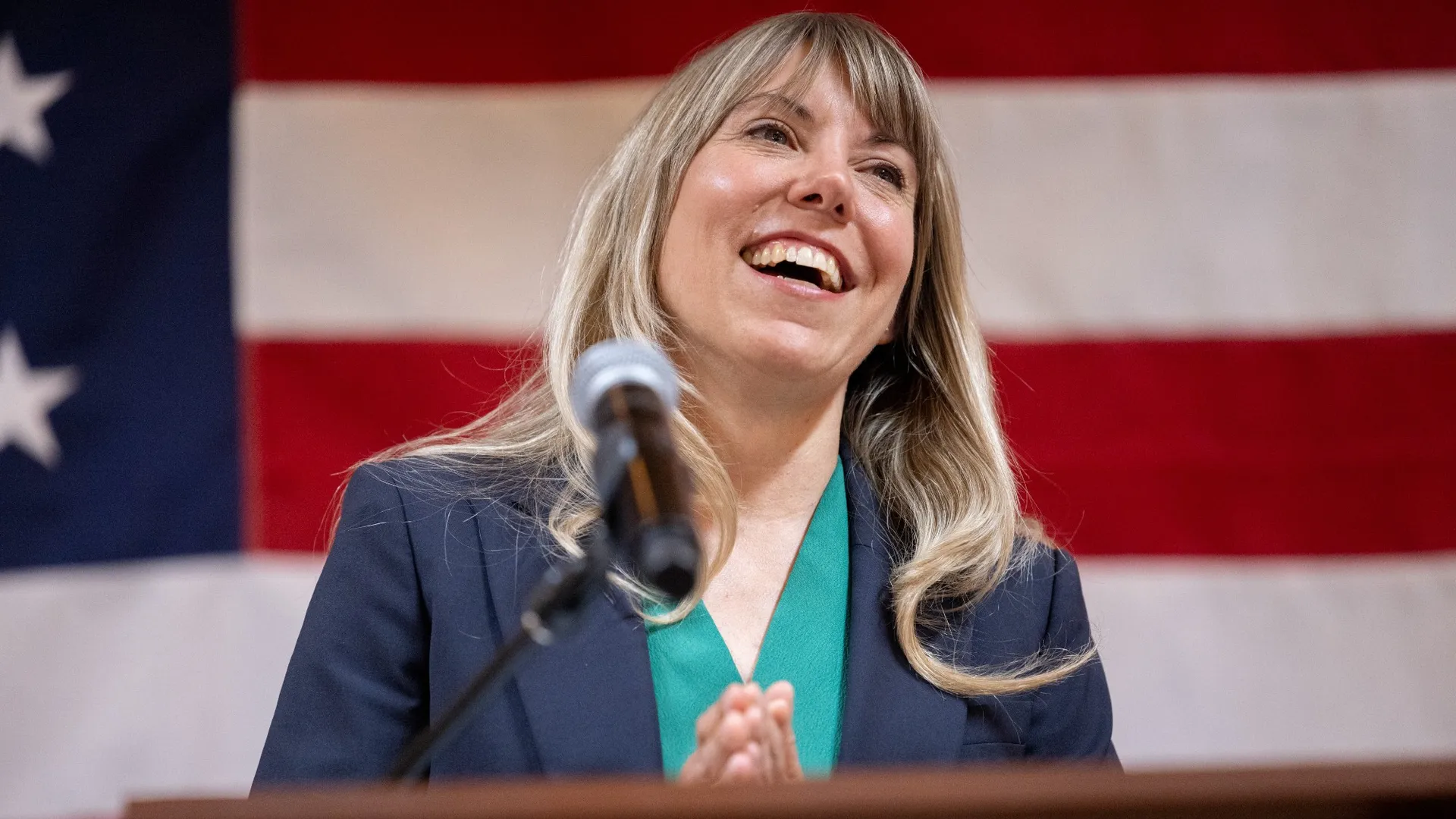
Republicans have usually claimed the faith mantle in U.S. politics. This year’s midterm elections are developing along a different path, with Democrats like James Talarico in Texas and Adam Hamilton in Kansas highlighting their religious bona fides on the campaign trail.
What did the commentators say?
“Faith is back in Democratic politics,” Jim Wallis said at Religion News Service. Democrats have often chosen to “ignore, dismiss or even discredit religion” because they did not know how to talk about such values without sounding as though they were “imposing their religion upon a pluralistic society.” But a new generation of “faith-forward” candidates is “reclaiming religion” as a “moral framework for public service.” They talk of faith “with authenticity instead of apology.” There could be broad benefits. “Faith may be our last line of defense in saving, and then restoring, our democracy.”
Democratic Socialists have received a lot of attention this campaign cycle, “but Democratic Christians may prove more influential this November,” Bill McKibben said at The New Yorker. Candidates like Talarico and Hamilton are leading a “resurgence of the once dominant and long-dormant mainline Protestant tradition” in Democratic politics. Their prominence can be seen as a response to the “right-wing evangelical hijacking of the Gospel message” and evangelicals’ embrace of Donald Trump. “Everyone should welcome a new depth to the debate.”
The Week
Escape your echo chamber. Get the facts behind the news, plus analysis from multiple perspectives.
Join more than 350,000 subscribers and keep yourself informed with a selection of The Week’s most interesting, enlightening and entertaining stories - plus daily puzzles.
Join more than 350,000 subscribers and keep yourself informed with a selection of The Week’s most interesting, enlightening and entertaining stories - plus daily puzzles.
Other faith-centric Democrats in this year’s midterm elections include Iowa’s Sarah Trone Garriott, a Lutheran minister, and Arkansas’ Robb Ryerse, an evangelical pastor. Iowa’s Rob Sand is not a pastor, but his campaign has featured messaging about “how his faith is deeply woven into his public service,” Vote Common Good’s Doug Pagitt said at The Hill.
A “sense of belonging” is important in “both religion and politics,” said Pagitt, but Republicans are “narrowing their definition of who belongs and which faith matters” with conservative Christian Nationalist rhetoric. Democrats have an opportunity to “welcome those Trump is denying.”
Democratic efforts to “reclaim God” are “unlikely to succeed” unless the party moves toward the center, Eric Teetsel said at The Washington Post. Barack Obama embraced religious rhetoric during his rise to the presidency, but once in the White House he advanced causes — abortion access, LGBT rights — that were “at odds with evangelical priorities.” Today’s progressive Christians are “not reaching out to religious voters by taking a more moderate stance” on transgender rights or euthanasia. Trump is problematic, but he has been able to “achieve reasonable policy wins consistent with a Christian understanding of the good.”
What next?
Republicans are pushing back. Democratic candidates “don’t profess the true gospel of Jesus Christ,” Iowa congressional candidate Joe Mitchell said at July’s Family Leadership Summit, per Religion News Service. Democrats also have to figure out how to speak the language of faith without alienating the large number of secular voters who make up their base, said ABC News. Achieving that balance is a “tricky road,” the University of Notre Dame’s David Campbell said to the outlet. Some candidates “do it better than others.”
Sign up to get Today’s Best Articles in your inbox
A free daily email with the day’s biggest news and analysis – and the best features from TheWeek.com
Joel Mathis is a writer with 30 years of newspaper and online journalism experience. His work also regularly appears in National Geographic and The Kansas City Star. His awards include best online commentary at the Online News Association and (twice) at the City and Regional Magazine Association.