The Week The Week
flag of US
US
flag of UK
UK
https://cdn.mos.cms.futurecdn.net/flexiimages/jacafc5zvs1692883516.jpg

SUBSCRIBE & SAVE

Less than $3 per week

Sign in
  • View Profile
  • Sign out
  • The Explainer
  • The Week Recommends
  • Newsletters
  • Cartoons
  • From the Magazine
  • The Week Junior
  • Student Offers
  • More
    • Politics
    • World News
    • Business
    • Health
    • Science
    • Food & Drink
    • Travel
    • Culture
    • History
    • Personal Finance
    • Puzzles
    • Photos
    • The Blend
    • All Categories
  • Newsletter sign up Newsletter
  • Brand Logo
    Trump targets Europe, Comey wins reprieve and Benin beats coup

     
    TODAY’S NATIONAL SECURITY story

    Moscow cheers Trump’s new ‘America First’ strategy

    What happened
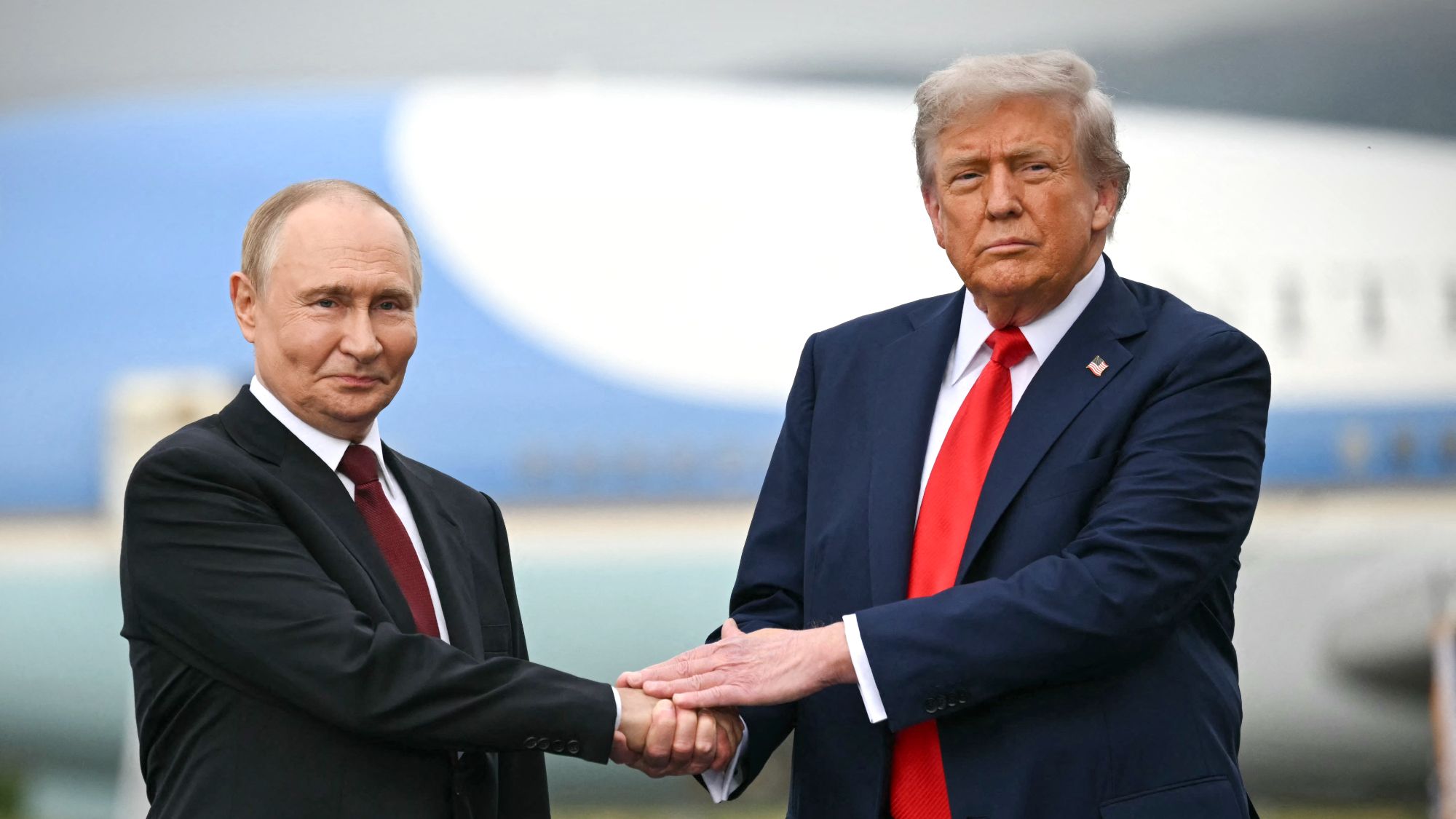
    The Kremlin yesterday applauded President Donald Trump’s new national security strategy, saying its “adjustments” are “largely consistent with our vision.” The document, released Friday, seeks “strategic stability” with Russia, asserts U.S. dominance over Latin America and is sharply critical of the country’s traditional European allies, claiming Western Europe faces “civilizational erasure.”

    Who said what
    Russian President Vladimir Putin’s response, delivered by spokesperson Dmitry Peskov, was “the first time that Moscow has so fulsomely praised such a document from its former Cold War foe,” Reuters said. Defense Secretary Pete Hegseth “made only a passing reference to Russia” in a speech Saturday on the new U.S. military focus, Politico said, but he laid out a “more conciliatory approach to China’s armed forces,” the focus of recent national defense strategies. The Trump administration will “seek a stable peace, fair trade and respectful relations with China,” Hegseth said, including “respecting” Beijing’s “historic military buildup.”

    The strategy “reinforces, in sometimes chilly and bellicose terms, Trump’s ‘America First’ philosophy, which favors nonintervention overseas,” The Associated Press said. But the administration, “in some respects, wants to have it both ways when it comes to foreign relations,” Politico said. For example, the document proposes “a ‘Trump Corollary’ to the Monroe Doctrine” to “restore American preeminence in the Western Hemisphere.”

    “Little of this is surprising,” Ishaan Tharoor said at The Washington Post, but the strategy starkly “underscored the depth of ideological vehemence within the White House” against the European Union and in favor of Europe’s far right. The continent’s immigration policies, “cratering” birthrates, “censorship of free speech and suppression of political opposition” could make it “unrecognizable in 20 years or less,” the document said, so it’s “far from obvious” that “certain European countries will have economies and militaries strong enough to remain reliable allies.” Trump’s assessment of Europe sometimes “sounds like Putin talking about Europe,” Jürgen Hardt, the foreign policy spokesperson for Germany’s ruling alliance, told DW.

    What next?
    The U.S. “remains our most important ally” in NATO, German Foreign Minister Johann Wadephul told reporters, but Europe does “not need outside advice” on “freedom of expression or the organization of our free societies.”


    TODAY’S LEGAL story

    Trump’s Comey case dealt new setback

    What happened
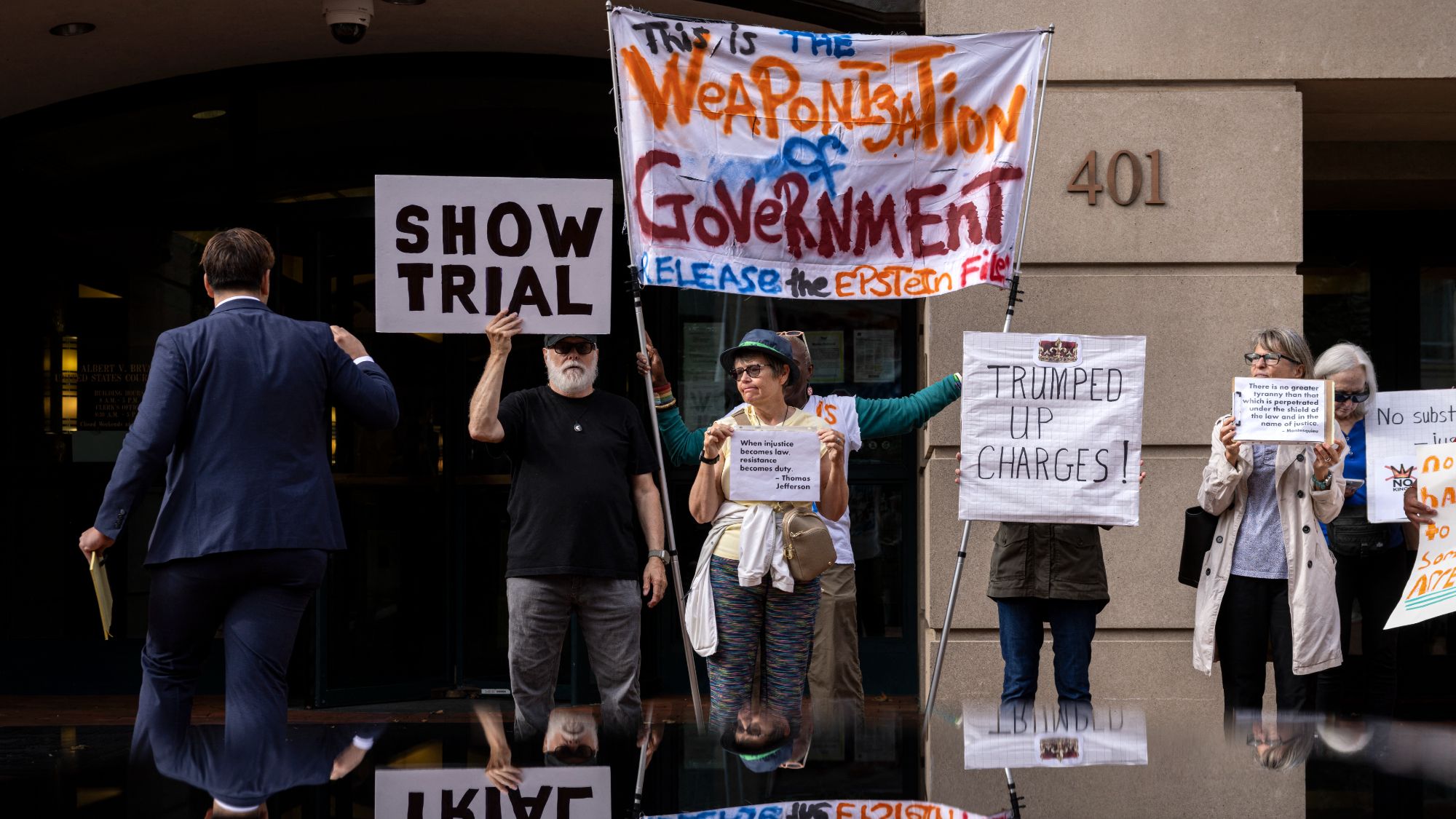
    A federal judge in Washington, D.C., ruled Saturday that prosecutors seeking to reindict former FBI Director James Comey cannot use key evidence, striking a blow to President Donald Trump’s effort to prosecute his perceived enemies. U.S. District Judge Colleen Kollar-Kotelly temporarily barred the Justice Department from accessing or utilizing information seized from the computer of Comey’s friend Dan Richman in 2017.

    Who said what
    Kollar-Kotelly said Richman was likely to succeed in proving that the Justice Department should have deleted his files after it closed the earlier Comey case in 2021 and had accessed prohibited data without a warrant. Her ruling “does not preclude the department from trying again soon to indict Comey,” The Associated Press said, but prosecutors would have to do so without “using evidence they had relied on” when Lindsey Halligan, Trump’s handpicked prosecutor in Virginia, “initially secured criminal charges” in September.

    A different federal judge threw out the cases against Comey and New York Attorney General Letitia James last month, ruling that Halligan had been unlawfully appointed. The Justice Department said it would push on, but Comey’s lawyers argued “he cannot be recharged now because the five-year deadline to bring a case against him expired” in September, The Washington Post said, and the judge “appeared to endorse that view.” The administration’s attempt to secure a new indictment against James, another perceived Trump adversary, was thwarted last week when a grand jury refused to sign off on charges.

    What next?
    Kollar-Kotelly put the dispute over Richman’s data “on a fast track,” Politico said, ordering the Justice Department to confirm by today that it had “complied with her order and to respond to Richman’s legal arguments” by tomorrow.


    TODAY’S INTERNATIONAL Story

    Benin thwarts coup attempt

    What happened
    Benin’s government yesterday reasserted control after a coup attempt against President Patrice Talon. Eight soldiers calling themselves the Military Committee for Refoundation appeared on state television early yesterday and claimed that Talon had been overthrown and all state institutions dissolved, to restore “national cohesion.” But after a day of chaos in the West African nation, Talon appeared on state TV and said the situation was “totally under control” and “this treachery will not go unpunished.”

    Who said what
    Talon, 67, is “regarded as a close ally of the West” and has been “praised by his supporters for overseeing economic development,” the BBC said. Benin has also been “viewed as a relatively strong democracy” in a region rocked by recent coups, The Washington Post said, but Talon, near the end of his second five-term, “has grown increasingly authoritarian in recent years.” 

    “There are grievances in the country,” as Talon’s government “is repressive and the main opposition party has been barred from contesting in the elections,” Beverly Ochieng, a leading regional security analyst based in Senegal, told The New York Times. But “the soldiers seem to have misjudged the political mood in the country,” believing “people would come out to support them.”

    What next?
    The West African regional bloc ECOWAS said last night it had ordered a “regional standby force” to help defend Benin’s government “with immediate effect.” It “remained unclear how many soldiers might be deployed and when they would arrive,” the Times said. But Nigeria has already intervened, sending in fighter jets to “help dislodge the coup plotters,” a presidential spokesperson in Lagos said.


    It’s not all bad

    NASA has finished construction on the Nancy Grace Roman Space Telescope, which will “expand our understanding of the universe,” said NASA Associate Administrator Amit Kshatriya. Named for NASA’s first chief astronomer, the infrared space telescope will travel 930,000 miles to the Sun-Earth Lagrange point L2 and “peer through dust” and “across vast stretches of space and time” to solve “profound” astrophysics mysteries, including the fate of the universe and “whether we are alone,” NASA said. It could launch as early as fall 2026.


    Under the radar

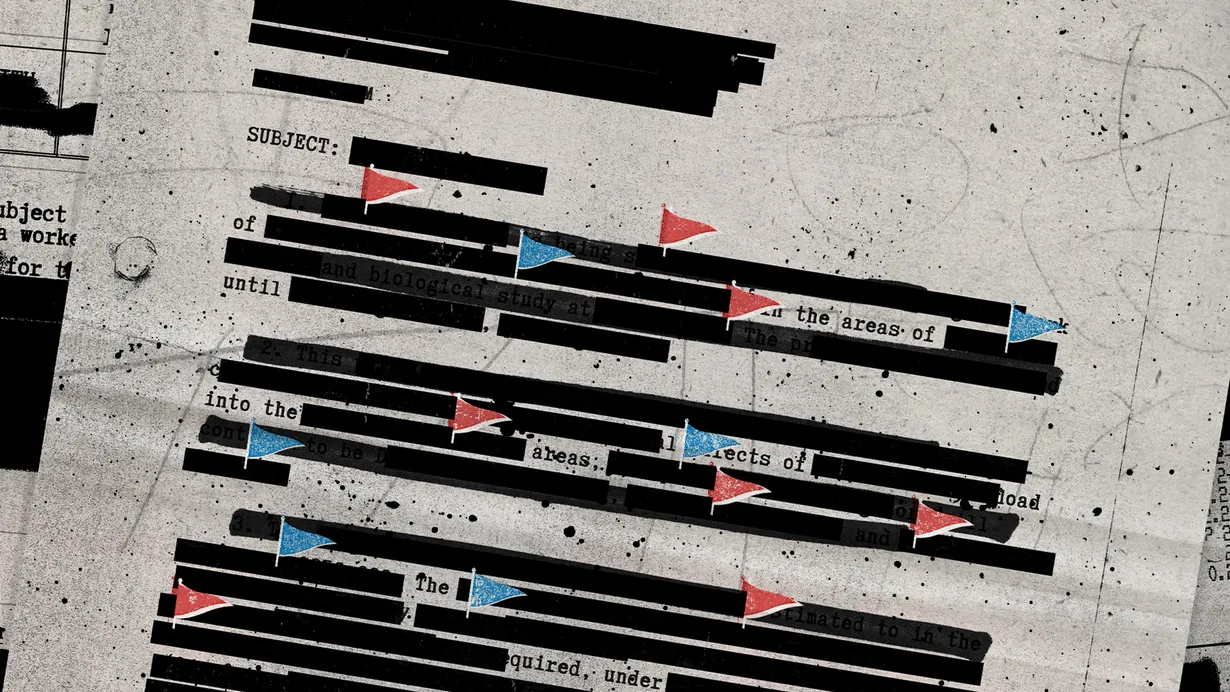
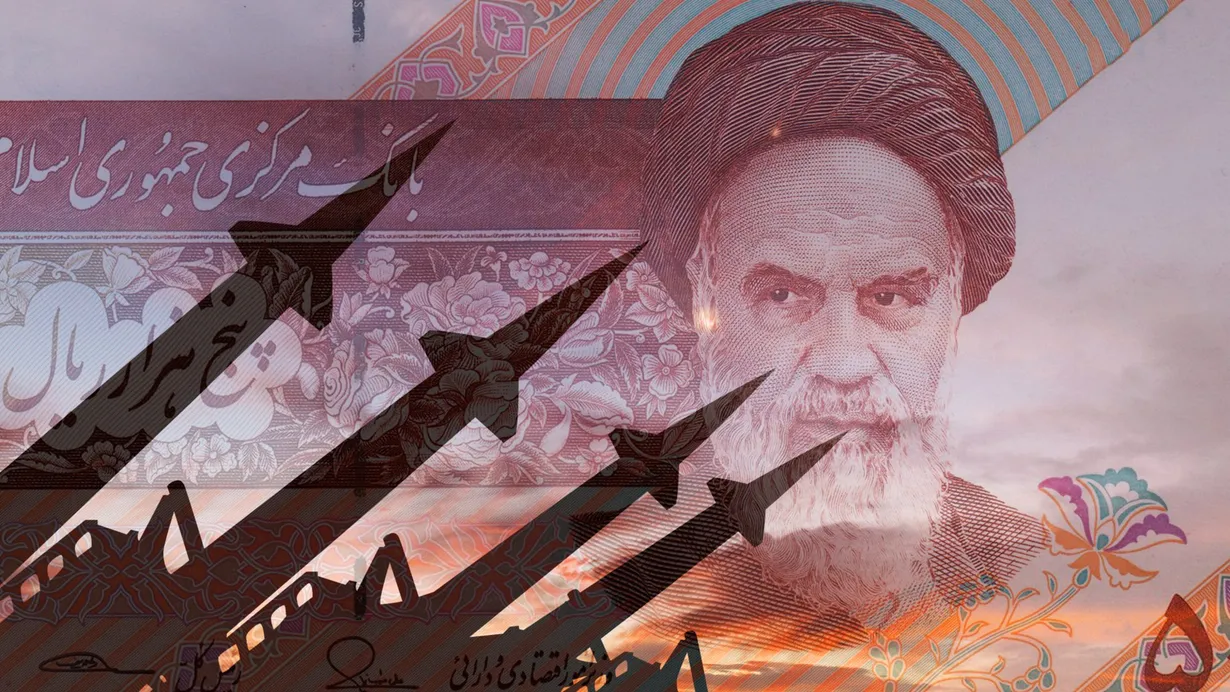
    Poems can force AI to reveal nuclear weapons plans

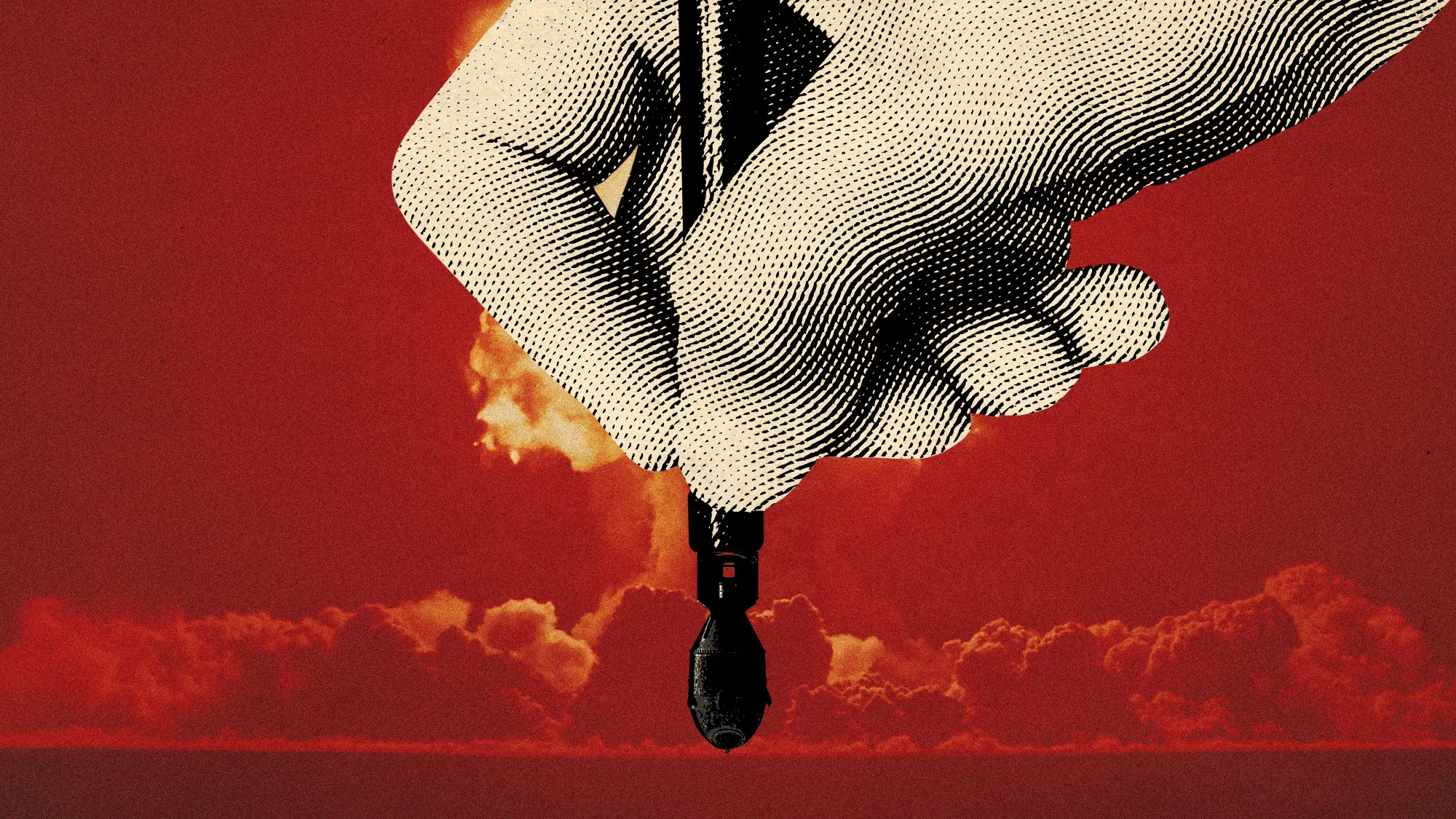
    Poetry has wooed many a heart. And now it is tricking artificial intelligence models into going apocalyptically beyond their boundaries.

    A group of European researchers found that “meter and rhyme” can “bypass safety measures” in major AI models, said The Tech Buzz. And, if you “ask nicely in iambic pentameter,” chatbots will explain how to make nuclear weapons.

    In artificial intelligence jargon, a “jailbreak” is a “prompt designed to push a model beyond its safety limits,” said the International Business Times. It allows users to “bypass safeguards and trigger responses that the system normally blocks.” Researchers at the DexAI think tank, Rome’s Sapienza University and Pisa’s Sant’Anna School of Advanced Studies discovered a jailbreak that uses short poems. 

    The “simple” tactic involves changing “harmful instructions into poetry,” because that “style alone is enough to reduce” the AI model’s “defenses,” the International Business Times said. Previous attempts “relied on long roleplay prompts” or “complex obfuscation,” but the new “brief and direct” approach seems to “confuse” automated safety systems. The “manually curated adversarial poems” have an average success rate of 62%, “with some providers exceeding 90%,” according to Literary Hub.

    The “stunning new security flaw” has also shown that chatbots will “happily explain” how to “create child exploitation material and develop malware,” said The Tech Buzz. It’s the latest in a “growing canon of absurd ways” of tricking AI, said Futurism, and it’s all “so ludicrous and simple” that you must “wonder if the AI creators are even trying to crack down on this stuff.”


    On this day

    December 8, 2024

    Bashar al-Assad was ousted as Syria’s leader following 24 years of dictatorial rule. The collapse of the Assad regime was welcomed by many Syrians as well as the U.S. and other Western powers, but Syria’s new government, led by Ahmed al-Sharaa, continues to deal with a variety of cultural and social problems.


    TODAY’S newspaperS

    ‘Consumers sour’

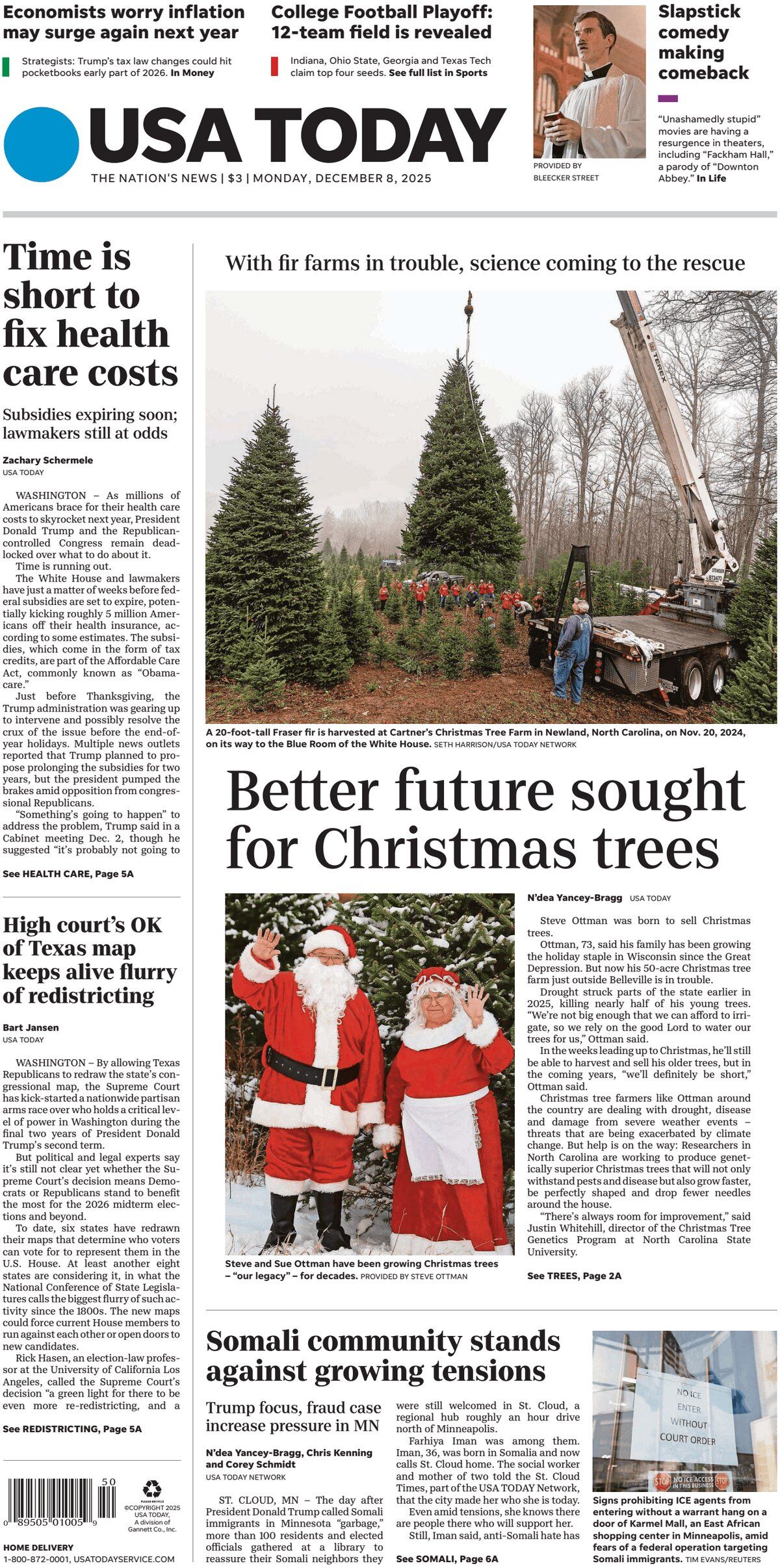
    “American consumers sour on the economy’s trajectory,” The Wall Street Journal says on Monday’s front page. “Time is short to fix health care costs,” USA Today says. “Trump power to oust gets a legal test,” and “some justices doubt 90-year-old precedent,” The New York Times says. “Crackdown turns to legal immigration,” the Los Angeles Times says. “Trump’s pardons a policy conflict” and “at odds with campaign promises,” The Washington Post says. “Trump’s security strategy lacks” significant “efforts to counter Russia and China,” The Boston Globe says. “U.S. eyes 2027 for Europe-led NATO defense,” says the Detroit Free Press.

    ► See the newspaper front pages


    Tall tale

    A whiter shade of pale

    Pantone’s 2026 color of the year, Cloud Dancer, is the first white shade to earn the honor. It is also, “technically, not a color at all,” said The Washington Post, making the choice “curious, even shocking.” But Leatrice Eiseman, the Pantone Color Institute’s executive director, said picking Cloud Dancer actually opens up “new avenues and ways of thinking.” It’s also a “conspicuous choice” after a year in which “DEI programs have been dismantled,” noted New York Times style writer Callie Holternmann.


    Morning Report was written and edited by Nadia Croes, Catherine Garcia, Scott Hocker, Anya Jaremko-Greenwold, Justin Klawans, Chas Newkey-Burden, Rafi Schwartz, Peter Weber and Kari Wilkin, with illustrations by Stephen Kelly and Julia Wytrazek.

    Image credits, from top: Andrew Caballero-Reynolds / AFP via Getty Images; Mehmet Eser / Middle East Images / AFP via Getty Images; Olympia De Maismont / AFP via Getty Images; Illustration by Julia Wytrazek / Getty Images
     

    Recent editions

    • Evening Review

      Open rebellion against Mike Johnson

    • Morning Report

      Lawmakers view ‘troubling’ boat strike video

    • Evening Review

      Netanyahu’s pardon push

    VIEW ALL
    TheWeek
    • About Us
    • Contact Future's experts
    • Terms and Conditions
    • Privacy Policy
    • Cookie Policy
    • Advertise With Us
    • FAQ
    Add as a preferred source on Google

    The Week is part of Future US Inc, an international media group and leading digital publisher. Visit our corporate site.

    © Future US, Inc. Full 7th Floor, 130 West 42nd Street, New York, NY 10036.