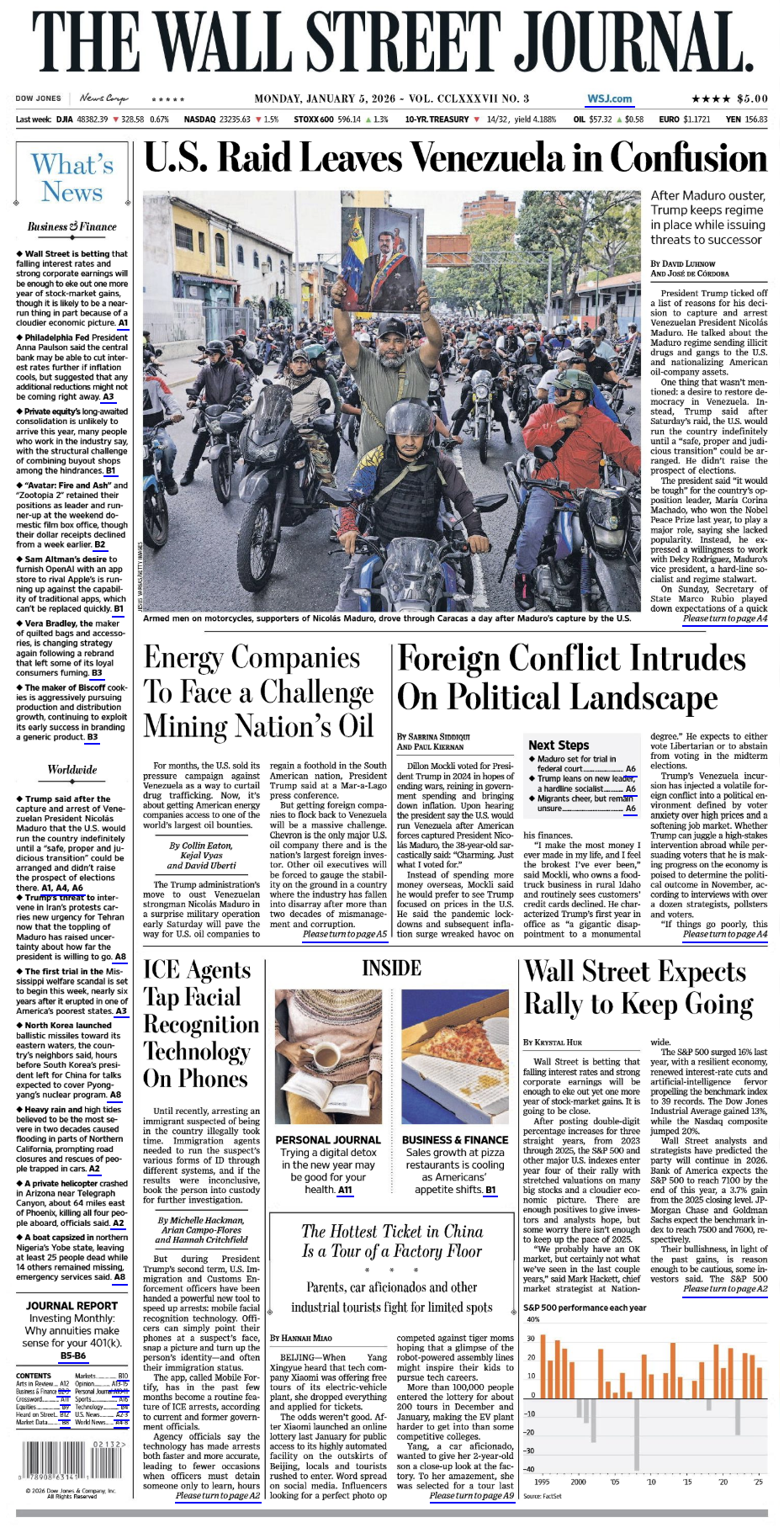
What happened
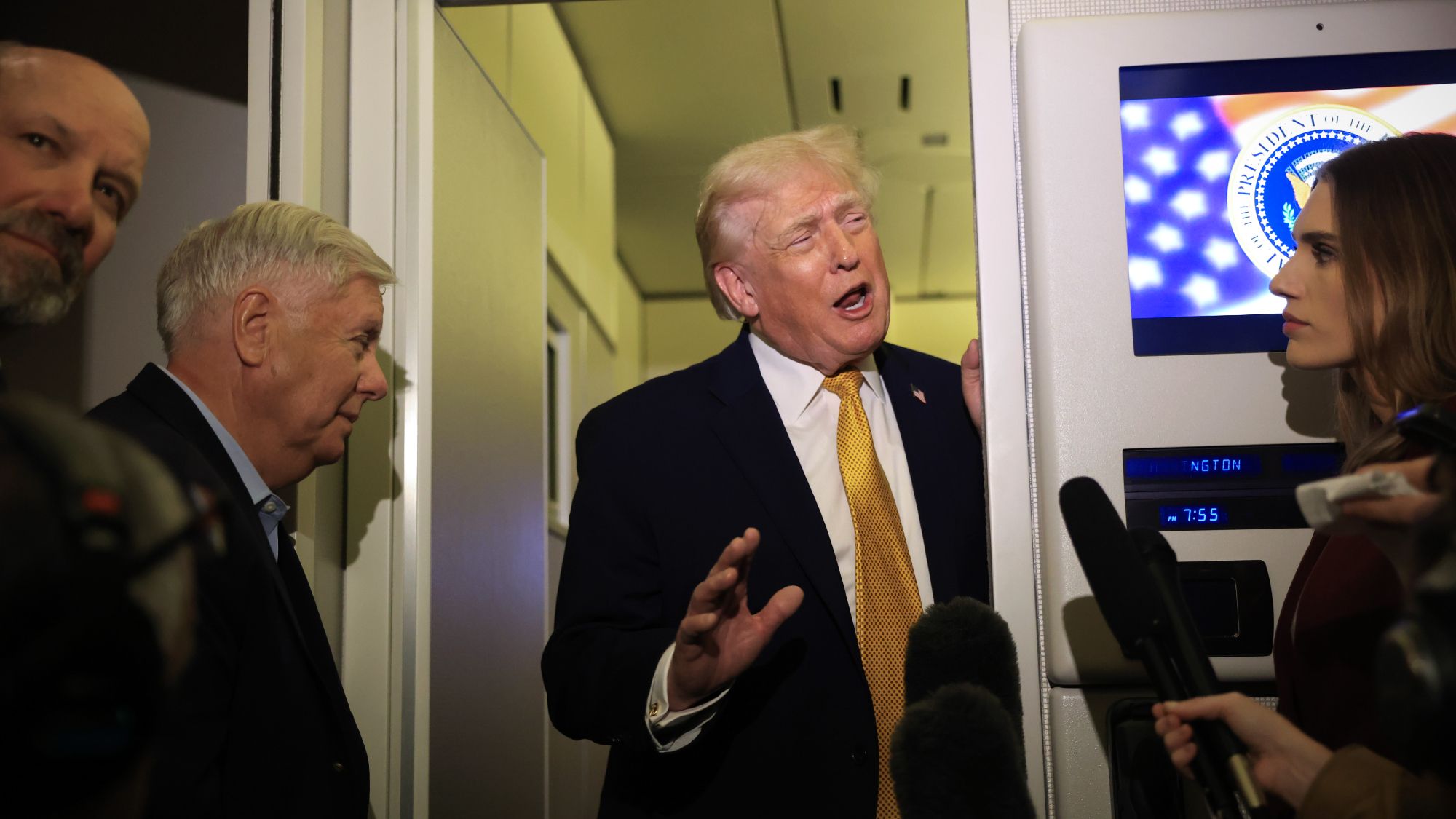
President Donald Trump last night told reporters that the U.S. is “in charge” of Venezuela after the U.S. military seized its president, Nicolás Maduro, and his wife in a raid on Caracas early Saturday. Trump on Saturday said the U.S. would “run the country” and its oil wealth for an unspecified period of time, and he was “not afraid of boots on the ground.” But Secretary of State Marco Rubio earlier yesterday said the U.S. is “running policy” in Venezuela through coercion and duress, not direct rule.
Maduro’s vice president, Delcy Rodríguez, assumed the role of interim president yesterday and is being sworn in today. At least 80 people were killed during the U.S. raid, including 32 Cuban security officers, and several U.S. soldiers were injured, The New York Times said, citing officials in the three countries.
Who said what
Rodríguez initially denounced the U.S. incursion as an “atrocity that violates international law,” but said on social media last night she hoped to build “respectful relations” with Trump and was willing to “collaborate” on “shared development within the framework of international law.” Trump had told The Atlantic earlier yesterday that if Rodríguez “doesn’t do what’s right, she is going to pay a very big price, probably bigger than Maduro.” Asked last night what he needs from her, Trump said “total access” to “the oil and to other things in the country.” The “very controversial” answer to “who’s in charge” in Venezuela is “we’re in charge,” he told reporters.
Democrats and many legal experts called Trump’s actions blatantly illegal, especially since he did not seek authorization from Congress to invade another country, or even inform key lawmakers beforehand. “Most Republicans lined up behind the president,” The Associated Press said, but “there were signs of unease across the spectrum within the party,” especially the “America First” wing. “This is the same Washington playbook that we are so sick and tired of that doesn’t serve the American people, but actually serves the big corporations, the banks and the oil executives,” Rep. Marjorie Taylor Greene (R-Ga.) said yesterday on NBC’s “Meet the Press.”
What next?
Maduro and his wife, Cilia Flores, are scheduled to be arraigned in federal court in Manhattan today on newly unsealed charges of drug trafficking and other alleged crimes. The United Nations Security Council is holding an emergency session today focused on the legality of the U.S. raid. |