The Week The Week
flag of US
US
flag of UK
UK
https://cdn.mos.cms.futurecdn.net/flexiimages/jacafc5zvs1692883516.jpg

SUBSCRIBE & SAVE

Less than $3 per week

Sign in
  • View Profile
  • Sign out
  • The Explainer
  • The Week Recommends
  • Newsletters
  • Cartoons
  • From the Magazine
  • The Week Junior
  • Student Offers
  • More
    • Politics
    • World News
    • Business
    • Health
    • Science
    • Food & Drink
    • Travel
    • Culture
    • History
    • Personal Finance
    • Puzzles
    • Photos
    • The Blend
    • All Categories
  • Newsletter sign up Newsletter
  • Brand Logo
    GOP revolts, FBI reverses and Iran’s protests escalate

     
    TODAY’S POLITICS story

    House approves ACA credits in rebuke to GOP leaders

    What happened
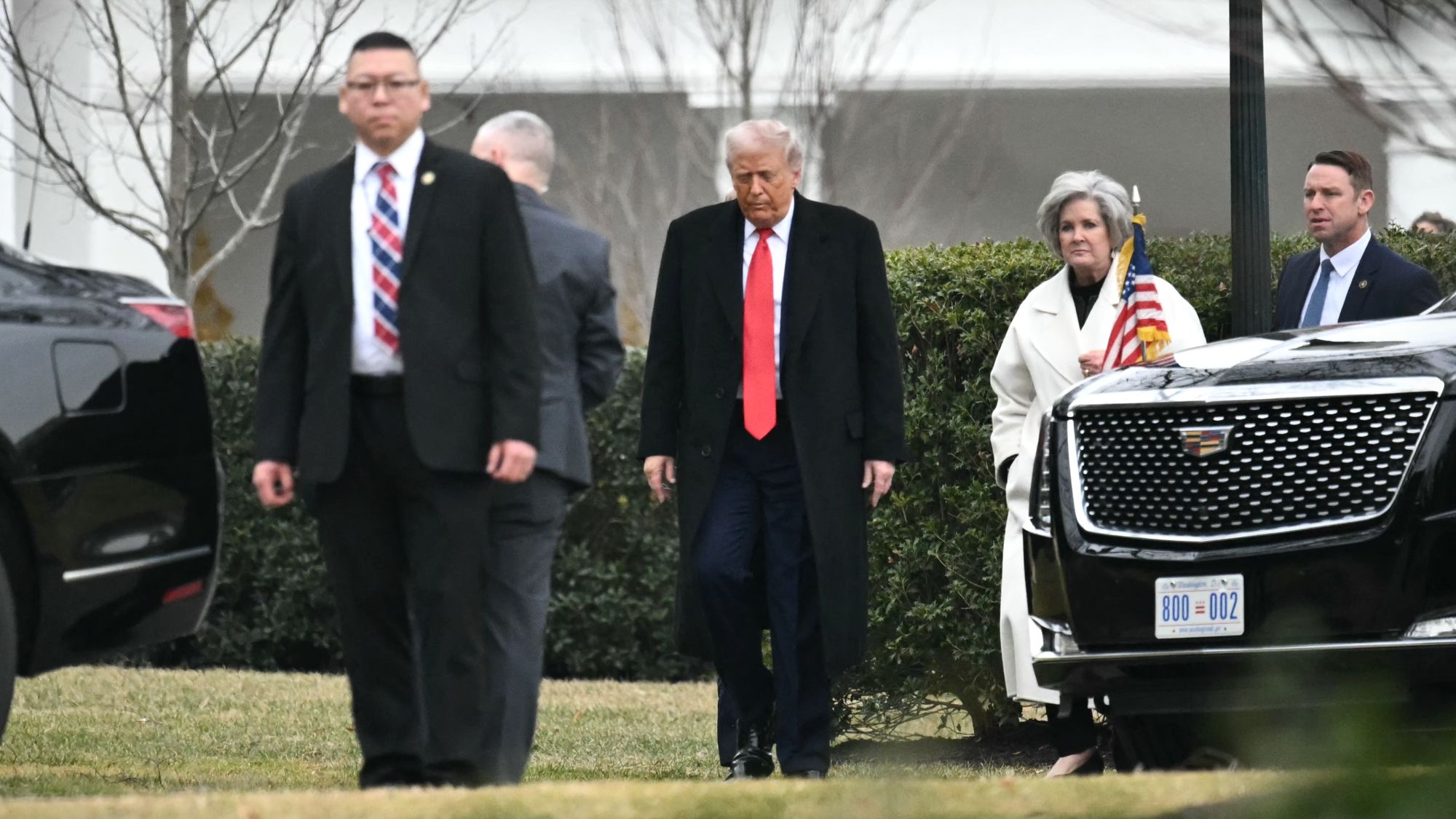
    The House yesterday approved a Democratic proposal to resurrect expired Affordable Care Act subsidies for three years. Seventeen “renegade GOP lawmakers joined every Democrat” in the 230-196 vote, The Associated Press said, significantly more than the four Republicans who helped force the bill onto the floor by signing a discharge petition last month. “The GOP revolt was bigger than anticipated,” Politico said, “and a stunning rebuke” to Speaker Mike Johnson (R-La.) and President Donald Trump.

    In a further blow to Trump, the Senate advanced a measure that would block further military action in Venezuela, with five Republicans joining all Democrats. And the chamber agreed to install a plaque honoring the police officers who protected the Capitol from a Trump-inspired mob on Jan. 6, 2021, in a unanimous vote two days after Trump’s White House published a revisionist history blaming the attack on law enforcement and Democrats.

    Who said what
    The “dramatic” House GOP revolt on ACA credits was “driven by concerns about spiking health care costs in an election year dominated by affordability concerns,” Axios said. The bill “has no path to enactment” through the GOP-led Senate, The New York Times said, but the “largely symbolic vote” could “bring fresh momentum to bipartisan efforts to find a compromise on health care costs” and the ACA subsidies, which ended Jan. 1. 

    Taken together, yesterday’s votes showed that “Trump’s honeymoon with the Republican Congress is officially over,” Semafor said. He was “apoplectic” at the five Republicans who supported the Venezuela resolution, urging voters to defeat them in future elections. “Lawmakers voting against their party’s president is common in midterm election years,” The Washington Post said, but the “repeated rebukes” of Trump, “and the number of lawmakers defecting, are unusual.”

    What next?
    The Senate will have a final vote next week on Sen. Tim Kaine’s (D-Va.) Venezuela war powers resolution. The House is scheduled to vote next week on GOP legislation to codify Trump’s push for more powerful showerheads. The Shower Act was “poised to be the first bill passed by the House this year,” the Post said, but “congressional leadership bumped it to next week” due to the ACA vote.


    TODAY’S NATIONAL story

    FBI bars Minnesota from ICE killing investigation 

    What happened
    Minnesota officials yesterday said the FBI was barring state and local investigators from participating in the inquiry into an ICE agent’s fatal shooting of Renee Nicole Good on Wednesday. Minnesota Bureau of Criminal Apprehension Superintendent Drew Evans said the FBI “had reversed course” on an initial agreement to conduct a joint investigation, and since the BCA will “no longer have access to the case materials, scene evidence or investigative interviews,” his agency “reluctantly” stepped back.

    Who said what
    “Minnesota must be part of this investigation,” Gov. Tim Walz (D) told reporters, or “it feels very, very difficult that we will get a fair outcome.” State Attorney General Keith Ellison said he hoped the FBI would “reverse” its “very concerning” decision. Homeland Security Secretary Kristi Noem said Minnesota officials “have not been out. They don’t have any jurisdiction in this investigation.”

    Vice President JD Vance said yesterday that the ICE agent who killed Good, identified in court papers as Jonathan Ross, “is protected by absolute immunity.” Vance’s claim was “quickly met with skepticism by experts,” CNN said. But keeping the investigation in federal hands means the BCA has “few tools available to fully scrutinize the shooting and provide its findings to county prosecutors, who would then determine whether the agent should face state charges.”

    What next?
    In Oregon, Portland Police Chief Bob Day said last night the FBI was leading the investigation into a Border Patrol agent’s non-fatal shooting of two people in a car yesterday afternoon. DHS said the agent fired a “defensive shot” at an alleged Venezuelan gang member after he fled a “targeted vehicle stop.” In previous cases, including Good’s killing, “video evidence cast doubt on the administration’s descriptions of what prompted the shootings,” The Associated Press said. Oregon Attorney General Dan Rayfield said his state’s Department of Justice would conduct its own investigation. 


    TODAY’S INTERNATIONAL Story

    Iran cuts internet as protests escalate nationwide

    What happened
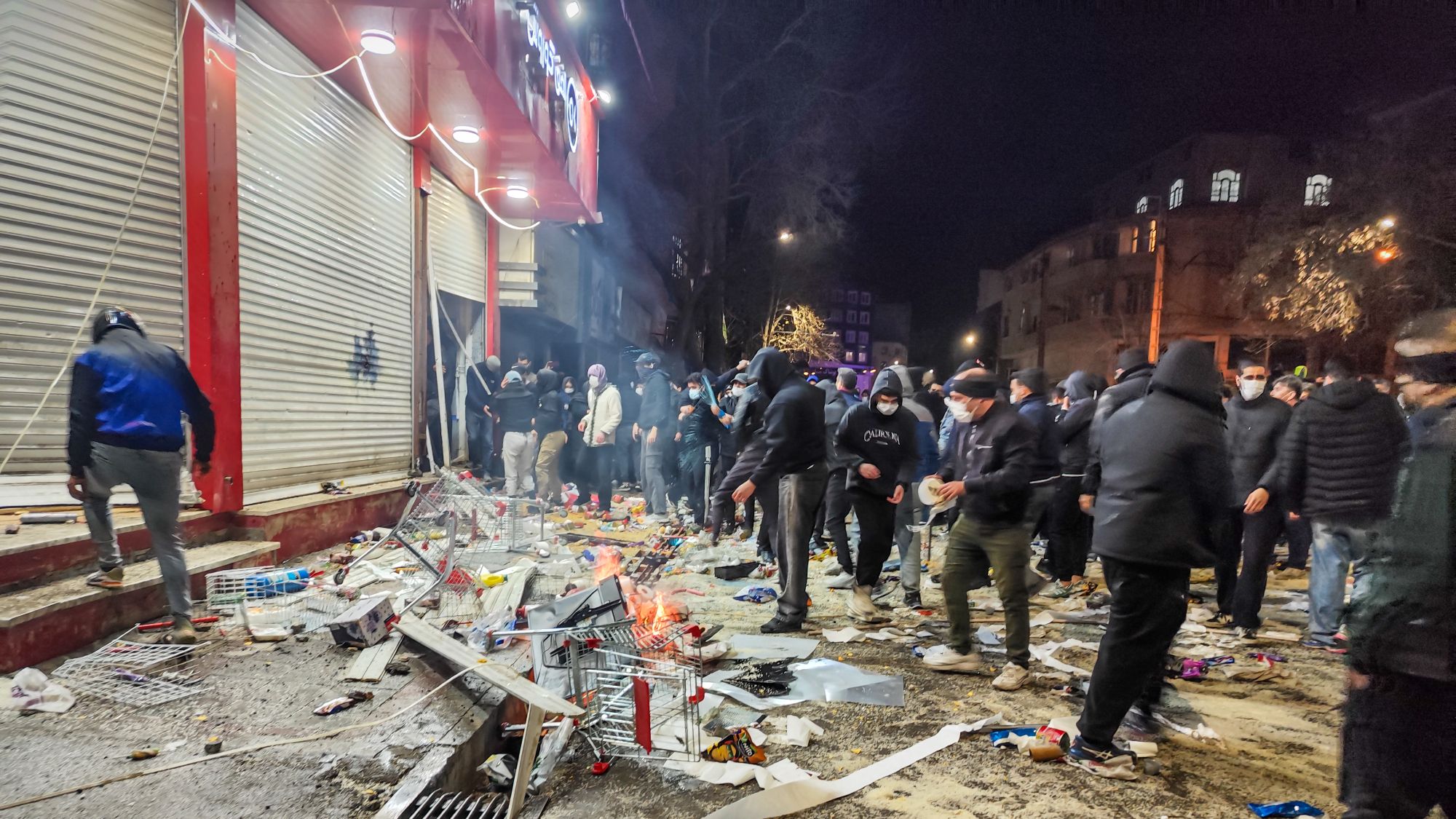
    Iranians took to the streets across the country yesterday and protested through this morning, but the “full scope of the demonstrations couldn’t be immediately determined” due to “Iran’s theocracy cutting off the nation from the internet and international telephone calls,” The Associated Press said. At least 42 people have been killed since  protests over Iran’s ailing economy broke out on Dec. 28 and then “morphed into the most significant challenge to the government in several years.”

    Who said what
    Supreme Leader Ayatollah Ali Khamenei said in a brief televised address this morning that protesters are “ruining their own streets to make the president of another country happy,” a reference to President Donald Trump. Trump said on Fox News last night that “the enthusiasm to overturn the regime has been incredible” and if Iranian authorities “do anything bad to these people, we’re going to hit them very hard.” 

    Videos from Iran filmed last night “showed government buildings on fire across the country, including in Tehran, as protests grew,” The New York Times said. Exiled former Crown Prince Reza Pahlavi, the son of the late shah, called for mass demonstrations at 8 p.m. yesterday and today, and that “turned the tide of the protests,” said Holly Dagres with the Washington Institute for Near East Policy. “The internet was shut down” to “prevent the world from seeing” that “Iranians had delivered and were taking the call seriously” to “oust the Islamic Republic” through protests.

    What next?
    Trump claimed in his Fox News interview that Khamenei was “looking to go someplace” because “it’s getting very bad” in Iran. But asked if he would meet with Pahlavi, Trump said he was “not sure that it would be appropriate at this point to do that as president.”


    It’s not all bad

    Sharon Marnell, who loves to sing, started three “tuneless” choirs in England for fellow vocal enthusiasts, especially those who don’t always hit the right note. Her choruses give untrained singers a place to find joy and connection. The experience is “powerful and transformative” and helps members form “real friendships,” Marnell told CBC News. She recently moved to Vancouver Island and is launching two more tuneless choirs, hopefully filled with people who have been told they “sound terrible,” she said.


    Under the radar

    NASA discovers ‘resilient’ microbes in its cleanrooms

    Spacecraft are assembled in specialized “cleanrooms” that are designed to avoid contamination from dust and microorganisms. But bacteria called extremophiles have genetic components that allow them to survive in extreme environments, and 26 of them have been found at NASA’s Kennedy Space Center in Florida.

    NASA’s cleanrooms have “stringent controls such as regulated airflow, temperature management and rigorous cleaning,” said a study published in the journal Microbiome. But these previously unidentified bacteria “resist cleaning chemicals and cling to sterile surfaces by producing sticky films,” said Nature. Many also have “genes that protect their DNA from radiation damage, while some have genes that help control cell repair under oxidative stress.” 

    As a result, these “resilient microorganisms” pose “potential risks for space missions,” said Microbiome. One of the bacteria, Tersicoccus phoenicis, is capable of playing dead to survive stressors. While dormant, it “can’t be detected by the usual method of swabbing surfaces,” said Scientific American. That means it could “theoretically sneak aboard spacecraft that are supposed to be free of Earth contaminants.” 

    Any microbe “capable of slipping through standard cleanroom controls could also evade the planetary-protection safeguards meant to prevent Earth life from contaminating other worlds,” said Live Science. Still, these findings “not only raise important considerations for planetary protection but also open the door for biotechnological innovation,” said study author Junia Schultz. However you look at it, “identifying these unusually hardy organisms and studying their survival strategies matters,” said Live Science.


    On this day

    January 9, 2001

    Apple CEO Steve Jobs introduced iTunes, a software program for managing digital music on Apple devices. It was a key moment in the transition from physical to digital media, boosted that October by Apple’s release of the iPod. Digital downloads have declined recently as streaming dominates, but Apple Music remains a key industry player. 


    TODAY’S newspaperS

    ‘Protests spread’

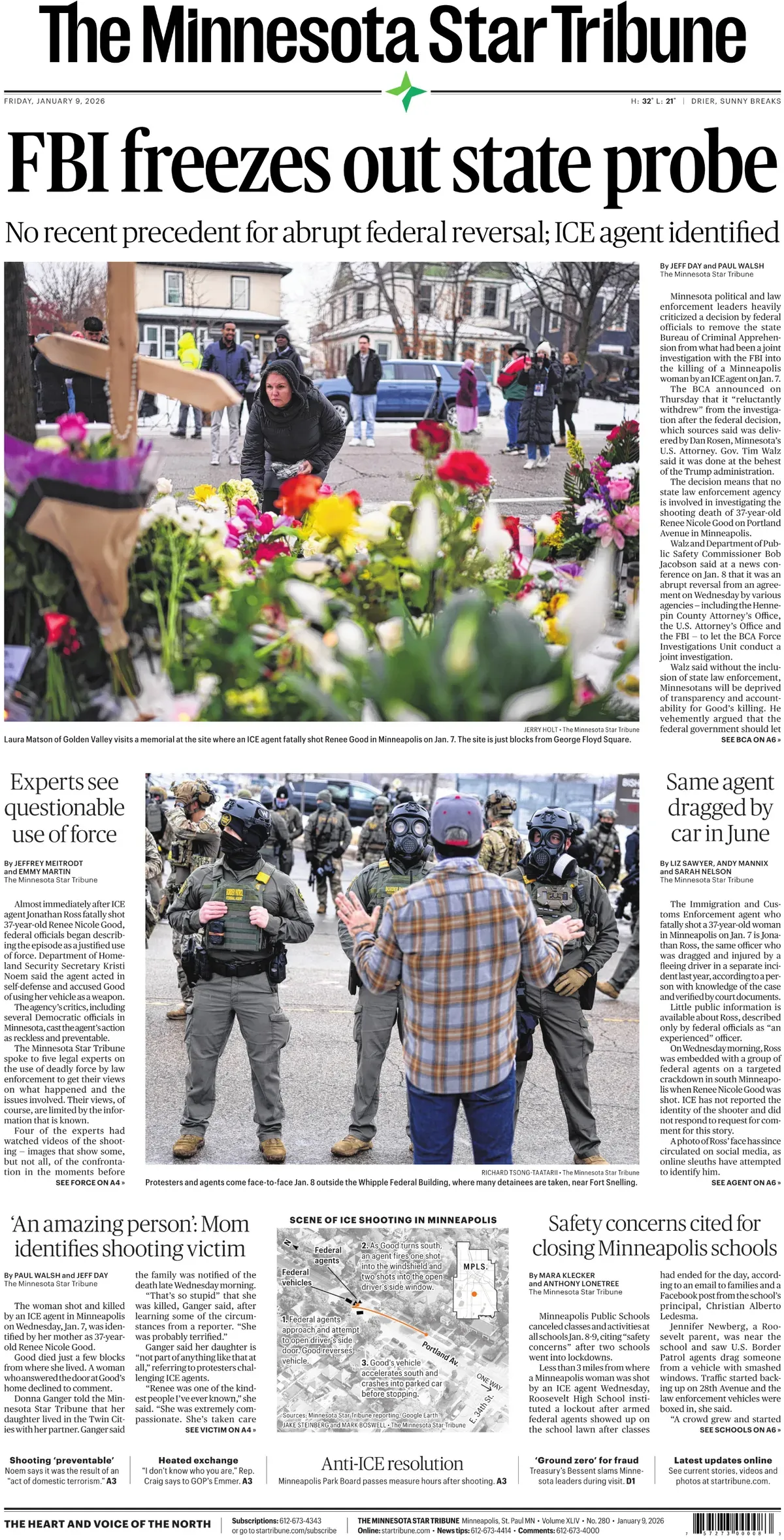
    “Protests spread after fatal shooting by ICE,” The Palm Beach Post says on Friday’s front page. “Slaying by ICE a test of Trump policy,” the Los Angeles Times says. “FBI freezes out state probe,” The Minnesota Star Tribune says. “Migrant teens jailed at site known for child abuse,” The Washington Post says. “Trump asserts his global power has one limit: himself,” The New York Times says. “Senate seeks to stop Trump,” the Detroit Free Press says. “U.N. panel condemns Maduro’s capture,” says USA Today. “Maduro’s cocaine-trafficking charges will be hard to prove,” the Miami Herald says. “Venezuela oil plan is risk for drillers,” says The Wall Street Journal. 

    ► See the newspaper front pages


    Tall tale

    Make your fortune

    A fortune teller in Thailand has been accused of stealing a teen’s phone to ensure that his prediction of bad luck would come true. The man approached the 19-year-old outside of a temple in Pattaya and told her she was on the “brink of misfortune” and about to “lose something valuable,” said The Independent. She soon realized her iPhone was missing and, with the help of bystanders, discovered the device inside the substandard seer’s bag.


    Morning Report was written and edited by Nadia Croes, Catherine Garcia, Scott Hocker, Anya Jaremko-Greenwold, Justin Klawans, Rafi Schwartz, Peter Weber and Kari Wilkin, with illustrations by Stephen Kelly and Julia Wytrazek.

    Image credits, from top: Mandel Ngan / AFP via Getty Images; Stephen Maturen / Getty Images; Kamran / Middle East Images / AFP via Getty Images; Illustration by Stephen Kelly / Getty Images
     

    Recent editions

    • Evening Review

      Upside-down eating

    • Morning Report

      ICE shoots, Minneapolis reels

    • Evening Review

      Is the Constitution on ‘firm’ ground?

    VIEW ALL
    TheWeek
    • About Us
    • Contact Future's experts
    • Terms and Conditions
    • Privacy Policy
    • Cookie Policy
    • Advertise With Us
    • FAQ
    Add as a preferred source on Google

    The Week is part of Future US Inc, an international media group and leading digital publisher. Visit our corporate site.

    © Future US, Inc. Full 7th Floor, 130 West 42nd Street, New York, NY 10036.