The Week The Week
flag of US
US
flag of UK
UK
https://cdn.mos.cms.futurecdn.net/flexiimages/jacafc5zvs1692883516.jpg

SUBSCRIBE & SAVE

Less than $3 per week

Sign in
  • View Profile
  • Sign out
  • The Explainer
  • The Week Recommends
  • Newsletters
  • Cartoons
  • From the Magazine
  • The Week Junior
  • Student Offers
  • More
    • Politics
    • World News
    • Business
    • Health
    • Science
    • Food & Drink
    • Travel
    • Culture
    • History
    • Personal Finance
    • Puzzles
    • Photos
    • The Blend
    • All Categories
  • Newsletter sign up Newsletter
  • Brand Logo
    Trump’s Nobel grudge, Hoosiers magic and a clever cow

     
    TODAY’S INTERNATIONAL story

    Trump ties Greenland threat to failed Nobel Peace bid

    What happened
    President Donald Trump said on social media this morning he had agreed to a meeting “concerning Greenland” at this week’s World Economic Forum in Davos, Switzerland, but insisted that “Greenland is imperative to National and World Security” and “there can be no going back.” Over the weekend, Trump threatened new tariffs on eight European countries that had sent small military deployments to Greenland, and he tied his escalating threats to seize the semiautonomous Danish territory to his unsuccessful campaign to win a Nobel Peace Prize.

    Who said what
    “Considering your Country decided not to give me the Nobel Peace Prize for having stopped 8 Wars PLUS, I no longer feel an obligation to think purely of Peace,” Trump said in a message Sunday to Norwegian Prime Minister Jonas Gahr Store. “The World is not secure unless we have Complete and Total Control of Greenland.” 

    Store said yesterday that Trump was responding to a message in which “we pointed to the need to de-escalate and proposed a telephone conversation” on tariffs and Greenland. “As regards the Nobel Peace Prize,” he added, “I have clearly explained, including to President Trump,” that “the prize is awarded by an independent Nobel Committee and not the Norwegian government.”

    Trump’s “bid to buy or seize” a NATO ally’s territory and “to unleash a trade war with European leaders who disapprove has sparked the greatest transatlantic crisis in generations,” The Washington Post said. Trump’s nod to the Nobel Peace Prize has also “injected a new level of uncertainty” about his “thinking and his campaign to gain control of the island,” The New York Times said. Europe is taking his threats “extremely seriously,” The Wall Street Journal said. But Store’s “tempered reply points to a difficult reality for European nations: America is too embedded in their collective security” for them to “threaten a quick punch-back.”

    What next?
    Trump’s speech in Davos tomorrow “will help determine the tone of Europe’s response” as “leaders desperately search for an off-ramp,” Politico said. If “diplomatic efforts fail,” the Post said, the EU’s “arsenal of trade tools” includes retaliatory tariffs on $100 million worth of U.S. goods and triggering its never-used anti-coercion trade “bazooka,” allowing the bloc to target U.S. tech services and other lucrative sectors. The leaders of the 27 EU member states will meet Thursday evening in Brussels for an emergency meeting on transatlantic relations. 


    TODAY’S Sports story

    Indiana beats Miami for college football title

    What happened
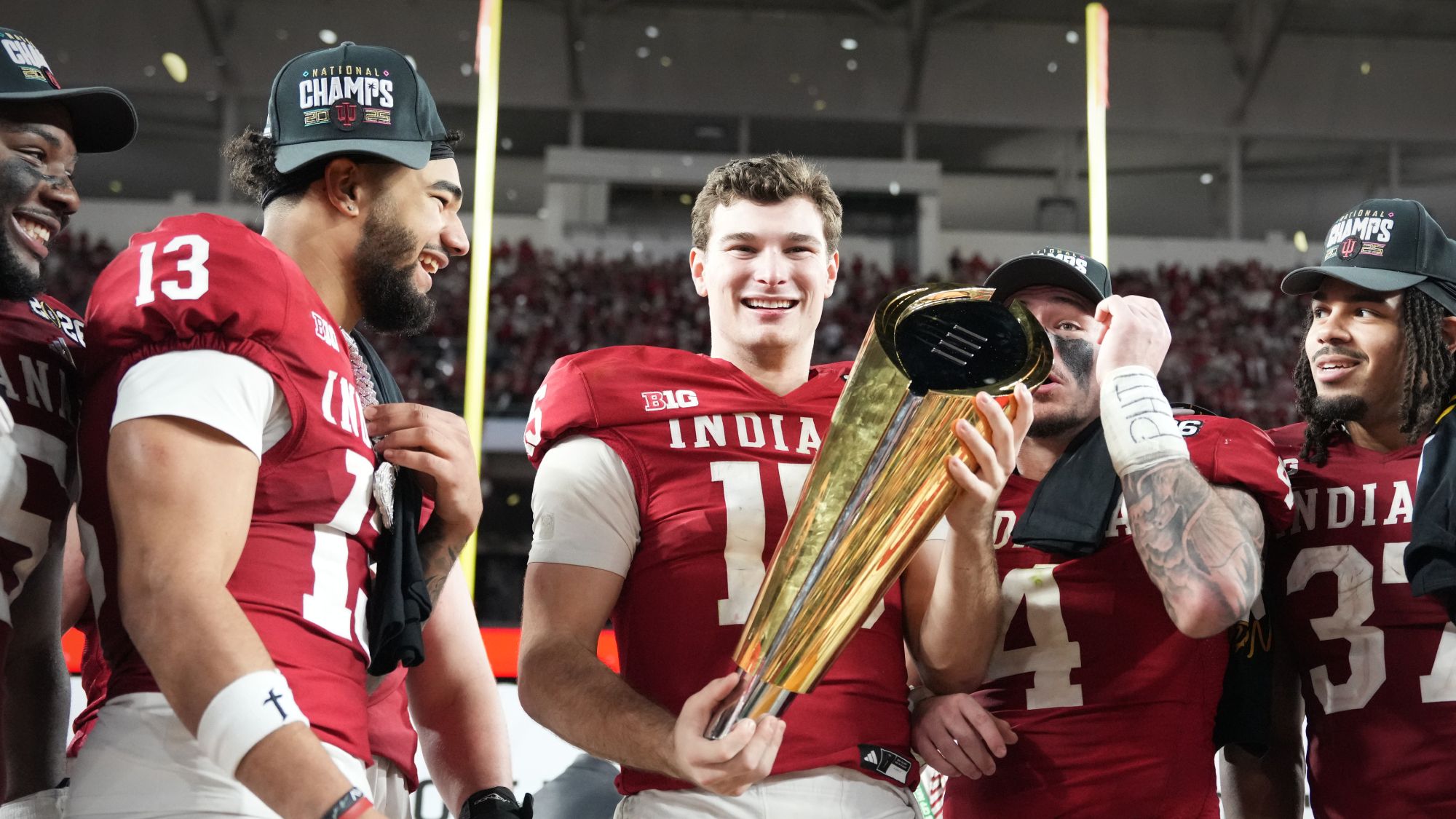
    The Indiana University Hoosiers beat the University of Miami Hurricanes 27-21 last night to cap an improbable College Football Playoff national championship. It was the first national title for the Hoosiers, the losingest program in college football, and Indiana also became the first team to finish a season 16-0 since Yale in 1894.

    Who said what
    “Let me tell you: We won the national championship at Indiana University,” said coach Curt Cignetti, who took over the program and its record 713 losses two years ago. “It can be done.” Cignetti’s coaching and a play-of-the-season touchdown run by Heisman Trophy winner Fernando Mendoza (pictured above center) “brought an improbable — maybe impossible? — national championship to a program that had known nothing but losing and indifference for almost 140 years,” The Associated Press said. 

    Cignetti completed “one of the most stunning turnarounds in American sports” by molding a “roster of overlooked and undersized misfits” into a “wrecking machine,” The Wall Street Journal said. Indiana’s “out-of-nowhere rise immediately joins the ranks of the U.S. Olympic hockey team’s ’Miracle on Ice’ in 1980” and “the New York Mets’ World Series in 1969.” Cignetti called his team’s victory “one of the greatest sports stories of all time.”

    What next?
    Mendoza is a “likely first pick in the 2026 NFL draft,” the Journal said. In a “fitting bit of symmetry” for the Hoosiers, their undefeated football title “comes 50 years after Bob Knight’s basketball team went 32-0 to win it all,” the AP said. “That hasn’t happened since, and there’s already some thought that college football — in its evolving, money-soaked, name-image-likeness era — might not see a team like this again, either.” 


    TODAY’S SCIENCE Story

    Cows can use tools, scientists report

    What happened
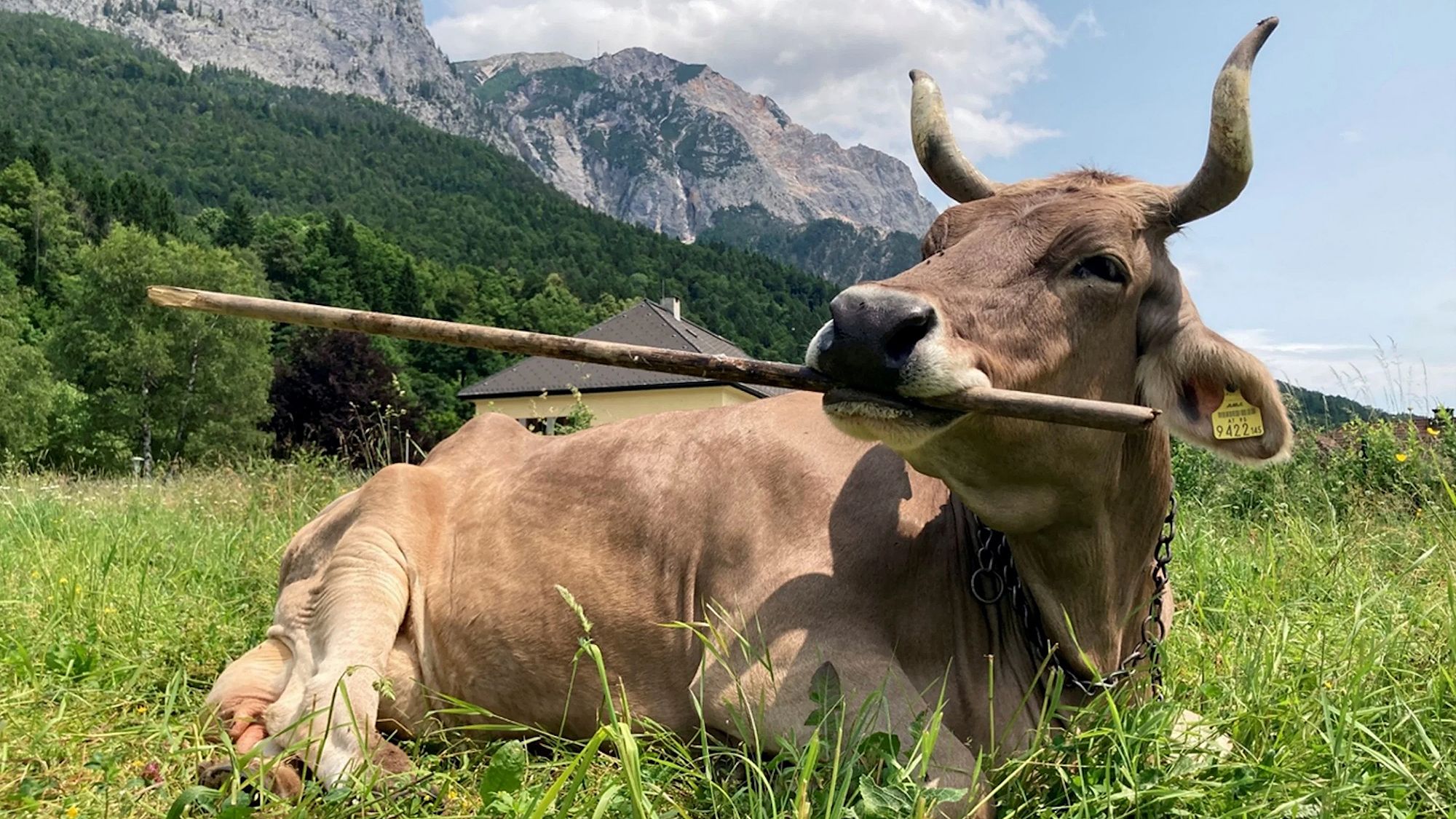
    An Austrian cow named Veronika can use different parts of a wooden push broom to scratch herself, in the first verified instance of cattle using tools, cognitive biologists reported yesterday in the journal Current Biology. The study adds cows to the “growing list of animals capable of using tools, an ability once thought to be a hallmark of humanity,” The Washington Post said.

    Who said what
    “Making and using tools” was “thought to be uniquely human” until the 1960s, when primatologist Jane Goodall observed a chimpanzee named David Graybeard “dip a blade of grass into a termite mound to fish for insects to eat,” the Post said. “Since then, orcas, elephants, octopuses, crows, wolves, fish and ants have taken human beings down a peg or two by apparently wielding tools.” 

    Cattle “have not traditionally been celebrated for their smarts,” but perhaps they have been “underestimated,” The New York Times said. Unlike Veronika, a 13-year-old family pet,  “very few of them get the opportunity to develop or demonstrate their cognitive abilities.” It’s probably not that Veronika is “like, the bovine Einstein,” said study co-author Alice Auersperg of the University of Veterinary Medicine Vienna. But “she has the opportunity to interact with her environment and to learn about her environment.” 

    What next?
    Other species of cattle have been caught on camera using branches to scratch themselves, so “our conclusion is that Veronika is not special,” said study co-author Antonio Osuna-Mascaró. Humans have been mainly interested in cattle for meat and milk, Auersperg told the Times.  “Perhaps the absurd thing was not the absurdity of a cow using tools, but the absurdity of us never thinking that a cow might be intelligent.”


    It’s not all bad

    A 22-year-old mountain gorilla named Mafuko was recently spotted in the Democratic Republic of Congo holding twins, an encouraging sight for conservationists. There are only about 1,000 mountain gorillas in the wild, and to see twins is “exciting, because it’s incredibly rare,” Tara Stoinski, the CEO of the Dian Fossey Gorilla Fund, told National Geographic. Mafuko and her babies live in Virunga National Park, and officials say the twins, both males, appear to be healthy.


    Under the radar

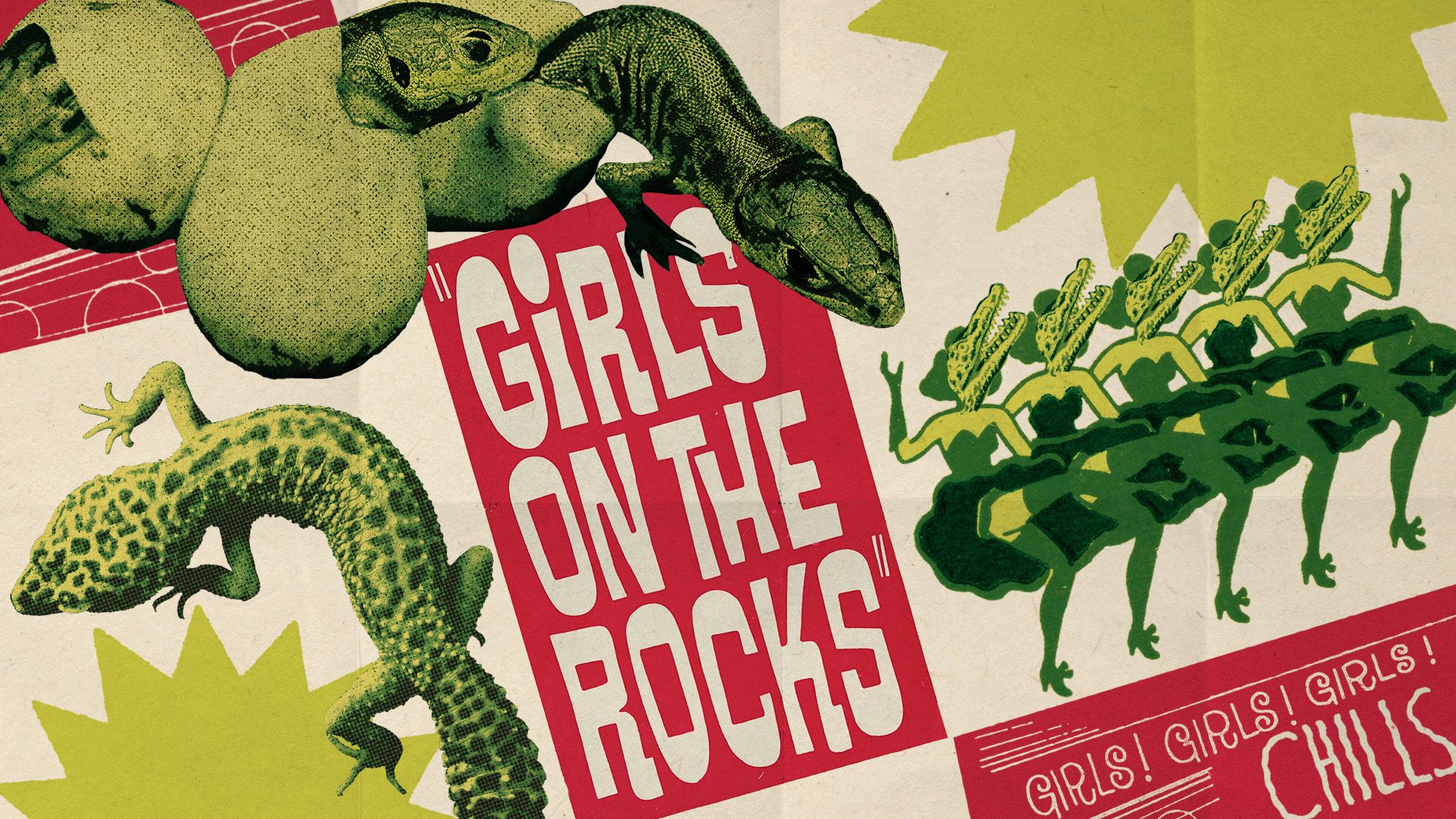
    Climate change could prompt a reptile ‘sexpocalypse’

    Warming temperatures have the potential to drastically alter the reproductive ability and evolution of reptiles. The sex of these creatures is “not determined by their genes,” as with “typical vertebrates,” said Scientific American. Rather, the “temperature of their nest pushes them toward becoming male or female.” 

    “For reptiles that already face habitat loss and pollution, this genetic sensitivity adds a quiet risk,” said Earth.com. In a world of increased heat from climate change, “entire generations of sexually reproducing reptiles will be dramatically skewed male or female,” Scientific American said. This development may lead to a “sexpocalypse” that spells the end of some species. Some scientists have predicted there could be only one sex of alligators by the year 2100.

    “Mating opportunities will decline; populations might become inbred,” said Scientific American. In addition, “surviving members of a species that’s already dwindling from other pressures might not be able to find a partner with whom to make babies.” As a result, “these ancient creatures — who have survived since the era of the dinosaurs — simply won’t be able to find mates to sustain the next generation,” said NBC.

    Reptiles have adapted before. Some of the oldest animals on Earth, they have outlasted “dramatic climate shifts, living through ice ages and intense heat,” said Scientific American. Reptiles at risk “might be able to keep their eggs cool and their sex ratios steady by nesting earlier in the year or in shadier places or by digging deeper in the ground.” However, this would “depend on the animals perceiving the temperature shift” and “having the capacity to do things differently.”


    On this day

    January 20, 1945

    Franklin D. Roosevelt was inaugurated for an unprecedented fourth term as U.S. president. This term was brief, though, as FDR died less than three months later, in April. After his presidency, Congress passed the 22nd Amendment, prohibiting presidents from serving more than two terms. It was ratified in 1951.


    TODAY’S newspaperS

    ‘Trump’s first year back’

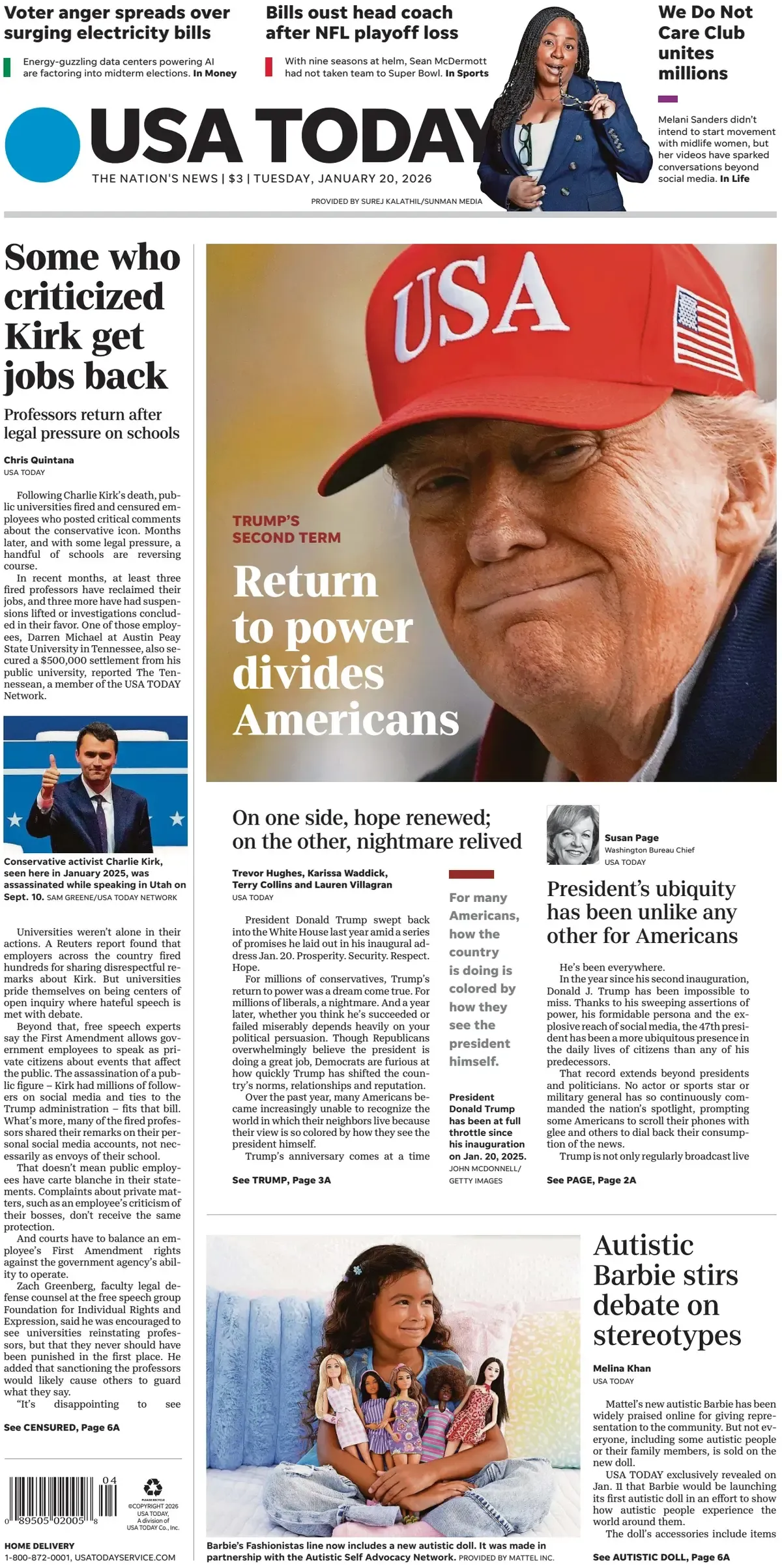
    “Trump’s first year back” has been “full of unprecedented actions, some in direct conflict with his vows,” the Los Angeles Times says on Tuesday’s front page. “President’s ubiquity has been unlike any other for Americans,” says USA Today. “Noem denies use of chemical agents in Minn., then backtracks,” The Sacramento Bee says. “Detained Coast Guard veteran rips CBP actions,” says the Arizona Republic. “A louder Christian right or a revival?” the Houston Chronicle says. “Trump threats on Greenland mobilize allies,” The Wall Street Journal says. “In Iran, a feeling of betrayal by Trump,” The Washington Post says. “Spain is stunned after rail crash” that “leaves scores dead,” says The New York Times.

    ► See the newspaper front pages


    Tall tale

    A bone to pick

    Donkey’s Place in Camden, New Jersey, is known for cheesesteaks and “perhaps less renowned for its antique walrus penis bone,” said NJ.com. The bone sat behind the bar for decades until last week, when a customer asked to hold it and then walked away, owner Rob Lucas Jr. said. Donkey’s Place shared a photo of the man online and requested that he return the unusual decor, no questions asked. “We just want the thing back,” said Lucas.


    Morning Report was written and edited by Nadia Croes, Catherine Garcia, Scott Hocker, Anya Jaremko-Greenwold, Justin Klawans, Rafi Schwartz, Peter Weber and Kari Wilkin, with illustrations by Stephen Kelly and Julia Wytrazek.

    Image credits, from top: Sean Gallup / Getty Images; Peter Joneleit / Icon Sportswire via Getty Images; Antonio J. Osuna Mascaró; Illustration by Julia Wytrazek / Getty Images
     

    Recent editions

    • Sunday Shortlist

      British discomfort viewing

    • Saturday Wrap

      Trump’s oil grab

    • Evening Review

      The momentum to impeach Noem

    VIEW ALL
    TheWeek
    • About Us
    • Contact Future's experts
    • Terms and Conditions
    • Privacy Policy
    • Cookie Policy
    • Advertise With Us
    • FAQ
    Add as a preferred source on Google

    The Week is part of Future US Inc, an international media group and leading digital publisher. Visit our corporate site.

    © Future US, Inc. Full 7th Floor, 130 West 42nd Street, New York, NY 10036.