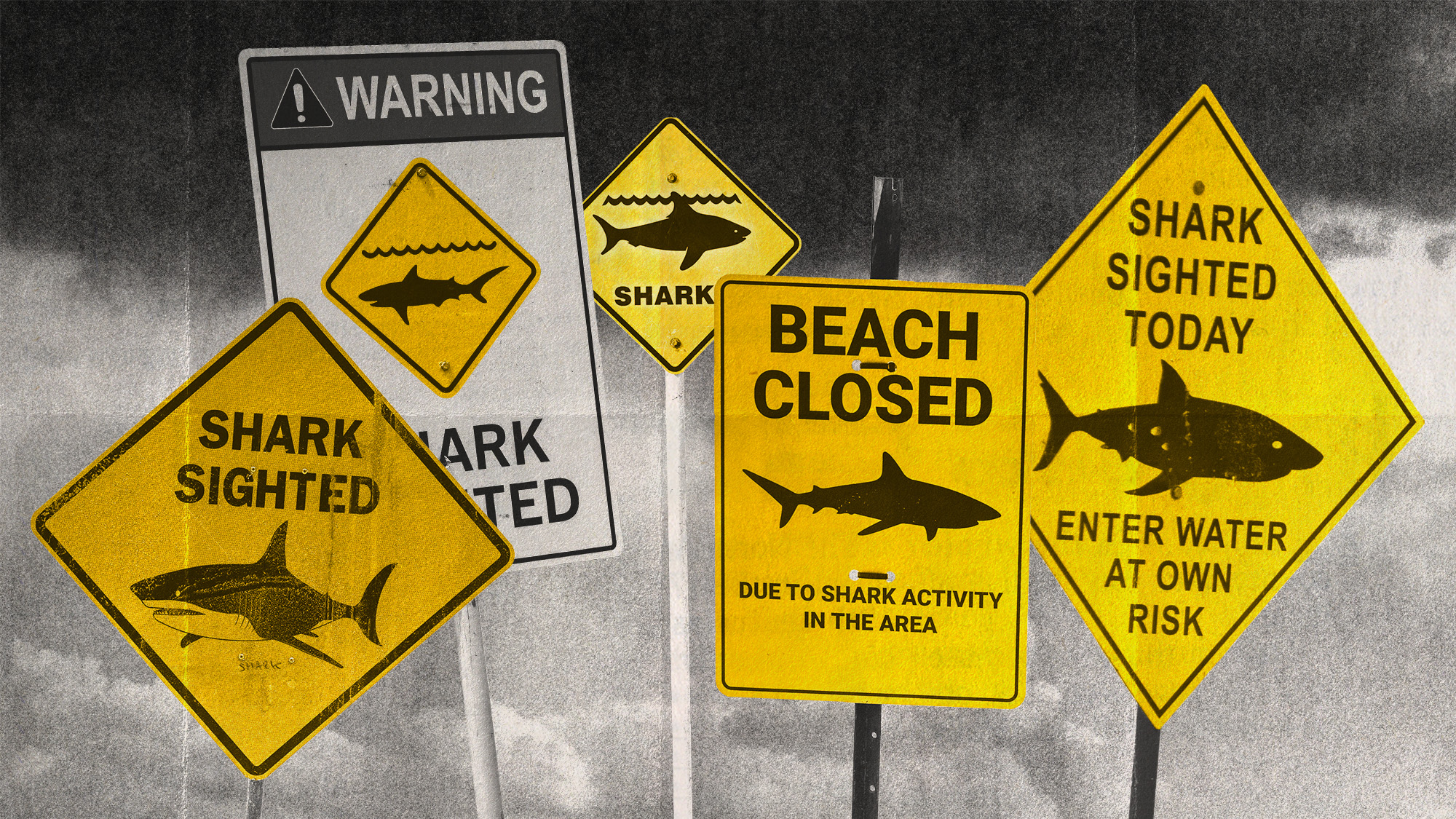
Swimmers off Australian beaches are suffering a higher-than-usual number of shark bites. There were two attacks in the span of 48 hours in January and, since then, at least four people have been killed and almost two dozen others injured. Extreme rainfall and warming ocean temperatures due to climate change are driving the uptick.
While shark attacks in Australia remain very rare, there’s a “gradual rise in encounters,” said Reuters. The country is “averaging nearly 29 incidents per year over the last decade, up from an average of roughly 16 per year in the 2000s.”
In January, a deluge “broke January daily rainfall records for Sydney” and “flushed sewage and other waste into the nearby coastal waters,” said Scientific American. This attracted “baitfish, which in turn lured sharks closer to shore.” Warming oceans also impact shark behavior. Fatal encounters are usually with bull sharks, tiger sharks or white sharks, and all three prefer warm waters and stay longer in them during summer.
To prevent incidents, Australia uses aerial surveillance. “Once drone pilots spot a potentially dangerous shark, they will alert lifeguards, who can sound the shark siren and clear the water,” said The New York Times.
The country also has a shark culling program, and some are calling for the program’s expansion in light of recent attacks. But others object to expanding it. To be effective, “you would have to remove all the sharks, driving them to extinction or close to it,” which is “not a cull, it’s ecocide,” said The Sydney Morning Herald.
Also, sharks can help to fight climate change. In coastal waters, they “protect and enhance what’s known as blue carbon,” which is carbon “stored in oceans,” said the World Wildlife Fund. When they “target plant-eating fish, they can positively impact the marine carbon cycle.” |