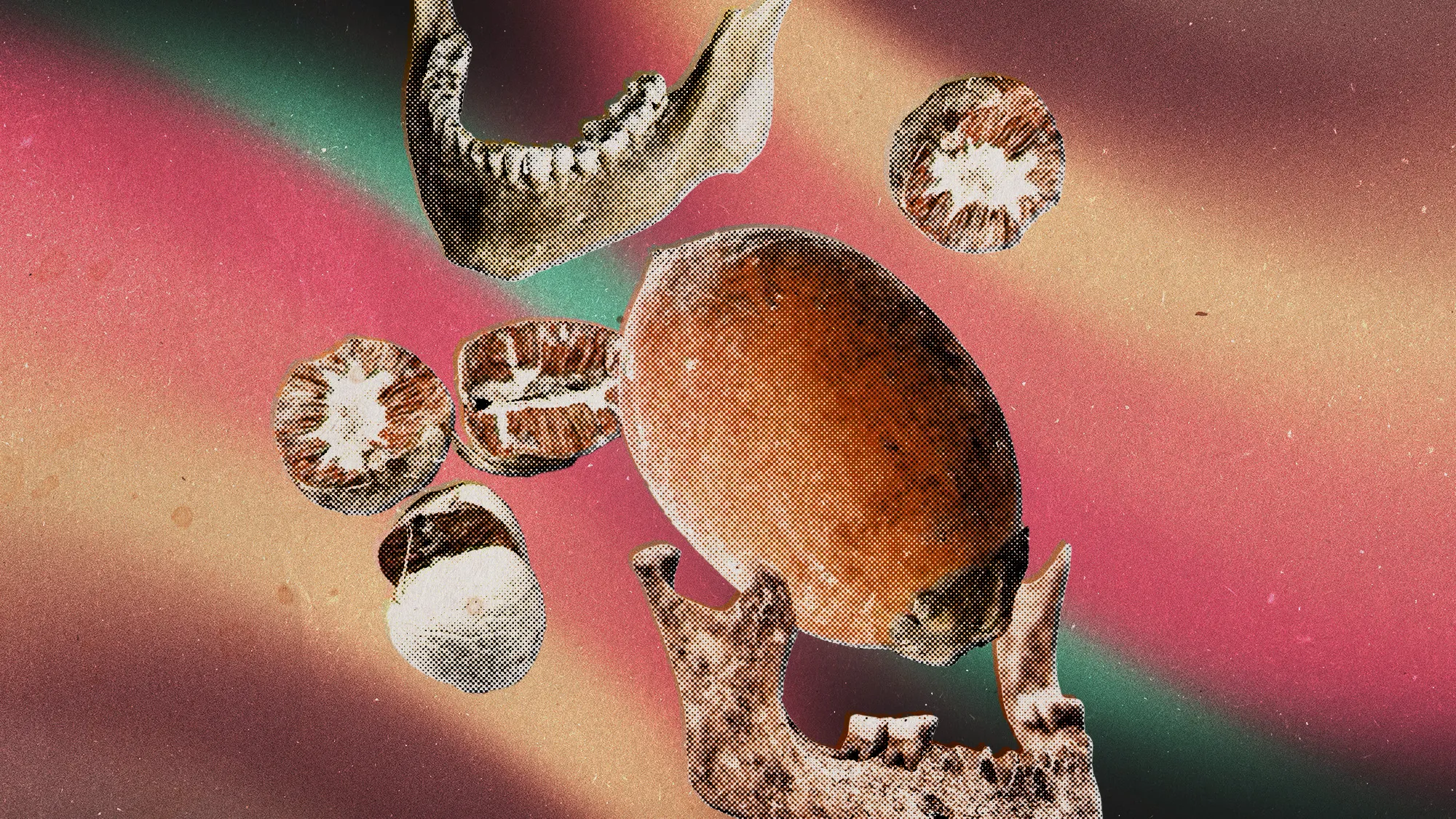
Researchers have found evidence that ancient humans chewed on betel nuts, a stimulant still widely used today. Analyzing the teeth of early human foragers from the Indonesian island of Sulawesi revealed “dental pathology” most likely attributed to the “habitual sucking of whole betel nuts,” said a study published in the journal Science Advances.
Written accounts of betel nut chewing go back about 2,000 years, and previous archaeological evidence goes back about 3,500 years. The new findings extend potential betel nut use by tens of thousands of years.
The skeletal remains had “deep, rounded grooves in some of their teeth,” the study’s authors said at The Conversation. These grooves were “unlike any previously documented form of prehistoric dental wear” and “pointed to an unusual activity, performed repeatedly over a long period.” Researchers compared the wear to the “rounded notches worn into the teeth of habitual smokers who regularly clenched the abrasive stems of clay tobacco pipes” during the colonial period.
The similarity led the researchers to the betel nut, whose “rounded seeds” match the “size and shape of the grooves,” said the authors. While not well known in the U.S., the nut is “one of the world’s most popular intoxicants,” especially in Southeast Asia, said Popular Science.
Chewing the drug produces a euphoric effect because of a psychoactive ingredient called arecoline. Prehistoric humans likely used the nuts as painkillers, said The New York Times, but in chewing on them, they “wore their teeth down to the pulp,” which “would have been excruciating.” |