The Week US The Week US
flag of US
US
flag of UK
UK
https://cdn.mos.cms.futurecdn.net/flexiimages/jacafc5zvs1692883516.jpg

SUBSCRIBE & SAVE

Less than $3 per week

Sign in
  • View Profile
  • Sign out
  • The Explainer
  • The Week Recommends
  • Newsletters
  • Cartoons
  • From the Magazine
  • The Week Junior
  • More
    • Politics
    • World News
    • Business
    • Health
    • Science
    • Food & Drink
    • Travel
    • Culture
    • History
    • Personal Finance
    • Puzzles
    • Photos
    • The Blend
    • All Categories
  • Newsletter sign up Newsletter
  • Brand Logo
    Voting challenge, execution reversal and Bend school shooting

     
    TODAY’S ELECTIONS story

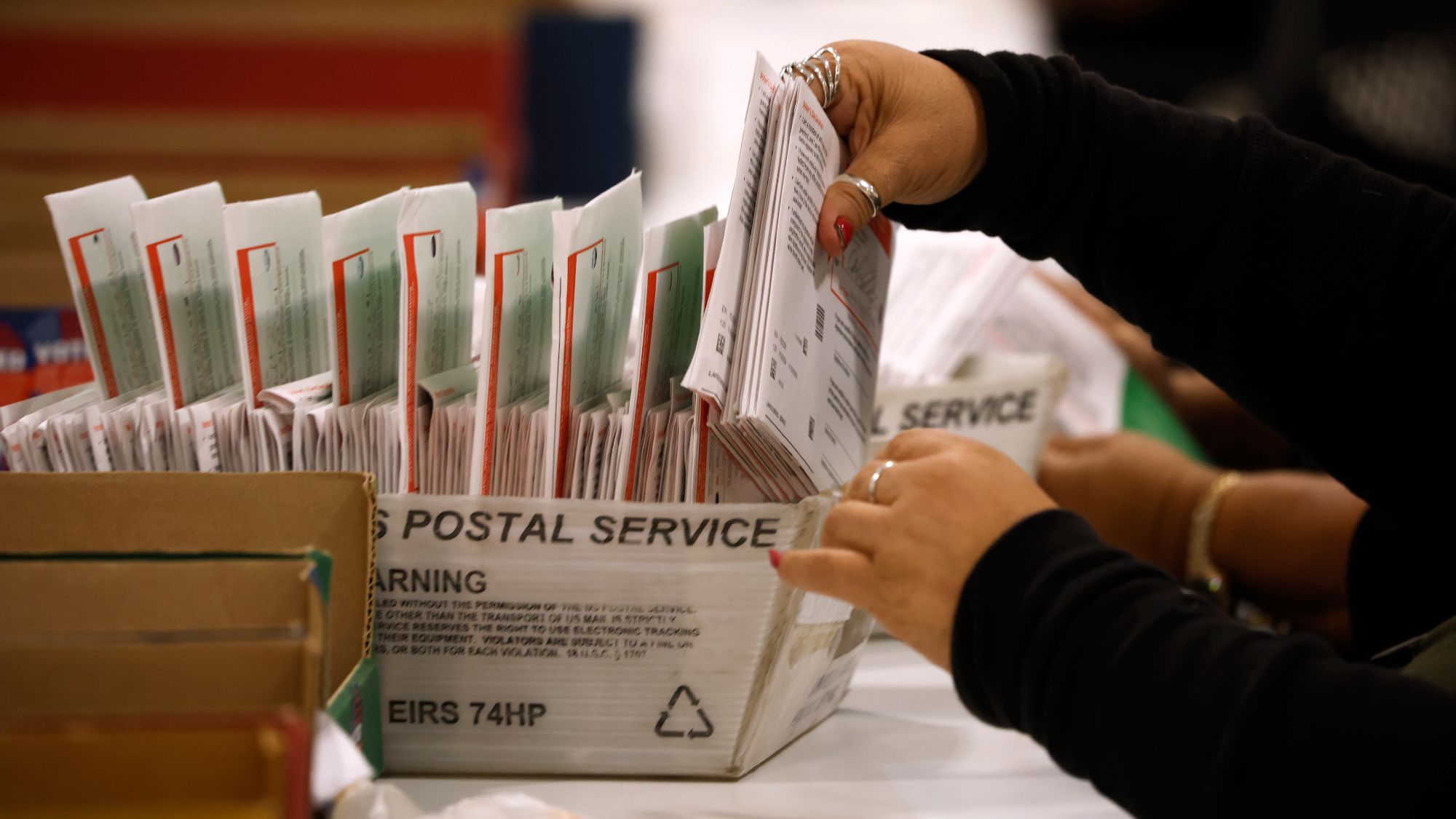
    DOJ sues California to bar 20k ‘likely’ noncitizen voters  

    What happened
    The Justice Department yesterday sued California and its top election officials, asking a federal judge to bar the state from counting the mail ballots of 20,000 alleged “likely noncitizens” until their legal status is verified. The DOJ sent officials a list of the voters on Tuesday and gave them 48 hours to review the names. “California has refused to comply” with this “opportunity to self-correct its records,” Attorney General Todd Blanche said in a statement. 

    Who said what
    California Secretary of State Shirley Weber said in a letter released yesterday that she would “welcome the opportunity” to review evidence of ineligible voters, but the DOJ’s list “lacks both the detail and function to be of any investigative use,” and she “will not disenfranchise thousands of Californians” based on an “unsupported and likely inaccurate” tally. The DOJ’s claims have “shrunk significantly” in other states “after further scrutiny,” CNN said. In Nevada, the DOJ’s initial tally of 15,903 noncitizen voters fell to 6,218, then 185, all of whom Nevada said appear to be citizens. 

    Claiming widespread noncitizen voting is a “central pillar” of President Donald Trump’s so-far-unsuccessful “multifront campaign to rewrite the rules for the 2026 midterm elections and avoid a GOP wipeout,” David Ignatius said at The Washington Post. This lawsuit is “as guaranteed a loss as anything the DOJ has filed yet,” Loyola Marymount University law professor Justin Levitt told CNN.

    What next?
    Trump’s “longstanding attacks” on voting systems, The New York Times said, are “crystallizing into what many election officials” fear is an “attempt to lay the groundwork to challenge” any “results that do not favor Republicans.”  


    TODAY’S CAPITAL PUNISHMENT story

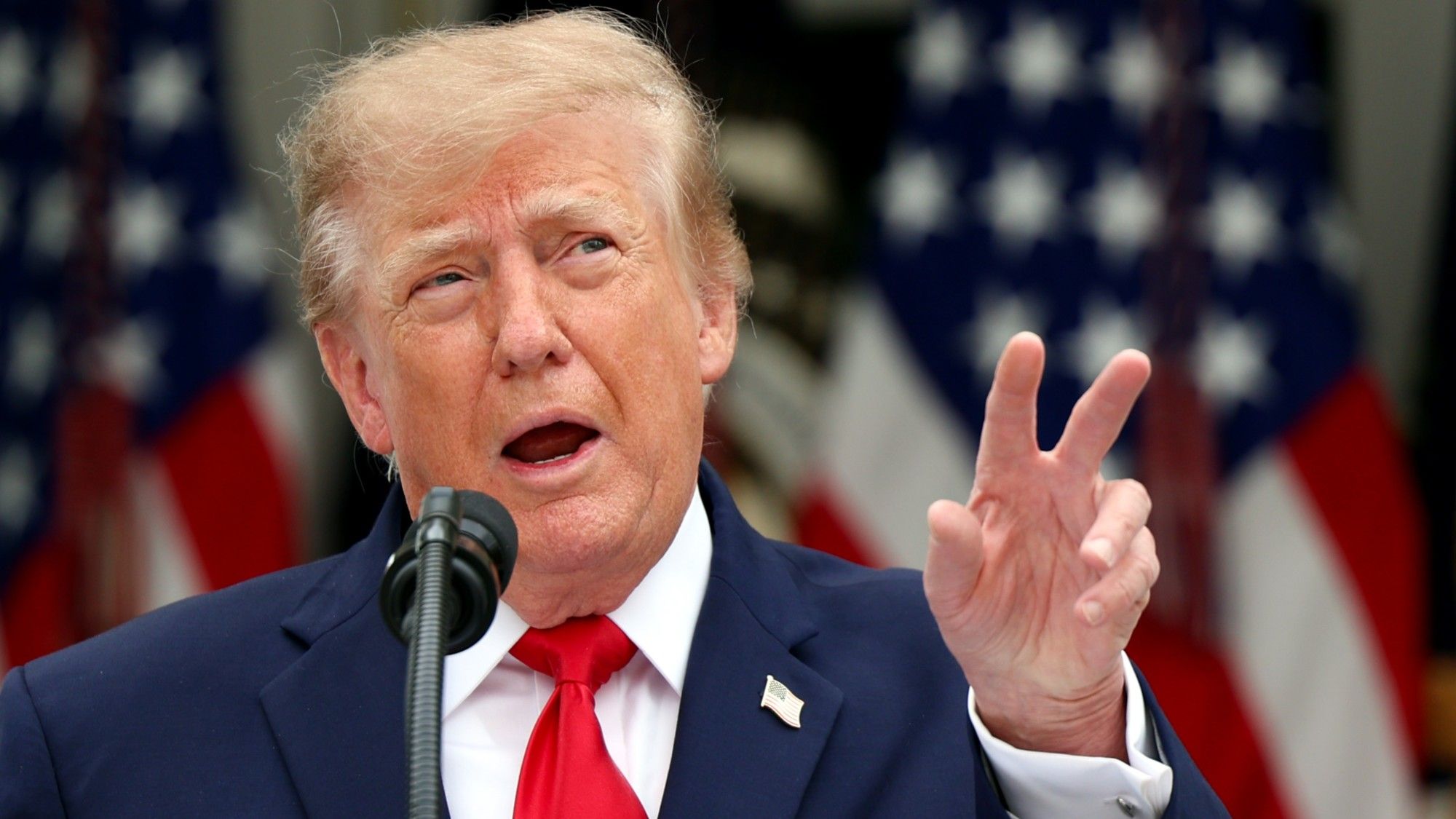
    Trump quashes plan to livestream execution

    What happened
    President Donald Trump yesterday canceled Defense Secretary Pete Hegseth’s plan to livestream the firing squad execution of Nidal Hasan, the former Army officer convicted of murdering 13 troops at Fort Hood. The decision followed “significant blowback from both Republicans and Democrats,” plus former military leaders and the Catholic Church, said The Associated Press.

    Who said what
    Hasan is a “very bad and evil man,” Trump said on social media, but “many very good and well meaning people would rather not watch him die, through streaming, or through any other visual device.” Cancelling the broadcast is a “significant rebuke” of Hegseth, said The Washington Post. Trump has stuck with him “through numerous controversies” despite Hegseth’s “flagging support” even among Republicans. 

    Trump was “initially full-throated in his approval” of broadcasting Hasan’s death, Axios said. It “took roughly a week for the plan to crumble” amid a “chorus of negative sentiment.” Even Vice President JD Vance “expressed doubt about it,” The New York Times said. Trump privately began wavering after learning “Hasan is paralyzed.”

    What next?
    Hasan will “die, as scheduled, by firing squad” on Dec. 3, Trump said. Family members of his victims can watch “if they so choose.” 


    TODAY’S GUN VIOLENCE Story

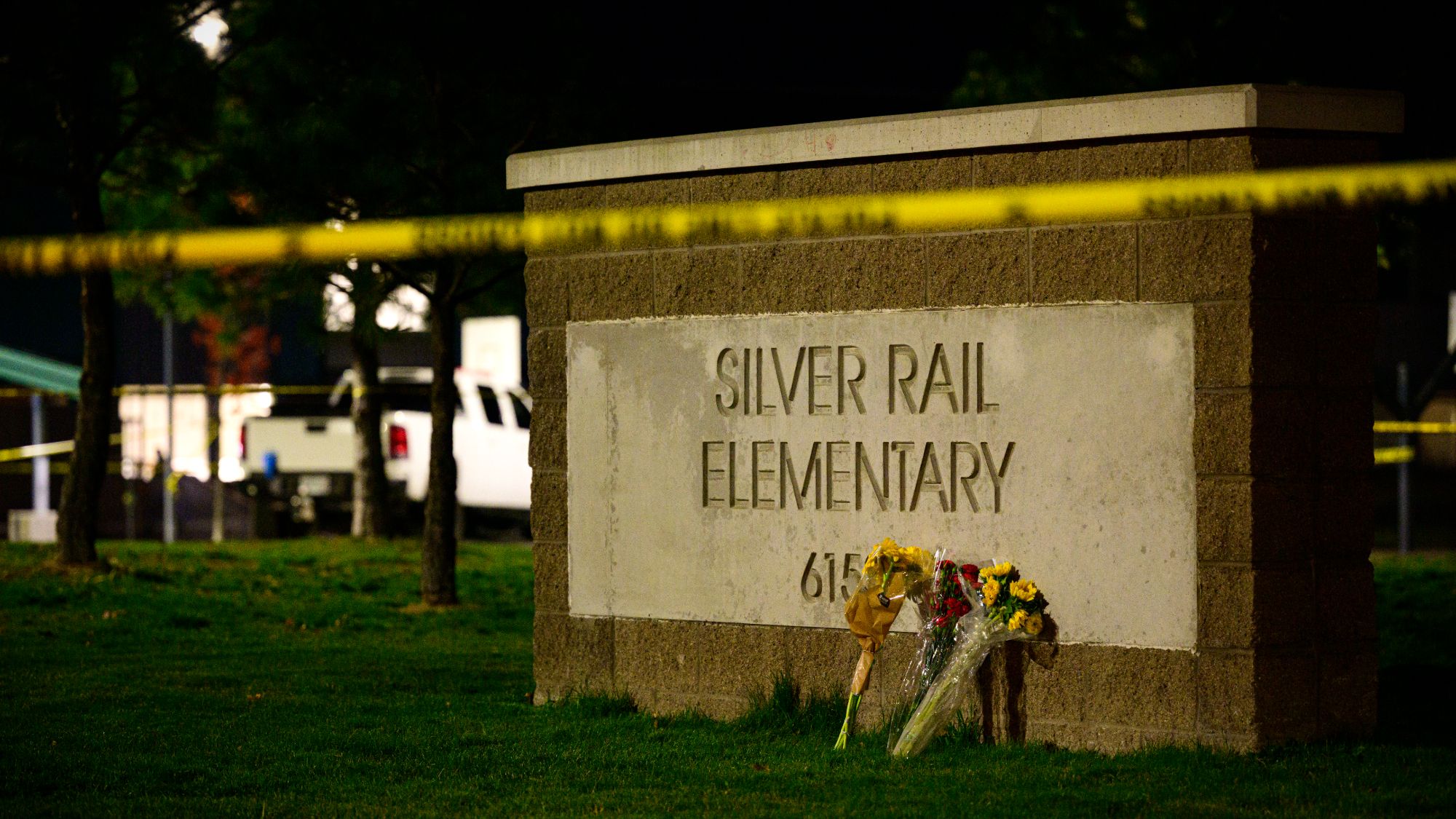
    3 kids, 1 teacher killed in Oregon by teen shooter

    What happened
    A 16-year-old yesterday shot dead three children and a teacher at Silver Rail Elementary School in Bend, Oregon. The unidentified teen entered the building by shooting a locked door and opened fire before being shot dead minutes later by an armed “community member” who “pursued him into the school,” Bend Police Chief Mike Krantz said at a news conference. The children killed were 5, 8 and 11, and a 7-year-old child and 54-year-old teacher were critically injured. The shooter used a pump-action shotgun purchased by his mother, a law enforcement official told The Associated Press. 

    Who said what
    Yesterday’s “spasm of violence is part of a long string of school shootings that have stricken the nation” over the past 30 years, “leaving deep and lasting scars on communities” and sometimes the “entire country,” The New York Times said. “It’s just something that we live with here in America,” Leah Schwartz, who heard the gunshots while walking her dog, told the Times. “It’s exhausting.”

    The “tragedy at Silver Rail Elementary marks the 36th shooting on K-12 school grounds this year,” CNN said. It was the “28th mass killing in the U.S. this year,” said the AP, and the third in the past week.

    What next?
    The Bend-La Pine school district canceled classes, sports and extracurricular activities today at all 32 of its schools.


    It’s not all bad

    Scientists in Argentina have revived a lost birdsong in a Buenos Aires park by playing a computer-generated recording based on hand-drawn annotations from the 1960s. Within three months, a local rufous-collared sparrow began imitating the lost song of his species. There’s “growing recognition of birdsong’s importance to conservation,” especially for finding a mate and defending territory, said The Guardian. If a bird population declines, fledglings “tweet abnormally or mistakenly learn the songs of other species, jeopardizing their chances of breeding.”


    Under the radar

    The Southern Giants militia reshaping Yemen’s war

    A militia led by a former honey and herb trader is “changing the Saudi-Houthi war,” said The Telegraph. The Southern Giants emerged in southern Yemen in 2015 during the civil war, and are now the country’s “most feared militia.” Their ideology is “rooted in Salafism, an austere, ultraconservative strand of Sunni Islam” that regards Shia groups, such as the Iran-backed Houthis, as “heretics.”

    Believed to control up to 70,000 fighters, the Southern Giants have become “one of Yemen’s most formidable military forces,” said Al Jazeera. Last week, the militia took a leading role in an operation to retake the strategically vital Red Sea port of Mocha, captured by the Houthis last month. The Yemeni government claims that Mocha and the coastal road along the crucial Bab el-Mandeb Strait are now under its control again, “one of their first major military gains in years.”

    For now, the Southern Giants represent the Saudi-led coalition’s “cutting edge” in the fight to roll back Houthi gains and pry back “leverage over global shipping,” said The Telegraph. But the militia also represents the “most dangerous fault-line” in the alliance between Saudi Arabia and the United Arab Emirates. 

    The UAE trains and funds the Southern Giants and ensures they are “lavishly supplied with tanks, artillery, modern armour, guided missiles,” The Telegraph said. Saudi and UAE interests are aligned for now, but how the Emiratis use their Yemen proxy force will shape not just current battles but “the longer struggle for control of Yemen’s south.”


    On this day

    October 16, 1962

    President John F. Kennedy was presented with the aerial reconnaissance photos of Soviet missile bases in Cuba, kicking off the Cuban Missile Crisis. The 13 days of intense planning and negotiations brought the two superpowers to the brink of nuclear war. Kennedy maintained his public schedule all day to avoid panic and suspicion. 


    TODAY’S newspaperS

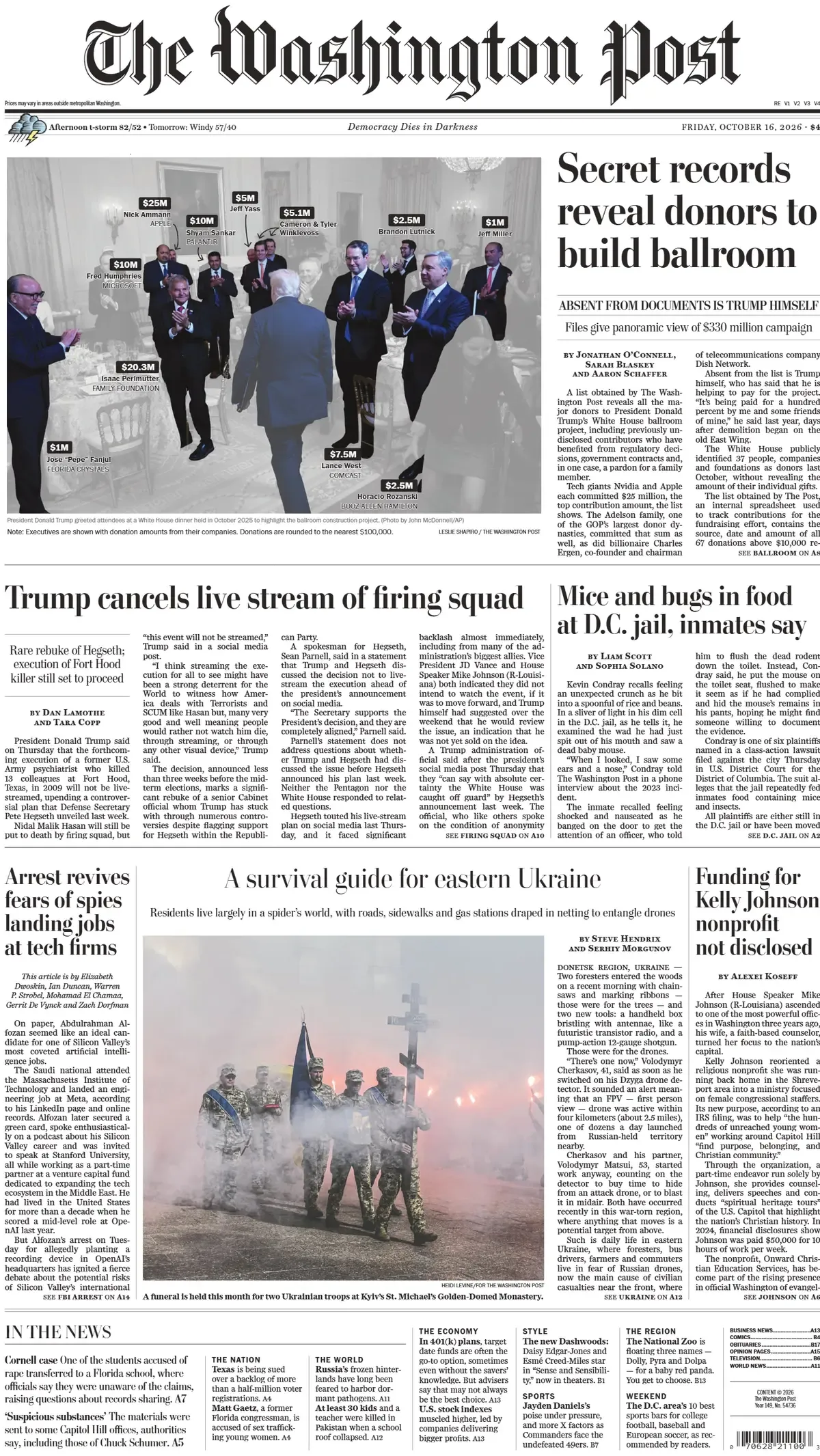
    ‘Guns, F-bombs and alpacas’

    TKTKTK

    ► See the newspaper front pages


    Tall tale

    Flying highness

    Queen Suthida Bajrasudha Bimalalakshana of Thailand has become the world’s first reigning woman monarch to pilot a fighter jet solo. The queen flew a Swedish-made Gripen jet from an airbase in southern Thailand, and after she landed, her husband, King Maha Vajiralongkorn, awarded her a Gripen Order Golden Patch badge. Nicknamed Pilot Queen, Suthida is a former flight attendant and royal guard who has logged more than 1,100 flight hours since becoming a pilot in 2010.


    Morning Report was written and edited by Nadia Croes, Scott Hocker, Anya Jaremko-Greenwold, Justin Klawans, Chas Newkey-Burden, Devika Rao, Rafi Schwartz, Peter Weber and Kari Wilkin, with illustrations by Stephen Kelly and Julia Wytrazek.

    Image credits, from top: Justin Sullivan / Getty Images; Tom Brenner / The Washington Post / Bloomberg / Getty Images; Mathieu Lewis-Rolland / Getty Images; Illustration by Julia Wytrazek / Getty Images
     

    Recent editions

    • Evening Review

      Can Democrats trust the polls?

    • Morning Report

      Ukraine stymied by mystery Starlink slowdown

    • Evening Review

      The return of public execution

    VIEW ALL
    TheWeek
    • About Us
    • Contact Future's experts
    • Terms and Conditions
    • Privacy Policy
    • Cookie Policy
    • Advertise With Us
    • FAQ
    Add as a preferred source on Google Add as a preferred source on Google

    The Week US is part of Future US Inc, an international media group and leading digital publisher. Visit our corporate site.

    © Future US, Inc. Full 7th Floor, 130 West 42nd Street, New York, NY 10036.