Once derided as ‘Little Marco,’ Trump’s 2016 primary rival is now a power player in his administration.
How influential is Rubio?
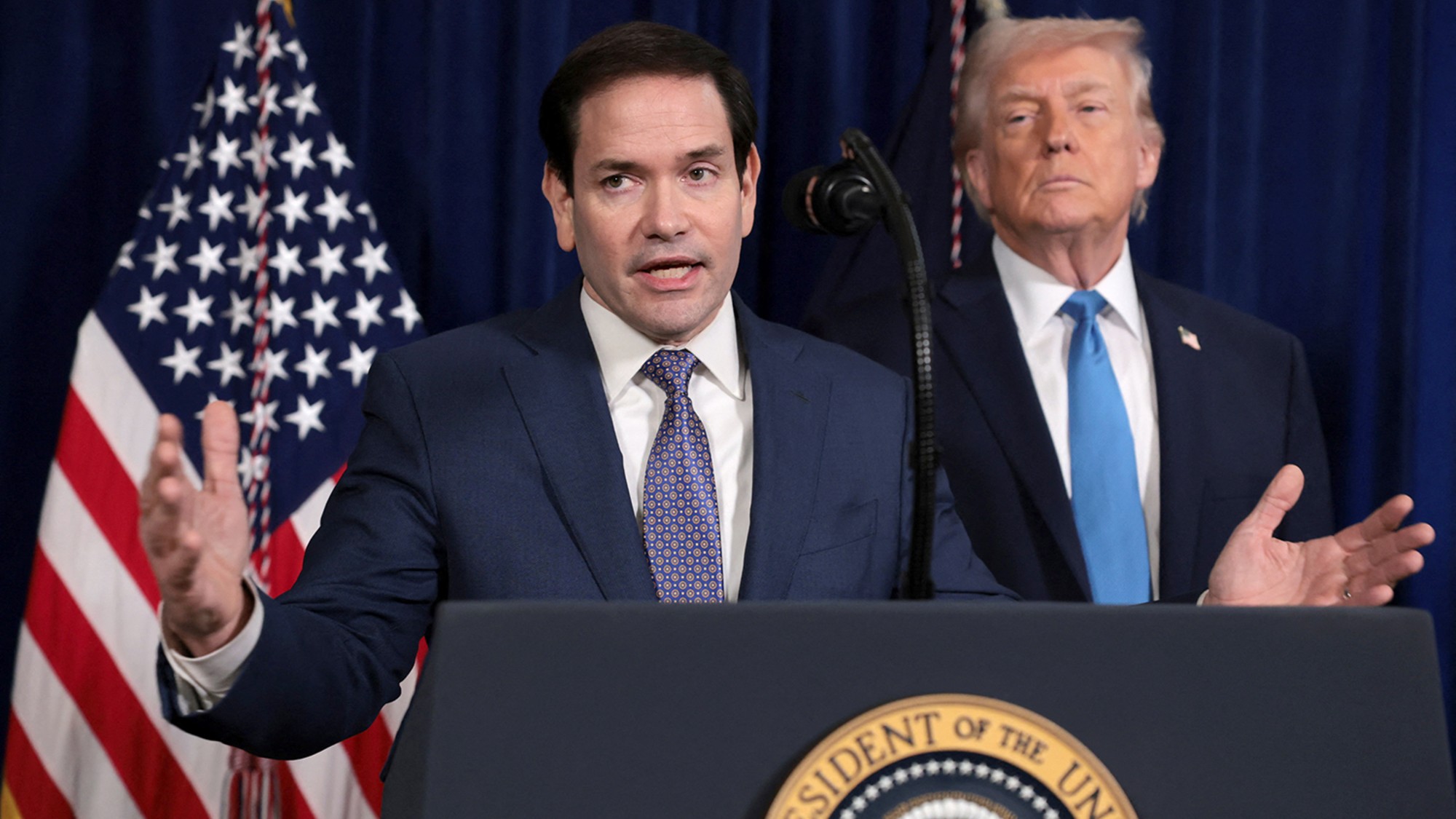
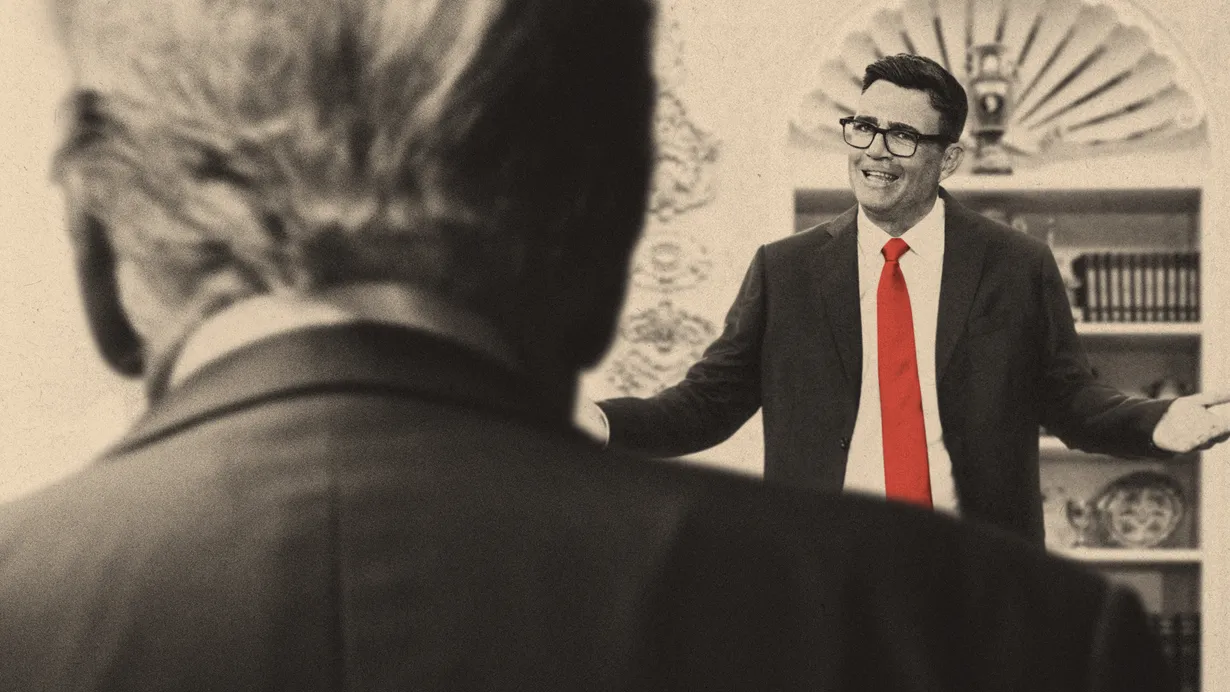
As the first official since Henry Kissinger to serve as both secretary of state and national security adviser, the 54-year-old former senator is the most powerful foreign policy voice in the White House in decades. An executor of President Trump’s “America first” doctrine, he has presided over the dismantling of the U.S. Agency for International Development, fired hundreds of foreign service officers, and revoked more than 80,000 visas, many belonging to foreign students in the U.S. who had criticized Israel’s war in Gaza. He played a key role in planning the January raid that captured Venezuelan strongman Nicolás Maduro and was later tasked by Trump with helping to “run” the country. Rubio’s MAGA ascendance is in many ways unlikely. Battling Trump for the Republican presidential nomination in 2016, Rubio savaged his current boss as a “con artist” and made insinuations about Trump’s manhood by referencing his “small hands.” A skilled political operator, the man Trump once dismissively nicknamed “Little Marco” has since ingratiated himself with Trump, who regularly lauds him in public. “When I have a problem, I call up Marco,” Trump said in May. “He gets it solved.”
What is his background?
He was born in Miami to Cuban immigrant parents, whom he for years described as “exiles,” suggesting they arrived in the U.S. after Fidel Castro seized power in 1959. In 2011, multiple outlets uncovered records showing his father, a bartender, and mother, a hotel maid, arrived in the U.S. three years before the Castro- led revolution. Still, his family’s immigrant story and staunch anti- communist beliefs became a key theme in his political career. Elected as a city commissioner in West Miami in 1998, the University of Miami Law School graduate won a seat in the Florida House two years later. Rubio impressed GOP colleagues with his drive and became the chamber’s first Cuban American speaker in 2006. Elected to the U.S. Senate on a Tea Party platform in 2010, he focused on national security; while running for president, he vowed to spread “economic and political freedom,” bolster alliances, and resist despots who “subjugate their smaller neighbors.” He ended his presidential campaign in 2016 after Trump crushed him in the Florida primary.
How did he become a Trump ally?
Reuters When Trump retreated to Mar-a-Lago following his 2020 defeat, then-senator Rubio began building bridges with his former foe. The pair spoke regularly on the phone, and as Trump prosecutions and scandals mounted, Rubio “went out of his way never to criticize the president publicly,” said one Rubio associate. When Trump ran for president again in 2024, Rubio gave an early endorsement and began wooing Trump’s children. Since becoming secretary of state, he has loudly defended the president’s policies and lauded his boss. Trump is “standing up for America in a way that no president has ever had the courage to do before,” Rubio wrote on X after Trump lashed out at Ukrainian President Volodymyr Zelensky in an explosive 2025 White House meeting. The administration is “a snake pit, but Rubio just seemed to be a little better at navigating it,” a former administration official told Politico. He’s also proved remarkably malleable in adapting his views to the MAGA agenda.
How has he changed?
Having demanded in 2022 that President Joe Biden boost funding for USAID to counter China’s rising global influence, Rubio last year oversaw its dismantling, calling it “an agency that long ago went off the rails.” A onetime champion of immigration reform and human rights, Rubio brokered a deal to send 250 Venezuelan migrants to El Salvador’s brutal CECOT prison, where inmates have reported torture. Some former colleagues are appalled by the shift. “Rubio’s MAGA brain transplant is complete,” said Sen. Chris Van Hollen (D-Md.). But some lawmakers and diplomats insist that, behind the scenes, Rubio acts as a restraining force.
Is there evidence of that?
Rubio intervened on Ukraine’s behalf last November when White House special envoy Steve Witkoff was pushing a ceasefire deal that Rubio reportedly condemned as a Kremlin “wish list.” After Rubio inserted himself into U.S.-Ukrainian negotiations, the deal was revised to account for Ukraine’s red lines. And when Trump threatened to grab Greenland from Denmark this year, Rubio quietly reassured European leaders. “He’s doing his best to moderate Trump’s worst impulses,” a European foreign minister told The New Yorker. But in other instances, he’s fueled Trump’s aggression—pushing for the removal of Venezuelan strongman Maduro, whom he’d long denounced as a “narco-dictator,” and for an almost total embargo of Cuba (see box). The “stunning 10-out-of-10 success” of the Maduro capture lifted his capital with Trump, said University of Florida foreign policy professor Patrick Hulme—and boosted Trump’s confidence in his ability to impose his will abroad. “You could draw a direct line from the Maduro raid to the Iran attack.”
What does Rubio’s future hold?
Another White House bid is near certain, say observers. The question is when. Vice President JD Vance is MAGA’s heir apparent, and he dominates Rubio in early 2028 polling. The secretary of state has pledged to back Vance if he runs, and associates say he might hold his fire for a later run. But ABC News recently reported that a group of Republican donors is quietly exploring ways to boost him as a 2028 contender, and Trump has repeatedly floated Rubio as a possible successor. He has been privately polling advisers and friends about the relative merits of Vance and Rubio, according to media reports, and shown increasing fondness for the secretary of state. At a recent dinner for 25 donors at Mar-a-Lago, he asked the crowd whom they wanted: Vance or Rubio. The verdict, one attendee told NBC News, “was almost unanimous for Marco.”