FIFA says the 2026 World Cup will deliver a windfall for the U.S. That’s looking doubtful.
How many people will be watching?
Some 6 billion viewers are expected to tune in to the world’s biggest sporting event, which kicks off June 11 in Mexico City and ends with the July 19 final at New Jersey’s MetLife Stadium. And 1.2 million foreign soccer fans are expected to travel to the U.S., which is co-hosting the World Cup with Canada and Mexico. That influx could deliver a much-needed boost for the American tourism industry, which last year saw a 5.5% decline in overseas visitors—that’s about 4 million fewer tourists—largely because of President Trump’s immigration crackdown and his antagonistic foreign policy. A study by the World Trade Organization and FIFA, soccer’s global organizing body, estimates that the World Cup should add $30.5 billion to the U.S. economy and create 185,000 jobs. But signs of that boom have yet to appear in most of the 11 American host cities, and some state and local officials fear they may not recoup the costs of putting on games: New Jersey alone is spending some $300 million in connection with the tournament. “It is not the cornucopia that FIFA talked about,” said Vijay Dandapani, CEO of the Hotel Association of New York City.
What are host cities reporting?
Nearly 80% of hoteliers in those cities said in a recent industry survey that tournament bookings are running below expectations. Many described the World Cup as a “nonevent,” with room reservations trailing an ordinary June or July in Kansas City, Boston, Philadelphia, San Francisco, and Seattle, while New York City, Los Angeles, Houston, and Dallas are seeing typical figures. The situation is rosier in Atlanta and Miami, where about half of hoteliers are in line with or outpacing forecasts; that’s possibly because those soccer-loving cities are hosting some of the more exciting early-stage games. Short-term rentals on sites like Airbnb have fared better, but many would-be hosts are still waiting for guests. Bookings could pick up in July when the quarterfinals begin and international fans “sniff an opportunity that ‘this could be our year,’” said Alan Fyall, a hospitality industry expert at the University of Central Florida. But many potential foreign visitors may decide it’s not worth the hassle of heading to the U.S.
Why might they stay home?
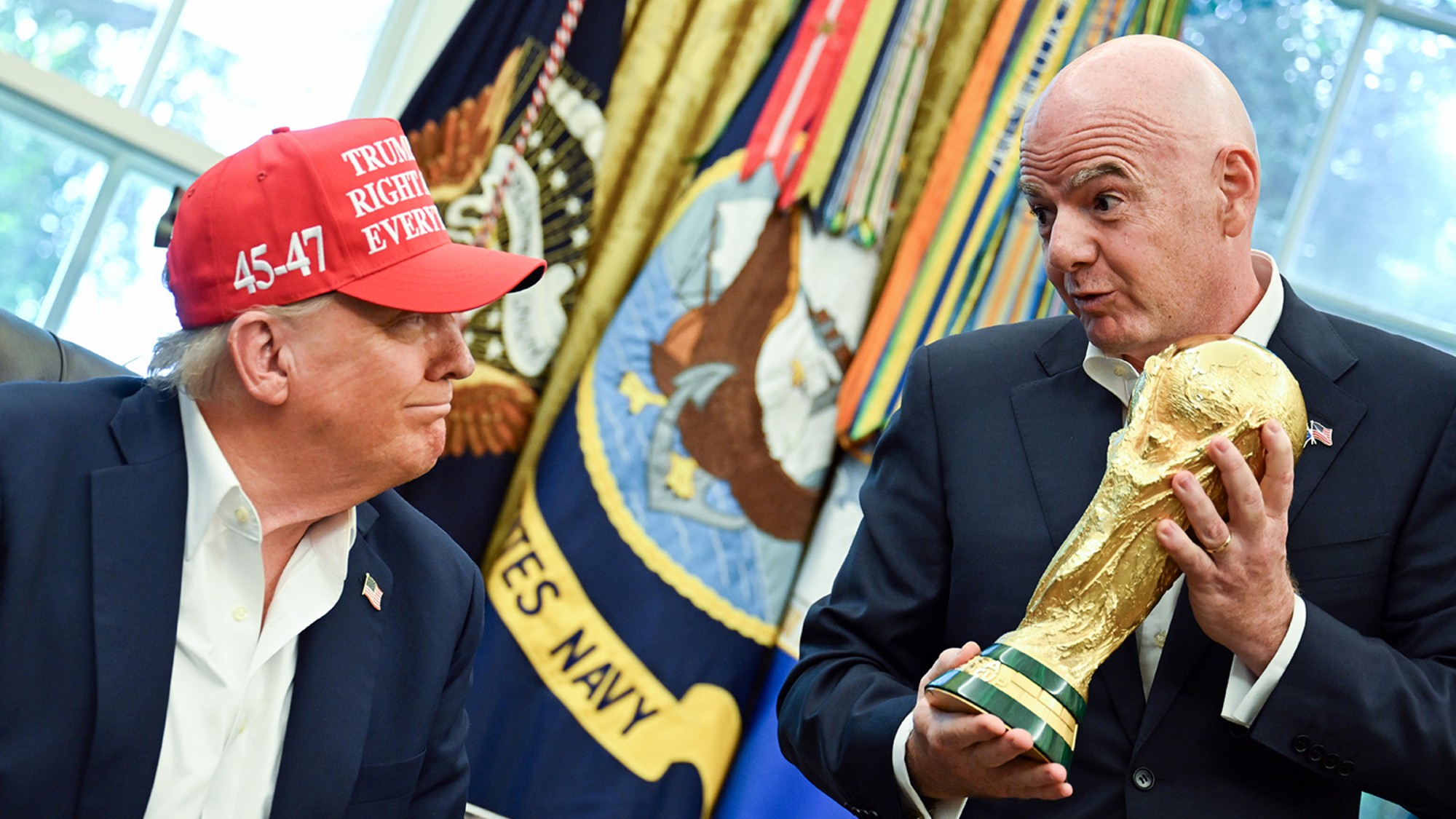
Trump’s immigration policies are a big factor. John Milce, an Australian who’s been to six World Cups, told The New York Times he’s not coming because he’s made comments about Trump online and fears getting denied entry on landing. “It was too much to risk,” said Milce, 76. Trump’s travel ban means fans of two participating teams, Haiti and Iran, won’t be allowed in. But the administration has waived a $15,000 visa bond for visitors from several African nations, including soccer powers Ivory Coast and Senegal, so long as they bought their World Cup tickets by April 15. Money will be an issue for other fans. The cheapest seats on resale sites are currently hovering around $150 to $200 for group-stage games between lower-tier squads like Cape Verde and Saudi Arabia. Tickets for the U.S.’s June 12 opening game against Paraguay in Los Angeles start at $900 and front-row tickets for the final are selling for nearly $33,000. On learning of those ticket prices, Trump — who’s become pals with FIFA boss Gianni Infantino — said he “wouldn’t pay it.” And transportation won’t be cheap. Dedicated fans will have to travel long distances between games — England’s group matches are in Texas, Massachusetts, and New Jersey — at a time when the Iran war has sent airfares and gas prices skyrocketing. Some cities and states have also jacked up the price of public transportation to stadiums.
Why is that?
While FIFA is expected to collect $13 billion from tickets, parking, merchandise, concessions, sponsorships, and TV rights, the organization isn’t covering any transportation costs, forcing local authorities to make tough calls. In Massachusetts, train passengers from Boston’s South Station will pay $80 to get to and from Gillette Stadium in Foxborough, four times what it costs for a New England Patriots game. NJ Transit initially said it would charge $150 for what’s normally a $13 round-trip ride from New York City to MetLife, citing the extra $48 million it will have to spend to accommodate all the extra passengers. The price has since dropped to $98 a game. “We will not be subsidizing World Cup ticket holders on the backs of New Jerseyans,” said Gov. Mikie Sherrill. Cities are also scrambling to beef up security since $625 million in federal funding was held up for months during the Homeland Security shutdown.
Are there safety concerns?
Law enforcement agencies are on high alert, particularly for homegrown, lone wolf extremists seeking to carry out attacks not only at the games but at “soft” targets such as bars and fan zones. “It will be hard to control, given the environment and the number of locations of matches and watch parties across the United States,” one member of a federal law enforcement agency told The Guardian. “There is a very real possibility that something bad will happen.” Still, there’s plenty of excitement about what will unfold on the field.
What can fans expect?
More teams. The number of competing countries has expanded from 32 to 48, and Cape Verde, Jordan, Curaçao, and Uzbekistan will this year make their first-ever appearance at the tournament. But soccer’s traditional powers are among the favorites to lift the trophy. There’s Spain, which will be fielding 18-year-old superstar Lamine Yamal, so long as he recovers from a hamstring industry; defending champs Argentina, who will be captained for likely the final time by Lionel Messi; and England, which is seeking to win its first World Cup since 1966. The U.S. squad has performed inconsistently in the lead-up to the tournament but hopes to make a deep run on home soil. “Why not us?” said head coach Mauricio Pochettino. “We need to really believe that we can be there. We need to dream.”