The Week The Week
flag of US
US
flag of UK
UK
https://cdn.mos.cms.futurecdn.net/flexiimages/jacafc5zvs1692883516.jpg

SUBSCRIBE & SAVE

Less than $3 per week

Sign in
  • View Profile
  • Sign out
  • The Explainer
  • The Week Recommends
  • Newsletters
  • Cartoons
  • From the Magazine
  • The Week Junior
  • Student Offers
  • More
    • Politics
    • World News
    • Business
    • Health
    • Science
    • Food & Drink
    • Travel
    • Culture
    • History
    • Personal Finance
    • Puzzles
    • Photos
    • The Blend
    • All Categories
  • Newsletter sign up Newsletter
  • The Week Evening Review
    Election security prep, Netanyahu in New York, and an OpenAI lawsuit

     
    IN THE SPOTLIGHT

    Democrats prepare for MAGA midterm interference

    President Donald Trump has long flirted with dispatching federal forces to polling sites as part of a broader and oftentimes martial emphasis on election security. Now, with the midterms just months away and Democrats looking increasingly likely to make major gains in November, party figures are starting to take Trump’s threats seriously. 

    ‘War room’ preparations
    This month, a “group of powerful” Democratic lawmakers “rehearsed for some of their darkest fears” about the midterm elections,” said MS NOW. Among those concerns: “disinformation triggering voter-roll purges,” soldiers “deployed to polling places” during open voting hours, and the “machinery of a free election seizing up in real time.” The session was part of a larger effort by the party to “prepare for anything ahead of November.”

    It “doesn’t matter” what the White House “tries to throw at us,” said Senate Minority Leader Chuck Schumer (D-N.Y.) in a recent Senate speech. Planning sessions like these “ensure we’ll be ready to respond.” Democratic senators have also introduced legislation to “limit the potential for armed military personnel or federal law enforcement at election polling places,” said CBS News.

    The “sad reality” necessitating these “war rooms” is that the federal government, once a trusted election partner, is now “our biggest concern,” said Washington State Attorney General Nick Brown to The New York Times. After Trump “declined to rule out” sending National Guard troops or DHS agents to polling sites on election day, a coalition of Democratic district attorneys calling itself the Project for the Fight Against Federal Overreach also warned the White House that “any federal agents sent to polling places within their jurisdictions will be prosecuted,” said Politico. 

    Wobbly guardrails
    Although attorneys general and secretaries of state often work closely together in a particular state, they “rarely work” with corresponding figures from another, said the Times. Given Trump’s threats, Democratic figures say “creating a national network of these two offices is necessary.”

    The “most realistic threats” from the Trump administration “create confusion, trigger litigation, delay certification or further undermine public confidence,” said Ari Mittleman, the executive director of the nonpartisan Keep Our Republic election group, to Newsweek. “The guardrails are real.” But they “depend on courts acting promptly, officials following the law and political leaders refusing to promote” election lies.


    QUOTE OF THE DAY

    ‘When they take something over, it’s always dirty. The sidewalks are dirty. The people are, I hate to say this, not clean, okay?’

    Trump at yesterday’s rally in Milford, Michigan, on the population in blue cities and the “terrible” smell lingering from the curbs splattered with “you-know-what.” We do not, for the most part, have “problems with the Republican-run cities,” he added.


    TALKING POINTS

    New Yorkers wrestle with a potential Netanyahu visit

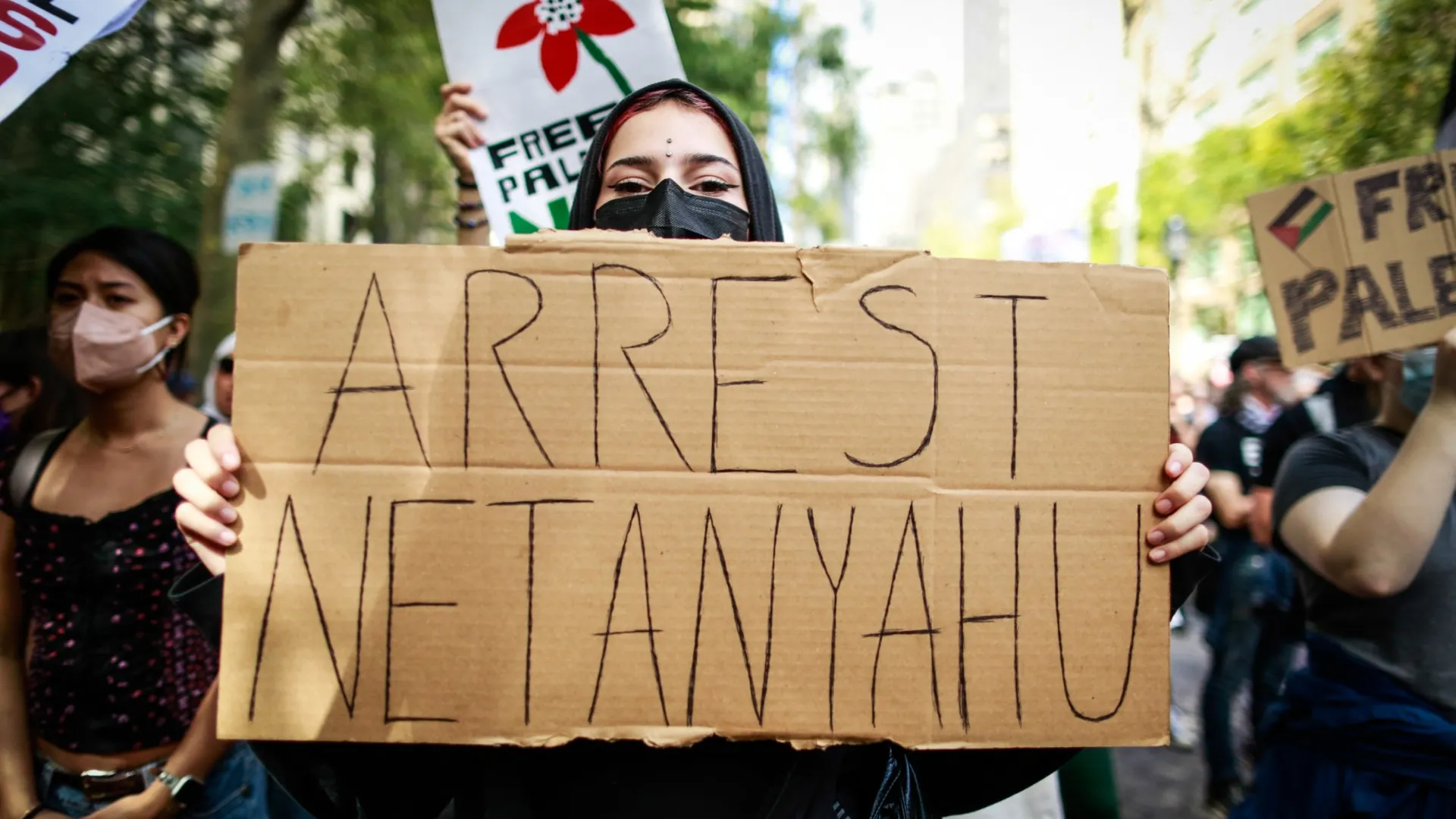
    While New York City Mayor Zohran Mamdani has backtracked on a pledge to arrest Israeli Prime Minister Benjamin Netanyahu if he enters the city, those in the Big Apple remain split on the idea. Some believe Netanyahu should be subject to the International Criminal Court’s arrest warrant if he visits the United Nations in Manhattan this September. Others think it is hypocritical to focus only on the Israeli leader.

    ‘Not welcome in New York City’
    Mamdani originally said he was looking into whether officials in New York City could arrest Netanyahu. But while the Israeli prime minister is a “war criminal,” New York City police officers do “not have the independent legal authority to enforce this warrant,” Mamdani said in a video on X. Still, Netanyahu is “not welcome in New York City,” and the federal government should “execute any warrant the International Criminal Court holds.”

    These words could inspire New Yorkers to hold “larger demonstrations against Israeli officials and supporters during the U.N. General Assembly,” given that Netanyahu is “one of many foreign officials who have outstanding arrest warrants issued” by the ICC, Elizabeth Kim said at Gothamist. Talk of an arrest also “gave the issue prominence at a time when Netanyahu’s conduct of the war in Gaza has led two independent United Nations inquiries and humanitarian groups inside and outside of Israel to accuse him of perpetrating a genocide,” say Sally Goldenberg, Dana Rubinstein and Liam Stack at The New York Times.

    Not Mamdani’s place
    Going after the Israeli prime minister presents a “selective approach to ICC arrest warrants,” said Zvika Klein at The Jerusalem Post. The U.N. General Assembly always “hosts the largest annual gathering of accused war criminals on Earth” who “arrive on diplomatic passports,” then safely “fly home.” 

    When the U.S. “decides a foreign leader belongs in a courtroom, it has tools,” said Klein, but New York City is “not among them.” Lawmakers may have also “advised the mayor that attempting an arrest could have subjected him and his collaborators to criminal liability,” said Paul Mauro at The Wall Street Journal.


    Statistic of the day

    0.05 grams per deciliter: The legal blood alcohol level limit for driving in Utah, lowered from 0.08 in 2017. After the threshold was lowered, alcohol-related crash fatalities declined significantly more in Utah compared to its six neighboring states, according to a study published in the American Journal of Preventive Medicine.


    THE EXPLAINER

    Apple’s ‘blockbuster’ lawsuit against OpenAI

    Two of the biggest Silicon Valley tech giants are locked in a “blockbuster lawsuit,” said the Financial Times, as Apple accuses OpenAI of “stealing secret hardware plans” to launch its own AI devices. Apple is seeking damages and a court order blocking the AI startup from possessing or using its trade secrets.

    What’s the background?
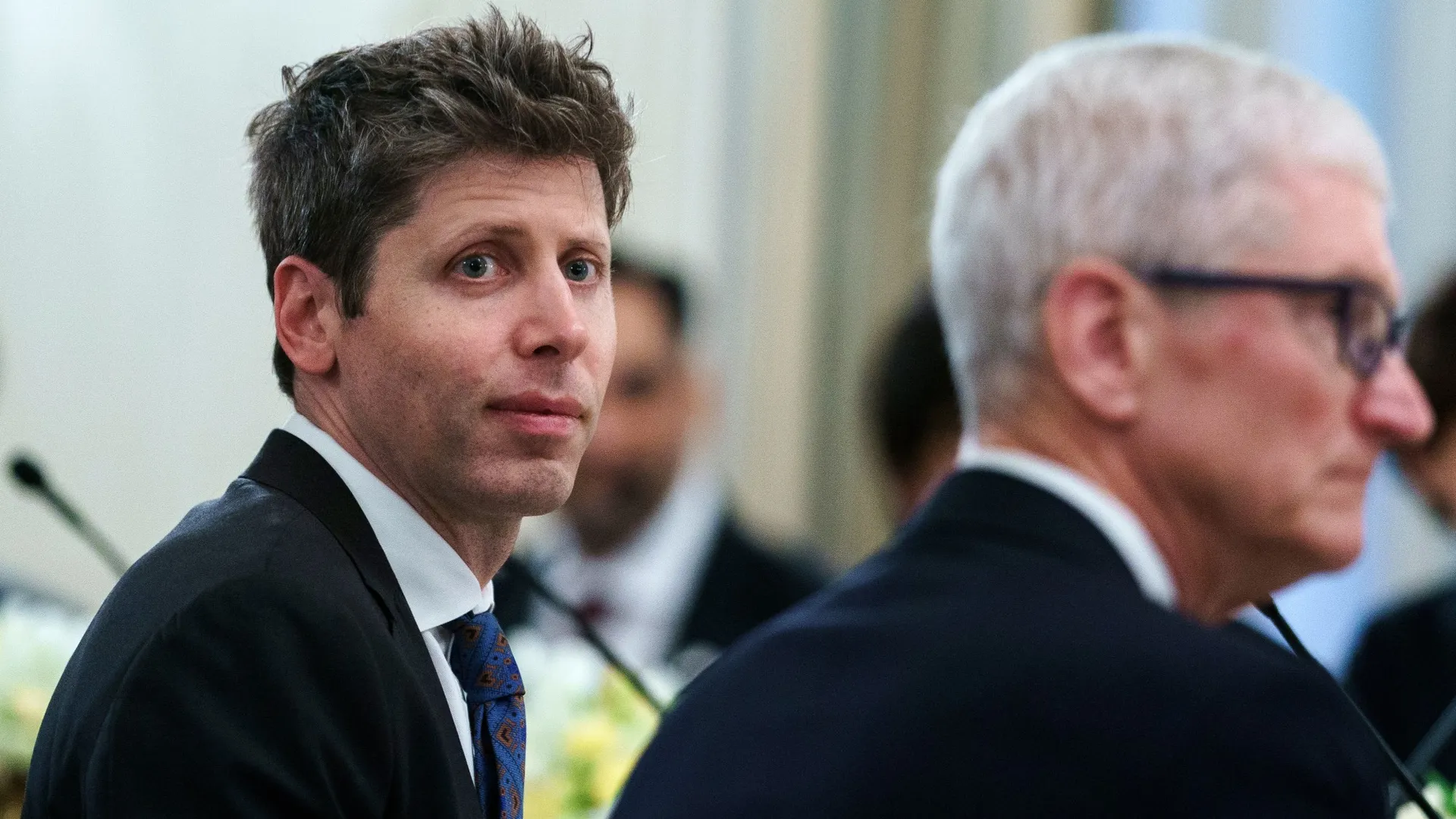
    Apple and OpenAI, cofounded by Sam Altman (pictured above), launched a partnership in 2024 to integrate OpenAI technology into Apple’s voice assistant, Siri. Apple also built ChatGPT into operating systems for iPhones, iPads and Macs.

    But tensions began to surface last year over OpenAI’s $6.4 billion purchase of IO Products — cofounded by Jony Ive, the designer behind the original iPhone — signaling that it was “foraying into hardware,” said The Guardian. Ive is now working on AI devices “intended to compete with the iPhone and other Apple products,” said Bloomberg. He’s one of more than 400 former Apple employees who now work at OpenAI, an “exodus” that has “fueled resentment” at their old company.

    What does the lawsuit claim?
    Apple’s suit claims OpenAI “poached Apple employees,” said The Guardian, “coaxing them to hand over confidential material, product designs and other tightly held information.” It specifically names Tang Yew Tan, a former vice president at Apple who left to join IO Products and is now OpenAI’s chief hardware officer.

    The lawsuit claims Tan took information about Apple suppliers with him and asked Apple employees attending job interviews at OpenAI to bring hardware components and unreleased product samples for “show-and-tell sessions,” said The Verge. Apple also claims another former employee breached the company’s internal network and downloaded “dozens of Apple’s confidential hardware-related files” after moving to OpenAI.

    What’s OpenAI’s response?
    OpenAI says it is not aware of “any evidence that the complaint has merit,” said the Financial Times. “We have no interest in other companies’ trade secrets,” said an OpenAI spokesperson.

    Essentially, OpenAI is a “huge threat” to Apple, said Business Insider. The company wants to either “directly challenge the iPhone” or replace it. That’s “too ambitious to swat away or subsume easily” and may explain the “intensity (or desperation?)” of Apple’s lawsuit.


    Good day 🐳

    … for whales seeking refuge. Almost 30 beluga whales have been relocated to aquariums across the U.S. in a “multinational emergency operation” after their original home, a Canadian theme park, shut down permanently, said CBS News. The first group of whales began arriving at their new homes in Chicago and San Antonio this week.


    Bad day ⚓

    … for preserving film props. The Swedish owners of a Viking longship replica featured in “The Odyssey” feel “forgotten” after filmmakers allegedly “returned the vessel damaged and failed to foot the bill for repairs,” said The Guardian. The warship Glad av Gillberga reportedly suffered $6,000 worth of damage during the six months it was with Universal.


    Picture of the day

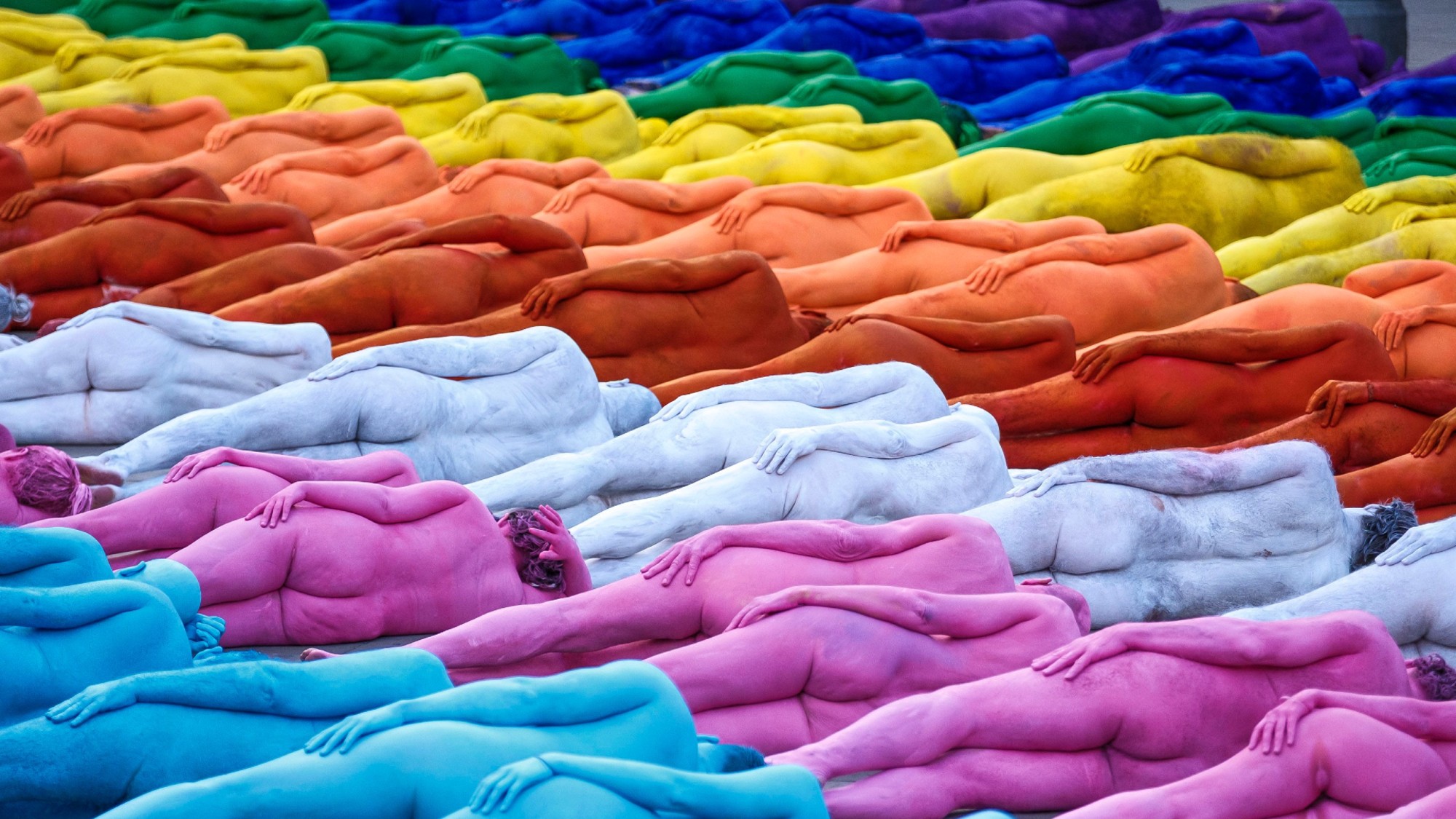
    Cheeky tribute

    Naked participants, painted in the colors of the Pride flag, lie outside Las Palmas Cathedral in Gran Canaria for an art installation by photographer Spencer Tunick. Hundreds of people bared all to be part of “Gran Spectrum,” a tribute to the global LGBTQ+ community.
    Angel Medina G / EPA / Shutterstock


    Puzzles

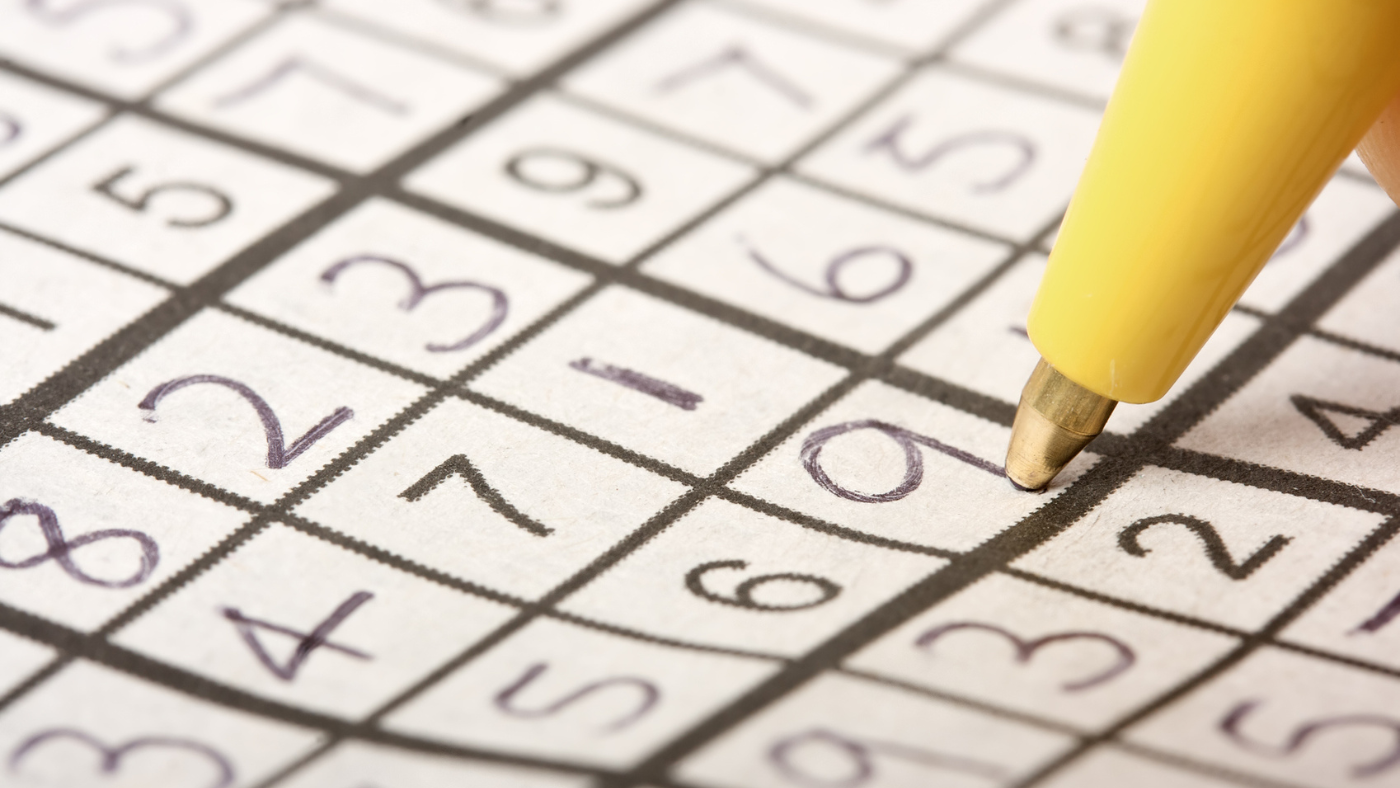
    Daily sudoku

    Challenge yourself with The Week’s daily sudoku, part of our puzzles section, which also includes guess the number

    Play here


    The Week recommends

    The best coffee table books for travelers

    A good coffee table book can spark infinite conversations, and this is especially true when the focus is on travel. Guests connect over destinations they’ve visited or dream of seeing, sharing memories and tips, and the spectacular photography might also encourage them to pick up a camera and better document their future trips. Stack these books in your living room, and see how they inspire.

    ‘African Adventures: The Greatest Safari on Earth’
    Let photographer Aline Coquelle show you Africa through her eyes. Coquelle’s “stunning” photography also offers a “deeper exploration” of each area’s “talented contemporary artists, artisans and conservationists,” said Condé Nast Traveler. ($120, Assouline)

    ‘Destinations of a Lifetime: 225 of the World’s Most Amazing Places’
    This tome combines the breathtaking photography National Geographic is known for with helpful insider information on how to travel like a local and the histories of each spot. If you’re stuck on the next country or city you want to visit, flip through “Destinations of a Lifetime,” pick any page and you’ll be booking a plane ticket in no time. ($21, Amazon)

    ‘Dream Trips of the World’ 
    This comprehensive guide explores 100 spectacular travel opportunities, including witnessing the Northern Lights in Norway, cruising down the Nile River and experiencing Bhutan’s monasteries. Each trip featured is accompanied by a detailed itinerary on where to go and what to see, tips on places to eat and how to pack, beautiful photography, and comments from local residents and travel experts on ways to best approach the destination. ($45, Lonely Planet)

    Read more


    Poll watch

    Gas prices are high, but three in five Americans (60%) believe prices in their area have risen by more than they actually have, according to a Politico survey of 2,061 adults. Nearly half of Americans (46%) say changes in gas prices will affect their vote come November.


    INSTANT OPINION

    Today’s best commentary

    ‘Cracker Barrel’s CEO ouster surprised Wall Street but not women’
    Beth Kowitt at Bloomberg
    Though it “seemed like” Cracker Barrel CEO Julie Felss Masino “saved her job,” her recent firing “left some analysts scratching their heads,” says Beth Kowitt. But “boards are moving much faster to fire the big boss when things go bad,” and the “phenomenon is even more acute for female CEOs, who have always been under more intense scrutiny than their male counterparts.” Masino’s “tenure at Cracker Barrel is a textbook example of how we’ve ended up with these statistics.”

    ‘The great tick explosion: A tiny threat tests America’s love of nature’
    Patti Waldmeir at the Financial Times
    It’s “easy to see why ticks loom so large in the American imagination,” says Patti Waldmeir. Headlines “portray them as a frightening new public health threat: Unfamiliar ticks turning up in unexpected places, bringing exotic new illnesses such as red meat allergies, debilitating infections and even death.” But “much can be done to reduce risk: Stick to the center of the trail, tuck socks into long trousers, check behind knees, groin and scalp after outings, wear insect repellent and use permethrin-treated clothing.”

    ‘Yale loses the capitulation bowl’
    Robert Kuttner at The American Prospect
    Yale University’s president “got caught trying to make a deal with the Trump administration to change its admission procedures as a way to settle an administration investigation of Yale and the threat of sanctions,” says Robert Kuttner. But “instead of a deal, the secret negotiations have produced massive protests by faculty, students and alums.” Yale’s “efforts to give in to Trump blackmail are in striking contrast to the evolution of negotiations between the administration and Harvard.”


    WORD OF THE DAY

    kokushobi

    A new Japanese term for a “cruelly hot day,” coined by the Japan Meteorological Agency as a designation to warn of temperatures of 104 degrees Fahrenheit or higher. The phrase follows a record number of heat stroke cases in the country last year as several cities logged their highest-ever temperatures.


    Evening Review was written and edited by Theara Coleman, Nadia Croes, Catherine Garcia, Scott Hocker, Anya Jaremko-Greenwold, Justin Klawans, Harriet Marsden, Summer Meza and Rafi Schwartz, with illustration by Julia Wytrazek.

    Image credits, from top: Illustration by Julia Wytrazek / Getty Images; Kena Betancur / AFP / Getty Images; Will Oliver / EPA / Bloomberg / Getty Images; National Geographic / Assouline / Lonely Planet
     

    Recent editions

    • Morning Report

      Trump escalates mail-in voting battle

    • Evening Review

      Trump’s Australian inspiration

    • Morning Report

      Iran war on pause?

    VIEW ALL
    TheWeek
    • About Us
    • Contact Future's experts
    • Terms and Conditions
    • Privacy Policy
    • Cookie Policy
    • Advertise With Us
    • FAQ
    Add as a preferred source on Google Add as a preferred source on Google

    The Week is part of Future US Inc, an international media group and leading digital publisher. Visit our corporate site.

    © Future US, Inc. Full 7th Floor, 130 West 42nd Street, New York, NY 10036.