The Week The Week
flag of US
US
flag of UK
UK
https://cdn.mos.cms.futurecdn.net/flexiimages/jacafc5zvs1692883516.jpg

SUBSCRIBE & SAVE

Less than $3 per week

Sign in
  • View Profile
  • Sign out
  • The Explainer
  • The Week Recommends
  • Newsletters
  • Cartoons
  • From the Magazine
  • The Week Junior
  • Student Offers
  • More
    • Politics
    • World News
    • Business
    • Health
    • Science
    • Food & Drink
    • Travel
    • Culture
    • History
    • Personal Finance
    • Puzzles
    • Photos
    • The Blend
    • All Categories
  • Newsletter sign up Newsletter
  • The Week’s Saturday Wrap
    Trump’s celebration fizzles, a bipartisan pushback to data centers, and Shania Twain’s strength

     
    TALKING POINTS

    America at 250: Trump’s fair is a flop

    “It’s almost as if the last 250 years never happened,” said Stephen Collinson in CNN.com. President Trump last week kicked off the Great American State Fair on the National Mall — billed as a modern-day world’s fair to celebrate the nation’s semiquincentennial — with a speech that “implied the nation’s greatness at this landmark moment was largely thanks to him.” Rather than ruminate on America’s journey and founding promise, Trump proclaimed that like “those patriots of 1776” he also had “saved our country in all things” following the “total disaster” of the Biden administration. The president wasn’t supposed to be the event’s headliner. He took over as the main act last month after artists including Martina McBride and the Commodores pulled out of an opening concert, having discovered the supposedly nonpartisan event was organized by Trump allies. In the end, more than 1,000 MAGA fans gathered to watch Trump run through his list of boasts and grievances, but he later claimed “at least 45,000 people were there.”

    The fair itself was “bleaker than I expected,” said Kate Corliss in Washingtonian. Trump insists the event is “packed with happy people,” but the crowd was sparse when I visited, which is understandable given “the lackluster attractions.” Some attendees took photos in front of a scaled-down plywood replica of Trump’s planned victory arch; others waited to ride a 110-foot Ferris wheel that kept breaking down. Then there were the cramped, mausoleum-like tents that house exhibits on all 56 states and territories — in the Nebraska tent I learned the state invented “modern center pivot irrigation” —  and a booth for Trump’s TruthSocial platform. It didn’t have to be like this, said Michelle Cottle in The New York Times. A decade ago, Congress established America250 to plan bipartisan celebrations for the nation’s birthday. But it was “shoved aside” to make way for Freedom 250, the Trump-led group that organized this farce and rerouted tens of millions of dollars toward a “politicized spectacle.” 

    Yes, the fair is a fiasco — but “I love it,” said Rex Huppke in USA Today. I love watching Fox News broadcast from the event, “its hosts claiming the place is filled with excited patriots while the scenes behind them show a vast expanse of untrod-upon grass.” It’s a daily humiliation for a president who craves validation. For the past 17 months Trump has subjected Americans to the kind of bullying that pushed the Founding Fathers toward revolution. To experience a sense of delight and quiet satisfaction as this vain bully’s big party fizzles is “as American as both apple pie and real state fairs.”


    It wasn’t all bad

    A lucky man won $3.3 million at a Las Vegas slot machine without even setting foot in one of the city’s famed casinos. Officials at Harry Reid International Airport, which has clusters of slot machines scattered about its terminals, reported that an unnamed traveler stopped to play a Wheel of Fortune machine before changing planes last weekend and won the seven-figure payout on a $10 bet. The airport posted a photo of the winning spin on social media and congratulated him, saying, “That’s one way to spend a layover.”


    briefing

    The data center backlash

    Voters in both blue and red states are rallying against AI infrastructure projects—and winning.

    Who opposes data centers?
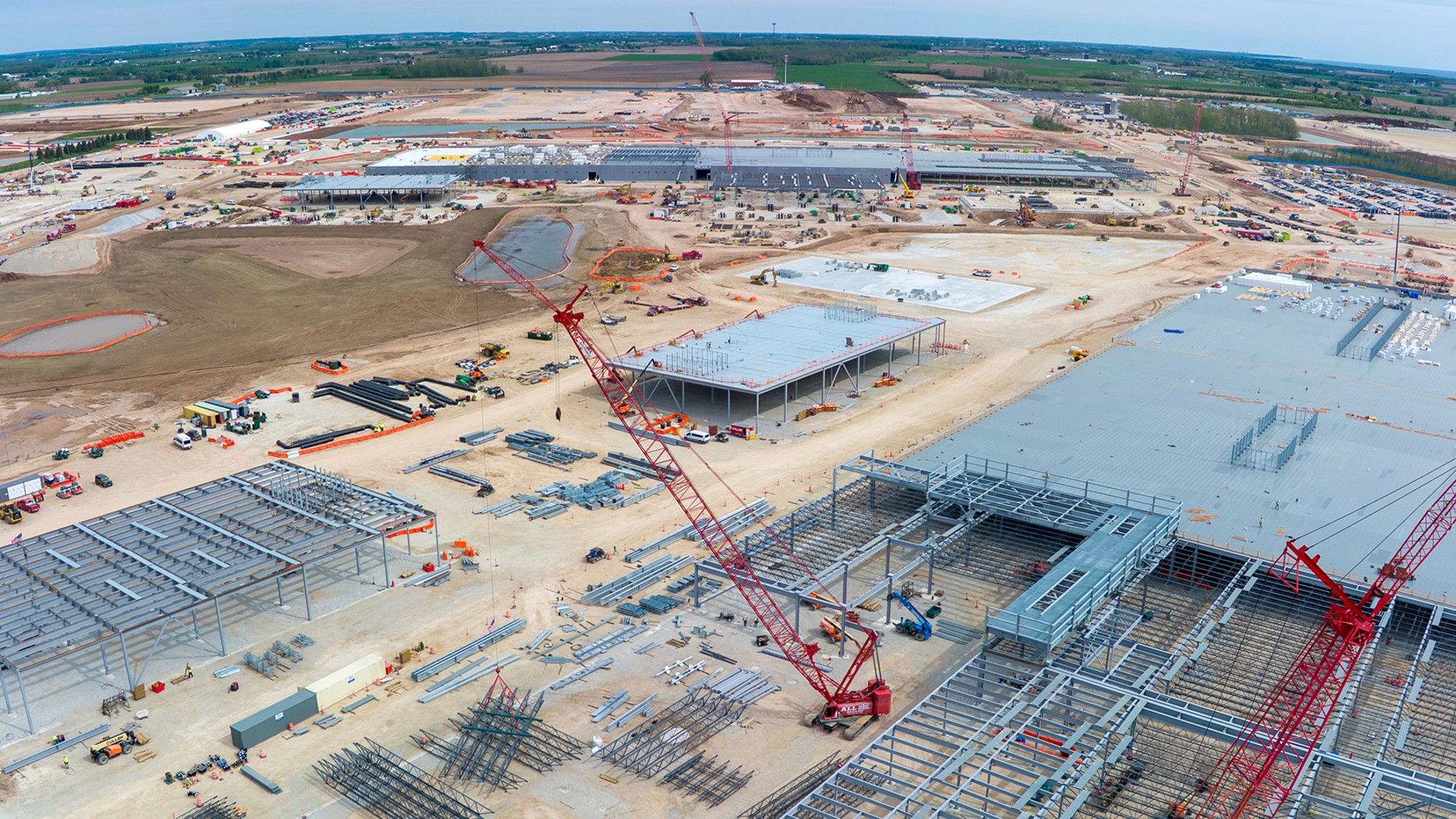
    Most Americans. A recent Gallup poll found that 71% of voters, including 75% of Democrats and 63% of Republicans, don’t want a data center built in their area. Hostility to these artificial intelligence facilities is “the most bipartisan issue since beer,” Milwaukee-based comedian Charlie Berens said at a recent rally against a 700,000-square-foot Meta facility in Port Washington, Wis. Opponents of these warehouse-like complexes, which are filled with energy-hungry computer servers, are racking wins. At least 75 projects worth about $130 billion were blocked or canceled in the first three months of 2026. After a 247,000-square-foot data center was proposed in Monterey Park, Calif., voters there last month overwhelmingly passed a ballot measure permanently banning such projects. Theirs is the first U.S. city with such a prohibition, but at least 67 other towns have temporary bans. Politicians who support data centers are paying the price at the polls: Stuart Adams, president of Utah’s state senate, and two local commissioners lost their GOP primaries last week after helping to approve a 62-square-mile facility in northwestern Utah. “Everybody who touched the data center went down,” said Brenna Williams, an anti-data-center campaigner. “People just wanted to send a message.”

    Why do people want to block these projects? 
    For some, it’s the vast amount of water and energy they use. Water is used to cool servers, which can get dangerously hot, and a large facility can guzzle up to 5 million gallons a day—about as much as a town of 50,000 people. In areas already struggling with drought, such as Utah, many residents fear the needs of data centers will be put before their own. Data centers also strain power grids. The nation’s more than 4,000 data centers now consume 6% of all U.S. electricity, up from 4% two years ago, and a single large-scale facility can use about 1 gigawatt of electricity, enough to power 750,000 homes. With data centers being built faster than new power sources are coming online, utility bills are rising fast. In states with a high concentration of data centers, such as Virginia, electricity prices have spiked 267% in five years. There are other concerns: the pollution pumped out by on-site generators, the constant hum of cooling systems, and the sheer size and ugliness of the buildings. Opposition to data centers is “rooted in the one thing that has always united Americans,” said Megan Mullin, a professor of public policy at UCLA: “Our deep affinity for where we live.” 

    What do AI firms say?
    They argue that fears around water and energy use are overblown, and that data centers are a net gain for communities. The build-out of 3,000 planned facilities is expected to create 4.7 million temporary construction-related jobs, according to a Meta-backed policy group. It also projects that some 700,000 permanent jobs will be created to operate and manage those facilities. To reduce the environmental impact of their centers, firms including Microsoft and OpenAI have pledged to slash water use, and microchip makers such as Nvidia are designing more energy-efficient processors. But opposition to data centers is likely to remain intense.

    Why is that?
    Because that opposition is motivated in part by hostility to artificial intelligence. A June survey by consultancy Milltown Partners found only 8% of data center opponents actually live near a facility, and that 63% have a negative view of AI. That suggests data centers are a stand-in for anger at Big Tech and AI, which some industry leaders have warned could result in mass unemployment and—in a worst-case scenario—humanity’s extinction. The opposition “isn’t happening in a vacuum,” said Milltown’s Tom Brookes. “The AI transformation is arriving at a time when Americans already feel angry, insecure, and pessimistic.” In some cases, that anger is turning into violence. In April, an unknown attacker fired 13 shots into the home of an Indianapolis councilman who’d voted in favor of an AI facility, and left a note that read “No Data Centers.”

    How are lawmakers responding to the backlash?
    Some want a pause in construction. New York’s Democratic-led state legislature in May passed a one-year moratorium on new data centers; it has yet to be signed by Gov. Kathy Hochul. In April, Maine’s Democratic Gov. Janet Mills vetoed similar legislation. The populist right is also pushing back on data centers, despite President Trump issuing an executive order last year to speed their construction. Florida Gov. Ron DeSantis signed a bill in May barring utilities from shifting data center costs to ordinary ratepayers. And red-tapeaverse Texas Gov. Greg Abbott last month issued sweeping data center regulation recommendations for the state legislature to pass in its next session, including mandating “closed loop” cooling systems that reuse water and requiring new facilities to contribute to the state’s electricity supply.

    Is a halt on construction likely?
    No, because too many officials want a slice of the money being poured into the buildout; six Big Tech companies will spend an estimated $1 trillion on data centers in 2027. Few politicians on either the Left or Right have backed calls for a pause or a ban; more are pushing measures they claim will reduce the impact of data center development. Democratic Virginia Gov. Abigail Spanberger is set to sign a tax on data center energy usage, capped at $600 million a year, while Republican Ohio Gov. Mike DeWine recently paused tax breaks for AI facilities after a government report found they cost the state nearly $1.6 billion in lost revenue last year. But those measures won’t stop protests by anti-data-center campaigners, who are demanding a meaningful crackdown on the industry. “I’m frustrated,” said Annette Singh of Hilliard, Ohio, who says a huge new Amazon data center has ruined her once peaceful neighborhood. “I want better politicians.”


     
     
    people

    How Twain got tough

    Shania Twain learned to look out for herself from a young age, said Megan Agnew in The Sunday Times (U.K.). Raised in severe poverty in rural Ontario, she and her siblings often went hungry — at times, they had nothing to eat but mustard sandwiches — and suffered frostbite during harsh winters. Her stepfather could be so violent that she feared he’d kill her mother. From age 8, Twain was made to sing in smoke-filled bars late at night. “I was stuck in places I didn’t want to be,” says the country singer, now 60. “Strippers coming off stage. You’re very vulnerable.” She quickly learned to not show too much skin, to protect herself from handsy men. It was grim, but it didn’t stop her from dreaming about a music career. At 26, four years after her parents were killed in a car crash, she escaped to Nashville. “I was very, very ready. There was no going back. Put on your big-girl pants, you have no family support, no financial support, everything you own is in your vehicle. So make it work and suck it up.” She soon landed a record deal and began racking up hits, putting her front and center in the macho country-music business. But she was unfazed. “I was meeting the industry for the first time, but not men. I would not be bullied by any man or anyone. I’d been through too much already. Nothing anyone did or said intimidated me at all.”


    Saturday Wrap was written and edited by Theunis Bates, Chris Erikson, Bill Falk, Bruno Maddox, Rebecca Nathanson, Tim O’Donnell, and Hallie Stiller.

    Image credits, from top: Getty, Reuters, Getty
     

    Recent editions

    • Evening Review

      Are AI’s benefits worth the costs?

    • Morning Report

      Vatican hammers ‘schismatic’ SSPX sect

    • Evening Review

      Does Crimea have Putin ready to blink?

    VIEW ALL
    TheWeek
    • About Us
    • Contact Future's experts
    • Terms and Conditions
    • Privacy Policy
    • Cookie Policy
    • Advertise With Us
    • FAQ
    Add as a preferred source on Google Add as a preferred source on Google

    The Week is part of Future US Inc, an international media group and leading digital publisher. Visit our corporate site.

    © Future US, Inc. Full 7th Floor, 130 West 42nd Street, New York, NY 10036.