Five years after the botched U.S. withdrawal, millions face repression, hunger, and despair.
What is life like in Afghanistan today?
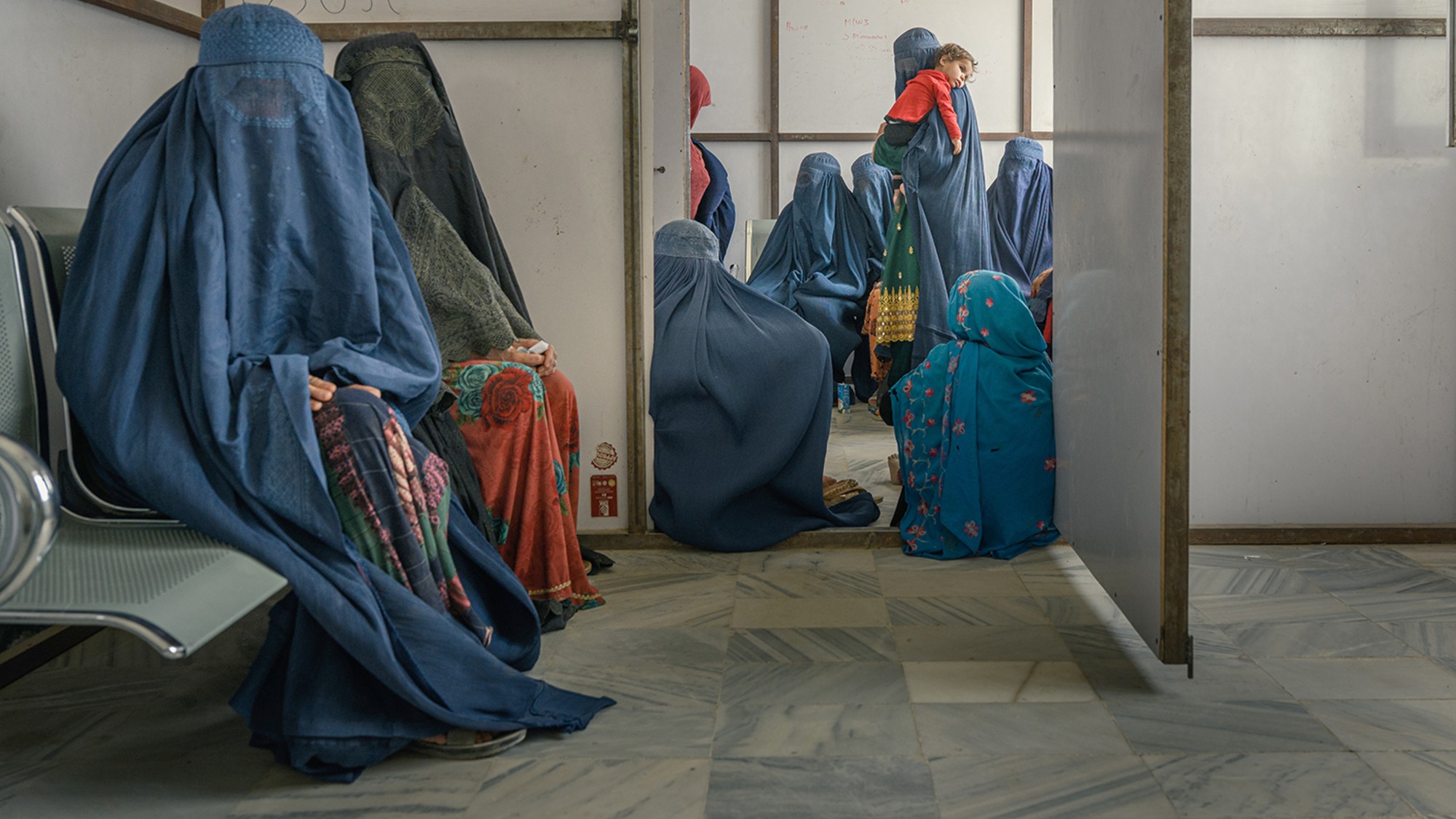
For the vast majority of Afghans, it is grim. Around 90% of the population lives below the poverty line, more than twice as many as before the U.S. pullout, and more than 3.5 million children suffer from malnutrition. Under the Taliban’s draconian interpretation of sharia, watching movies, playing chess, singing, and playing or listening to music are all banned. Men must wear long beards and attend daily prayers. And for women, whose movements are governed by some 200 Taliban edicts, it is the most repressive country on Earth. Women can’t attend school past sixth grade, work in most jobs, travel without a male relative accompanying them, uncover their faces in public, or even speak in public. “Imagine living every day not knowing whether the door to freedom will ever reopen,” said former Afghan lawmaker Shukria Barakzai, who now lives in exile in the U.K. “The psychological trauma is immense.
How did the Taliban take control?
In February 2020, the first Trump administration struck a deal with the Taliban —s idelining the teetering Afghan government— that traded U.S. troop withdrawal for Taliban assurances that the country would not be used as a base for terrorist attacks on Americans. Incoming President Joe Biden then promised to get the troops out before Sept. 11, 2021, but the execution was chaos. When the Afghan government collapsed on Aug. 15, 2021, thousands of desperate Afghans rushed the Kabul airport trying to board U.S. planes as the Taliban overran the capital. At least 169 Afghans and 13 U.S. service members were killed in an ISIS-K suicide bombing. While the Taliban have mostly succeeded in containing ISIS-K and other terrorist groups, their promises to govern more moderately than they did before 2001 proved worthless. They soon reintroduced floggings, public amputations, and stoning. When women tried to march for their rights, they were violently suppressed, and by 2023, nearly all those in Afghan jails were political prisoners, and many were tortured. Now Afghanistan is a global pariah, its Taliban government recognized only by Russia.
Has that hurt the economy?
Yes, deeply enough that a third of its population of 45 million is going hungry. Taliban rules have stifled the formal economy, though they tolerate some opium cultivation and have turned themselves into arms dealers hawking the $7 billion worth of military hardware the U.S. and its allies left behind. But ordinary Afghans have been further battered by Taliban repression, major earthquakes in 2022 and 2025, and the rollback of most U.S. and other Western humanitarian aid. Rural Afghans must contend with water shortages and contamination from U.S. burn pits and bomb residue. The country has long had one of the world’s highest maternal mortality rates, now exacerbated by the Taliban’s ban on medical training for women and the requirement that women patients be accompanied to appointments by a male guardian. “In the beginning, I found it very hard when I saw children dying,” said Fatima Husseini, a nurse in central Ghor province. “But now it has almost become normal for us.”
How do Afghans cope?
Some resort to selling their children into bondage or forcing them into marriage. More than 6 million Afghans fled to neighboring Iran and Pakistan, but both those countries have kicked out nearly all their Afghan refugees in recent years—even Afghans who arrived back in 1979, during the Soviet invasion. In Iran, Afghans have been attacked by mobs and baselessly accused of collaborating with Israel; some legal residents have had police tear up their documents in front of them. In Pakistan, authorities have demolished Afghans’ homes, stripped them of their valuables, and forced over 2.5 million refugees to march back across the border. Once back home, they often have no access to employment or basic services; roughly 25% of returnees are homeless. Western countries, too, have been seeking to deport Afghans, even collaborating with the Taliban to make it happen.
What about the U.S.?
The Biden administration welcomed more than 190,000 Afghans into the U.S. after the troop withdrawal, prioritizing former interpreters, U.S.-allied fighters, and others who aided the American war effort. But the second Trump administration moved to cancel their immigration status, and last year, after an Afghan national trained by the CIA and resettled in the U.S. shot two National Guard soldiers in Washington, D.C., President Trump halted all visas for Afghans. More than 100 have been deported directly to Afghanistan; hundreds of others have been shipped to unsafe “third countries.” Currently, the administration is trying to send most of the 1,100 Afghans at a U.S. base in Qatar—all of them thoroughly vetted exiles who either helped the U.S. military or are the spouses or children of U.S. service members—to the war-torn Democratic Republic of Congo. The only other choice, officials tell them, is returning to Afghanistan.
What happens to returnees?
They face imprisonment, torture, and death. Kamin Jan, a former interior ministry employee deported from Iran, was shot dead in Takhar province in October 2025, just weeks after he was expelled from Iran. Hundreds of Afghans who once worked with American forces have been executed; some reported having their toenails pulled out and being hung by their feet during Taliban prison interrogations. Some U.S. military officials warn that the deportations could set a precedent that undermines American interests. Potential allies are likely to think twice if American promises “have the shelf life of one administration,” says Marine veteran Kyleanne Hunter, head of Iraq and Afghanistan Veterans of America. “You cannot win a future war with partners who watched you abandon the last ones.”