The Week The Week
flag of US
US
flag of UK
UK
https://cdn.mos.cms.futurecdn.net/flexiimages/jacafc5zvs1692883516.jpg

SUBSCRIBE & SAVE

Less than $3 per week

Sign in
  • View Profile
  • Sign out
  • The Explainer
  • The Week Recommends
  • Newsletters
  • Cartoons
  • From the Magazine
  • The Week Junior
  • Student Offers
  • More
    • Politics
    • World News
    • Business
    • Health
    • Science
    • Food & Drink
    • Travel
    • Culture
    • History
    • Personal Finance
    • Puzzles
    • Photos
    • The Blend
    • All Categories
  • Newsletter sign up Newsletter
  • The Week’s Saturday Wrap
    A BDSM romcom, Sauvignons from Austria, and Lincoln’s long game

     
    FILM REVIEW

    Pillion

    Two men fall into a leather-heavy romance

    While this gay BDSM romcom from a rookie director “might sound niche,” said Amy Nicholson in the Los Angeles Times, “free yourself to see it and you’ll discover it’s a universal romance.” Former Harry Potter side figure Harry Melling stars as a shy singleton who’s figuring out what he wants in a relationship when he happens into a submissive-dominant entanglement with a tall, handsome biker played by Alexander Skarsgard. Soon, Melling’s Colin is obeying his lover’s every order, including by shaving himself bald and sleeping like a dog on the floor. But the “kinky-funny” screenplay, which won a prize at Cannes, makes sure we see that Colin is not stuck but growing. While the movie’s sex scenes are “refreshingly graphic,” they’re “never used for shock value,” said Odie Henderson in The Boston Globe. “The real shock comes from how emotionally involved the characters become within the construct of their kink.” And when Colin brings his new lover home to meet the parents, Skarsgard and Lesley Sharp, as Colin’s suburban London mom, do memorable work because “neither of them approaches the scene in a way you’d expect.” Until the ending, which “feels a little neat,” said Zachary Barnes in The Wall Street Journal, the movie “proceeds with an assurance of tone that’s especially impressive for a first-time filmmaker handling material like this.” Harry Lighton’s debut “could have been simply shocking, revving its engine in sexed-up style. Instead, Pillion purrs.” 


    tv review

    Vladimir

    Being seen is a turn-on. Especially when you feel as if the world has started looking past you. Rachel Weisz is terrific in this sexy, fourth-wall-breaking new series as a professor and former writer who can feel her magnetism fading with age. Her husband, a fellow professor played by John Slattery, looks elsewhere for intimacy and her class rosters are dwindling when she’s awakened by the attention of a strapping young author, played by Leo Woodall. As in the acclaimed 2022 novel the show is based on, she’s soon obsessed, spiraling toward disaster as the line between reality and her fantasies blur. Thursday, March 5, Netflix


    FOOD & DRINK

    Wine: Austria’s sauvignons

    Though they fly under the radar, Austrian sauvignon blancs are “among the more exciting white wines you’ll taste,” said Edward Deitch in Vinepair. The country is better known for its grüner Veltliners, but South Styria, a gorgeous region near Slovenia, produces sauvignons that overdeliver compared with France’s Sancerres. They’re “a bit richer and with an underlying minerality and acidity that make them fresh and complex.” 

    2024 Wohlmuth ‘Phyllit’ ($23)
    “Crisp notes of lemon-lime” give this wine “a slight spritz” before it “settles down to a nice elegance,” blending hints of peach, strawberry, and herbs. 

    2024 Weingut Tement ‘Kalk & Kreide’ ($24)
    “White peach and apricot are the hallmarks of this crisp sauvignon.” It’s “perfectly balanced, with a nice mineral texture and a saline hint on the finish.” 

    2024 Sattlerhof ($26)
    This wine “leans more to the racy and herbaceous side,” mixing “a hint of grassiness” with crisp green apple, lemon, lime, and orange notes.


    BOOK OF THE WEEK

    Boss Lincoln: The Partisan Life of Abraham Lincoln

    by Matthew Pinsker

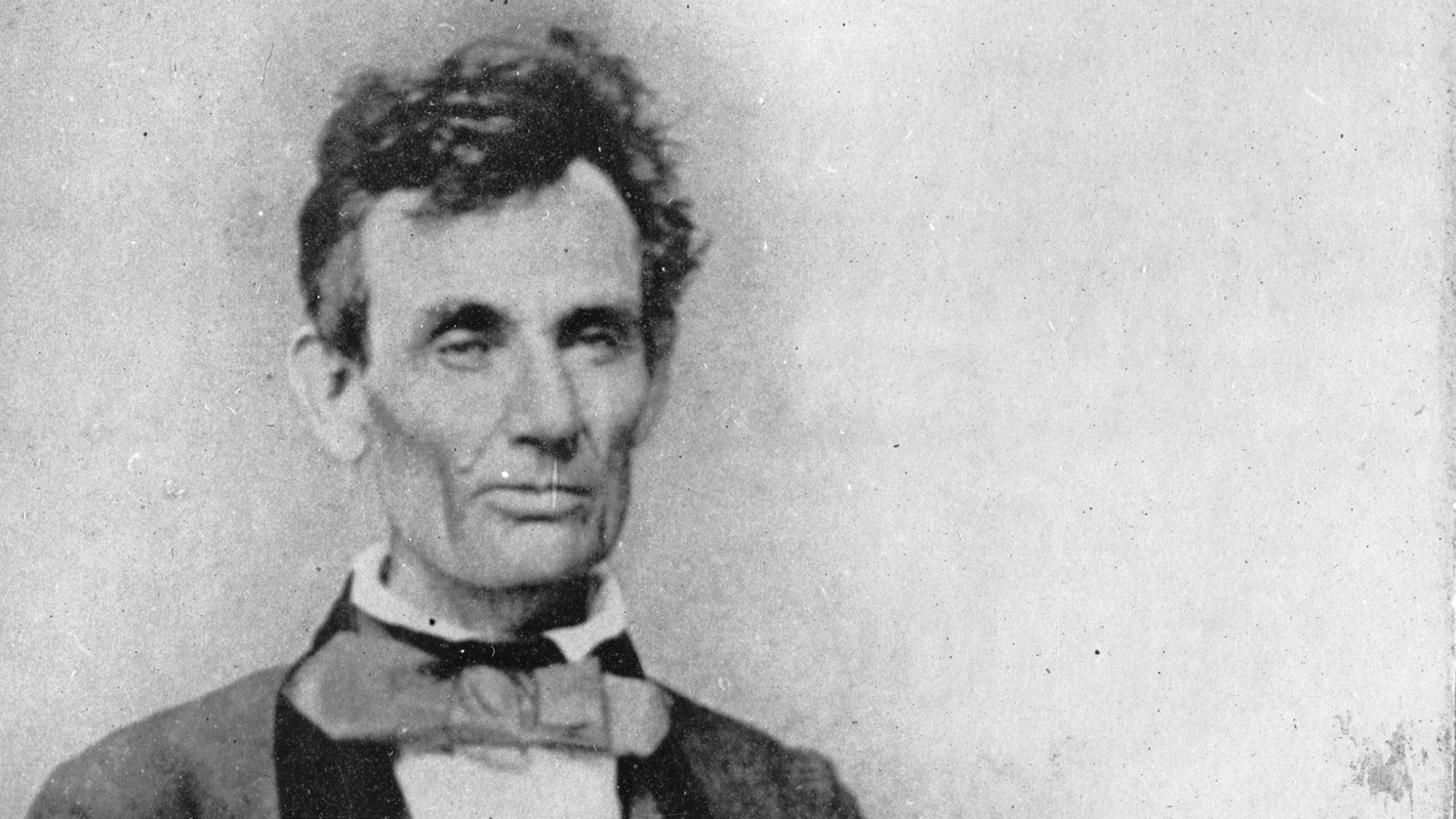
    When he was elected president in 1860, “Abraham Lincoln was not the inexperienced politician that history and myth have suggested,” said Caroline E. Janney in The Washington Post. In Matthew Pinsker’s compelling new book, America’s 16th president comes across as a man who dedicated most of his working life to political-partybuilding. Though he’d held no elected office since 1849, when he’d kept his promise to leave Congress after a single term, Lincoln never ceased networking, exercised power throughout the intervening decade as a lawyer and lobbyist, and by 1853, when a town was named after him, was the most prominent Whig in Illinois. Whigs were outnumbered, however, and the party was soon torn apart by the issue of slavery. By 1856, Lincoln was pouring his energy into the Republican cause, and when the new party tapped him as their standard bearer, “no one should have been surprised.” 

    “Pinsker drives home what a mover and shaker Lincoln was,” said Neil Steinberg in the Chicago Sun-Times. “A driven, scheming political animal,” he deluged constituents with promotional material, glad-handed both allies and foes, and at times used deceit and manipulation to manage party factions. “We’re reminded the past isn’t a playpen: They weren’t handing out presidencies to whatever Bible-quoting yahoo showed up and asked.” And while Pinsker can go too deep into the weeds, spending 20 pages on Lincoln’s failed 1849 effort to secure a subCabinet federal post, “Boss Lincoln is history at its most fresh, real, and relevant,” showing us that even the great unifiers of bygone times had to scrap to push this country in the right direction. 

    “It is hard to imagine that the year will bring forth a Lincoln book of more originality or consequence,” said Harold Holzer in The Wall Street Journal. “Boss Lincoln is Team of Rivals on steroids,” focusing far more intently than Doris Kearns Goodwin’s 2005 best seller did on the long game Lincoln played to achieve goals he cared more about than his own career. First his passion was infrastructure building, including railroads; later it was preventing the spread of slavery. Lincoln understood that those goals couldn’t be achieved without gathering power, and Pinsker’s “deep research, interpretive daring, and fine writing advance the case with panache.” Given that even the Gettysburg Address is analyzed here primarily for its political impact, “perhaps Pinsker grants Lincoln too little credit for inspiring voters with his soaring oratory.” Still, his book “fills a gap in the literature” and should inspire “lively discussion” among historians for years to come.


    OBITUARY

    Jesse Jackson

    The civil rights icon who was a groundbreaker and peacemaker

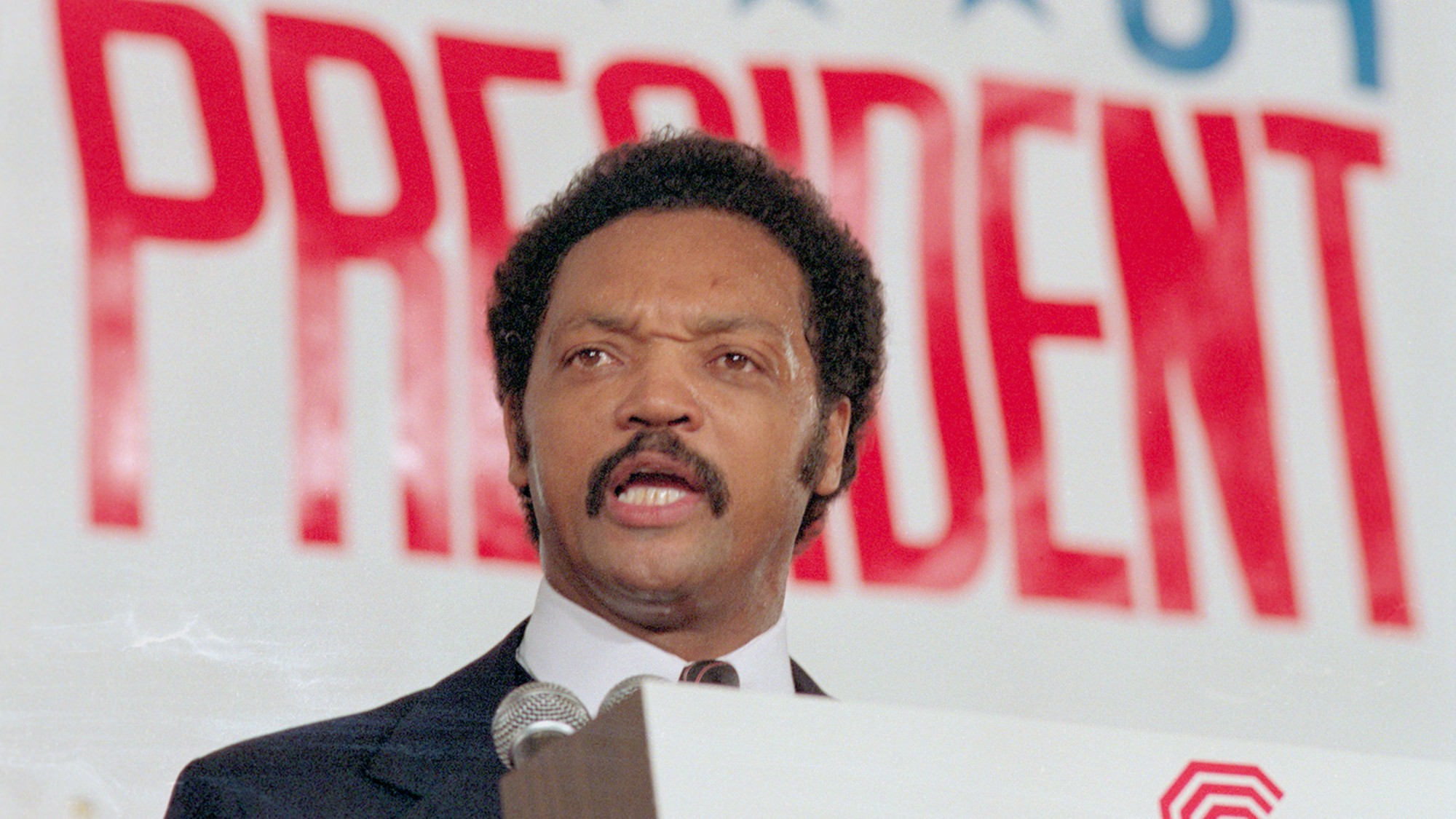
    The son of an unmarried teen mother raised in the Jim Crow South, Rev. Jesse Jackson rose to become a political trailblazer and the most prominent civil rights leader of his generation. A protégé of Martin Luther King Jr. with a gift for electrifying oratory, Jackson claimed the mantle of successor after King was assassinated in 1968. In the following years, he worked for Black empowerment, leading social-justice protests, pushing companies to hire Black workers, and inspiring Black youth with his mantra “I am somebody!” Running for president in 1984 and 1988, he was the first Black candidate to make meaningful headway, finishing second in the 1988 Democratic primary. Often polarizing, Jackson alienated many with his relentless self-promotion and occasional offensive remarks, although even his detractors never questioned his gifts as a mobilizer. “My constituency is the desperate, the damned, the disinherited, the disrespected, and the despised,” he said in 1984. “They are restless and seek relief.” 

    He was born in Greenville, S.C., “under highly unpromising circumstances,” said the Chicago Sun-Times. His 16-year-old mother lived in a house with no plumbing; his father, a married neighbor, shunned him. “Taunted for his stammer,” he nonetheless excelled as a student and athlete and won a football scholarship to the University of Illinois. During a summer break he made his first foray into activism, leading a sit-in at Greenville’s whites-only library. The experience lit a fire in him, and he transferred to a Black college in North Carolina, where he became class president and met his wife, Jacqueline. After graduation, they moved to Chicago and Jackson attended seminary. By that point he had “immersed himself in the blossoming civil rights movement,” said the Associated Press. In 1965, he met King at a march in Selma, Ala. Struck by Jackson’s drive, King made him Chicago organizer of the Southern Christian Leadership Conference (SCLC). 

    Jackson “went home transformed,” said The New York Times. He became the leader of Operation Breadbasket, which used boycotts to pressure companies to hire and promote Black workers. By 1967, he “was gaining a national reputation” and was ensconced in “King’s inner circle,” and the following year he was ordained as a minister. As his profile grew, so did tensions with those who accused him of grandstanding—particularly after King was killed in Memphis. Jackson, who was there, “appeared on the Today show” in a bloodstained sweater, claiming to have cradled King’s head as he died, a detail others refuted. The bad blood grew, and in 1971, Jackson resigned from the SCLC to start his own organization, People United to Save Humanity. 

    Over the next decade Jackson “became a household name,” said The Telegraph (U.K.). He “crisscrossed the country, speaking out against racism, militarism, and class divisions.” In forays abroad, he denounced South African apartheid and backed Palestinian statehood. While sometimes controversial, the trips boosted his profile and set the stage for his presidential runs. During his “chaotic” 1984 bid, said The Washington Post, Jackson “was widely viewed as a gadfly with no chance of winning,” and he caused an uproar over an offensive reference to Jews as “Hymies.” Still, with his boldly progressive campaign and calls for a multiracial “rainbow coalition,” he defied expectations, finishing third. In 1988, he “was better financed and organized,” and he pulled some 7 million votes, ending second behind Michael Dukakis and setting a new bar for a “Black person in American presidential politics.” 

    “Jackson continued to travel, agitate, and protest” in later years, said the Los Angeles Times, “but the spotlight had moved on.” He worked as a kind of freelance diplomat, helping to free hostages in Syria, Cuba, and Iraq, and was awarded the Presidential Medal of Freedom in 2000. When Barack Obama won the Democratic nomination in 2008, it was a bittersweet moment for Jackson, who had accused Obama of talking down to Black voters, but on election night he wept with joy. “Sometimes when you tear down walls, you’re scarred by falling debris,” he said, “but your mission is to open up holes so others behind you can run through.”




    Sunday Shortlist was written and edited by  Susan Caskie, Ryan Devlin, Chris Erikson, Chris Mitchell, and Matt Prigge.

    Image credits, from top: A24; Netflix; Getty; Getty
     

    Recent editions

    • Saturday Wrap

      Trump’s Iran ambitions

    • Evening Review

      A breaking point for Pakistan and Afghanistan

    • Morning Report

      ICE and Columbia tangle over student arrest

    VIEW ALL
    TheWeek
    • About Us
    • Contact Future's experts
    • Terms and Conditions
    • Privacy Policy
    • Cookie Policy
    • Advertise With Us
    • FAQ
    Add as a preferred source on Google

    The Week is part of Future US Inc, an international media group and leading digital publisher. Visit our corporate site.

    © Future US, Inc. Full 7th Floor, 130 West 42nd Street, New York, NY 10036.