The Week The Week
flag of US
US
flag of UK
UK
https://cdn.mos.cms.futurecdn.net/flexiimages/jacafc5zvs1692883516.jpg

SUBSCRIBE & SAVE

Less than $3 per week

Sign in
  • View Profile
  • Sign out
  • The Explainer
  • The Week Recommends
  • Newsletters
  • Cartoons
  • From the Magazine
  • The Week Junior
  • Student Offers
  • More
    • Politics
    • World News
    • Business
    • Health
    • Science
    • Food & Drink
    • Travel
    • Culture
    • History
    • Personal Finance
    • Puzzles
    • Photos
    • The Blend
    • All Categories
  • Newsletter sign up Newsletter
  • The Week Evening Review
    A weaponized waterway, slavery reparations, and RAMageddon

     
    TODAY’S BIG QUESTION

    Does the ‘Tehran tollbooth’ upend Trump’s plans?

    Iran’s success at throttling fuel shipments through the Persian Gulf’s Strait of Hormuz has forced President Donald Trump to reframe his war in petrochemical terms. Bolstered by its ability to regulate oil shipping lanes, Iran has moved to weaponize its growing Gulf dominance. And last week, the Islamic Republic began to facilitate the passage of approved tankers through the waterway, a process that includes a reported $2 million transit fee to pass the “Tehran tollbooth.”

    What did the commentators say?
    Charging fees on ships hoping to move through the Strait of Hormuz is “another sign” of Tehran’s control over the world’s “most important maritime energy channel,” said Bloomberg. Although the payment system is happening on a “case-by-case basis,” Iran has “floated the idea of formalizing the charges as part of a broader postwar settlement.”

    Iranian Foreign Minister Abbas Araghchi’s pledge that the strait is “open, but closed to our enemies,” signals a “de-escalation from earlier remarks” by the Islamic Revolutionary Guard Corps threatening violent reprisals, said Al Jazeera. Multiple nations are “discussing vessel transit plans directly with Tehran,” said Lloyd’s List. Iran has created a “de facto ‘safe’ shipping corridor,” providing passage for approved ships in exchange for, “in at least one case, a reported $2 million payment.”

    Iran’s chokehold on the Gulf has forced the White House to explore unexpected fuel futures, including what a “potential spike” of up to $200 per barrel in oil prices would “mean for the economy,” said Bloomberg. Domestically, the “most visible impact” to date of the growing fuel crisis is an estimated 30% increase in retail gasoline cost, wiping away declines that Trump had “touted as a key economic achievement.” 

    What next?
    The White House has been “effective, so far, at jawboning” crude prices below the $120 to $150 per-barrel levels some analysts have predicted, said Fortune. But “physical shortage hasn’t actually reached most of the world yet.” 

    Multiple oil executives who had “privately begun” to push for a permanent U.S. presence in the Strait of Hormuz that would “remove Iran’s ability to attack oil tankers in the strait” were “caught off-guard” by Trump’s sudden push for a negotiated ceasefire last week, said Politico. 


    QUOTE OF THE DAY

    ‘A new world is being born, and they are basically trying to abort it, which is a little ironic, given their views on abortion.’

    Author and activist Rebecca Solnit, to The Guardian, on the far right’s backlash to the “seismic changes in our attitudes on everything” that have been “happening since the ’50s,” said the outlet. Her new book, “The Beginning Comes After the End: Notes on a World of Change,” was released earlier this month. 


    the explainer

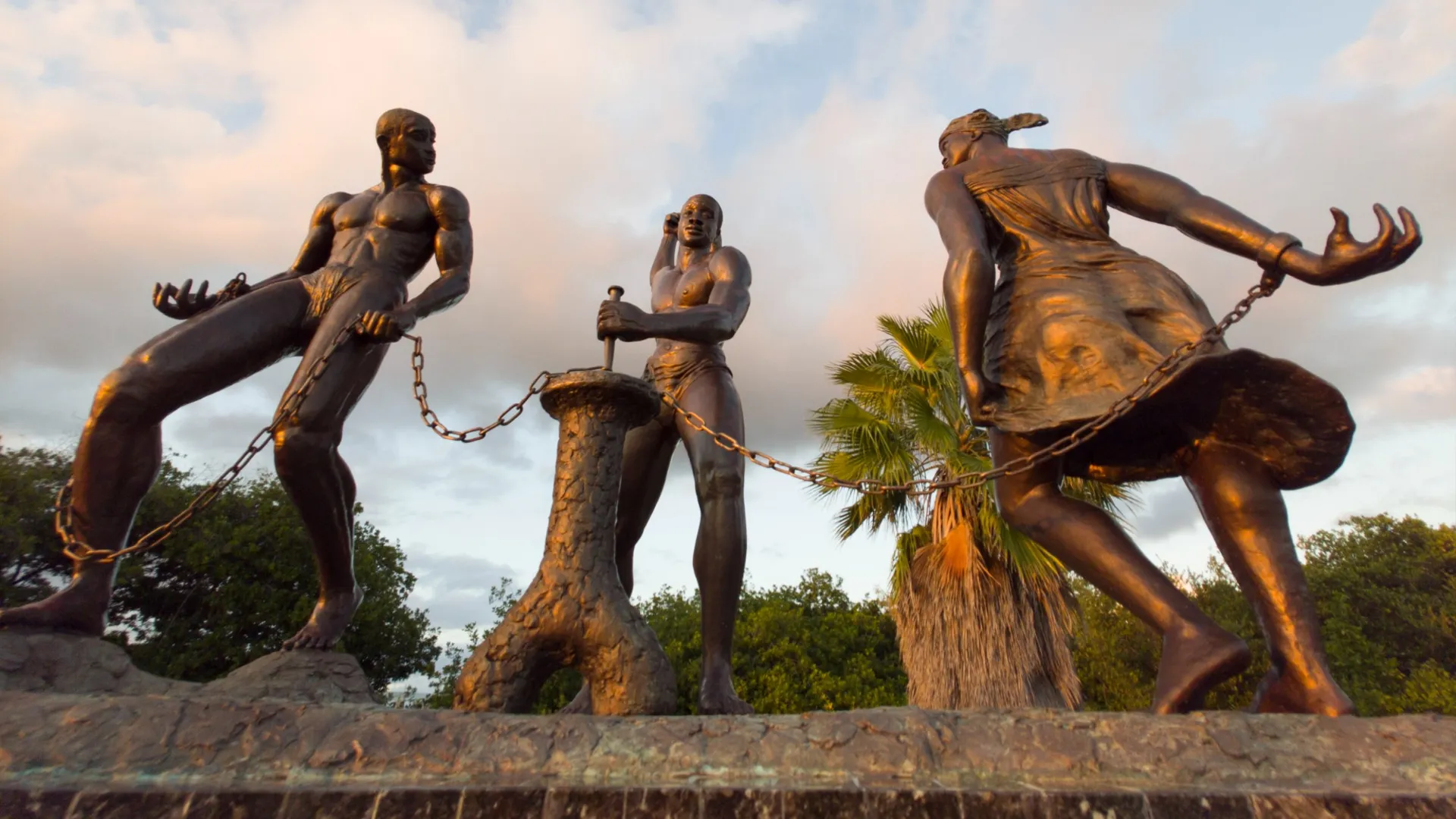
    The UN wants reparations for slavery. Not all countries agree.

    The United Nations has taken a major step in trying to correct a historic wrong. It has called for reparations for African nations that were subjected to the transatlantic slave trade and voted to recognize slavery as a crime against humanity. Though African countries welcomed the U.N.’s resolution, other nations, including the U.S., viewed the vote with skepticism.

    What did the UN vote for?
    The resolution was spearheaded by Ghana, one of the countries from which an estimated 12.5 million people across the African continent were captured by Europeans during the height of the slave trade. The resolution declares the “trafficking of enslaved Africans and racialized chattel enslavement of Africans” to be the “gravest crime against humanity.” Ghanaian President John Mahama “called on U.N. members to ‘engage in inclusive good-faith dialogue on reparatory justice, including a full and formal apology,’ as well as measures of restitution and compensation,” said Bloomberg. 

    Why are some countries against it?
    The resolution was largely well-received, passing 123-3. But the three countries that voted “no” were significant: Argentina, Israel and the U.S. The American vote comes as “policy groups, human rights organizations and academics have accused President Donald Trump of minimizing Black history,” said The New York Times.

    Critics often point to Trump’s gripe against the Smithsonian Institution, which the president has accused of “focusing too much on ‘how bad slavery was’ and not enough on the ‘brightness,’” said the Times. U.S. officials claim the decision to vote “no” on the resolution was not about race. The White House “strongly objects to the resolution’s attempt to rank crimes against humanity in any type of hierarchy,” said Deputy U.S. Ambassador Dan Negrea in a speech to the United Nations. The U.K., which abstained from the vote, used almost identical language.

    Others felt the move by the U.N. was a necessary one. The resolution was “significant,” said Justin Hansford, a ⁠law professor at Howard University, to Reuters, as it “represented the furthest the U.N. has ​gone in recognizing transatlantic slavery as a crime against humanity and in calling for reparations.” 


    Statistic of the day

    14%: The percentage of the world’s cities that complied with the World Health Organization’s recommended air-quality standards in 2025, according to a report by IQAir. The percentage is down from 17% the previous year, in part because of large-scale wildfires in Canada. In a ranking of the most polluted countries, the U.S. was 120 out of 143.


    in the spotlight

    RAMageddon is ravaging the tech industry

    Tech enthusiasts and industry analysts are sounding the alarm about RAMageddon, a shortage of random-access-memory chips crucial for running many consumer electronics. Though the future implications of the mass integration of generative AI have had much of the industry worried, the immediate impact of AI’s excessive memory needs is being felt worldwide.

    ‘Insatiable high-margin demand’
    The memory chip shortage is “beginning to hammer profits, derail corporate plans and inflate price tags” on everything from “laptops and smartphones to automobiles and data centers,” said Bloomberg. Major technology companies have hinted that going forward, the shortage of DRAM, or dynamic random access memory, the “fundamental building block of almost all technology,” will constrain production.

    RAMageddon has been driven by the “insatiable high-margin demand for AI data center infrastructure,” leading manufacturers to shift “production capacity away from consumer products,” said CNN. This has led to the shortage “expected to last well into 2026 and potentially up to 2028,” analysts said to the outlet.

    ‘Bigger than anything we have faced before’
    The tech industry may be reeling because of the shortage, but an easy fix is not imminent. There’s “no relief until 2028,” said Intel CEO Lip-Bu Tan early last month, after speaking to two of the big three memory companies — Micron, Samsung and SK Hynix — which control about 95% of the global DRAM supply.

    We stand at the “cusp of something that’s bigger than anything we have faced before,” said Tim Archer, the CEO of chip equipment supplier Lam Research, at a conference in South Korea, per Bloomberg. What lies ahead “between now and the end of this decade” will “overwhelm all other sources of demand.”

    The ongoing memory crisis is making it “hard for tech enthusiasts and the general population not to feel more than a little deflated,” said Tom’s Guide (a sister site of The Week). We are “marching toward lining the pockets of a small few” while “giving up environmental and financial stability.” It’s “easy to feel jaded,” but this kind of crisis “feels a little unprecedented.”


    Good day 🍷

    … for authentic wine. Wine lovers may soon have a foolproof way to spot fakes after a breakthrough by French scientist Benjamin Laforêt at winemaker Château Angélus. His team has embedded grape DNA into bottle seals, allowing fine vintages to be authenticated with certainty. The innovation offers collectors a rare guarantee that what’s in the bottle matches the label.


    Bad day 👨‍💼

    … for corporate speak. Workers most impressed by company jargon may be the least equipped to make effective business decisions, which can lead them to become dysfunctional leaders, according to a study published in the journal Personality and Individual Differences. “Corporate bullshit” uses puzzling buzzwords and terminology and is ultimately “semantically empty and often confusing,” said the study. 


    Picture of the day

    Sweet success

    Secondary school students in Patna, the capital of the Indian state of Bihar, celebrate with traditional ladoo sweets after getting the results of their Class 10 exams, the mandatory standardized tests taken nationwide that finished earlier this month. Bihar is the first state to release scores.
    Santosh Kumar / Hindustan Times / Getty Images


    Puzzles

    Daily sudoku

    Challenge yourself with The Week’s daily sudoku, part of our puzzles section, which also includes guess the number

    Play here


    The Week recommends

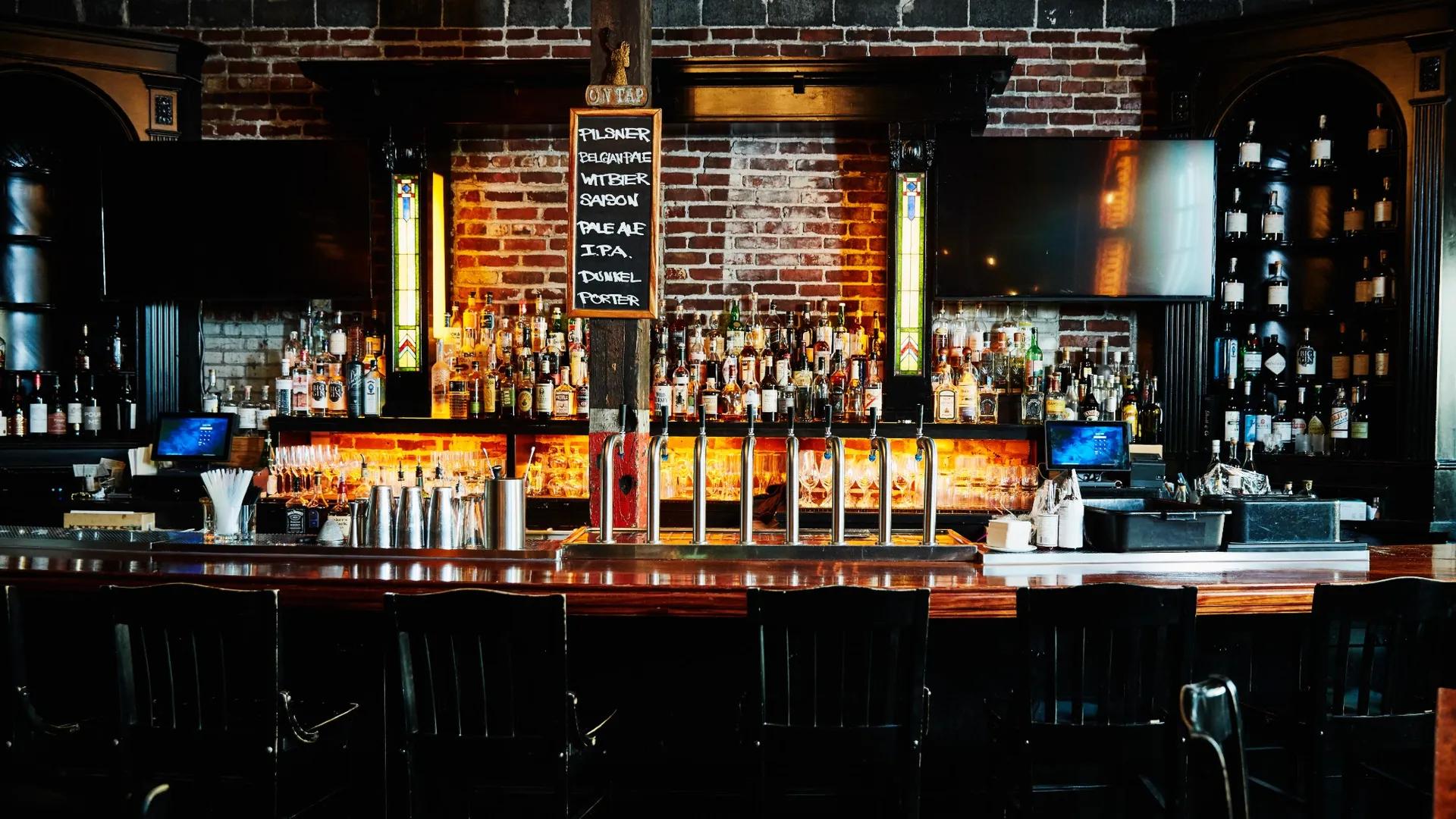
    Legends only: long-lasting bars that matter more than ever

    Welcome to the icons-only edition of where to drink this spring. These bars have been around for a spell, achieving venerable notoriety in their respective cities. All hail the longtimers.

    Clermont Lounge, Atlanta
    It’s unjust to call this a strip club. Let’s call it a bar with strippers. A “core group of women” has worked there for more than 25 years, said Dana Hazels Seith at The Bitter Southerner. The Clermont, which debuted in 1965, is a rip-roaring good time. “Every person who spent time there, from bartender to customer to dancer, told me the same thing,” said Seith. “You can be yourself at the Clermont Lounge.”

    Julius’, New York City
    At once a raunchy dive bar and an LGBTQ+ icon, Julius’ has been open since the 1860s in Manhattan’s West Village. It’s a place to meet the man of your dreams for a night, as well as one of the centerpieces of the queer civil rights movement. And as of 2022, Julius’ is an officially designated New York City landmark. 

    Smuggler’s Cove, San Francisco
    The Tiki heyday occurred during the middle of the 20th century, with Americans pining for exotic locales and fruity cocktails. You could argue, though, that the finest incarnation of Tiki-dom launched when Smuggler’s Cove opened in 2009. Fresh juices, quality rums, pristine drinkmaking technique — this place has it all. Yes, a Zombie from the Cove will render you lifeless, but it will taste so good before your demise begins.

    Read more


    Poll watch

    Gen Z is the most alcohol-averse age group, with 53% reporting they don’t drink, according to a LendingTree survey of 2,000 U.S. adults. Millennials are the most likely to imbibe, at 63%. Overall, almost half of Americans (45%) are teetotalers, up from 42% in 2024. 


    INSTANT OPINION

    Today’s best commentary

    ‘Democrats need a new promise: a house by 30’
    Rotimi Adeoye at The New York Times
    The Trump administration has “declared that it’s ‘bringing back the American dream of homeownership’” but is “doing little to make it a reality,” says Rotimi Adeoye. Politicians “can offer a simple promise: Anyone who works, pays taxes and plays by the rules should have a realistic path to buying a first home by age 30.” The “political benefits for the Democratic Party could be large,” as “housing will be a central issue in 2028.”

    ‘AI deepfakes of girls are flooding schools. Teachers need more training to help stop it.’
    Emma Le and Stephanie Choi at the San Francisco Chronicle
    Deepfakes are a “dire issue in high schools full of digital natives: 98% of AI-generated content online is explicit deepfakes, and 40% of high school students know of deepfakes of themselves or their classmates,” say Emma Le and Stephanie Choi. While “protections exist, students still have little way of knowing whether they apply to them.” This gap “stems not from indifference but rather a lack of resources and guidance to address the scope of the deepfake problem among students.”

    ‘Aging boomers will jam ERs — why it’s about to get worse’
    Tom Wolzien at Newsweek
    Patients are “increasingly stuck in the ER when they should have been moved ‘upstairs’ in the hospital,” and “increasingly, baby boomers will remain in those beds due to a lack of skilled nursing and assisted living facilities,” says Tom Wolzien. This “ripple effect will get much worse throughout the health care system.” This “could leave you, your spouse or your child in that ER hallway because when we boomers have nowhere to go, you will have nowhere to go.”


    WORD OF THE DAY

    Doolysaurus

    A recently discovered species of juvenile dinosaur named after Dooly, South Korea’s “national cartoon icon,” said The Guardian. When paleontologists discovered the species on Korea’s Aphae Island, they didn’t take long to name it after the “mischievous green baby dinosaur with two little sprigs of hair.”


    Evening Review was written and edited by Theara Coleman, Nadia Croes, Scott Hocker, Anya Jaremko-Greenwold, Justin Klawans and Rafi Schwartz, with illustrations by Julia Wytrazek.

    Image credits, from top: Illustration by Julia Wytrazek / Getty Images; BSR Agency / Getty Images; Illustration by Julia Wytrazek / Getty Images; Thomas Barwick / Getty Images
     

    Recent editions

    • Morning Report

      Pope Leo speaks out

    • Sunday Shortlist

      Are you an AI ‘apocaloptimist’?

    • Saturday Wrap

      The high price of war

    VIEW ALL
    TheWeek
    • About Us
    • Contact Future's experts
    • Terms and Conditions
    • Privacy Policy
    • Cookie Policy
    • Advertise With Us
    • FAQ
    Add as a preferred source on Google Add as a preferred source on Google

    The Week is part of Future US Inc, an international media group and leading digital publisher. Visit our corporate site.

    © Future US, Inc. Full 7th Floor, 130 West 42nd Street, New York, NY 10036.