The Week The Week
flag of US
US
flag of UK
UK
https://cdn.mos.cms.futurecdn.net/flexiimages/jacafc5zvs1692883516.jpg

SUBSCRIBE & SAVE

Less than $3 per week

Sign in
  • View Profile
  • Sign out
  • The Explainer
  • The Week Recommends
  • Newsletters
  • Cartoons
  • From the Magazine
  • The Week Junior
  • Student Offers
  • More
    • Politics
    • World News
    • Business
    • Health
    • Science
    • Food & Drink
    • Travel
    • Culture
    • History
    • Personal Finance
    • Puzzles
    • Photos
    • The Blend
    • All Categories
  • Newsletter sign up Newsletter
  • The Week’s Sunday Shortlist
    A Bourdain biopic, a Djokovic documentary, and a terrifying biowar warning

     
    FILM REVIEW

    Tony

    Anthony Bourdain comes of age one fateful summer.

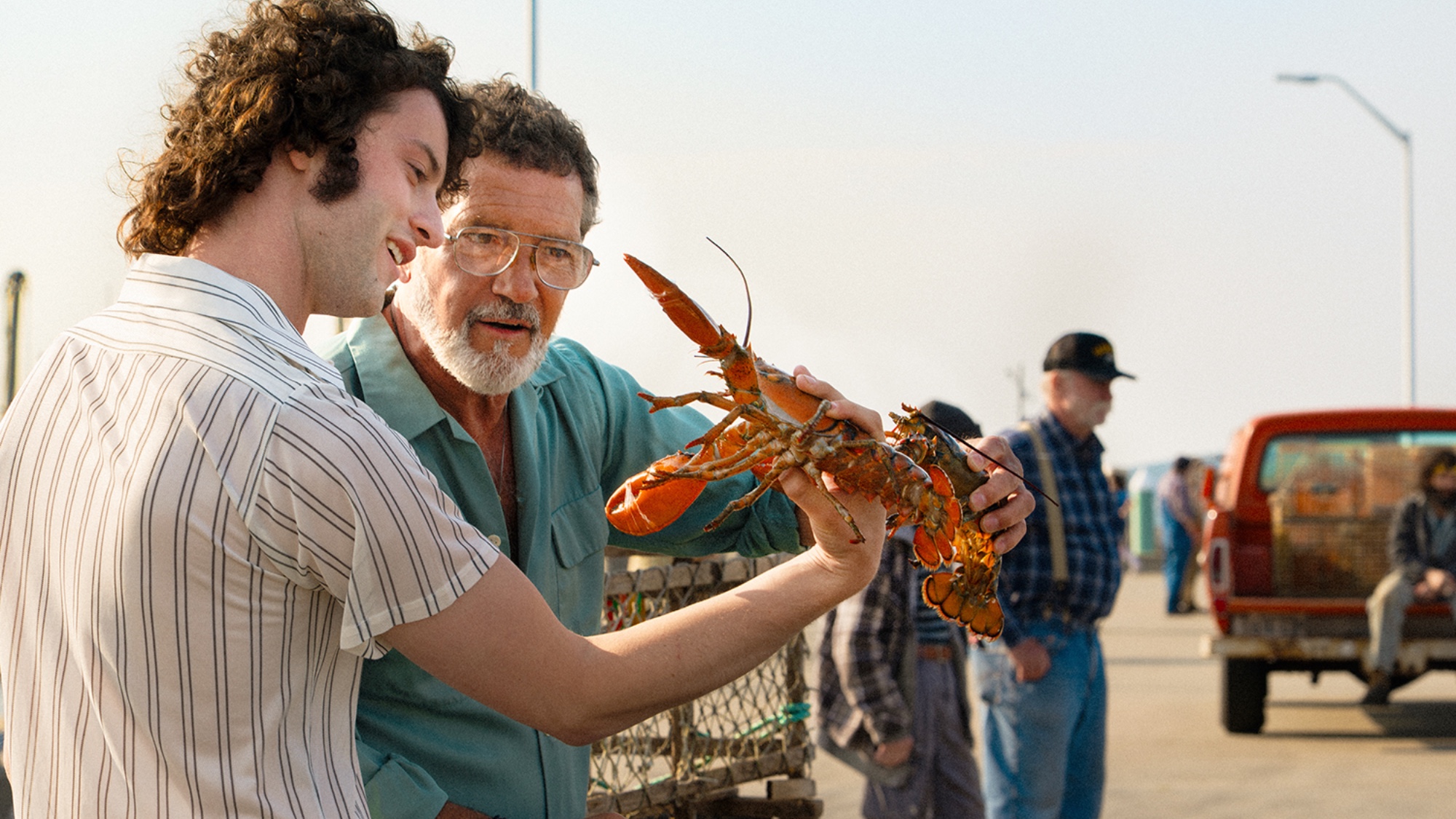
    Though the new Anthony Bourdain biopic is merely an amuse-bouche, it’s “a memorably tasty one,” said Nick Schager in The Daily Beast. The movie covers only early chapters in the celebrity chef’s name-making memoir, Kitchen Confidential, and because it’s mere prologue to Bourdain’s New York City arrival and globe-hopping TV days, it’s “a tad slight.” Still, as it shows us a cocky but rudderless 19-year-old Bourdain falling hard for the rowdy life of the kitchen during a 1970s summer in Provincetown, Mass., “there’s a spontaneity and genuineness to Tony,” and its familiar coming-of-age story beats have an “endearing prickliness.” Dominic Sessa is excellent in the lead role, said David Rooney in The Hollywood Reporter. Making good on the promise he showed in 2023’s The Holdovers, the young actor “nails the contradictory aspects of a slippery character.” When his broke Bourdain lucks into a job washing dishes at a seafood eatery, he’s torn between the hard-partying ways of an oyster shucker played by a terrific Leo Woodall and the focus shown by Antonio Banderas as the operation’s fatherly owner. The movie’s only weak link is an underdeveloped romantic subplot involving CODA’s Emilia Jones. For compensation, we get the “quiet miracle” of Banderas’ performance, said Dana Stevens in Slate. The older actor’s chemistry with Sessa “makes this gentle, low-stakes story simmer along like a cauldron of chowder.” Even if Tony weren’t a biopic about a food-world god who died too soon, “it would be a movie worth watching.”


    tv review

    Novak Djokovic: The Wolf in Winter

    He has won more Grand Slam titles than any other man in tennis history. Still, at 39, while continuing to compete at the game’s highest level, Novak Djokovic has yet to be fully embraced by the world he’s conquered. This rich documentary portrait reviews his life story, tracking his rise out of war-torn Serbia to the pro circuit and his history of dazzling and irritating observers with his competitive fire. Often cast as a villain and as the unwelcome disrupter of Roger Federer and Rafael Nadal’s elegant rivalry, he gets a chance here to explain how he’s persevered. Thursday, Aug. 20, Prime


    FOOD & DRINK

    Wine: Jurançon sec

    “Jurançon sec is having a moment,” said Emma Terhaar in Vinepair. With prices of Sancerre and Chablis skyrocketing, sommeliers have been steering diners toward the little-known white blend because, at its price, it “frequently over-delivers on flavor and complexity.” The wine is named for its region, a particularly pretty patch of the French Pyrenees. 

    2021 Clos Uroulat ‘Cuvée Marie’ ($25)
    A quality Jurançon sec that’s easy to find, this one features the gros manseng grape and delivers “bright notes of green apple, lemon zest, and saline.” 

    2024 Domaine Bellegarde ‘La Pierre Blanche’ ($30) 
    This full-bodied wine is mostly petit manseng, and it’s “ideal for food pairing,” offering “delightful notes of lemon curd and roasted hazelnuts.” 

    2021 Clos Guirouilh Jurançon Sec ($30)
    Gros manseng leads again in this wine, providing “concentrated notes of ripe apples, honey, green herbs, and guava.”


    BOOK OF THE WEEK

    Biological War: A Scenario

    by Annie Jacobsen

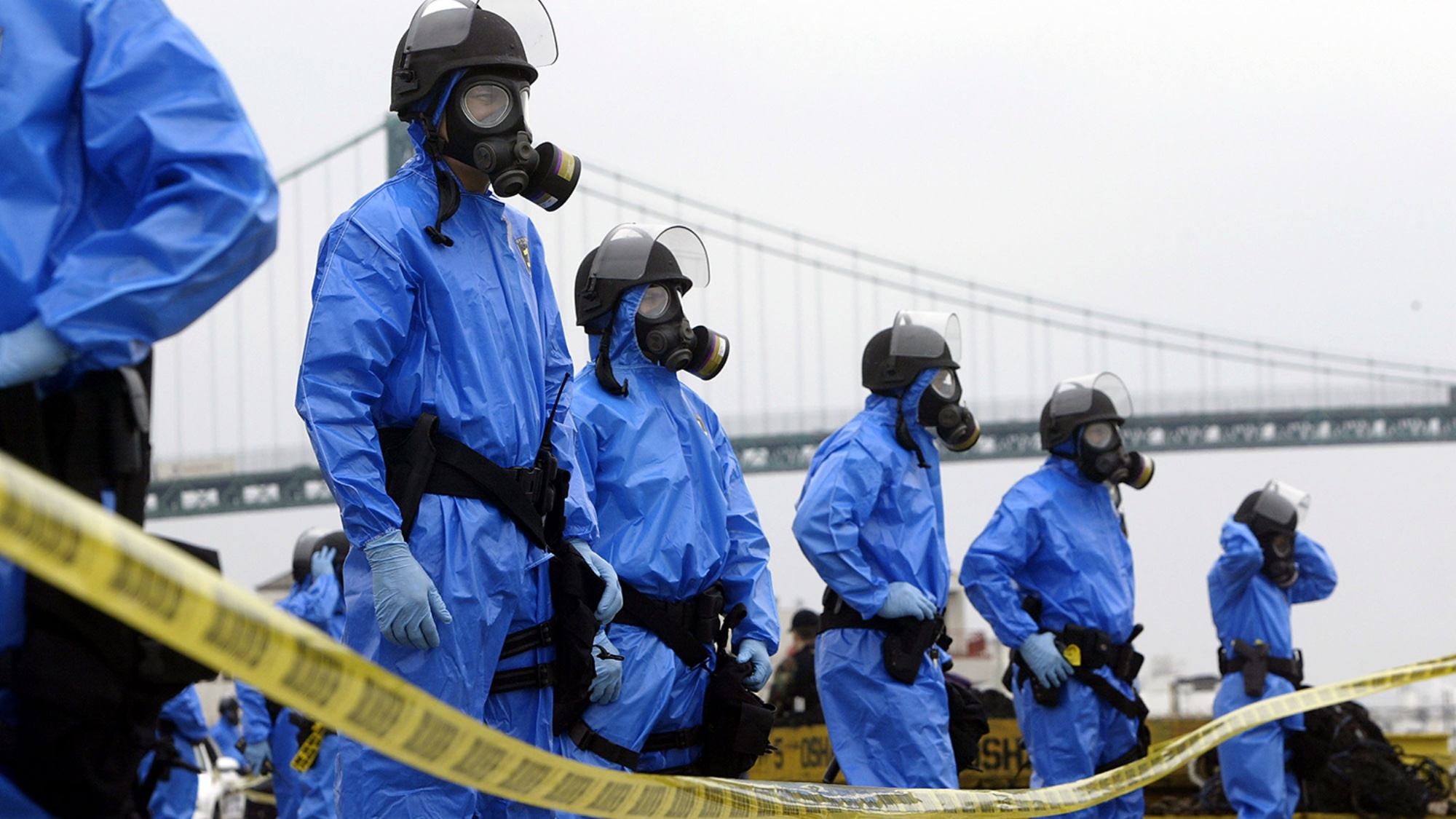
    Annie Jacobsen’s new best seller “moves like a meteor,” said Dwight Garner in The New York Times. The investigative reporter who previously reignited worries worldwide about nuclear war has this time unfurled a terrifyingly plausible scenario in which weaponized pathogens quickly wipe out humanity. To paraphrase a classic bookjacket blurb, “I paused in my reading only to wipe off the sweat.” Though biological weapons are banned by international law, a handful of countries, including Russia, Syria, and North Korea, have developed and hoarded contagious pathogens. Jacobsen, after interrogating scientific and security experts around the world, has imagined an accident at a Siberian lab that launches a runaway outbreak. She gives her chapters headings such as “Day Two” or “Day Three.” Unfortunately, “Day Six is about as far as civilization gets.” 

    “The only recent book more disturbing than Jacobsen’s previous one is her new one,” said George F. Will in The Washington Post. In 2024, she made nuclear apocalypse feel trigger-close. The potential of annihilation by genetically engineered pathogen seems closer, in part because of scientific advances of the past 25 years. In this book’s scenario, an explosion at the Siberian lab sets loose a virus that has been designed to spread rapidly, deceive medical professionals, and produce a 100% fatality rate. A handful of people are infected, including a few who hop on planes. Soon, the horrifying virus is everywhere, and resulting scarcities of water, food, and medicine cause panic, which leads to false conspiracy theories, riots, and an utter collapse of social trust. The book is a “summons to seriousness” that should rattle any reader thinking we need to send more pyromaniacs to Washington. “Jacobsen’s message is: Cascading extinction-level events are possible, so sometimes government is a serious business.” My takeaway: “Vote accordingly.” 

    Though only a tiny fraction of the world’s population survives Jacobsen’s imagined Armageddon, said Gideon Lewis-Kraus in The New Yorker, the post-plague scene she sketches proves “strangely anticlimactic, almost consoling.” She pictures the U.S. largely emptied of people except for survivors in biohazard suits sequestered in fortress-like military facilities. Maybe, though, she has sold the catastrophe short, tying her speculations too closely to historical precedents because she knows many readers will be skeptical about her end-of-days warning. Many of us hear talk of plague and think that humanity, as ever, will manage to muddle through. At least Jacobsen’s book, because it takes account of how deadly a designer virus could be, is “a persuasive argument to the contrary.” If nothing else, “it should destabilize those of us who are quick to sneer at any talk of extinction risk as mere Book of Revelations cosplay.”


    OBITUARY

    Betye Saar

    The sculptor who turned caricature into art 

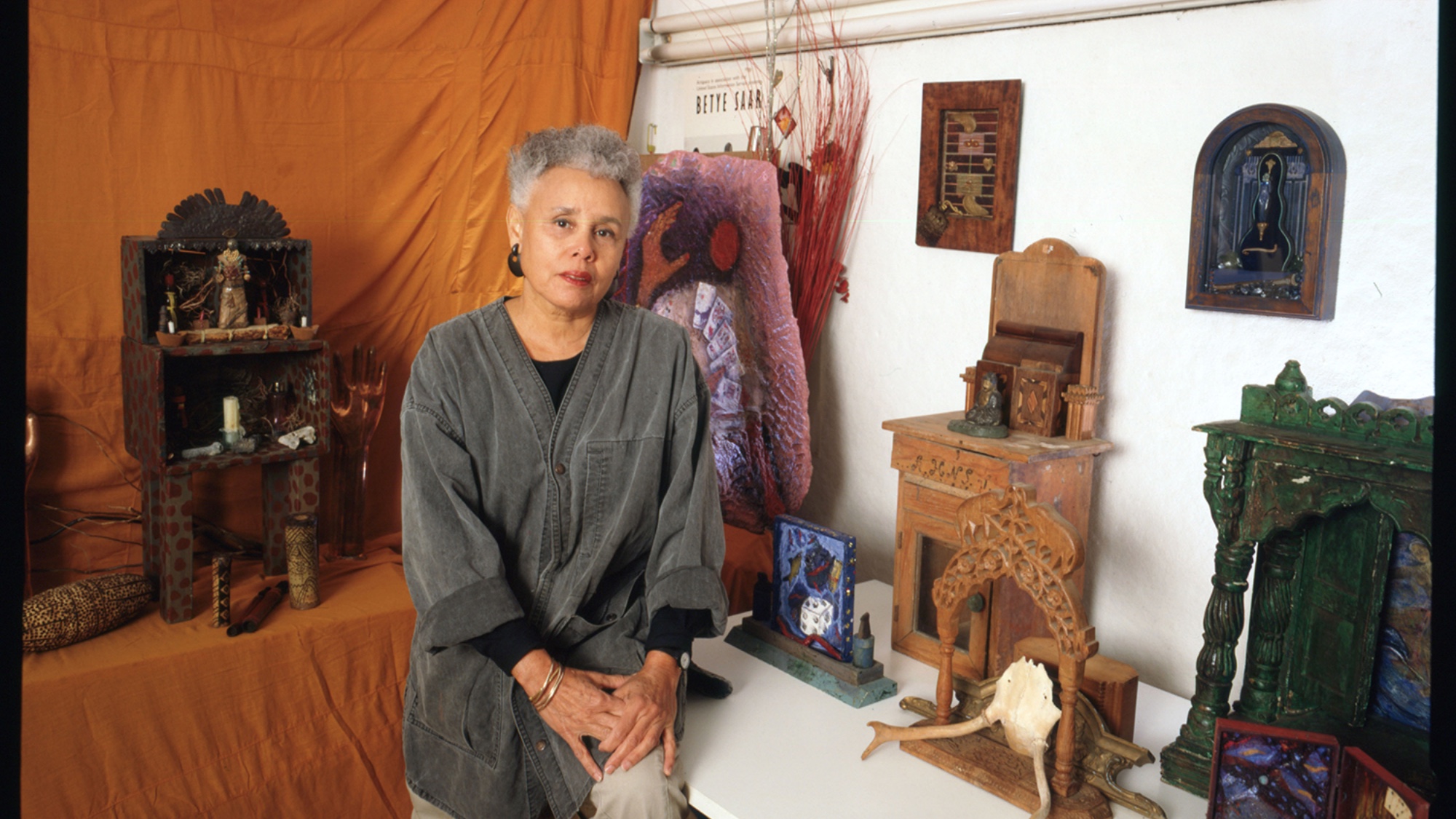
    Betye Saar could make the humblest of objects sing and shout. The Los Angeles–based artist, an early leader in the Black Arts Movement, repurposed trash, heirlooms, and flea market finds into provocative sculptures and dioramas that exploded stereotypes of Black women. Many have a searching, mystical quality, informed by her mixed African American, Irish, and Choctaw ancestry and her trips to Africa and Haiti. Her work is now featured in at least 80 museums worldwide, but the best known may be her landmark 1972 assemblage The Liberation of Aunt Jemima. It featured a plastic, thick-lipped, “mammy” figurine holding a broom in one hand and a rifle in the other. “I wanted to put a rifle and a grenade under her skirts,” Saar said in 2016. “I wanted to empower her. I wanted to make her a warrior.” 

    Born in L.A., Betye Irene Brown grew up in Pasadena, where the family moved after her insurance salesman father died. “Art was in the air” throughout her childhood, said the Los Angeles Times. Her seamstress mother encouraged her in crafting projects, and she graduated from UCLA with a design degree. Brown became an interior decorator, marrying ceramicist Richard Saar and uncouth wild man” to “the series’ heart.” After the show ended, Jones went into politics. Though he joked he had “more skeletons in his closet than the Smithsonian,” he won his 1988 race to represent Georgia in the House in a landslide. A raconteur with perfect comic timing, he was popular with fellow lawmakers and the press. In Congress, Jones “kept his aw-shucks personality, but took the issues seriously,” said the Associated Press. Socially liberal and economically conservative, he served as Democratic whip but lost his seat to redistricting after two terms. Soon he turned Dukes of Hazzard booster, touring with Cooter’s Garage Band, opening museums in Virginia and Tennessee and hosting an annual festival that drew as many as 100,000 fans. He drew controversy for defending the Confederate flag—painted on the roof of the show’s famous car—as what he called a “symbol of non-­racist Southern spirit,” and he insisted that “in Hazzard County, there was never any racism.” Even in the wake of the racially motivated Charleston church massacre, Jones refused to stop selling Confederate-themed merch. “I will fight these people until hell freezes over,” he said in 2015, “and then I will fight them on the ice.” bringing up three children in Laurel Canyon, “a hotbed of hippiedom.” Inspired by the radical politics around her, she started making prints and sculptures. “One of her most important” early works was a decorated windowpane called Black Girl’s Window, said The New York Times. In it the silhouette of a girl with her palms pressed against the window shares space with celestial bodies, astrological symbols, and a daguerreotype of her grandmother—a scene of “ancestral yearning.” She gained a measure of early recognition, winning a 1974 grant from the National Endowment for the Arts. 

    But it wasn’t until the 2010s, when she was in her 90s, that her fame reached “an international scale,” said ArtNews. Scholarly attention focused on overlooked Black artists, and in 2019 Saar had simultaneous retrospectives at New York City’s MoMA and the L.A. County Museum of Art. The artist was thrilled both by the new attention and by Quaker Oats’ decision to scrap the Aunt Jemima logo in 2020. “She’s liberated!” Saar posted online. She continued working until her death, days short of her 100th birthday. “Not everyone has a reason to get out of bed, something they love to do and that gives their life meaning,” she said. “I am so lucky that I have that.”



    Sunday Shortlist was written and edited by Susan Caskie, Ryan Devlin, Chris Erikson, Chris Mitchell, Matt Prigge, and Hallie Stiller.

    Image credits, from top: A24; Getty; Getty; Getty
     

    Recent editions

    • Saturday Wrap

      Out of ammo

    • Evening Review

      One year of the National Guard in DC

    • Morning Report

      Rough seas for US aircraft carriers

    VIEW ALL
    TheWeek
    • About Us
    • Contact Future's experts
    • Terms and Conditions
    • Privacy Policy
    • Cookie Policy
    • Advertise With Us
    • FAQ
    Add as a preferred source on Google Add as a preferred source on Google

    The Week is part of Future US Inc, an international media group and leading digital publisher. Visit our corporate site.

    © Future US, Inc. Full 7th Floor, 130 West 42nd Street, New York, NY 10036.