Sign up to get Today’s Best Articles in your inbox
Join 350,000+ subscribers and keep yourself informed with a selection of
The Week’s most interesting, enlightening and entertaining stories - plus daily puzzles.
You are now subscribed
Your newsletter sign-up was successful
Want to add more newsletters?
An account already exists for this email address, please log in.
Coastal California braces for Kelvin wave chaos
Fueled by an intense El Niño season, this little-known oceanographic phenomenon is threatening the Pacific seaboard
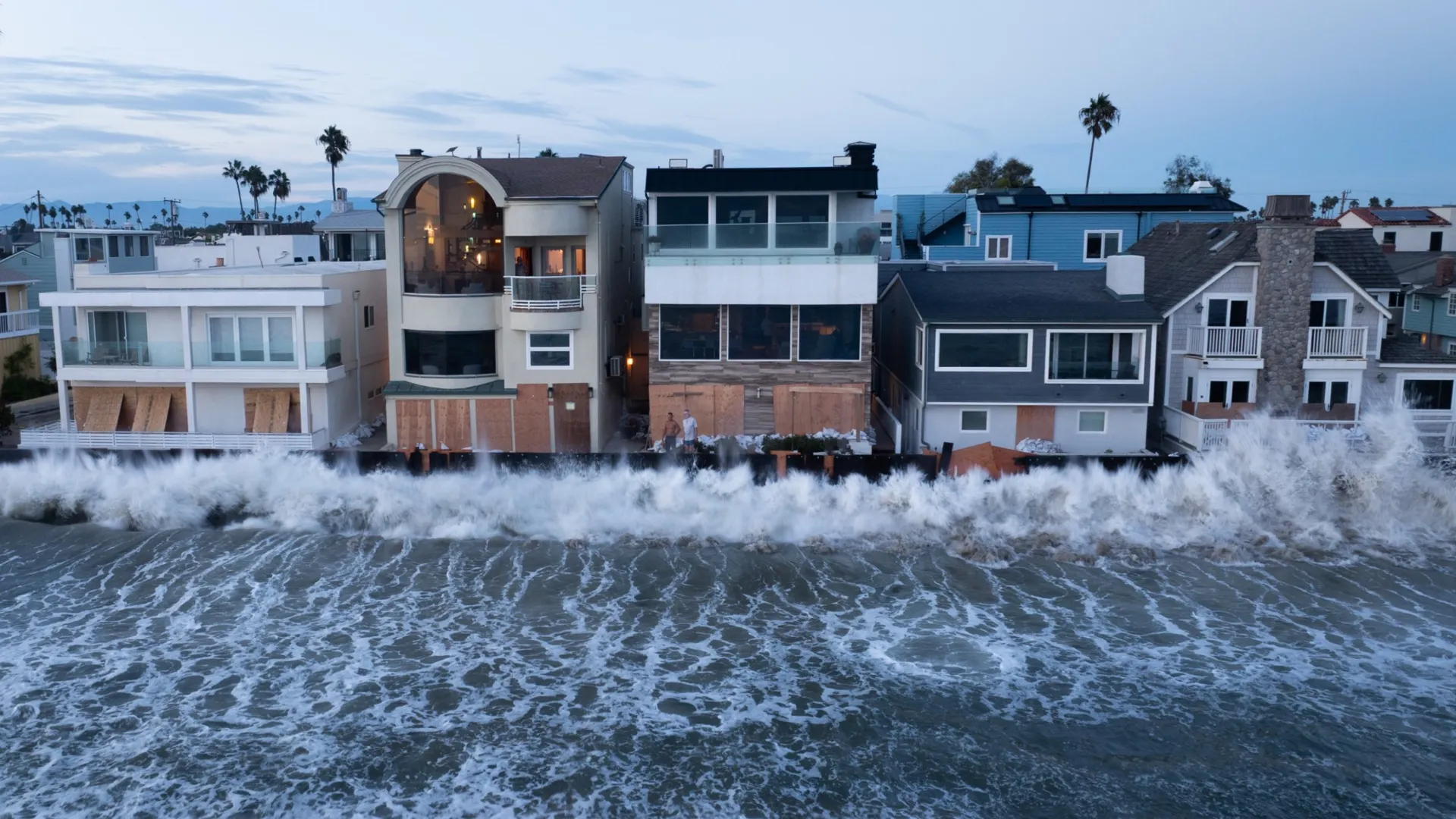
Many people are familiar with El Niño’s warming surface temperatures across the Pacific Ocean. Less known is a separate but related oceanographic feature quickly positioning itself as one of, if not the, major disruptive weather events of the season. Dubbed a Kelvin wave, researchers warn this large surge of warm ocean water could lead to intense meteorological destruction during a winter storm season already heightened by a particularly active El Niño.
‘Not like crashing waves at the beach’
Unlike “typical” waves visible across the “surface of the water,” Kelvin waves occur when “bursts of westerly winds push warm water eastward,” said LiveNow from Fox. The eastern push then generates Kelvin waves that “travel beneath the water’s surface along the equator.”
Kelvin waves manifest when ocean trade winds that “usually” move from South America toward Asia “die down or reverse" in El Niño years, said The Guardian, setting off a “massive slow-moving slosh of water.” But Kelvin waves are “not like crashing waves at the beach.”
The Week
Escape your echo chamber. Get the facts behind the news, plus analysis from multiple perspectives.
Join more than 350,000 subscribers and keep yourself informed with a selection of The Week’s most interesting, enlightening and entertaining stories - plus daily puzzles.
Join more than 350,000 subscribers and keep yourself informed with a selection of The Week’s most interesting, enlightening and entertaining stories - plus daily puzzles.
These waves are “planetary in scale, spanning thousands of miles,” and carry an “untold amount of warm water that slowly moves from the western Pacific, along the equator, towards South, Central and North America,” said The Guardian. Unlike normal shoreline waves, Kelvin waves are a “propagating disturbance” that moves energy through the ocean, “shifting heat, pressure, and sea level” along the way, said the Desert Sun.
Lasting impact
This year’s wave has “added nearly a foot to tides in Southern California,” said The Atlantic. It has also created conditions that “tend to drum up storm activity in the Pacific.”
Potential Kelvin wave damage “depends on the force of the swells and how high tides are,” said The Orange County Register. If the wave is “indeed arriving now” at California’s shoreline, it will dovetail with “6-foot tides” and hurricane conditions “already churning up the ocean’s force.” Though the exact timing of the wave’s impact on coastal California remains uncertain, said The Guardian, researchers predict the wave’s effects will “linger through the winter and into early next year.”
Sign up to get Today’s Best Articles in your inbox
A free daily email with the day’s biggest news and analysis – and the best features from TheWeek.com
Rafi Schwartz has worked as a politics writer at The Week since 2022, where he covers elections, Congress and the White House. He was previously a contributing writer with Mic focusing largely on politics, a senior writer with Splinter News, a staff writer for Fusion's news lab, and the managing editor of Heeb Magazine, a Jewish life and culture publication. Rafi's work has appeared in Rolling Stone, GOOD and The Forward, among others.