Sign up to get Today’s Best Articles in your inbox
Join 350,000+ subscribers and keep yourself informed with a selection of
The Week’s most interesting, enlightening and entertaining stories - plus daily puzzles.
You are now subscribed
Your newsletter sign-up was successful
Want to add more newsletters?
An account already exists for this email address, please log in.
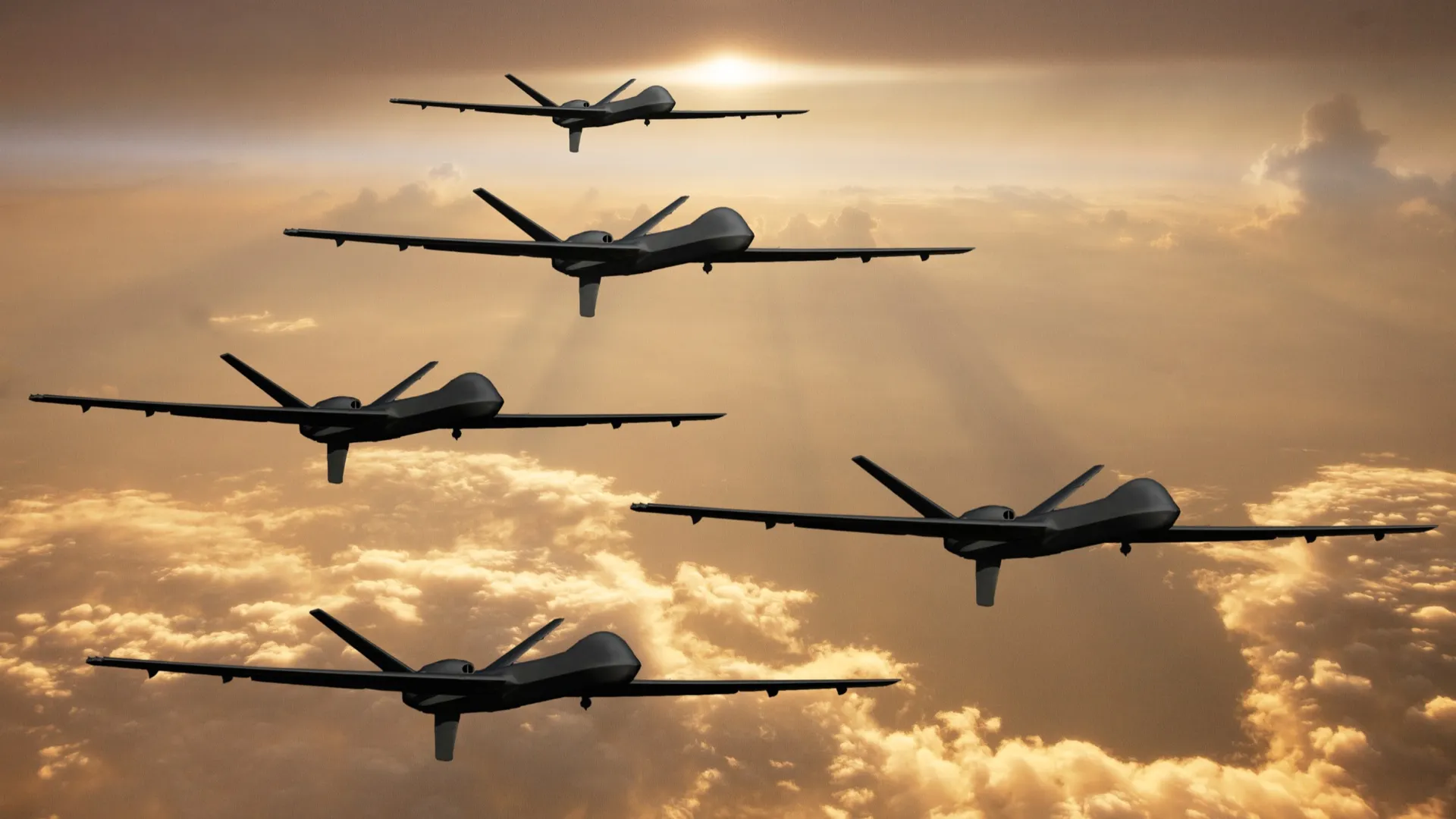
War is a human activity, but humans are increasingly distant from the equation. Russia’s war in Ukraine pits fleets of drones against each other. Now the United Nations is considering guardrails to limit the use of autonomous weapons, known colloquially as killer robots, that can choose their own targets. The stuff of science fiction films has become reality.
‘Futuristic debate’
The discussions that started at this week’s U.N. conference on Certain Conventional Weapons might be the “last best chance to agree [on] rules before it is too late,” said NPR. AI-assisted drones have already been used in combat in Ukraine and Gaza, but they have remained under human control. Letting machines choose and kill their own targets would be “crossing a moral red line,” said U.N. Secretary-General António Guterres in an August statement.
“What used to be considered a futuristic debate is now something that is very tangible and real,” said Vincent Boulanin, a senior researcher at the Swedish International Peace Research Institute, to France 24. The effort to draw bright lines around the use of autonomous weapons faces opposition from the United States and Russia. The U.S. has an eye on the possibility of a “major conflict” with China and American officials believe “they should not be limiting their ability to fight.”
The Week
Escape your echo chamber. Get the facts behind the news, plus analysis from multiple perspectives.
Join more than 350,000 subscribers and keep yourself informed with a selection of The Week’s most interesting, enlightening and entertaining stories - plus daily puzzles.
Join more than 350,000 subscribers and keep yourself informed with a selection of The Week’s most interesting, enlightening and entertaining stories - plus daily puzzles.
Experts say it is “possible to actually encode the Geneva Conventions into AI weapons,” said The Economist. But such proposals are “not on the table.”
‘Clear, binding rules’
The “prevailing consensus” is that superpowers “can’t trust their competitors” to follow any rules limiting AI-driven weapons, said the CBC. Leaders of the major powers largely believe that “whoever wins the AI race will dominate the world,” said Paul Lushenko, a senior fellow at Cornell University Tech Policy Institute, to the outlet.
Artificial intelligence “will not set its own limits in warfare,” said Cordula Droege at the International Red Cross’ Humanitarian Law & Policy blog. The countries of the world should come together to create “clear, binding rules setting clear limits” on such weapons before they are completely unleashed on the battlefield.
Sign up to get Today’s Best Articles in your inbox
A free daily email with the day’s biggest news and analysis – and the best features from TheWeek.com
Joel Mathis is a writer with 30 years of newspaper and online journalism experience. His awards include Best Online Commentary at the Online News Association and (twice) at the City and Regional Magazine Association.