Sign up to get Today’s Best Articles in your inbox
Join 350,000+ subscribers and keep yourself informed with a selection of
The Week’s most interesting, enlightening and entertaining stories - plus daily puzzles.
You are now subscribed
Your newsletter sign-up was successful
Want to add more newsletters?
An account already exists for this email address, please log in.
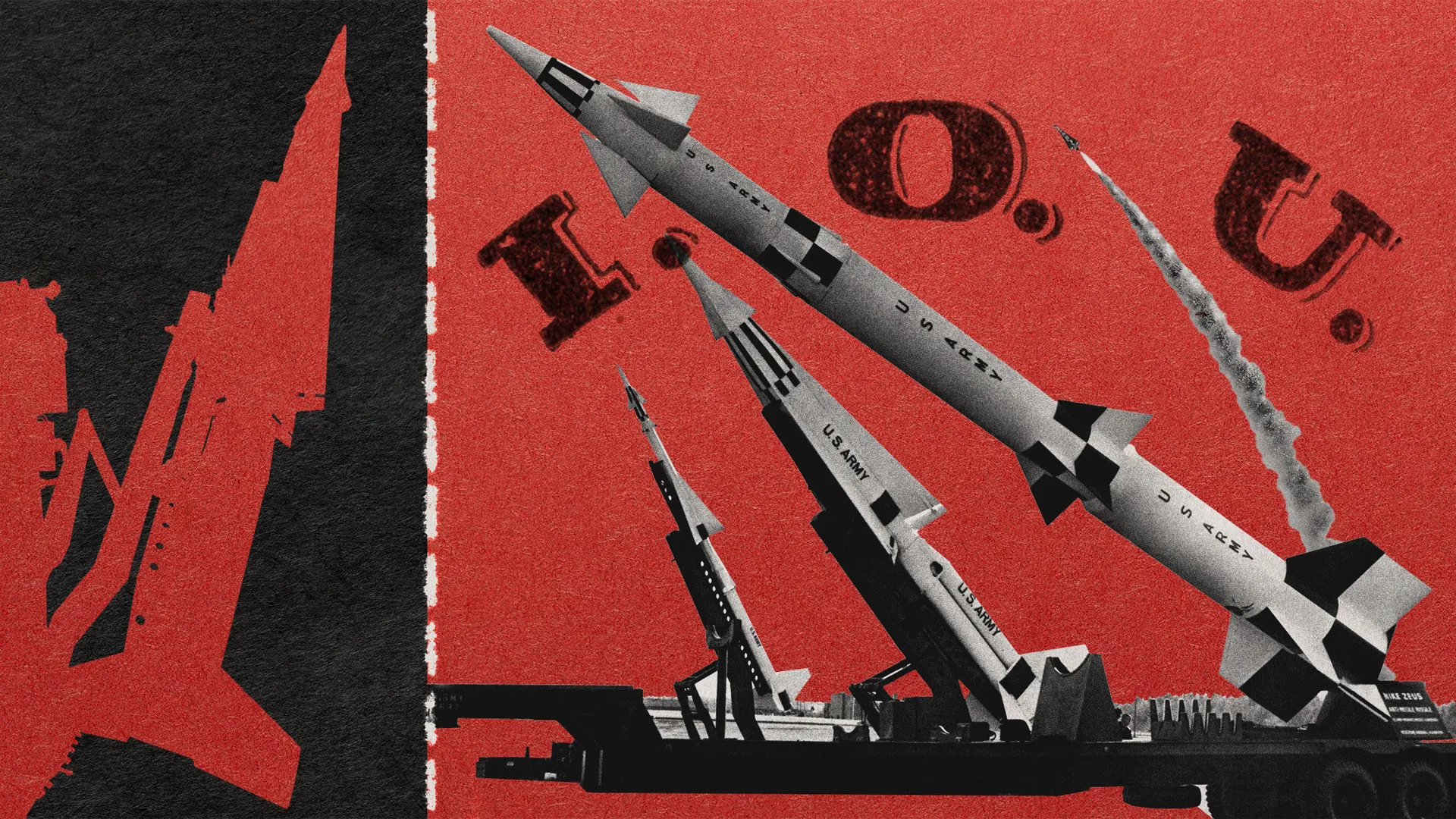
U.S. military power is immense but has its limits: Soldiers, sailors and Marines cannot fire missiles that do not exist. The war in Iran has used up much of the U.S. weapons stockpile, though the Pentagon is silent on how much remains. The answer to this question could determine President Donald Trump’s next steps in the Persian Gulf, as well as whether America is ready for a potential war with China.
What did the commentators say?
The missile question is “Washington’s very sensitive secret,” said The Wall Street Journal. Information about munitions stockpiles is always “closely guarded.” There is nonetheless “tremendous concern” within the government about a shortfall. The Army has reportedly “used up much of its stockpile of highly accurate long-range missiles” during the war with Iran, Reuters said this week. Fears that renewed fighting could “dangerously drain” remaining supplies have apparently been a factor in the president’s repeated decisions to “set aside” his threats to escalate the war, said The New York Times.
White House officials are pushing back against such a narrative, said The Associated Press. The military has “everything it needs to execute at the time and place of the president’s choosing,” a White House spokesman said in a statement to the outlet. But “shrunken inventories” of Patriot and other missiles are “potentially putting American troops at more risk,” said the AP, citing a new analysis from the Center for Strategic and International Studies. That fear seems borne out by battlefield experience. U.S. commanders are “picking and choosing” which Iranian attacks to defend against to “preserve the Pentagon’s diminishing supply of weapons,” said NBC News.
The Week
Escape your echo chamber. Get the facts behind the news, plus analysis from multiple perspectives.
Join more than 350,000 subscribers and keep yourself informed with a selection of The Week’s most interesting, enlightening and entertaining stories - plus daily puzzles.
Join more than 350,000 subscribers and keep yourself informed with a selection of The Week’s most interesting, enlightening and entertaining stories - plus daily puzzles.
The munitions crisis is “even worse than you think,” Aaron MacLean said at The Free Press. If war with a “middling power” like Iran can deplete U.S. missile supplies after just a few months, “what would happen in a broader and more intense campaign” against China? It is a sign that American plans for a potential war in the Pacific “involved some magical thinking.” Realism is needed. The war against Iran is a reminder that “presumptively short wars have a tendency to run inconveniently long.”
A missile shortage “should be a five-alarm fire” for the White House, said The Wall Street Journal. And public concerns about such a possibility undermine the “credibility of U.S. resolve” by signaling to Iran that America “can’t sustain the fight.”
What next?
Trump is attempting to boost weapons production, said Reuters. The United States has the “best quality in the world,” he said to armsmakers last month. “But we need a little more speed."
The conflict has nonetheless highlighted concerns about U.S. munitions manufacturing “in a way that now cannot be ignored,” Virginia Burger said at The Project on Government Oversight. The U.S. is facing a “multiyear window of degraded stockpiles” that cannot be quickly restocked, given the timeline needed to produce America’s complicated and expensive weaponry. This issue poses a danger. “Munitions are the clear backbone of American military strategy.”
Sign up to get Today’s Best Articles in your inbox
A free daily email with the day’s biggest news and analysis – and the best features from TheWeek.com
Joel Mathis is a writer with 30 years of newspaper and online journalism experience. His work also regularly appears in National Geographic and The Kansas City Star. His awards include best online commentary at the Online News Association and (twice) at the City and Regional Magazine Association.