Delaware's top court effectively strikes down the death penalty

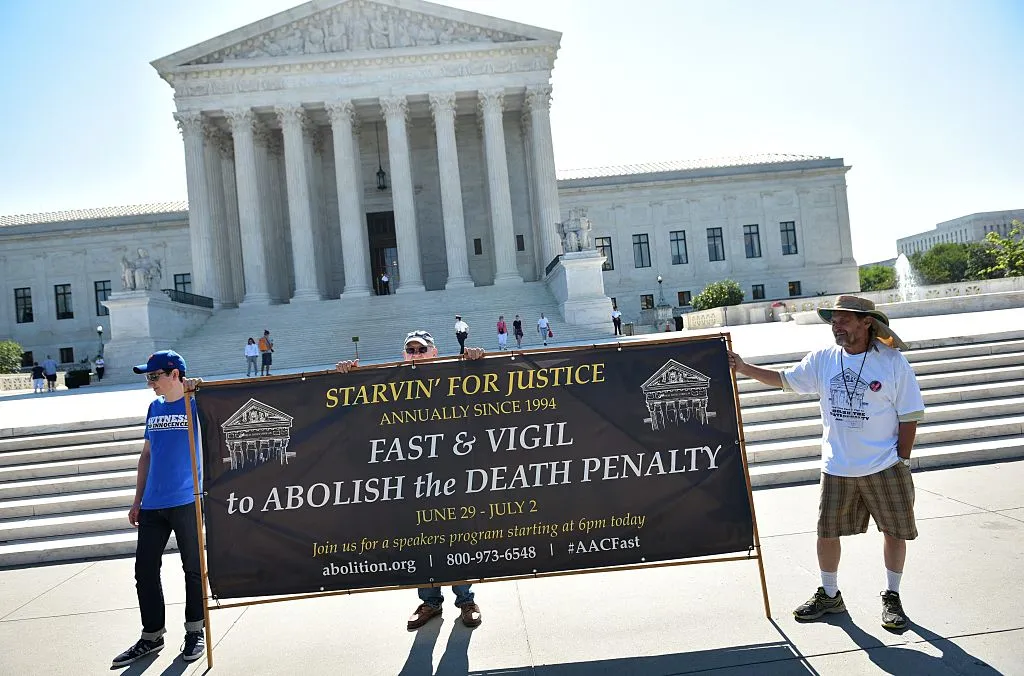
On Tuesday, Delaware's Supreme Court ruled that the state's death penalty law violates the U.S. Constitution, because it allows a judge, not a jury, to impose capital punishment. The state's top court cited a January U.S. Supreme Court ruling that struck down a similar law in Florida because "the Sixth Amendment requires a jury, not a judge, to find each fact necessary to impose a sentence of death." The state Supreme Court ruling "probably means, as a practical matter, the end of the death penalty in Delaware," Hofstra University death penalty expert Eric Freedman tells The New York Times. Delaware has 14 prisoners on death row and carried out its last execution in 2012.
The Delaware Senate voted to abolish capital punishment earlier this year, and Gov. Jack Markell (D) said he would sign such a bill. Florida tried to conform with the January federal ruling by allowing a jury to impose the death penalty by a 10 to 2 vote — that, too, is being challenged in court — but Delaware's top court said if the state legislature votes to re-impose capital punishment, juries would have to "unanimously and beyond a reasonable doubt" find that "aggravating circumstances" outweigh mitigating ones to merit a death sentence.
The Week
Escape your echo chamber. Get the facts behind the news, plus analysis from multiple perspectives.

Sign up for The Week's Free Newsletters
Join more than 350,000 subscribers and keep yourself informed with a selection of The Week’s most interesting, enlightening and entertaining stories - plus daily puzzles.
Join more than 350,000 subscribers and keep yourself informed with a selection of The Week’s most interesting, enlightening and entertaining stories - plus daily puzzles.