Sign up to get Today’s Best Articles in your inbox
Join 350,000+ subscribers and keep yourself informed with a selection of
The Week’s most interesting, enlightening and entertaining stories - plus daily puzzles.
You are now subscribed
Your newsletter sign-up was successful
Want to add more newsletters?
An account already exists for this email address, please log in.
Countries decry 'unilateral' approach in Pompeo's ending of Iranian oil sanctions waivers
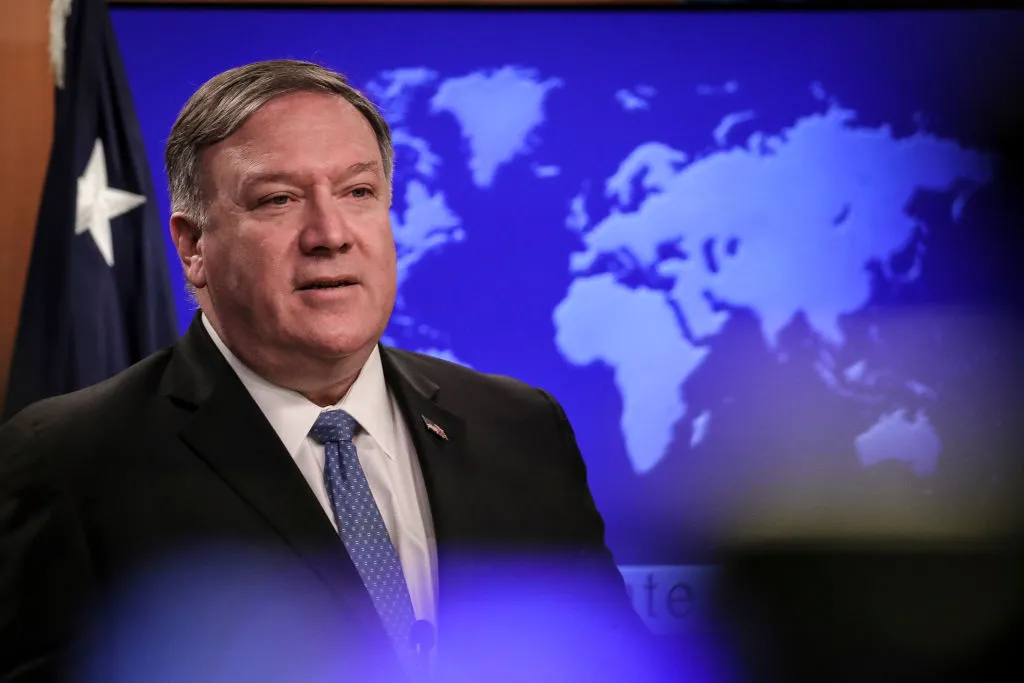
Secretary of State Mike Pompeo announced on Monday that the United States would not renew waivers exempting five countries from sanctions on Iranian oil imports. Pompeo said the intention is "to bring Iran's oil exports to zero, denying the regime its principal source of revenue."
The list of countries includes large markets such as China, India, South Korea, Japan, and Turkey. And a few of them quickly let the U.S. know they were not happy about the announcement.
The Week
Escape your echo chamber. Get the facts behind the news, plus analysis from multiple perspectives.
Join more than 350,000 subscribers and keep yourself informed with a selection of The Week’s most interesting, enlightening and entertaining stories - plus daily puzzles.
Join more than 350,000 subscribers and keep yourself informed with a selection of The Week’s most interesting, enlightening and entertaining stories - plus daily puzzles.
Iran denounced the move as "illegal" and denied that it has "any value or credibility." Turkey, a key U.S. ally in the Middle East, followed suit. The country's Foreign Minister Mevlut Cavusoglu said on Twitter that Turkey would not accept the "unilateral" terms.
China also pushed back, calling Pompeo's words more evidence of the United States' "unilateral sanctions and long-arm jurisdiction."
On the flip side, Israel and Saudi Arabia — two countries historically at odds with Iran — praised the decision. Israeli Prime Minister Benjamin Netanyahu said it "is of great importance for increasing pressure" on Iran.
India, South Korea, and Japan have yet to formally respond.
Sign up to get Today’s Best Articles in your inbox
A free daily email with the day’s biggest news and analysis – and the best features from TheWeek.com
The announcement is the latest example of the Trump administrating ramping up tensions with Iran — the White House recently designated Iran's Islamic Revolutionary Guard Corps a terrorist group.
Tim is a staff writer at The Week and has contributed to Bedford and Bowery and The New York Transatlantic. He is a graduate of Occidental College and NYU's journalism school. Tim enjoys writing about baseball, Europe, and extinct megafauna. He lives in New York City.