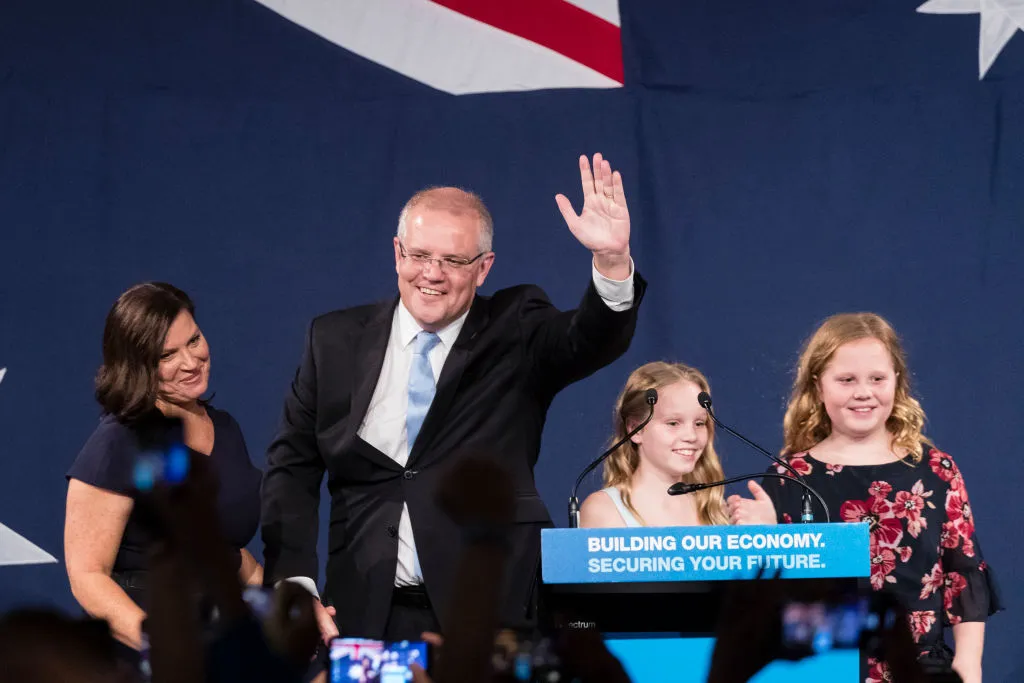
Governing Liberal Coalition declares 'miracle victory' in Australian Federal Elections
A free daily email with the biggest news stories of the day – and the best features from TheWeek.com
You are now subscribed
Your newsletter sign-up was successful
In a surprising turn of events, Australia's governing Liberal-National Coalition has reportedly defied predictions on Saturday to win the country's federal elections.
Only 70 percent of the nationwide votes have been counted so far, but the Coalition has won — or is ahead in — 74 seats, with main opponent Labor trailing with 66 seats. The Coalition needs 76 seats to claim a majority government for center-right Liberal Prime Minister Scott Morrison.
The anticipated victory comes as a shock in light of most pre-election opinion polling, which largely pointed to a narrow victory for Labor and its leader, Bill Shorten. BBC writes that it would be difficult to "find someone who says they saw this result coming" and Morrison described the result as a miracle. Shorten accepted defeat and announced he would resign his post.
The Week
Escape your echo chamber. Get the facts behind the news, plus analysis from multiple perspectives.
Sign up for The Week's Free Newsletters
From our morning news briefing to a weekly Good News Newsletter, get the best of The Week delivered directly to your inbox.
The election was considered a crucial one, BBC reports, because Australia has had a tumultuous decade-plus in the political realm. While elections in the country are held every three years, no prime minister has served a full term since 2007.
Australia has mandatory voting and a reported record 16.4 million voters enrolled for the election.
A free daily email with the biggest news stories of the day – and the best features from TheWeek.com
Tim is a staff writer at The Week and has contributed to Bedford and Bowery and The New York Transatlantic. He is a graduate of Occidental College and NYU's journalism school. Tim enjoys writing about baseball, Europe, and extinct megafauna. He lives in New York City.