Colonial pipeline attack increases bipartisan urgency to reform cyberattack reporting laws
There was already a bipartisan effort in Congress to craft legislation that would require certain companies, particularly those that operate critical infrastructure, to report cyberattacks, and the recent ransomware strike against the Colonial Pipeline has increased the urgency to get things done, Politico reports.
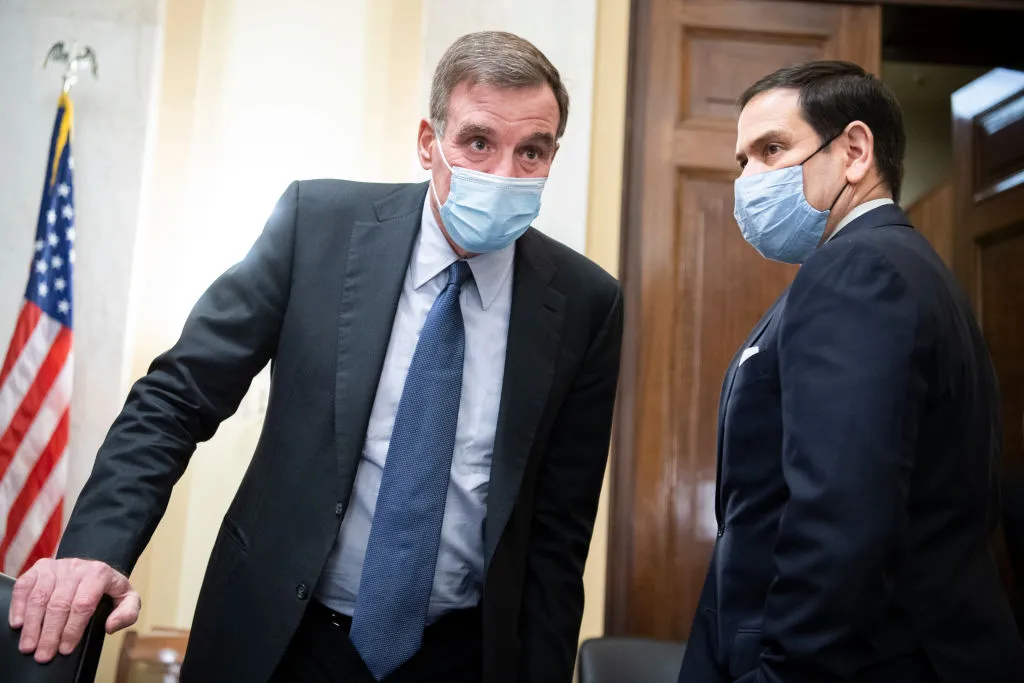
"You couldn't have a better reason" for adding a mandate than the attacks on Colonial and SolarWinds, which took place last year, Sen. Mark Warner (D-Va.) told Politico. He's working alongside Sen. Marco Rubio (R-Fla.), who said requiring companies like Colonial to alert the government of an attack is just "the tip of the iceberg of what we need to do."
Private companies have bristled at the idea of voluntarily sharing their data with the government for fear of leaks, Politico notes, but as the risk of cyberattacks increases, a mandate could become harder and harder to avoid. Until something is in place, the U.S. government will remain "completely blind to what is happening," Brandon Wales, the acting director of the Department of Homeland Security's Cybersecurity and Infrastructure Security Agency, told reporters earlier this week, per Politico. "That just weakens our overall cyber posture across our entire country."
The Week
Escape your echo chamber. Get the facts behind the news, plus analysis from multiple perspectives.
Sign up for The Week's Free Newsletters
From our morning news briefing to a weekly Good News Newsletter, get the best of The Week delivered directly to your inbox.
Warner said the legislation would provide a "public-private forum, with appropriate immunity and confidentiality." Read more at Politico.
A free daily email with the biggest news stories of the day – and the best features from TheWeek.com
Tim is a staff writer at The Week and has contributed to Bedford and Bowery and The New York Transatlantic. He is a graduate of Occidental College and NYU's journalism school. Tim enjoys writing about baseball, Europe, and extinct megafauna. He lives in New York City.
-
Exploring ancient forests on three continentsThe Week Recommends Reconnecting with historic nature across the world
-
The rise of the spymaster: a ‘tectonic shift’ in Ukraine’s politicsIn the Spotlight President Zelenskyy’s new chief of staff, former head of military intelligence Kyrylo Budanov, is widely viewed as a potential successor
-
How oil tankers have been weaponisedThe Explainer The seizure of a Russian tanker in the Atlantic last week has drawn attention to the country’s clandestine shipping network
-
Why Greenland’s natural resources are nearly impossible to mineThe Explainer The country’s natural landscape makes the task extremely difficult
-
Iran cuts internet as protests escalateSpeed Reada Government buildings across the country have been set on fire
-
US nabs ‘shadow’ tanker claimed by RussiaSpeed Read The ship was one of two vessels seized by the US military
-
Maduro pleads not guilty in first US court hearingSpeed Read Deposed Venezuelan leader Nicolás Maduro and his wife Cilia Flores pleaded not guilty to cocaine trafficking and narco-terrorism conspiracy
-
Iran’s government rocked by protestsSpeed Read The death toll from protests sparked by the collapse of Iran’s currency has reached at least 19
-
Israel approves new West Bank settlementsSpeed Read The ‘Israeli onslaught has all but vanquished a free Palestinian existence in the West Bank’
-
US offers Ukraine NATO-like security pact, with caveatsSpeed Read The Trump administration has offered Ukraine security guarantees similar to those it would receive from NATO
-
Hong Kong court convicts democracy advocate LaiSpeed Read Former Hong Kong media mogul Jimmy Lai was convicted in a landmark national security trial