Is AI really enabling productivity gains?
A new survey of executives suggests not
A free daily email with the biggest news stories of the day – and the best features from TheWeek.com
You are now subscribed
Your newsletter sign-up was successful
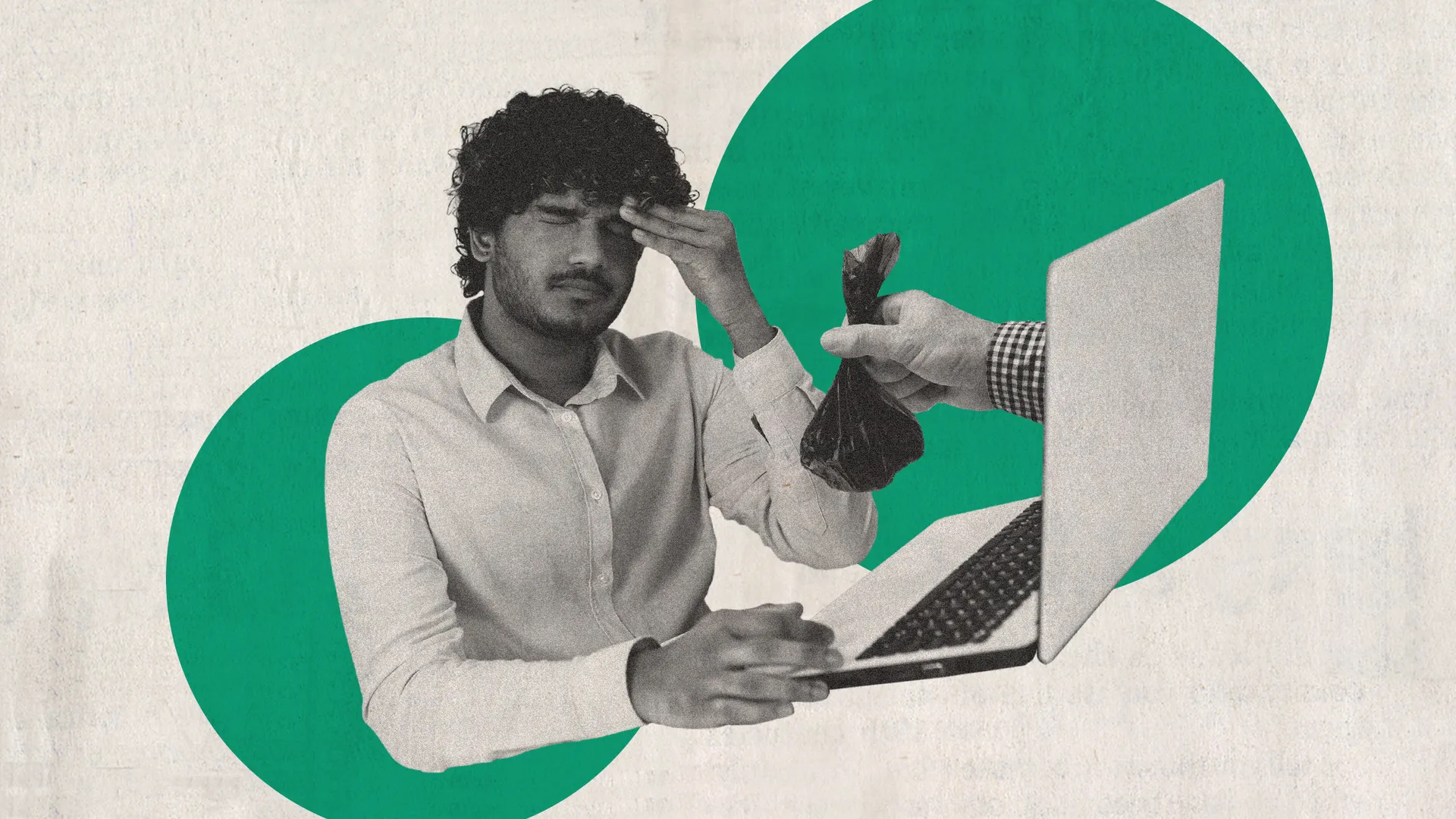
More work in less time with fewer workers — productivity gains are supposed to be one of the big benefits of artificial intelligence. But those promises have not yet come to fruition, according to a new survey of corporate executives around the world.
More than 80% of the 6,000 executives surveyed by the National Bureau of Economic Research (NBER) “detect no discernible impact from AI on either employment or productivity,” said The Register. It’s not for lack of trying: 69% of businesses say they use AI in the workplace, three-quarters “expect to use it over the next three years,” and more than 90% say it has “no impact on employment” at their businesses. The new survey is the latest addition to a “growing body of evidence” that AI’s advocates are “just not living up to their promises — at least not yet.”
The link between AI and productivity is “murky at best,” said Marketplace. That is because any productivity improvements are “going to be really hard to measure,” said Erika McEntarfer of the Stanford Institute for Economic Policy Research to the outlet. There are other factors increasing business productivity at the moment, including new investments in research and the “loosening labor market,” said Marketplace. Figuring out AI’s impact will involve measuring “hundreds of millions of people, doing at least that many, if not more, discrete tasks every day,” said George Pearkes of Bespoke Investment Group.
The Week
Escape your echo chamber. Get the facts behind the news, plus analysis from multiple perspectives.
Sign up for The Week's Free Newsletters
From our morning news briefing to a weekly Good News Newsletter, get the best of The Week delivered directly to your inbox.
What did the commentators say?
The NBER survey is “damning,” said Frank Landymore at Futurism. While most firms are using AI in some fashion, the “vast majority” say the technology “hasn’t budged the needle for them yet.” Other surveys have found that AI can “slow down rather than speed up human programmers” and ends up “accelerating burn-out” among human workers. There is precedent for this: The adoption of computers decades ago was “obviously transformative,” but they “didn’t immediately translate to economic gains.” This is why executives will keep “clinging to the hope that the tech’s promises will be borne out in the long run.”
Businesses are experiencing the “pause before the gale,” said James Pethokoukis at the American Enterprise Institute. There is a growing consensus that AI will gradually seep into the workplaces via office software in “useful, but hardly revolutionary” fashion. The firms that see productivity gains will be willing to “thoroughly rethink how work is organized.” When the promised benefits of AI finally arrive, “no one will doubt its existence and import.”
What next?
AI’s economic impact is “just beginning,” said Columbia Business School. But the gap between the promises and the measurable outputs is creating a “growing tension in public discourse.” Artificial intelligence already “feels transformative” in many users’ daily lives, but the “effects are not fully visible in traditional macroeconomic statistics.” What seems certain is that work will evolve as the technology changes. Workers have adapted to new technologies throughout history, said Aaron “Ronnie” Chatterji, OpenAI’s chief economist. “I’m bullish on humans,” he said.
A free daily email with the biggest news stories of the day – and the best features from TheWeek.com
Joel Mathis is a writer with 30 years of newspaper and online journalism experience. His work also regularly appears in National Geographic and The Kansas City Star. His awards include best online commentary at the Online News Association and (twice) at the City and Regional Magazine Association.
-
Democrats seek calm and counterprogramming ahead of SOTUIN THE SPOTLIGHT How does the party out of power plan to mark the president’s first State of the Union speech of his second term? It’s still figuring that out.
-
Climate change is creating more dangerous avalanchesThe Explainer Several major ones have recently occurred
-
What’s TrumpRx and who is it for?The Explainer The new drug-pricing site is designed to help uninsured Americans
-
China and the rise of the humanoid robotsThe Explainer The country’s ‘bustling’ robotics industry is dominating the global market, though experts are split on how concerned we should be
-
Moltbook: The AI-only social networkFeature Bots interact on Moltbook like humans use Reddit
-
Are AI bots conspiring against us?Talking Point Moltbook, the AI social network where humans are banned, may be the tip of the iceberg
-
Are Big Tech firms the new tobacco companies?Today’s Big Question A trial will determine whether Meta and YouTube designed addictive products
-
AI: Dr. ChatGPT will see you nowFeature AI can take notes—and give advice
-
Moltbook: the AI social media platform with no humans allowedThe Explainer From ‘gripes’ about human programmers to creating new religions, the new AI-only network could bring us closer to the point of ‘singularity’
-
Will AI kill the smartphone?In The Spotlight OpenAI and Meta want to unseat the ‘Lennon and McCartney’ of the gadget era
-
Claude Code: Anthropic’s wildly popular AI coding appThe Explainer Engineers and noncoders alike are helping the app go viral