Sign up to get Today’s Best Articles in your inbox
Join 350,000+ subscribers and keep yourself informed with a selection of
The Week’s most interesting, enlightening and entertaining stories - plus daily puzzles.
You are now subscribed
Your newsletter sign-up was successful
Want to add more newsletters?
An account already exists for this email address, please log in.
Inside a Black community’s fight against Elon Musk’s supercomputer
Pollution from Colossal looms over a small Southern town, potentially exacerbating health concerns
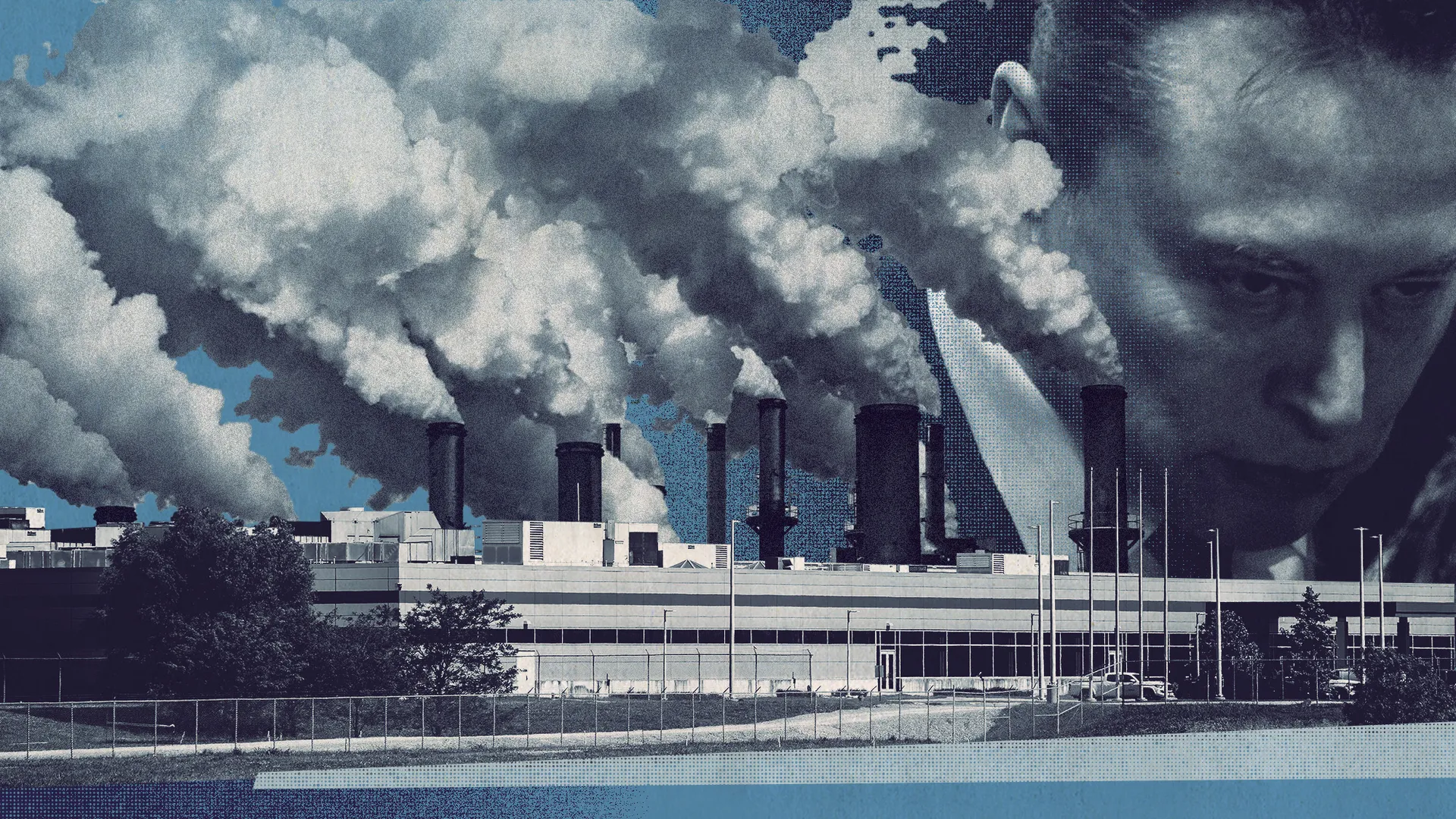
A small, primarily Black community in Memphis is fighting back against tech giant Elon Musk, claiming a massive facility he built there is overloading an already beleaguered town with dangerous pollutants. While community leaders and residents insist that the data center is threatening the community's energy and air, Musk’s company, xAI, shows no signs of slowing down.
A colossal strain on the community
Desperate to keep up with the artificial intelligence race, Musk created xAI to compete with ChatGPT, OpenAI’s popular chatbot. To power Grok, xAI’s chatbot, Musk searched for a city in need of investment where he could establish a massive data center.
He settled on Boxtown, Memphis, a 90% Black working-class neighborhood first settled by formerly enslaved people in 1863, to construct his supercomputer facility, Colossus, in 2024. Memphis authorities were “willing to waive planning regulations to help him build his supercomputer,” and in just 122 days, he turned a former appliance factory into the largest artificial intelligence supercomputer in the world, said The Times.
The Week
Escape your echo chamber. Get the facts behind the news, plus analysis from multiple perspectives.
Join more than 350,000 subscribers and keep yourself informed with a selection of The Week’s most interesting, enlightening and entertaining stories - plus daily puzzles.
Join more than 350,000 subscribers and keep yourself informed with a selection of The Week’s most interesting, enlightening and entertaining stories - plus daily puzzles.
Colossus, like other AI data centers, requires a massive amount of energy. When it is completed, Colossus will require 1.1 gigawatts of power, about “40% of the energy consumption of Memphis on an average summer’s day,” said The Times. It will also pump 1 million gallons of water, “equivalent to 1.5 Olympic-sized swimming pools, to cool its processors each day.” Residents in Boxtown, about a mile away, complain that the facility is straining the local power grid and has made the already polluted suburb “even more noxious.”
According to the Southern Environmental Law Center (SELC), the facility draws enough electricity to “power approximately 100,000 homes,” said The Tennessee Lookout. While those “inputs are alarming,” the “outputs are even worse.” The facility operates 33 methane-powered gas turbines to fuel its AI technology despite holding a permit for only 15. The facility’s turbines “increase Memphis’ smog by 30-60%” as they “belch planet-warming nitrogen oxides and poisonous formaldehyde," pollutants linked to “respiratory and cardiovascular disease.” The extent of the emissions will “likely make xAI the largest industrial source of smog-forming pollutant in Memphis,” said SELC.
‘Reinforcing a long legacy of environmental racism’
It is no coincidence that “if you are African American in this country, you’re 75% more likely to live near a toxic hazardous waste facility,” said state Rep. Justin J. Pearson, a Memphis Democrat, in a recent interview. It is no accident that “in this community, there are over 17 Toxics Release Inventory facilities surrounding us — now 18 with Elon Musk’s xAI plant.”
The xAI turbines are “leading to a public health crisis in Memphis by releasing nitrogen oxides — pollutants known to directly harm the lungs,” Austin Dalgo, an academic primary care physician, said to Time. If these facilities had been “placed next to St. Jude Children’s Research Hospital, no one would allow it,” Instead, they were placed “in the backyard of a historically Black, underserved neighborhood, reinforcing a long legacy of environmental racism in Memphis — and our country.”
Sign up to get Today’s Best Articles in your inbox
A free daily email with the day’s biggest news and analysis – and the best features from TheWeek.com
Public outcry from the community has surged over the last year. In July, protesters who were gathered by the student coalition Tigers Against Pollution marched in front of the Shelby County Health Department, holding signs that read “Elon XiPloits” and “our lungs / our lives / NOT FOR SALE,” per Time. They are being called “anti-business extremists,” Christian Dennis, a 22-year-old South Memphian, said to Time. To get that reaction “simply from wanting clean air, wanting equal health opportunities — it just tells you a lot about people.”
When The Times asked xAI for comment on Memphis residents’ concerns about Colossal’s effects on air quality, Musk’s company gave a terse response: “Legacy media lies.”
Theara Coleman has worked as a staff writer at The Week since September 2022. She frequently writes about technology, education, literature and general news. She was previously a contributing writer and assistant editor at Honeysuckle Magazine, where she covered racial politics and cannabis industry news.