The Week The Week
flag of US
US
flag of UK
UK
https://cdn.mos.cms.futurecdn.net/flexiimages/jzblygzdxr1769609154.gif

SUBSCRIBE

Try 6 weeks free

Sign in
  • View Profile
  • Sign out
  • The Explainer
  • Talking Points
  • The Week Recommends
  • Podcasts
  • Newsletters
  • From the Magazine
  • The Week Junior
  • More
    • Politics
    • World News
    • Business
    • Health
    • Science
    • Food & Drink
    • Travel
    • Culture
    • History
    • Personal Finance
    • Puzzles
    • Photos
    • The Blend
    • All Categories
  • Newsletter sign up Newsletter
  • The Week Evening Review
    The Lebanon war, Neets, and teenage sensation Max Dowman

     
    TODAY’S BIG QUESTION

    Will Israel’s war in Lebanon outlast Iran conflict?

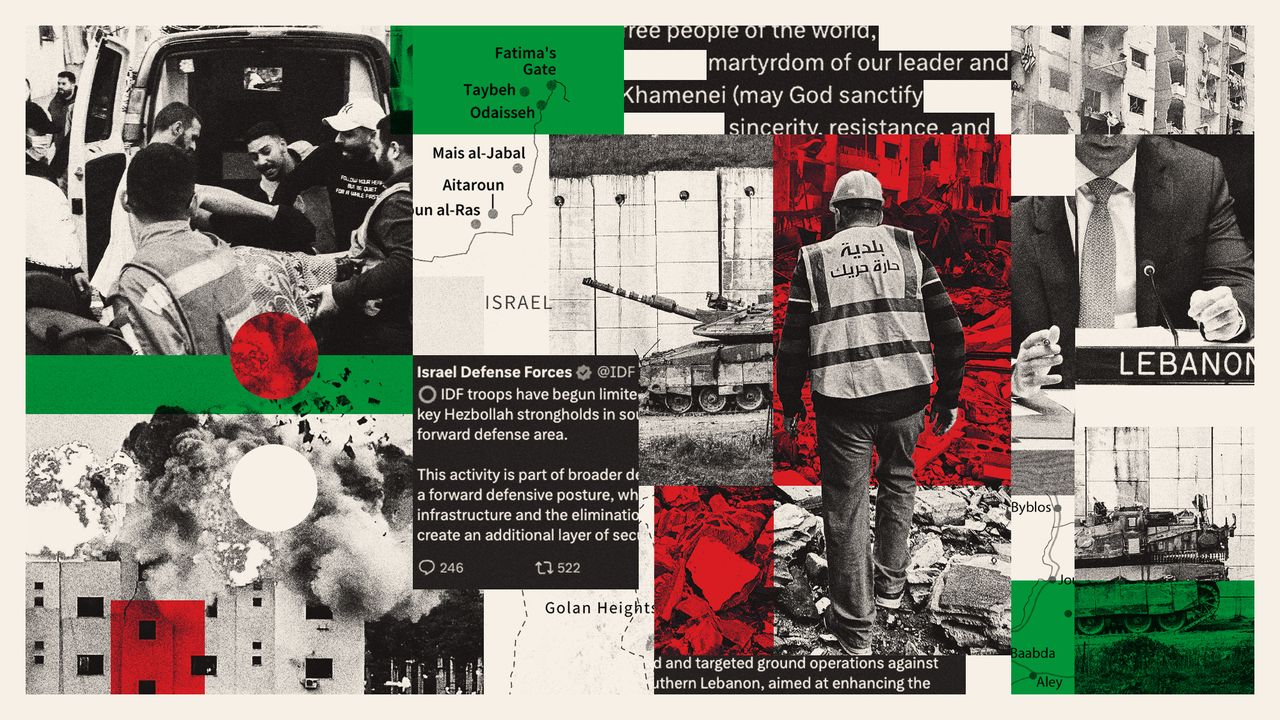
    Israel has begun what it calls a “limited and targeted” ground operation in Lebanon, despite warnings from five key Western allies.

    As tensions reignited between Tel Aviv and Iran-backed Hezbollah, the leaders of the UK, Canada, France, Germany and Italy said that Israeli troops on the ground “could lead to a protracted conflict” with “devastating humanitarian consequences”. An Israel Defense Forces spokesperson said the operation is designed to establish “forward defence, which includes destroying terrorist infrastructure and eliminating terrorists”.

    What did the commentators say?
    What is happening in Lebanon is “a war within a war”, said The New York Times’ Christina Goldbaum on “The Daily” podcast. This “second front” is “actually a much bigger war for Lebanon, and feels much more consequential for this country”. Israel is “really seizing on this moment” while all eyes are on Iran, and it’s “feeling emboldened by its partnership” with the US.

    The “extended campaign” against Hezbollah is “likely to continue beyond the end of the war against Iran”, said James Shotter in the Financial Times. We are going to see a “major impact on the population” of Lebanon, Michael Young, from the Carnegie Middle East Center, told Time. Between 850,000 and one million civilians have already been displaced in the Hezbollah-controlled south since the latest conflict began. Israel wants to “ensure that that area becomes uninhabitable”.

    It is the “price” international communities must pay for their “silence”, said Laure Stephan in Le Monde. Ever since the signing of the “theoretical truce” in late 2024, which didn’t actually stop Israeli attacks, world leaders have been “implicitly accepting the rule of force over international law”. This “lopsided ceasefire”, which “Israel never respected”, is the “root of today’s war”.

    The US-backed Lebanese government has made “unprecedented efforts” to uproot Hezbollah but achieved little tangible progress. In fact, “Hezbollah’s refusal to disarm has weakened the authorities”.

    What next?
    The French government has drafted a proposal to end the conflict in Lebanon. The framework could “de-escalate the war, prevent a prolonged Israeli occupation of southern Lebanon” and “increase international pressure to disarm Hezbollah and open the door to a historic peace deal”, said Barak Ravid on Axios. The Lebanese government has reportedly “accepted the plan as a basis for peace talks”, which are expected to take place in Paris.


    THE EXPLAINER

    Why youth unemployment is so high

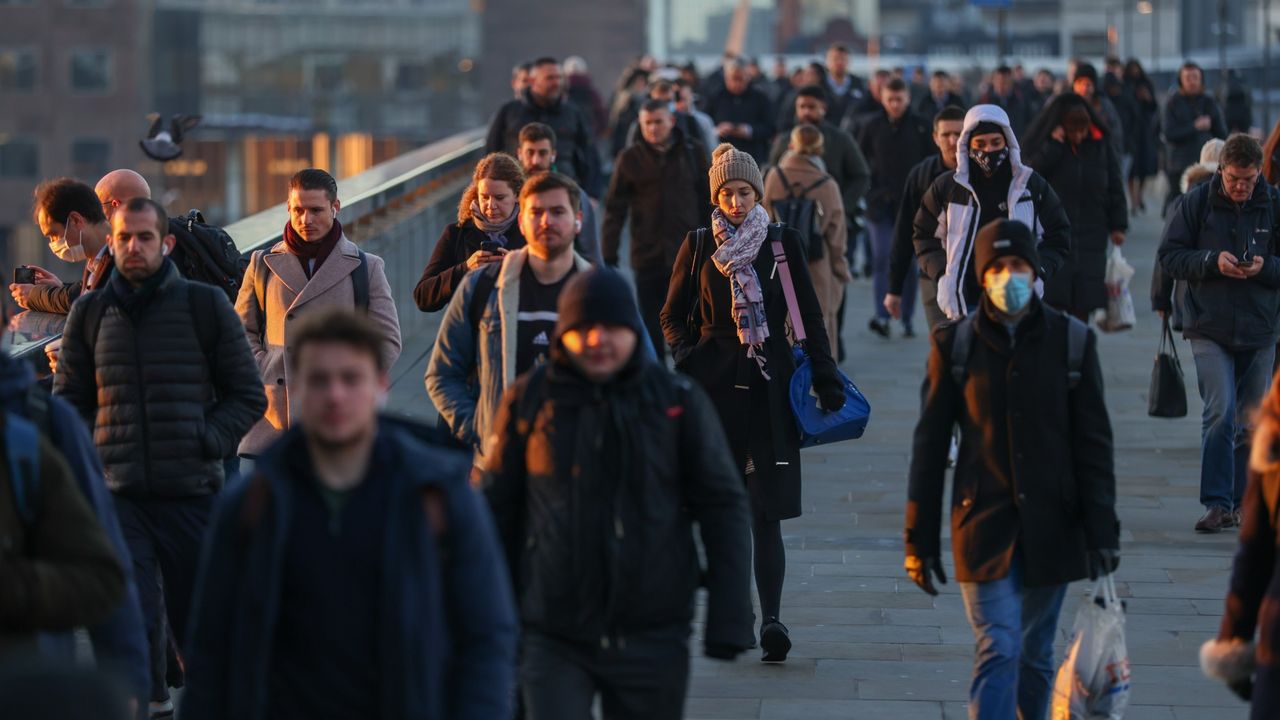
    As the number of economically inactive young people nears one million, British businesses are to be offered a £3,000 state bonus for hiring a young person who has been out of work for six months.

    Work and Pensions Secretary Pat McFadden said it was part of the government’s plans to “back Britain’s young people” after youth unemployment hit its highest level in more than a decade.

    How bad is it?
    According to the Office for National Statistics, 14% of Britons aged 18 to 24 were unemployed in the final quarter of 2025, compared with 12.7% in the same period of 2024. The number of people aged 16 to 24 who were not in employment, education or training (Neets) reached 957,000 – up from around 800,000 in 2019.

    For many, “the challenge is not so much a lack of skills or visibility as the dearth of openings in a stagnating labour market”, said the Financial Times. “Young people say they lack work experience and something to talk about to employers,” said Sareena Bains, chief executive of charity Movement to Work. “Those opportunities are becoming few and far between.”

    The tough labour landscape has been made worse by the rollout of AI, which threatens to erase many entry-level jobs. Business groups have also criticised the government’s decision to raise employers’ national insurance contributions and the youth minimum wage, as well as bringing in changes to workers’ rights – all of which could make companies less inclined to take a risk on a newcomer to the workforce over an experienced worker.

    What else is to blame?
    There is a “toxic cocktail” of “rising employment taxes, perverse incentives to claim benefits and a broken migration system”, said The Centre for Social Justice. The think tank’s Wasted Youth report found that businesses are turning to non-EU migrants while a growing number of young Britons are claiming benefits.

    Health is another major factor. The share of Neets who report having a health condition that limits their ability to work rose from 26% in 2015 to 44% in 2025, according to The Health Foundation. This “mirrors trends among young people generally”, said the charity. “Regardless of whether they are in work or education, 16- to 24-year-olds today are much more likely to report having a work-limiting health condition than they were in the past”. This increase is “driven primarily by mental-health and neurodevelopmental conditions”.


    QUOTE OF THE DAY

    “The more pain someone like me is in, the more money they are going to make. And it fuels it and feeds it.”

    Kristin Cabot, who was caught on “kisscam” with her boss at a Coldplay concert last year, tells the Oprah Winfrey podcast that technology companies should be more accountable for profiting from the victims of viral content.


    Poll watch

    Prince Louis has been crowned the top royal mischief-maker in a survey to mark 75 years of Dennis the Menace. The seven-year-old prince was ranked 22nd, two spots above his uncle Harry, in a survey of 1,000 children aged 6 to 12 by Beano. At the top of the list of 75 celebrities was American YouTuber MrBeast, followed by Dwayne Johnson and Rowan Atkinson.


    IN THE SPOTLIGHT

    Arsenal’s 16-year-old boy wonder

    Max Dowman made football history on Saturday. Running from his own half, he fired into an empty net to secure Arsenal a 2-0 win over Everton and become the youngest goalscorer in the Premier League.

    But afterwards, in the “ecstatic dressing room, the man of the match wasn’t there”, said Miguel Delaney in The Independent. That’s because Dowman “isn’t actually the man of the match”, but a child. The midfielder, aged 16 years and 75 days, isn’t allowed in the same dressing room as the adult players, and gets changed in his own space near the referees’ room.

    ‘Far ahead’ of his peers
    There has been “a buzz” around Dowman for years, said Sam Dean in The Telegraph. He was scouted when he was just four; at 13, he became the youngest player to represent Arsenal’s under-18s; at 14, he was the youngest to play for their under-21s. He also played for the England under-17s at 14, and started training with Arsenal’s first team.

    Last season, Dowman was “so far ahead of his opponents and teammates that he was almost playing a different sport”. It was obvious he had “outgrown youth football”. If Premier League rules hadn’t prevented him from playing for the senior team last year, “he might have broken through even earlier”.

    ‘Clear rules in place’
    Arsenal manager Mikel Arteta once likened Dowman to a young Lionel Messi. The teenager has already signed a pre-contract agreement with the north London club (his father handled the negotiations), and a professional deal will follow when he turns 17 in December.

    There are “clear rules in place” for minors playing adult football, said BBC Sport. Dowman only goes into the main changing room for team talks, and a member of Arsenal’s security team is “assigned to stay close” to him at all times. Due to sit his GCSEs this summer, the teenager divides his non-playing time between a private tutor and school.

    His goal at the weekend will “go down in Arsenal folklore”, said Sky Sports. It took the team closer to their first Premier League title in two decades, but it looked like Dowman “had been doing that for years”.


    Good day 📀

    … for vinyl, as US sales passed $1 billion last year, for the first time since 1983. New data from the Recording Industry Association of America shows a 19th consecutive year of revenue growth for record sales.


    Bad day 🩱

    … for spandex, after its maker The Lycra Company filed for bankruptcy. Creditors have taken control of the business in a restructuring deal that will allow much of its debt to be written off. It’s not thought that customers or employees will be affected.


    PICTURE OF THE DAY

    Fluttering lashes 

    Julia butterflies land on the eyes of a caiman in the Pantanal wetlands of Brazil. The photo, taken by Morris Hersko, is among a set of previously unseen pictures from last year’s Nikon Comedy Wildlife Photography Awards, released this week to mark the start of the 2026 competition.

    Morris Hersko / Comedy Wildlife Photography Awards


    Puzzles

    Guess the number

    Try The Week’s daily number challenge in our puzzles and quizzes section

    Play here


    THE WEEK RECOMMENDS

    Slow down with a wellness stay in Ibiza

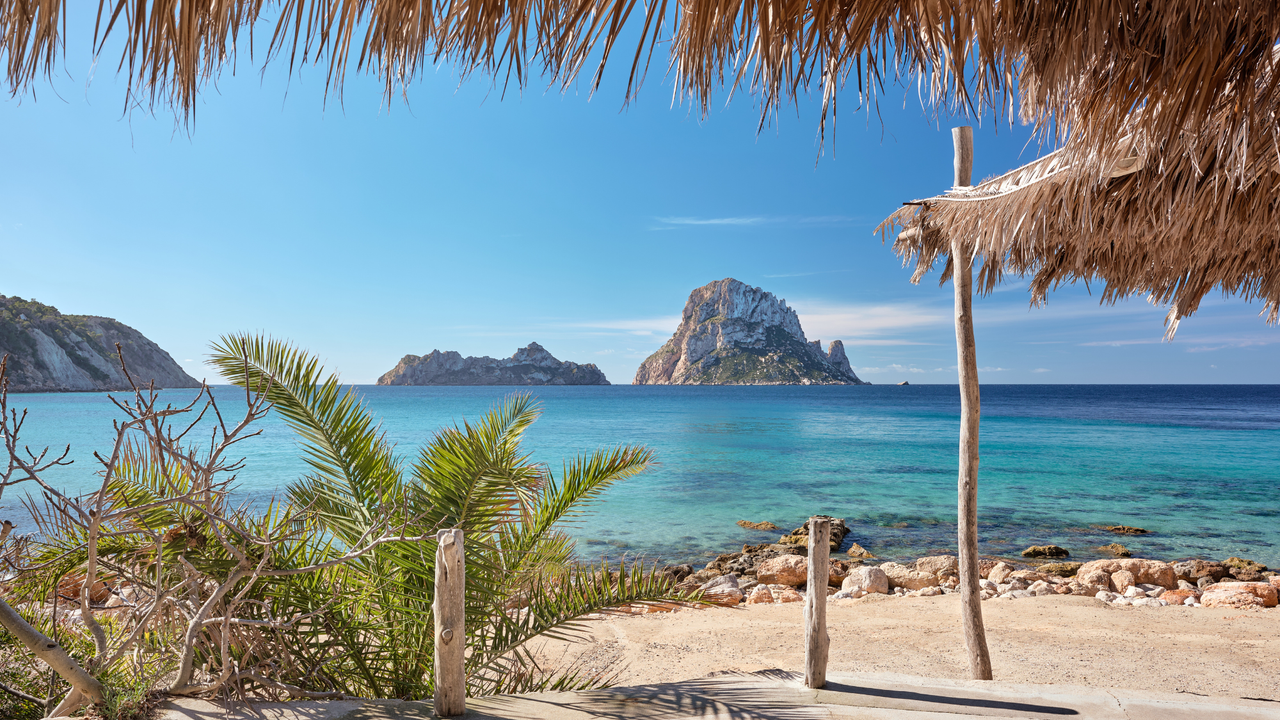
    “If sozzled ‘Brits abroad’, super-clubs and €12 bottles of water” are the first things you think of when someone mentions Ibiza, “you’re long overdue a refresh”, said Joanna Whitehead in The Independent. In recent years, the Mediterranean island has also become a haven for wellness.

    Cala San Miguel is a great base for discovering the “soulful”, wellness-focused side of Ibiza, said Karli Poliziani in Grazia. “Tucked away” on the island’s “serene” northern coast, the “adults-only sanctuary” offers guests a varied programme of activities, spanning everything from Pilates by the sea to sunset sound baths.

    For indulgent spa sessions, you’d be hard pressed to do better than Six Senses Ibiza at Xarraca Bay, said Sarah Leigh Bannerman in Condé Nast Traveller. “A winding staircase leads underground to the typically mystical, darkened world of ‘zen’ that the brand does so well”, where guests can “enjoy the facilities inside this sprawling oasis of calm”. Over on the easterly side of Ibiza is the “understated” Hostal La Torre: drop by for one of its early morning yoga sessions on the cliff face and salute the sun “with a coastal breeze in your hair”.

    And for “authentic farm-to-table dining”, head to Juntos Farm just outside Santa Gertrudis. Its owners are dedicated to regenerative farming and local food production. Either book an immersive tour to “explore the grounds and meet the animals” or “spend an evening in the courtyard, sampling creative, nourishing light bites and cocktails”.


    Statistic of the day

    £18.6 billion: The estimated cost of fixing all the potholes on local roads in England and Wales, according to the Asphalt Industry Alliance, which oversees road surfacing. The industry body said that these roads are only being resurfaced, on average, once every 97 years.


    instant opinion

    Today’s best commentary

    Why I’m teaching my kids to lie
    Kirsty Ketley in The i Paper
    “I’m honest with my kids” about lies, writes Kirsty Ketley. I tell them the odd white lie is OK – “not to get out of trouble or to shift blame but rather to be kind or spare someone’s feelings”. It’s “less about deception and more about having empathy and tact”. There’s “a huge difference between lying to avoid accountability”, and a “harmless” fib that makes everything “feel a little easier”. The former “undermines trust; the latter oils the wheels” of daily life.

    Donald Trump’s war is driving me mad
    Séamas O’Reilly in The New Statesman
    We’ve been given “at least six separate and contradictory rationales” for the US bombing of Iran, writes Séamas O’Reilly. Donald Trump calls it “an excursion”, flanked by a defence secretary who promotes “heinous acts of war” with “AI-generated meme videos”. We must look at this deadly conflict that’s “destroying the global economy” not “as the behaviour of a pugnacious yet effective superpower, but as the actions of a weird, unstable tyrant. A giant freak. A Mad King.”

    What do we really gain from no-cry onions?
    Harriet Fitch Little in the Financial Times
    Japanese scientists have managed to strip an onion “of its mythical power to make grown chefs weep”, writes food expert Harriet Fitch Little. I imagine a “shiny fridge” where “no-cry onions room with the no-chop garlic” and “the no-cook salmon fillets” and other “ingredients that make no demand of your senses until the moment of tasting”. Perhaps the “end result” will be just “as delicious” but “I suspect a bit of the magic” of cooking “would be lost”.


    word of the day

    RAMmageddon

    The shortage of random-access memory (RAM) chips is not only hitting video gamers, it’s “affecting some scientists as well”, said Nature. The rise of AI is to blame for the shortage, which has pushed up prices in a crisis “dubbed RAMmageddon”. This is “disruptive” for science laboratories, but it might “accelerate efforts to design more memory-efficient models”, said Matteo Rinaldi of the Institute for NanoSystems Innovation at Northeastern University in Massachusetts. “When shortages happen, people get creative.”


    Evening Review was written and edited by Hollie Clemence, Rebecca Messina, Will Barker, Harriet Marsden, Chas Newkey-Burden, Irenie Forshaw, David Edwards and Helen Brown, with illustrations from Stephen Kelly.

    Image credits, from top: illustration by Stephen Kelly / Getty Images; Hollie Adams / Bloomberg via Getty Images; Justin Setterfield / Getty Images; Morris Hersko / Comedy Wildlife Awards; L. Apolli / AidBC / Getty Images

    Morning Report and Evening Review were named Newsletter of the Year at the Publisher Newsletter Awards 2025
     

    Recent editions

    • Morning Report

      Authorities rush to stop meningitis spread

    • Evening Review

      Trump's rallying cry falls on deaf ears

    • Morning Report

      UK readies minesweeping drones for Hormuz

    VIEW ALL
    TheWeek
    • About Us
    • Contact Future's experts
    • Terms and Conditions
    • Privacy Policy
    • Cookie Policy
    • Advertise With Us
    • FAQ
    Add as a preferred source on Google Add as a preferred source on Google

    The Week UK is part of Future plc, an international media group and leading digital publisher. Visit our corporate site.

    © Future Publishing Limited Quay House, The Ambury, Bath BA1 1UA. All rights reserved. England and Wales company registration number 2008885.