The Week The Week
flag of US
US
flag of UK
UK
https://cdn.mos.cms.futurecdn.net/flexiimages/jzblygzdxr1769609154.gif

SUBSCRIBE

Try 6 weeks free

Sign in
  • View Profile
  • Sign out
  • The Explainer
  • Talking Points
  • The Week Recommends
  • Podcasts
  • Newsletters
  • From the Magazine
  • The Week Junior
  • More
    • Politics
    • World News
    • Business
    • Health
    • Science
    • Food & Drink
    • Travel
    • Culture
    • History
    • Personal Finance
    • Puzzles
    • Photos
    • The Blend
    • All Categories
  • Newsletter sign up Newsletter
  • WeekDay AM: 10 Things you need to know this morning
    Meningitis outbreak, Cuba suffers blackout, and Japan’s ‘bumping’ trend

     
    today’s health story

    Authorities rush to stop meningitis spread

    What happened
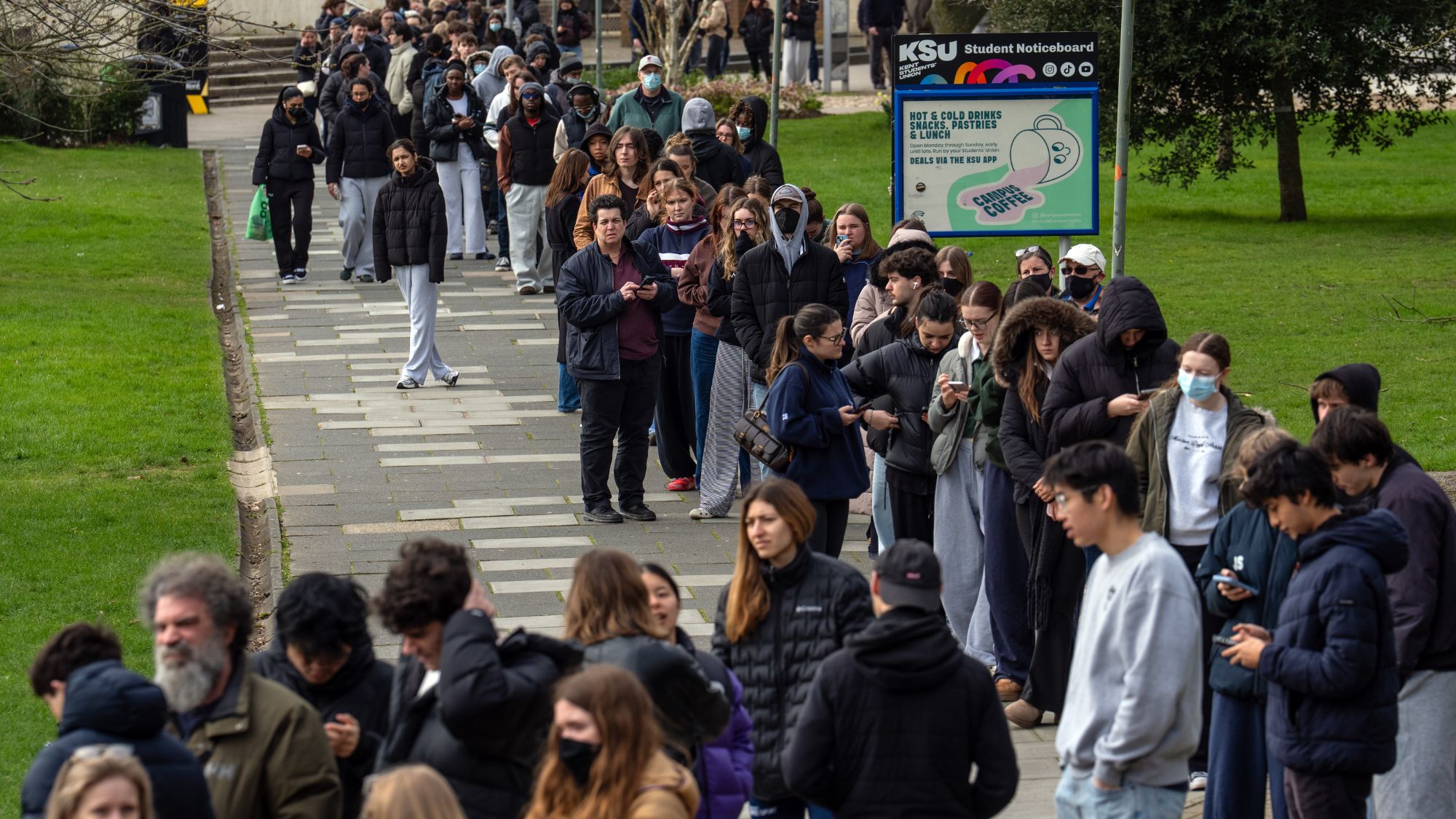
    Health authorities in Kent are distributing preventive antibiotics to thousands of young people in response to a rapidly developing meningitis outbreak linked to a Canterbury nightclub. The illness has claimed two lives: a sixth form student from Faversham named Juliette and a 21-year-old studying at the University of Kent.

    More than a dozen additional people aged roughly 17 to 21 are being treated in hospital, with at least one patient reported to be in a coma. Investigators believe that many of the infections are connected to visits to Club Chemistry earlier this month. Officials fear that the disease may already have spread further as students socialised over the weekend and travelled home for Mother’s Day.

    Who said what
    Juliette’s father said the family was “beyond devastated” and had “no words to express their loss”. Professor Andrew Preston of the University of Bath warned: “An outbreak of this size and speed is very unusual, and of great concern.”

    Students are now queueing for antibiotics in “Covid-esque” scenes, said Dan Haygarth in The Independent. However, health officials have been “criticised for waiting days to issue public warnings about a deadly meningitis outbreak”, according to The Times.

    What next?
    As a precaution, people who visited Club Chemistry and those who had contact with confirmed cases are being asked to collect antibiotic medication from emergency clinics. Exams at the university have also been postponed while health teams work to contain the outbreak.


    today’s international story

    Cuba plunges into blackout as US pressure intensifies

    What happened
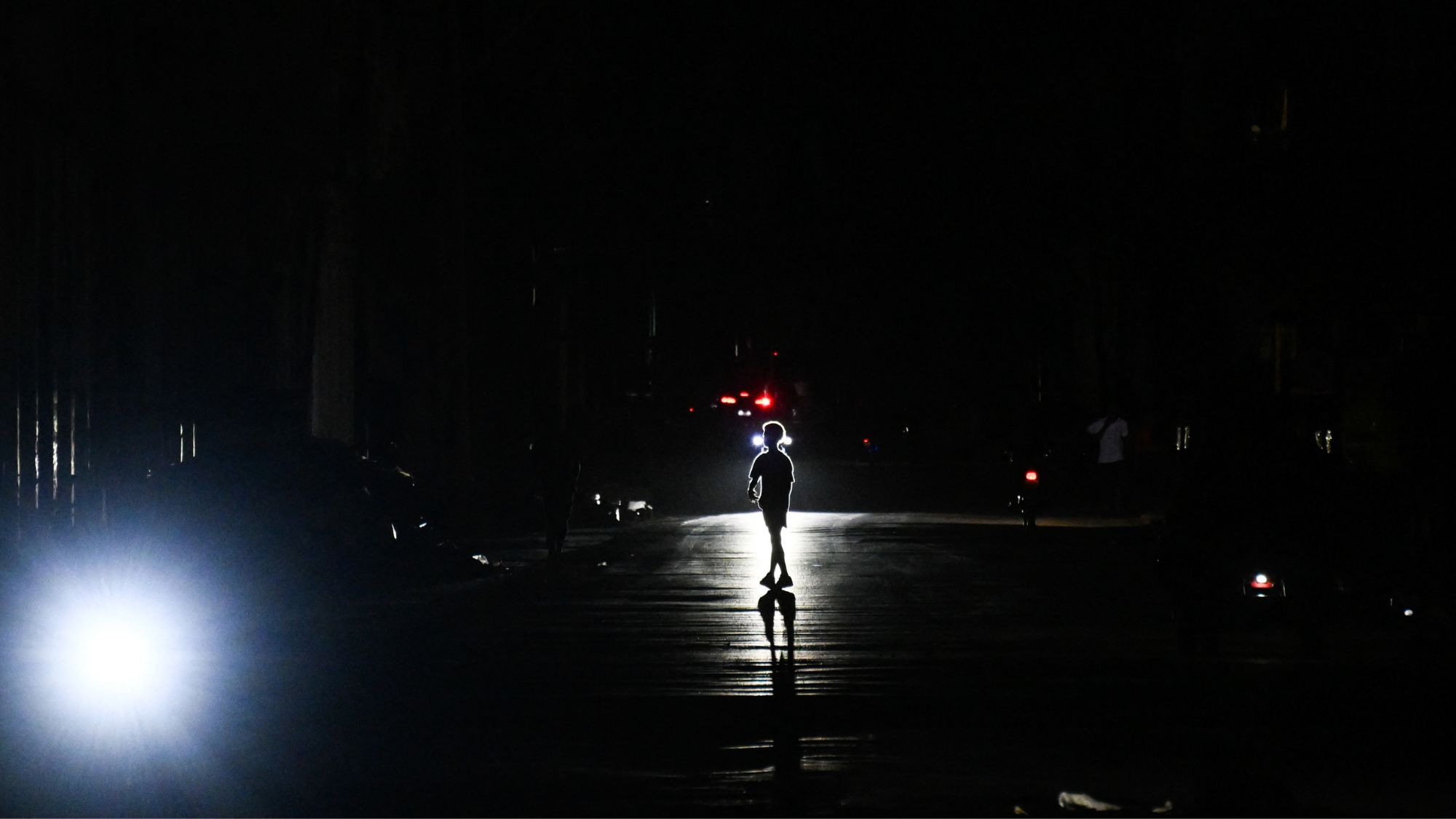
    Cuba’s national electricity network has failed, cutting power to the island’s roughly 10 million residents and worsening an already severe energy crisis.

    The outage comes as the country struggles to deal with a sharp decline in fuel imports. Oil shipments from Venezuela – once the island’s main supplier – have stopped this year, while only two small deliveries have arrived from other countries. Analysts say the shortages have pushed Cuba’s aging power infrastructure to breaking point.

    The blackout follows a weekend of unrest in which residents protested about extended outages and deteriorating living conditions.

    Who said what
    Cuban President Miguel Díaz-Canel blamed the situation on Washington’s sanctions, saying the crisis stemmed from “the energy blockade that has been imposed on us”.

    Meanwhile, Donald Trump suggested that the US could assert control over the island, with the president telling reporters: “I do believe I’ll have the honour of taking Cuba.” According to The New York Times, US officials have “signalled to Cuban negotiators that the president must go” during their ongoing talks.

    What next?
    Officials in both countries are continuing to hold discussions that could potentially ease the economic stand-off.


    Today’s economy story

    Update of inflation basket to reflect consumer habits

    What happened
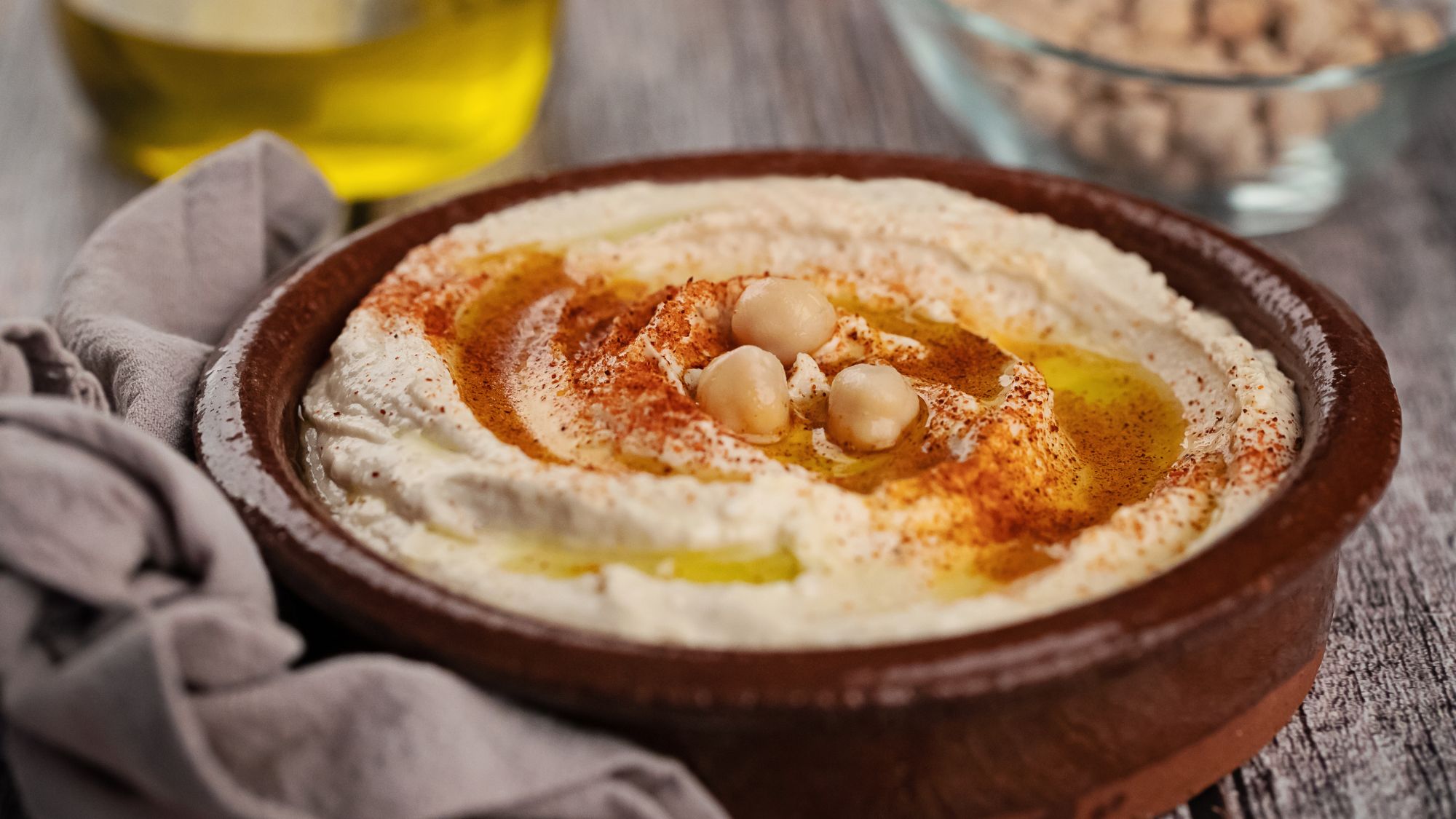
    Hummus, alcohol-free beer, dashboard cameras and pet grooming have all been added to the Office for National Statistics’ (ONS) metaphorical shopping basket, which is used to calculate inflation.

    Twenty-seven indicators have been added, while 19 objects, including wrapping paper, have been removed, making up a total of 760 items.

    Who said what
    The revisions will give Bank of England policymakers “further food for thought before they set interest rates every eight weeks”, said City A.M.

    These latest additions reflect “broader shifts in consumer behaviour” and the fact that shoppers are “increasingly embracing healthier, protein-focused diets”, said The Times. The history of the ONS basket offers a “fascinating insight into our changing tastes, trends and lifestyles”, said the BBC. When the first list was created in 1947, wild rabbit was one of the items included, while tea bags only replaced loose leaf tea in the 1980s.

    What next?
    The ONS will also adopt a “new method of data collection”, according to the BBC. Instead of manually gathering price information, the bureau will now collect millions of prices automatically using “supermarket scanner data”.


    It’s not all bad

    Croatia has officially been declared free of landmines, more than 30 years after the War of Independence left large areas of the country contaminated with explosives. Since joining the Ottawa Treaty banning anti-personnel mines in 1997, authorities and international partners have cleared vast tracts of land, destroying about 107,000 mines. Jessica Hyland of the Mines Advisory Group said Croatia’s achievement showed what such long-term efforts could accomplish. “Croatia’s success provides a strong example of what can be achieved with sustained commitment and national ownership.”


    under the radar

    Japan’s ‘bumping’ trend back in the spotlight

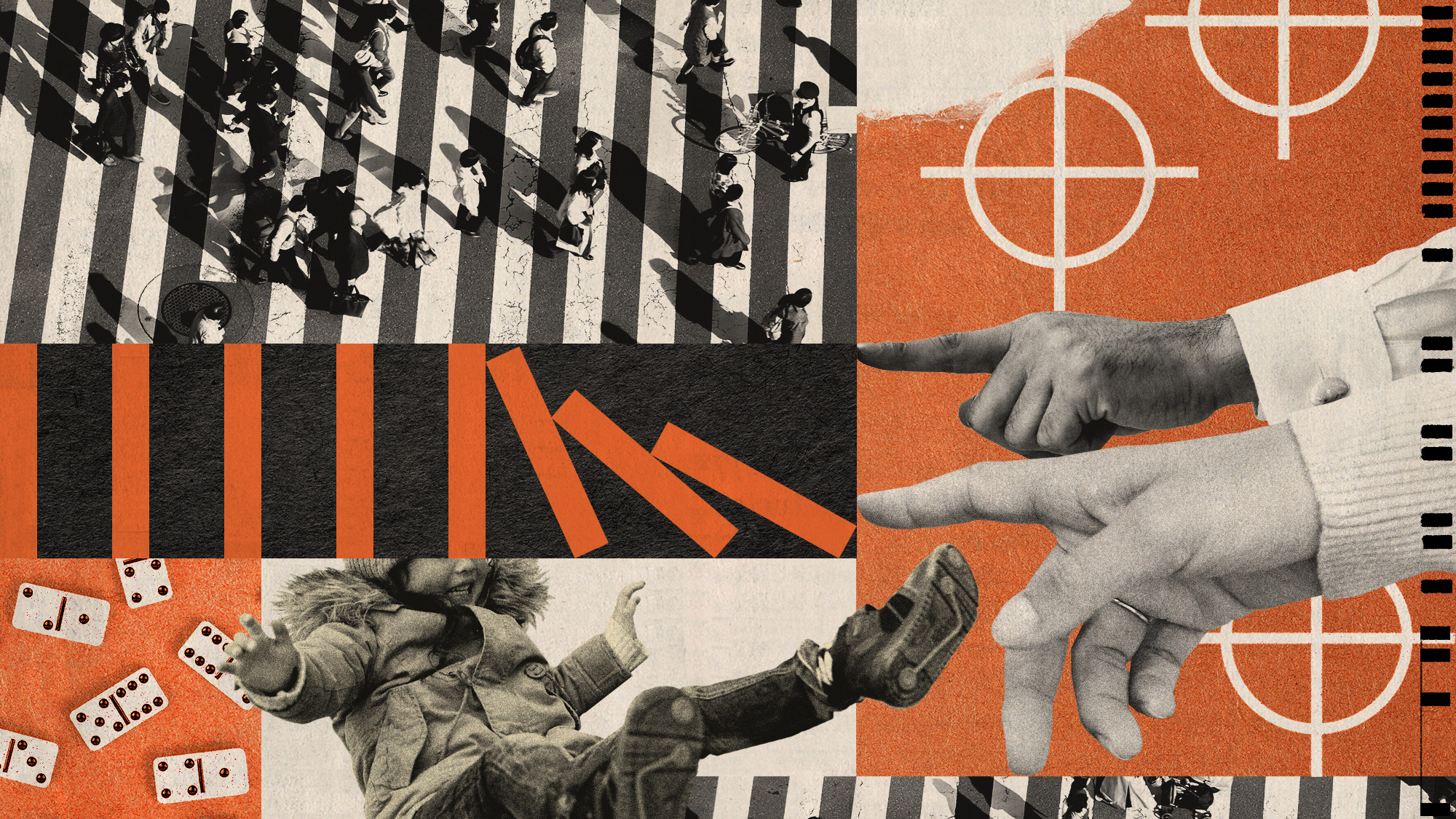
    A viral video of a young girl being pushed over as she posed for a photo in the street has sparked consternation about safety in Japan’s public spaces.

    The clip, posted last week by a Taiwanese social media user, was filmed in February at Tokyo’s famous Shibuya crossing. Like others around her, the girl pauses to smile for the camera before someone in a mask “strides up from behind” and “shoves the girl, who falls to the ground”, said the South China Morning Post. “This was no accidental clash of shoulders in a crowded place,” said The Guardian. It was “one of the most visible examples” of butsukari otoko – literally meaning “bumping men” – incidents in Japan.

    The butsukari otoko phenomenon “entered the Japanese public consciousness in 2018”, according to The Guardian, after a video went viral of a man “deliberately barging” into women at the busy Shinjuku railway station. The term refers to men who purposely collide with others (mostly women) in crowded public spaces like stations and crossings.

    It is a “reflection of modern society”, said Kiryu Masayuki, a specialist in criminal psychology at Toyo University, last year. “Old-fashioned ideas” about gender roles and male superiority “are still deeply rooted” in Japanese society.

    The trend has begun to spread from Japan to other large cities around the world such as New York and London. It’s “commonly associated with misogynistic subcultures and self-identifying incels”, said Glamour. “I’m struck by what this trend exposes: a deeper, systemic discomfort with women taking up space,” clinical psychologist Dr Arianna Masotti told the magazine. “It’s about reminding women, in a visceral way, that their bodies don’t belong in public.”


    on this day

    17 March 1861

    The Italian states were unified into a single Kingdom of Italy under Victor Emmanuel II. Critics have long debated the economic impact of the union as a stark gap in GDP per capita has persisted, with the north of the country still generating roughly twice as much revenue as the south.


    Today’s newspapers

    ‘US pressure’

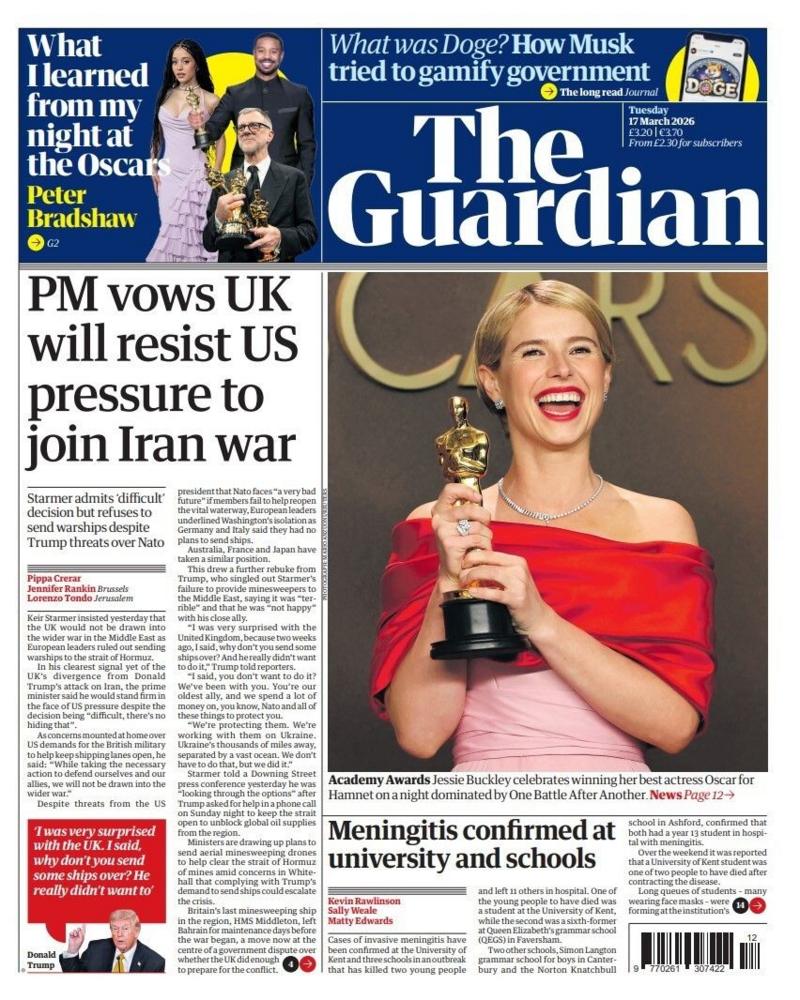
    Keir Starmer will “resist US pressure to join” the Iran war, says The Guardian, while The Times says that Trump has turned his “fire back on Starmer” as the US president called it “terrible” that the UK refused to send warships. “Donald’s Trumped”, Metro reports. The Telegraph says there’s a “race to stop meningitis spreading nationwide” after two deaths, while the Daily Mail urges thousands to “get help now”, and The Mirror reports on “terror on campus”. Meanwhile, Angela Rayner has carried out a “charm offensive” on City investors, reports the Financial Times. 

    See the newspaper front pages


    tall tale

    I’d butter run faster

    TikTok run-fluencers are using their own body motion to make butter in a trend known as “churning and burning”. Content creators have shared videos of themselves strapping bags filled with heavy cream and salt to their torsos before they “hit the trails”, with the motion of the run producing homemade butter, said the Canadian Broadcasting Corporation. It’s an alternative motivation to “getting PBs and Strava likes”, according to the broadcaster. “Is this the reason I finally start running?”, one user commented.


    Morning Report was written and edited by Arion McNicoll, Harriet Marsden, Will Barker, Ross Couzens and Chas Newkey-Burden, with illustrations by Julia Wytrazek.

    Image credits, from top: Carl Court / Getty Images; Yamil Lage / AFP / Getty Images; Cris Canton / Getty Images; Illustration by Julia Wytrazek / Getty Images.

    Morning Report and Evening Review were named Newsletter of the Year at the Publisher Newsletter Awards 2025
     

    Recent editions

    • Evening Review

      Trump's rallying cry falls on deaf ears

    • Morning Report

      UK readies minesweeping drones for Hormuz

    • Sunday Shortlist

      ‘Catnip’ for Peaky Blinders fans

    VIEW ALL
    TheWeek
    • About Us
    • Contact Future's experts
    • Terms and Conditions
    • Privacy Policy
    • Cookie Policy
    • Advertise With Us
    • FAQ
    Add as a preferred source on Google Add as a preferred source on Google

    The Week UK is part of Future plc, an international media group and leading digital publisher. Visit our corporate site.

    © Future Publishing Limited Quay House, The Ambury, Bath BA1 1UA. All rights reserved. England and Wales company registration number 2008885.