The Week The Week
flag of US
US
flag of UK
UK
https://cdn.mos.cms.futurecdn.net/flexiimages/jzblygzdxr1769609154.gif

SUBSCRIBE

Try 6 weeks free

Sign in
  • View Profile
  • Sign out
  • The Explainer
  • Talking Points
  • The Week Recommends
  • Podcasts
  • Newsletters
  • From the Magazine
  • The Week Junior
  • More
    • Politics
    • World News
    • Business
    • Health
    • Science
    • Food & Drink
    • Travel
    • Culture
    • History
    • Personal Finance
    • Puzzles
    • Photos
    • The Blend
    • All Categories
  • Newsletter sign up Newsletter
  • The Week Evening Review
    The AI race, broken ceasefires, and UK troops in the Middle East

     
    TODAY’S BIG QUESTION

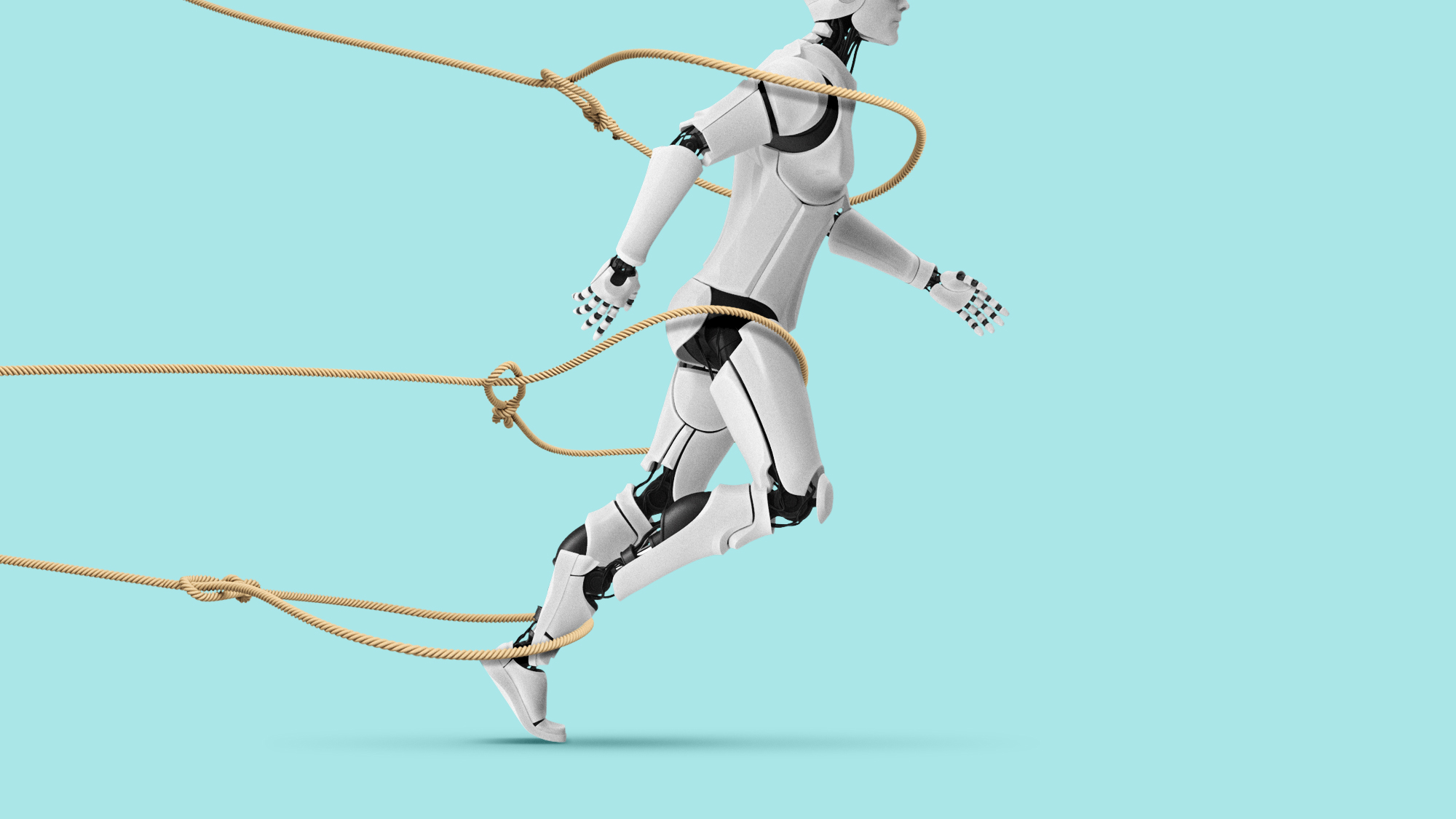
    Can we really put the brakes on AI development?

    “Right now, it’s like the AI industry has a gas pedal, but it doesn’t have a brake pedal,” Anthropic co-founder Jack Clark told the BBC.

    Anthropic recently overtook OpenAI as the world’s most valuable AI start-up. But Clark has called for a global freeze in AI development, warning that humans risk losing control. Clark and his research colleague, Marina Favaro, suggested in a blog post that work at Anthropic could undergo “a meaningful slowdown or pause” if other AI tech firms were prepared to do the same, in order “to give ourselves more time to deal with the immense implications” of the fast-developing technology.

    What did the commentators say?
    Better regulation “would keep AI systems in their lane”, David Krueger, a specialist in responsible AI, told The Guardian. We should insist that companies have “clear and well-scoped purposes” for their AI tools, and “demand evidence that they are fit for purpose”. Firms should also report statistics and data so we can see if a product is being used in ways that “deviate from its intended purpose” – especially given “increasingly alarming warning signs” that “rogue AI agents” could be on their way. 

    On Tuesday, Donald Trump signed a “much-awaited” executive order to establish a measure of vetting for AI companies, said Politico. It was “messy, muted and far less ambitious” than Silicon Valley’s critics had hoped for but it marks a “sea change in Washington’s willingness to tighten” oversight.

    The new voluntary process of sharing new models with the US government, so that security risks can be identified before the technology is released, could “soon pave the way for mandatory vetting, federal pre-approval of advanced AI systems and other regulations”.

    But this order is “relatively toothless”, said The Atlantic. Trump wants to “score points” with the public, but “he is not saying or doing anything substantive at all”. The window for serious regulation, anywhere in the world, is now “rapidly closing”.

    What next?
    Trump’s executive order is a “good first move”, said Jen Easterly, former director of the US Cybersecurity and Infrastructure Security Agency, in The New York Times. But we need legislation. A voluntary framework, predicated on cooperation between private companies and the US government, “cannot guarantee” effectiveness – especially when an “executive order is only as durable as the administration that issued it”. 


    The Explainer

    The point of an imperfect ceasefire

    “To great fanfare”, ceasefires have been announced in Gaza, Lebanon and with Iran, said PBS News – yet fighting has continued. The term “ceasefire” is “rapidly losing its meaning”.

    What’s been happening?
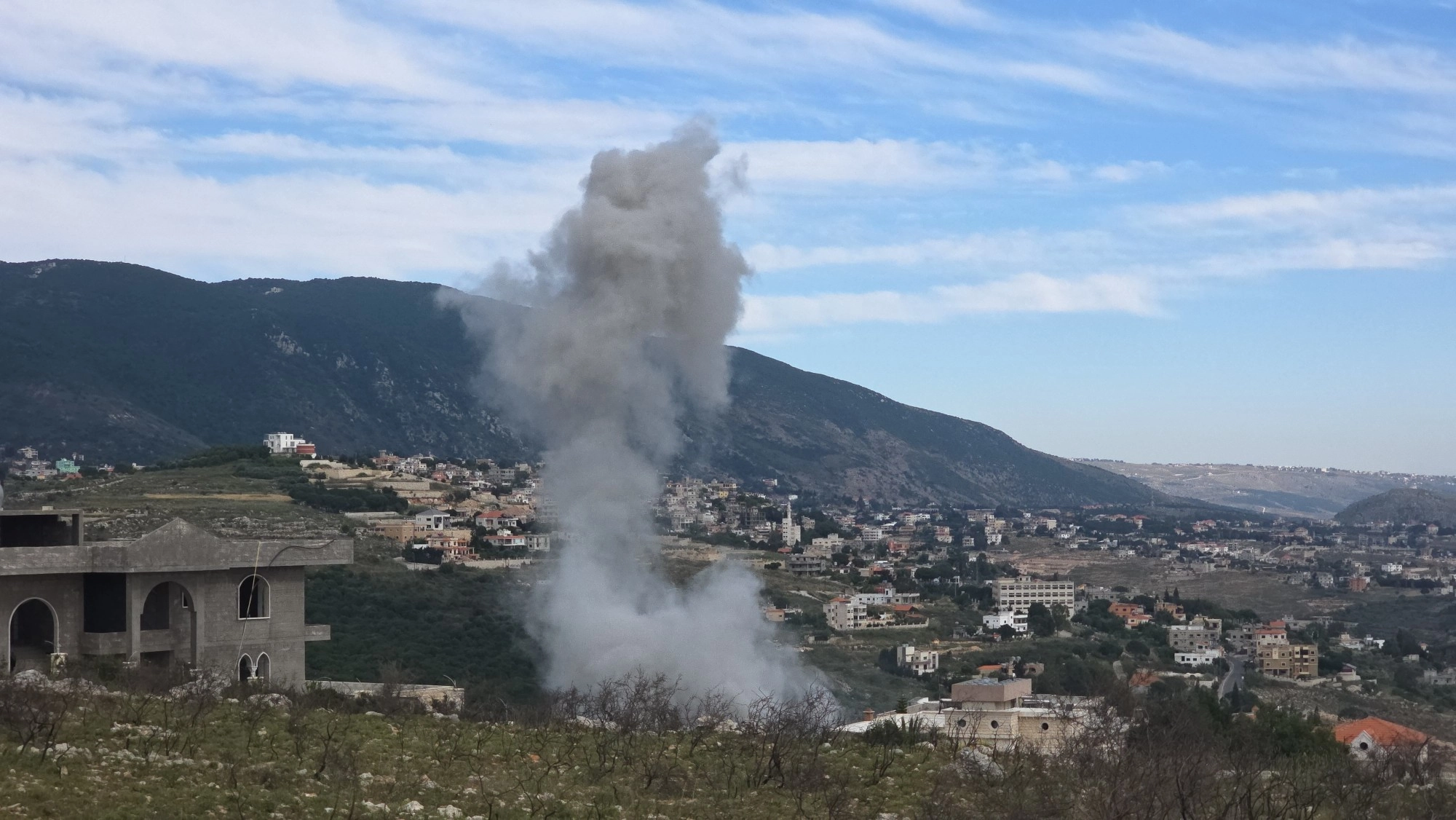
    Contravening the US-brokered truce with Hamas in October, Israeli forces have continued to capture territory in Gaza, and at least 900 Palestinians have died in strikes, according to Gaza’s Ministry of Health. Israel has also been intensifying bombardments of Lebanon and making deeper incursions across the border, while Hezbollah has kept up rocket fire of its own. The US and Iran have also continued to trade fire since a ceasefire agreement in April, as they struggle to reach a permanent truce.

    What are the advantages?
    Ceasefires “often seem to be just smoke and mirrors that precede another round of fighting”, said academics Avishay Ben-Sasson-Gordis and Simon Frankel Pratt on Foreign Policy. But “even when they don’t hold, they still have value”: they can “establish new bargaining baselines that, over multiple iterations, can become a ladder to a more permanent peace agreement”. The Northern Ireland peace process, for example, was primarily driven by two ceasefires that then paved the way for the Good Friday Agreement in 1998.

    Even a partial decrease in fighting can save lives and reduce destruction. Truces can also help with humanitarian access because aid organisations can deliver food, medicine and other supplies, while civilians may be able to evacuate. Even brief pauses in fighting can enable exchanges of detainees or recovery of bodies.

    What are the potential pitfalls?
    Sceptics argue that imperfect ceasefires simply allow forces to regroup militarily. They can be exploited for propaganda, or they may create a false impression that a conflict is being resolved. They can also create long-term problems if policymakers don’t have clear objectives.

    After the first Gulf War in 1991, the US stumbled into a “decade-long trap of its own making”, said academics Daniel Chardell and Samuel Helfont on Foreign Affairs. Washington “crafted a ceasefire agreement” with Iraq that led to ongoing tensions, repeated military confrontations and a long-term containment strategy. Subsequent US presidents were unwilling to accept Saddam Hussein remaining in power or to commit to removing him. In the end, the ceasefire became a stepping stone to the larger war in 2003.


    Poll watch

    Nearly three-quarters (71%) of Brits think the nation’s rivers are in a bad state. Only 18% of 7,545 adults polled by YouGov thought Britain’s waterways were in a “good” or “very good” condition, while the remainder were undecided.


    Statistic of the day

    26%: The percentage of babies delivered in England by emergency caesarean, according to a BBC analysis of NHS data – up by 8% since 2022. The rate of planned C-sections has also increased, to 20%. The increases have been attributed to a variety of factors, but some experts are reportedly concerned that a “culture of fear in maternity units” is a key driver.


    In the Spotlight

    The UK’s military presence in the Middle East

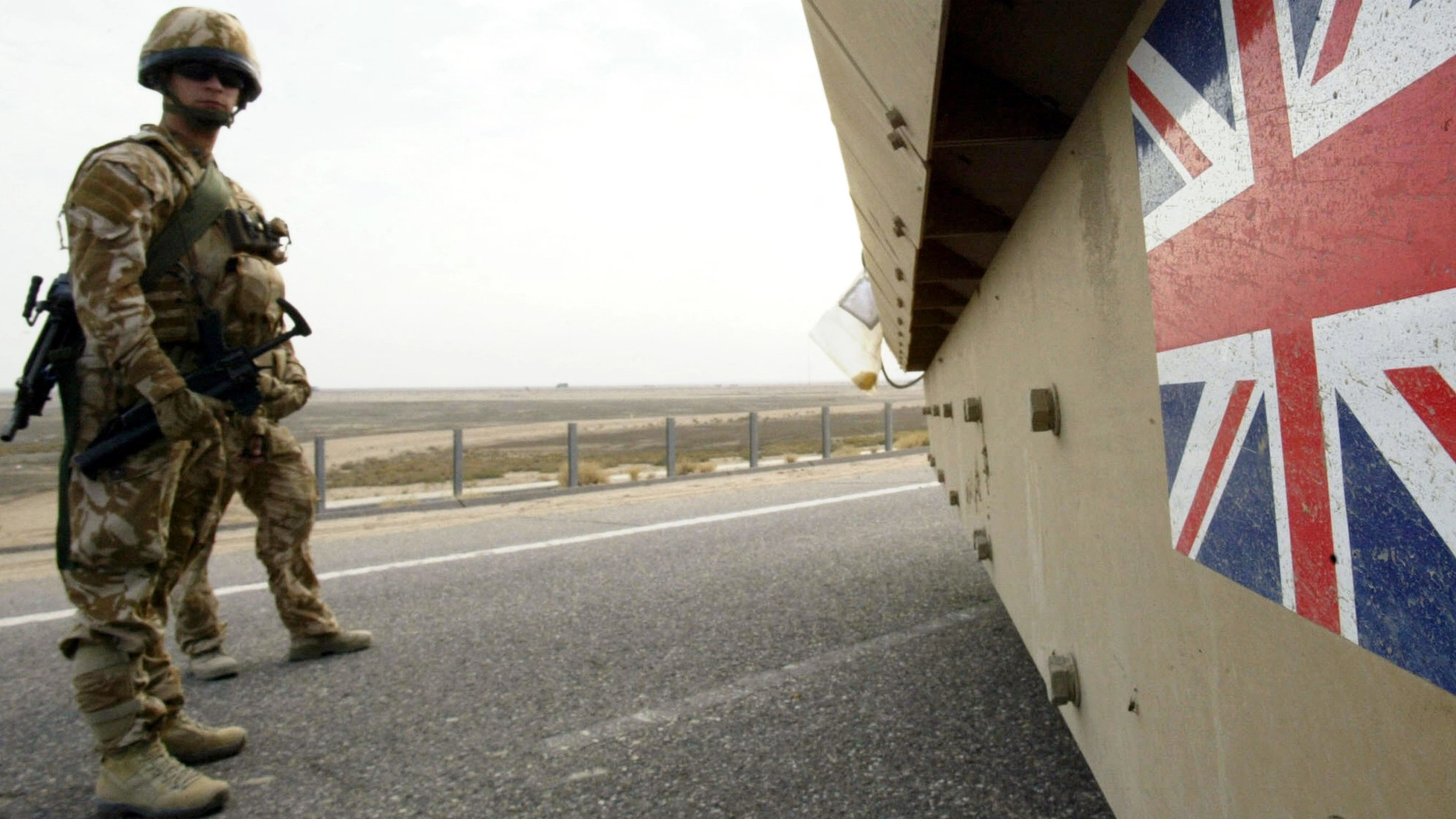
    The death of a British soldier in Iraq has refocused concerns over the UK’s military presence in the Middle East. Lance Corporal James Stewart Freeman died last Sunday during a training exercise, said the Defence Secretary John Healey. The US confirmed that he and an American soldier had died at a US base that houses some UK troops, in Erbil, near the Iranian border.

    Heightened risk to British troops
    The UK’s position on the Iran war is to participate in “defensive action” only. After Iran began retaliating against US-Israeli strikes, the UK deployed more personnel to the region, bringing the total number to about 1,000, including 200 in Iraq.

    Since then, Northern Iraq has been “one of the most dangerous places for British troops”, said The Times. Tehran has been targeting “US strongholds” across the border; US soldiers in Erbil have “shot down more than 100 kamikaze drones” since the war started, and British personnel stationed at the base “have been within a few hundred feet of successful Iranian strikes”. 

    The US has about “two dozen” similar coalition bases and outposts, with about 50,000 personnel, “scattered from Turkey to Oman”, said The Independent. Many are in Gulf nations – “all of which are at risk of Iranian retaliation”. The UK also has two Sovereign Base Areas in Cyprus; a string of drone attacks, presumably launched by Hezbollah, appeared to target one in March.

    The UK’s naval support facility, which supports its “maritime security mission” in the Persian Gulf, has been in Bahrain since the 1980s, said Geraint Hughes, military historian at King’s College London, on The Conversation. The base was “close” to an Iranian missile strike targeting a US headquarters in February. That shows British military personnel “could potentially be at risk from an Iranian attack, even if indirect”.

    Assumed British-US ‘complicity’
    Iran is “unlikely to acknowledge” the distinction Keir Starmer has drawn between “defensive” operations and “offensive” ones. As part of the Five Eyes alliance, Britain also “closely coordinates its eavesdropping operations” with the US.

    Fundamentally, Iran presumes the US and Britain will “always collaborate”. It may have “assumed British complicity in the launching of Operation Epic Fury”, and may “target the UK’s military assets”. The UK “may find itself drawn into a war it had no say in starting”.


    Good day🎧

    … for Gary Lineker, whose media production company has been named the UK’s fastest-growing private business. Goalhanger, the maker of podcast hits including “The Rest is Politics”, has scored an average 321% annual sales growth over the past three years, according to The Sunday Times’ latest yearly ranking.


    Bad day 💻

    … for Elon Musk, as new claimants come forward to take legal action against his company now that a Labour MP has launched a test case. Jess Asato is suing xAI for damages after its GrokAI tool was used to create fake sexualised images and videos of her, and her lawyers said they’re now representing “multiple individuals” over similar content. xAI has not publicly commented on Asato’s case.


    picture of the day

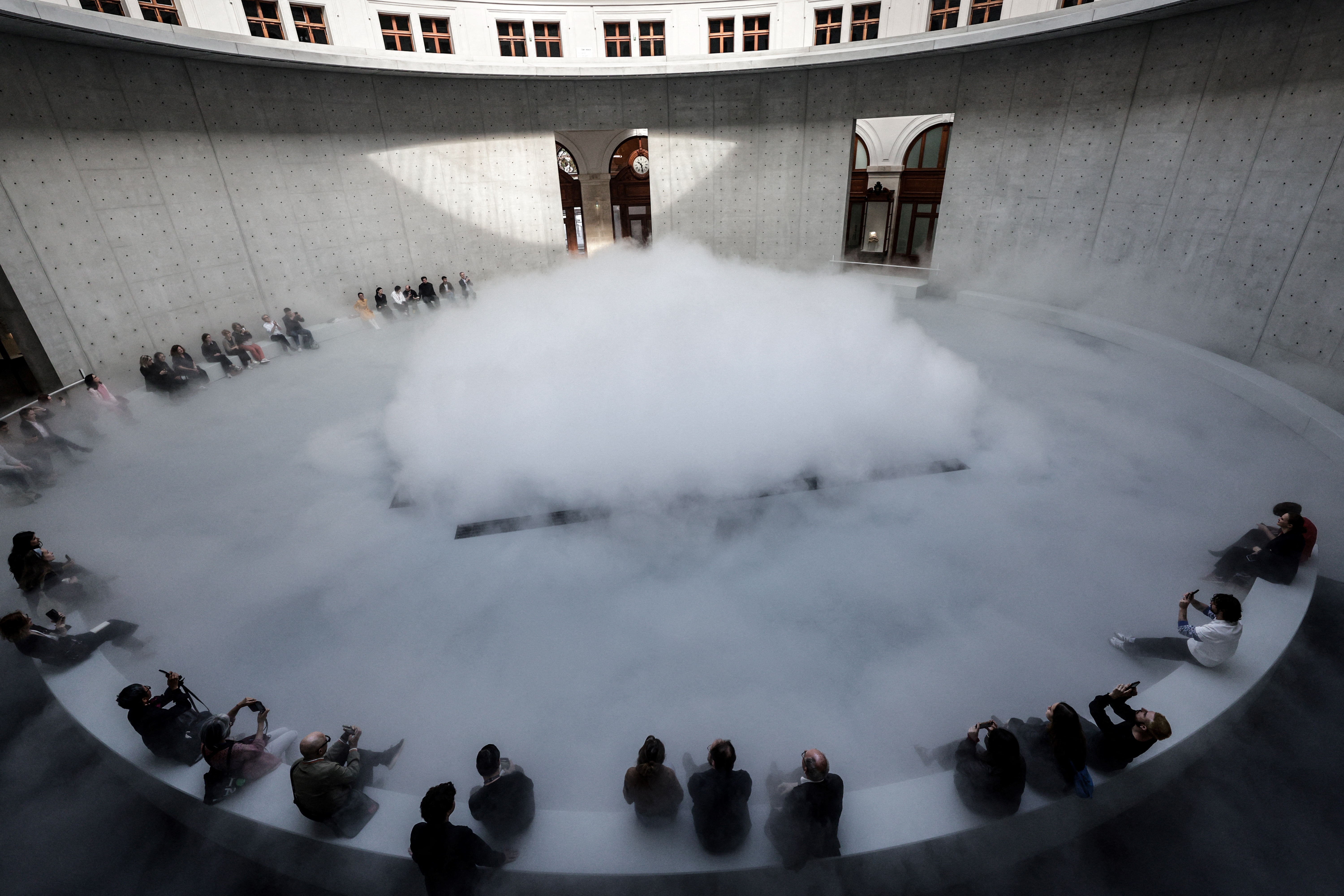
    Head in the clouds

    Visitors lose themselves in “Cloud #07156”, an immersive “fog sculpture” by Japanese artist Fujiko Nakaya, in the circular Rotunda of the Bourse de Commerce in Paris. The installation uses high-pressure pumps and custom nozzles to release water into the air as a shifting mist.

    Stephane de Sakutin / AFP / Getty Images


    PUZZLES AND QUIZZES

    Quiz of The Week

    Have you been paying attention to The Week’s news? Try our weekly quiz, part of our puzzles section, which also includes sudoku and crosswords 

    Play here


    THE WEEK RECOMMENDS

    Properties of the week: fabulous farmhouses

    Wiltshire: Upper Minety, Malmesbury
    This charming period Cotswold build offers long views over the surrounding countryside. The property spans approx. 38 acres, with 2 paddocks and land laid to permanent pasture. 5 beds, 4 baths, kitchen/breakfast room, 3 receps, outbuildings, stables, garden, parking. £1.75 million; Knight Frank.

    Devon: Higher Collaton, Blackawton
    An elegant Georgian property with just under 10 acres of pasture. 6 beds, 4 baths, kitchen/breakfast room, 2 receps, 2-bed barn, 1-bed cottage, garden, parking. £1.5 million; Marchand Petit.

    Bedfordshire: North End, Bletsoe
    Grade II thatched farmhouse with a wealth of period features. 5 beds, 4 baths, kitchen/breakfast room, 5 receps, garden, outbuildings, parking. £1 million; Fitzjohn Estates.

    Lincolnshire: The Old Farmhouse, Fulbeck
    A glorious Grade II property set in mature gardens and situated in the heart of one of Lincolnshire’s most attractive villages. 5 beds, 2 baths, kitchen, 3 receps, outbuildings, garden, parking. OIEO £750,000; Mount & Minster.

    See more


    QUOTE OF THE DAY

    “I’ve become more optimistic that people are going to be able to discover things that we have not been allowed to discover.” 

    Steven Spielberg reflects on the likelihood of extraterrestrial life at the UK premiere of his film “Disclosure Day” – which is about a conspiracy to cover up proof of non-human intelligence. “There’s a lot of mystery and things that are undisclosed” in real life, too, he told the BBC.


    instant opinion

    Today’s best commentary

    I have spent 26 years studying Vladimir Putin – this is why I think he’s about to crack
    Bill Browder in The Independent
    Vladimir Putin has a “favourite trick”, writes financier and human-rights activist Bill Browder. “Whenever he is in trouble at home, he starts a war abroad.” But this time, “it is not working”. With his Ukraine campaign “a busted flush”, the Russian president is “a cornered man” – “which is exactly why this is the worst possible moment to push Ukraine towards a peace deal”. We must make Putin “more frightened, more isolated and more beleaguered”, not “hand him a lifeline”.

    Governments need to learn how to talk about debt
    Gillian Tett in the Financial Times
    In an age of “rising populism”, it’s hard for governments to push through debt-cutting measures, writes Gillian Tett. The OECD is urging world leaders to “address the political obstacles” by demystifying fiscal policy for voters. Instead of “pontificating about abstract issues like debt-to-GDP ratios”, they’re advised to explain debt on social media, using “simple metaphors, such as a household budget”. But “humans are highly skilled” at “ignoring bad news”; it may take a bond market “crunch” to “concentrate minds”.

    In one smart move, Prince William has shown us who he really is
    Simon Kelner in The i Paper
    The Prince of Wales’ recent visit to the Prince of Peckham turned out not to be to “a fellow royal from an obscure south London lineage”, writes Simon Kelner, but rather “a public house where they sell a cocktail called Randy Bull”. William’s remarks about saving pubs were a “foray into politics” that some frown upon. But the royal family is positioning itself “as a guardian of civil society”, trying to “identify those threads that still bind the country together”.


    word of the day

    Vuvuzela

    A long plastic horn that, when blown, sounds like an elephant’s trumpet. Vuvuzelas have long been a fan accessory at football matches in South America but anyone hoping to make some noise at this summer’s men’s World Cup will have to think again, as Fifa has banned the horns in an update to its stadium code of conduct.


     Evening Review was written and edited by Harriet Marsden, Jamie Timson, Chas Newkey-Burden, Will Barker, Irenie Forshaw, Kari Wilkin, Adrienne Wyper, David Edwards and Helen Brown, with illustrations by Stephen P. Kelly.

    Image credits, from top: Illustration by Stephen P. Kelly / Shutterstock / Getty Images; Mohamad Zanaty / Anadolu / Getty Images; Ali Al-Saadi / AFP / Getty Images; Stephane de Sakutin / AFP / Getty Images; Fitzjohn Estates; Knight Frank; Marchand Petit; Mount & Minster

    Morning Report and Evening Review were named Newsletter of the Year at the Publisher Newsletter Awards 2025
     

    Recent editions

    • Morning Report

      Andrew rented out cottages on Windsor estate

    • Evening Review

      How the Ukraine war took to the skies

    • Morning Report

      US House votes to limit Trump’s Iran war powers

    VIEW ALL
    TheWeek
    • About Us
    • Contact Future's experts
    • Terms and Conditions
    • Privacy Policy
    • Cookie Policy
    • Advertise With Us
    • FAQ
    Add as a preferred source on Google Add as a preferred source on Google

    The Week UK is part of Future plc, an international media group and leading digital publisher. Visit our corporate site.

    © Future Publishing Limited Quay House, The Ambury, Bath BA1 1UA. All rights reserved. England and Wales company registration number 2008885.