The Week The Week
flag of US
US
flag of UK
UK
https://cdn.mos.cms.futurecdn.net/flexiimages/jzblygzdxr1769609154.gif

SUBSCRIBE

Try 6 weeks free

Sign in
  • View Profile
  • Sign out
  • The Explainer
  • Talking Points
  • The Week Recommends
  • Podcasts
  • Newsletters
  • From the Magazine
  • The Week Junior
  • More
    • Politics
    • World News
    • Business
    • Health
    • Science
    • Food & Drink
    • Travel
    • Culture
    • History
    • Personal Finance
    • Puzzles
    • Photos
    • The Blend
    • All Categories
  • Newsletter sign up Newsletter
  • WeekDay AM: 10 Things you need to know this morning
    US-Iran truce ‘over’, Burnham’s defence pledge, and good news for pet owners

     
    today’s international story

    Trump declares Iran truce ‘over’ amid fresh strikes

    What happened
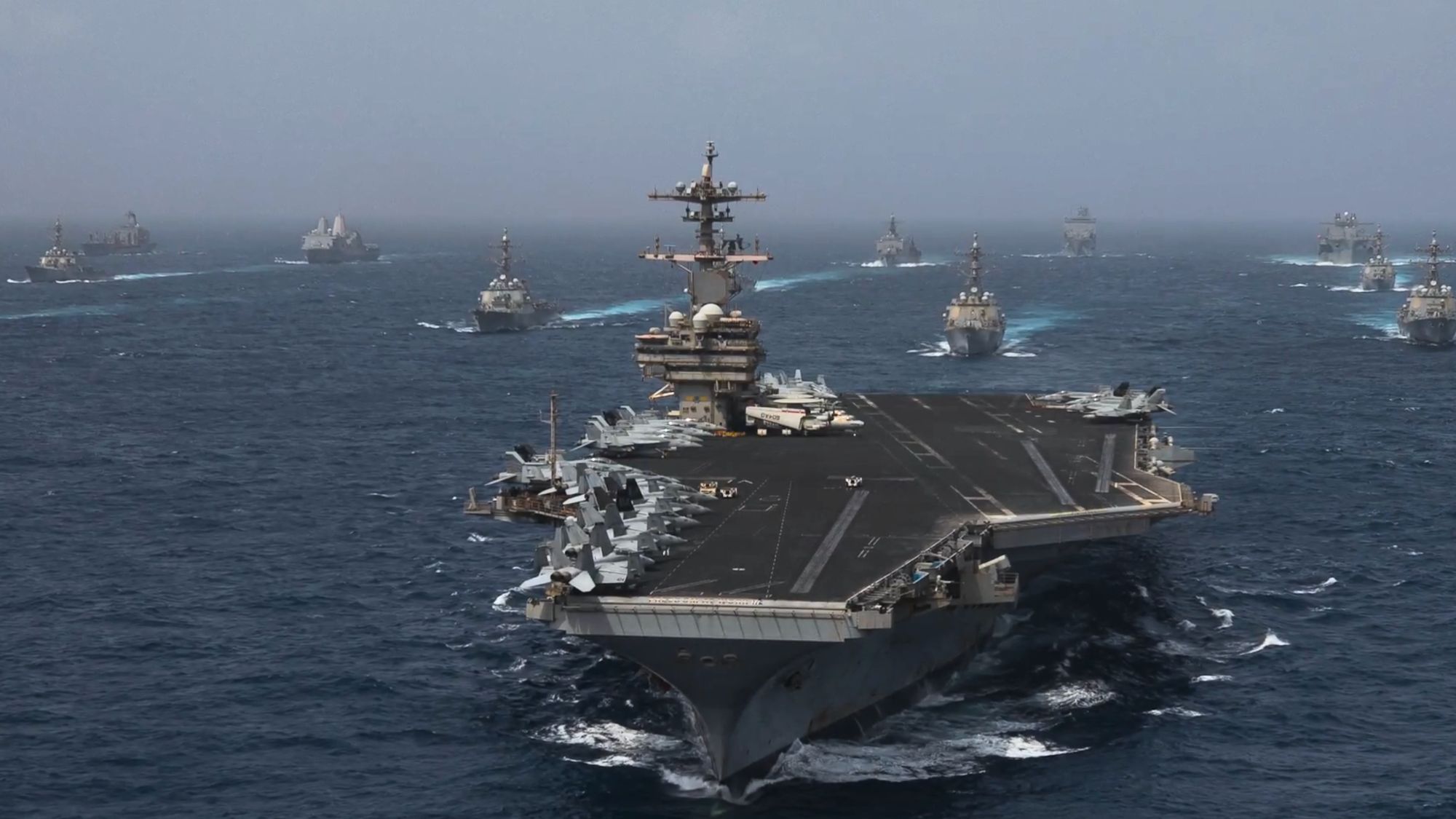
    The US has carried out a new wave of military attacks against Iran after Donald Trump declared that the three-week ceasefire between the two countries was effectively finished. The overnight strikes targeted sites linked to Iran’s capacity to threaten commercial shipping in the Strait of Hormuz, according to US Central Command.

    Who said what
    Trump described the operation as “retribution” for attacks on merchant vessels, warning on Truth Social: “If it happens again, it will get much worse!” Earlier, he said he believed that the ceasefire was “over”, but that he remained willing to negotiate and did not expect a full-scale conflict.

    Former supreme leader Ali Khamenei’s funeral procession this week has unleashed a “deep wave of religiosity and patriotism” in Iran, said Patrick Wintour in The Guardian. So a “foul-tempered Donald Trump picked a particularly sensitive moment at the Nato summit in Turkey to describe Iranians as ‘garbage’, ‘cancer’, ‘devils’ and ‘scum’”.

    “Trump’s Iran errors are catching up with him,” said Jake Wallis Simons in The Telegraph. “The US president ignored the Joint Chiefs’ advice in favour of his gut, leaving America sinking into a quagmire of his own making.”

    What next?
    Shipping in the Strait of Hormuz has been disrupted again and oil prices are climbing as fears grow that the confrontation could escalate further.


    today’s politics story

    Burnham vows to put UK defence firms first

    What happened
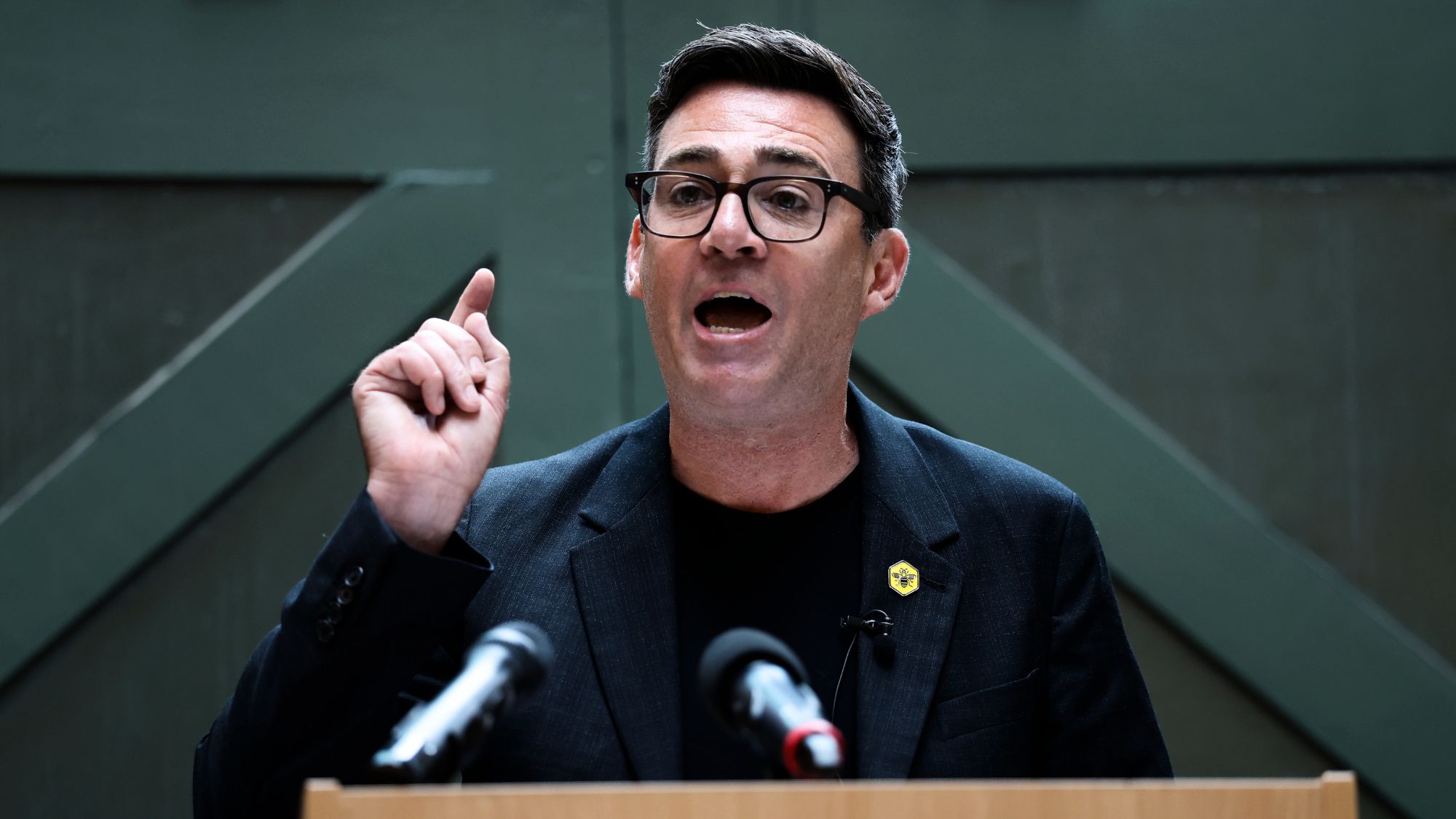
    Andy Burnham has pledged to use a major increase in UK defence spending to revive domestic manufacturing – rather than channel billions of pounds to overseas arms suppliers – if he becomes prime minister.

    In his first major foreign policy statement, Burnham said Britain should use its commitment to raise defence spending to 3.5% of GDP by 2035 to strengthen the country’s industrial base, create jobs and reduce dependence on foreign equipment. He also promised closer defence cooperation with European allies.

    Who said what
    Writing in The Times, Burnham said Britain must “rebuild our hard power for a new era” and ensure that increased defence investment “backs British workers and businesses”.

    Senior defence officials are now “pushing for Andy Burnham to borrow more to fund military spending” by utilising war bonds, said Tony Diver in The Telegraph. “Here we owe again,” said Martina Bet in The Sun. Burnham “could be forced into a rethink on Labour’s fiscal rules” as defence chiefs ask for billions more.

    What next?
    Burnham said he would be more candid with voters about the scale of investment needed to meet Britain’s defence commitments and confirmed that he would retain Jonathan Powell as national security adviser if he enters Downing Street. His last remaining leadership threat, former defence minister Al Carns, told Sky News he would not run, paving the way for Burnham’s “coronation”.


    Today’s crime story

    King’s pardon for last British woman to be hanged

    What happened
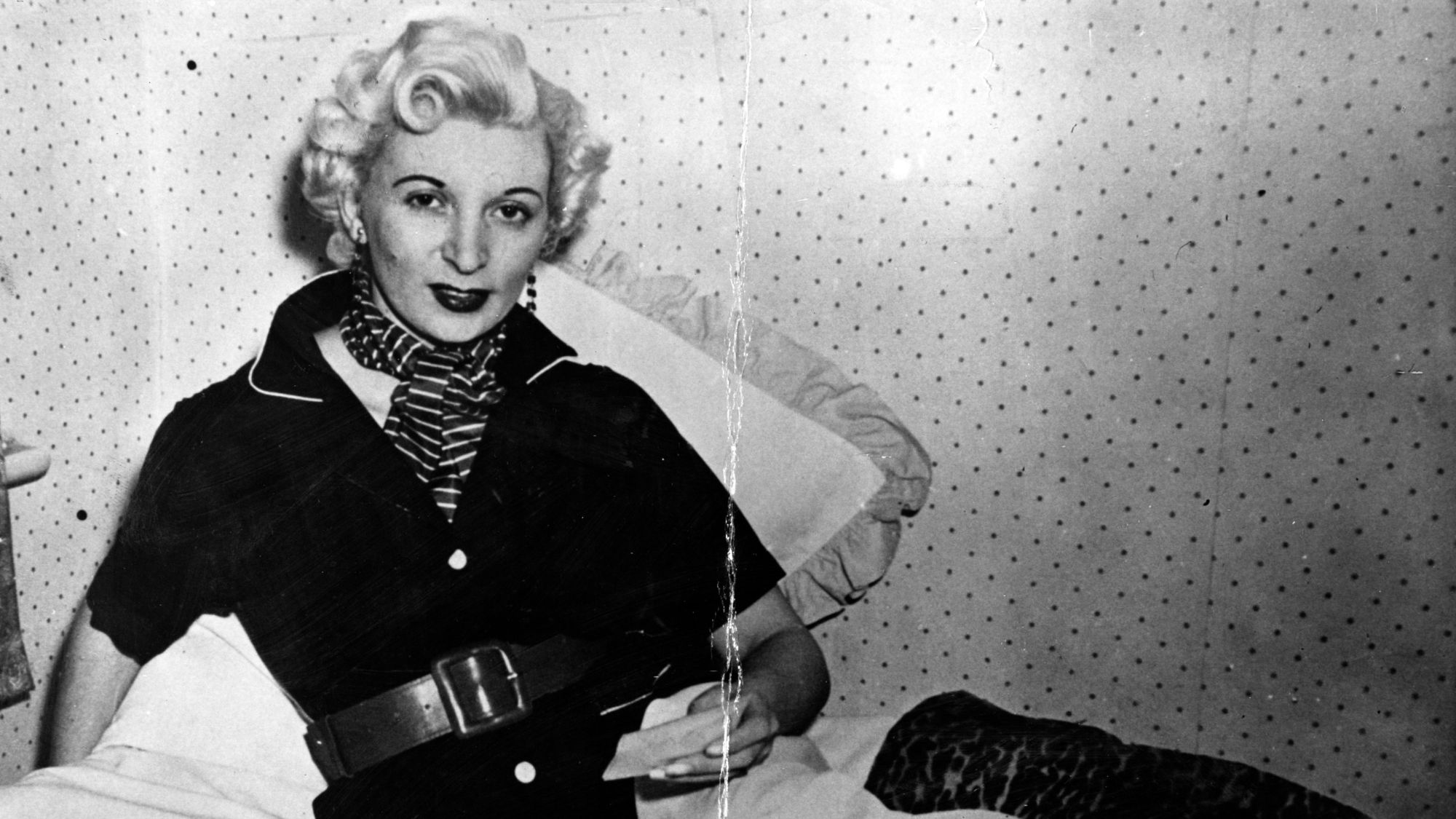
    Justice Secretary David Lammy said the King had granted a conditional pardon to Ruth Ellis, 71 years after her execution. Lammy said the court at Ellis’s 1955 trial for fatally shooting her partner David Blakely had failed to consider evidence that she was a victim of domestic abuse and coercive and controlling behaviour.

    Her execution – the last of a woman in the UK – sparked public outcry and contributed to the decision to abolish Britain’s death penalty in 1965. Previous attempts to secure Ellis a pardon had been made in 2003 and 2007.

    Who said what
    This pardon hopes to bring “some measure of peace to Ruth’s family”, said Lammy. Lauda Enston, Ellis’s granddaughter, told The Guardian that the pardon “does not undo what happened”, but shows “formally and finally” that Ellis was wrongfully killed.

    Ellis’s case serves as a “haunting reminder” of a time when the justice system “ignored the realities of domestic abuse”, said Labour MP Pam Cox.

    What next?
    The pardon is conditional and does not alter the guilty verdict. Rather, it changes the sentence from death penalty to life imprisonment.


    It’s not all bad

    Pet owners could soon pay less for veterinary care under government plans to cap prescription charges at £21 and force clinics to publish clear price lists. Government ministers are also considering licensing every practice and creating an independent regulator to improve standards and accountability in the industry. The reforms come after the competition watchdog found that pet owners faced high bills and limited choice, with most practices now owned by a handful of large corporate groups.


    under the radar

    An Antarctic sea squirt could help treat melanoma

    New medicine can be found even in the iciest of locations. During an expedition to Antarctica, scientists discovered a species of sea squirt that may promise a new cancer treatment. The marine organism contains bacteria capable of producing a toxin that could eventually become a widely available drug. However, research still needs to be done on the species and bacteria before it can be tested on humans.

    The cancer-fighting sea squirt, also called an ascidian, was first discovered 20 years ago and identified as a potential cancer therapy. The bacterium in the organism, Candidatus Synoicihabitans palmerolidicus, can “produce the metabolite palmerolide A, which kills melanoma cells without causing too much harm to healthy human cells”, said Discover.

    Scientists have now conducted a second expedition to Antarctica to “better understand the compound and explore whether it could someday contribute to new therapies for patients battling melanoma”, said a news release from the University of South Florida.

    The researchers have also tested the sea squirt’s bacteria on melanoma cells in mice. “The good news is it didn’t kill the mice,” Bill Baker, a chemistry professor at the university who led the first expedition and advised the second one, told The Guardian. “It did kill their cancer, so we know it has the physiological properties to act like a drug.”

    While the sea squirt shows promise, the “pathway to producing a safe and effective anti-melanoma drug, with approval for use in humans, is long”, said The Guardian. It would “require a succession of strictly regulated and ever-expanding trials even after a drug was formulated”. Still, the knowledge gained from this expedition “could significantly advance the timeline”.


    on this day

    9 July 2006

    Italy beat France in the World Cup final in Berlin, their fourth and most recent crown. The “Azzurri” won in a 5-3 penalty shoot-out after the match had ended in a 1-1 draw following extra time. Italy has failed to qualify for the past four World Cups.


    Today’s newspapers

    ‘Running scared’ 

    “More Reform transactions worth millions” have been “reported” to the “crime agency”, says The Guardian. An alleged political donation made to Robert Jenrick when he was standing for the Tory Party leadership “centres on a claim that £37,500 came from foreign donor”, says The i Paper. Rival parties are “running scared” from the Clacton by-election because they’re worried he would win, says Nigel Farage in the Daily Express. Tesco could sell its European operations and “bring down the curtain on a three-decade attempt” to build a global empire for the UK’s biggest supermarket, says the Financial Times.

    See the newspaper front pages


    tall tale

    Autonomous arrest

    Two 15-year-olds in San Mateo, California who spent the afternoon in a Waymo car drinking alcohol and firing water beads at passers-by from a toy gun were delivered to police by the self-driving taxi after their misbehaviour triggered its security system. The driverless vehicle halted and contacted police to alert them to its location, where officers were able to apprehend the young miscreants.


    Morning Report was written and edited by Arion McNicoll, Elliott Goat, Will Barker, Lea Tran, Devika Rao, Ross Couzens and Chas Newkey-Burden, with illustrations by Julia Wytrazek.

    Image credits, from top: US Central Command; Jeff J Mitchell / Getty Images; Evening Standard / Getty Images; Illustration by Julia Wytrazek / Getty Images.

    Morning Report and Evening Review were named Newsletter of the Year at the Publisher Newsletter Awards 2025
     

    Recent editions

    • Evening Review

      Is this it for Prince Harry and the royals?

    • Morning Report

      Farage’s by-election gamble backfires

    • Evening Review

      Farage declares war

    VIEW ALL
    TheWeek
    • About Us
    • Contact Future's experts
    • Terms and Conditions
    • Privacy Policy
    • Cookie Policy
    • Advertise With Us
    • FAQ
    Add as a preferred source on Google Add as a preferred source on Google

    The Week UK is part of Future plc, an international media group and leading digital publisher. Visit our corporate site.

    © Future Publishing Limited Quay House, The Ambury, Bath BA1 1UA. All rights reserved. England and Wales company registration number 2008885.