The Week The Week
flag of US
US
flag of UK
UK
https://cdn.mos.cms.futurecdn.net/flexiimages/jzblygzdxr1769609154.gif

SUBSCRIBE

Try 6 weeks free

Sign in
  • View Profile
  • Sign out
  • The Explainer
  • Talking Points
  • The Week Recommends
  • Podcasts
  • Newsletters
  • From the Magazine
  • The Week Junior
  • More
    • Politics
    • World News
    • Business
    • Health
    • Science
    • Food & Drink
    • Travel
    • Culture
    • History
    • Personal Finance
    • Puzzles
    • Photos
    • The Blend
    • All Categories
  • Newsletter sign up Newsletter
  • WeekDay AM: 10 Things you need to know this morning
    US-Saudi nuclear deal, prisoner release row, and underwater scientists

     
    today’s international story

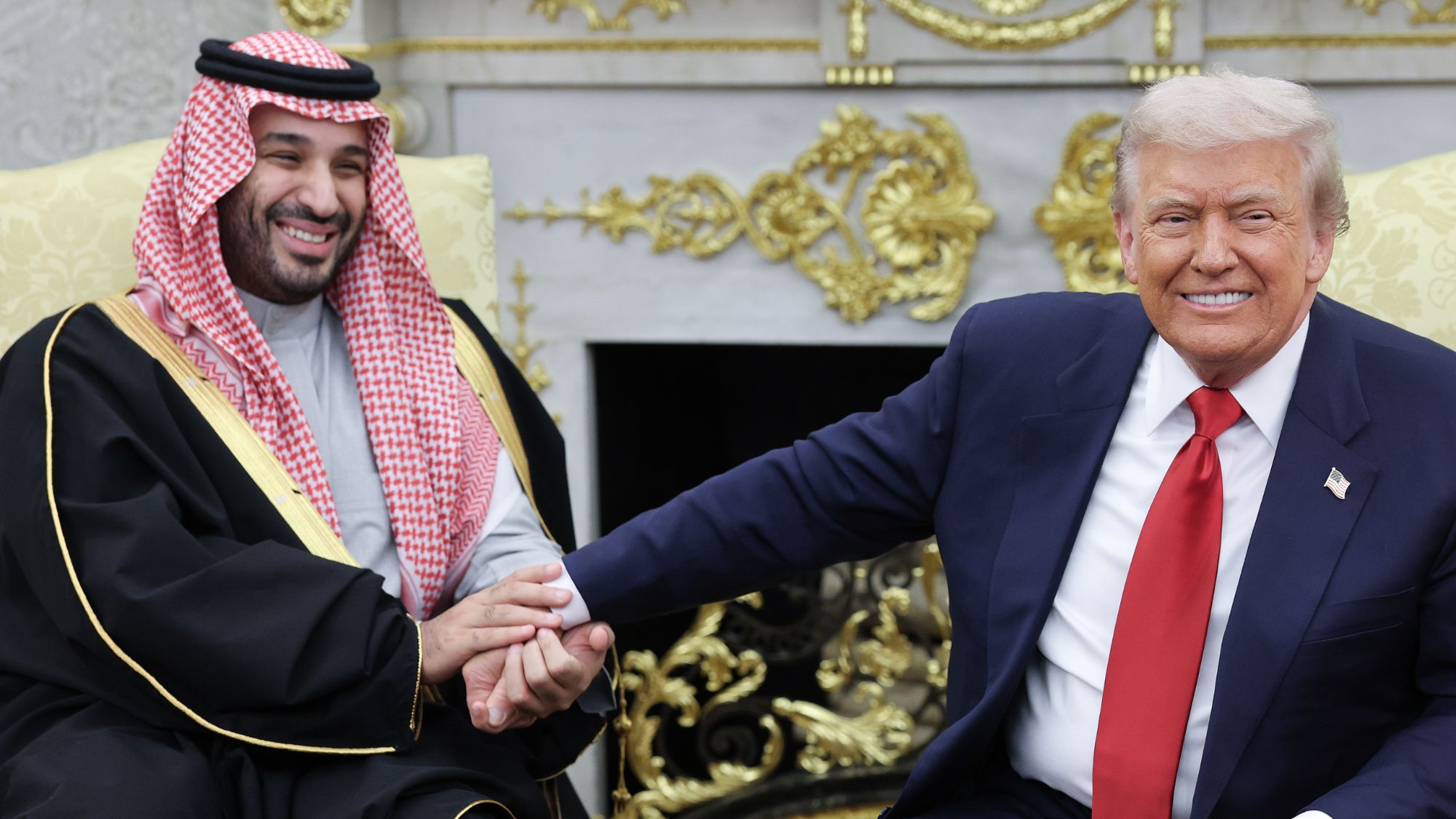
    US and Saudi Arabia sign civilian nuclear deal

    What happened
    The US and Saudi Arabia have sealed an agreement to expand cooperation on nuclear energy, marking a significant step in a partnership that has been under negotiation for years. The deal was signed by US Energy Secretary Chris Wright and Saudi Energy Minister Prince Abdulaziz bin Salman alongside a separate agreement covering nuclear safeguards.

    If approved by the US Congress, the arrangement could eventually allow Saudi Arabia to develop technology for producing fuel for its own nuclear reactors following a joint economic assessment. The Trump administration argues that the deal will strengthen its ties with Riyadh, support the American nuclear sector and generate billions of dollars in business for US companies.

    Who said what
    “Rest assured, these agreements uphold the highest standards of nuclear safety and non-proliferation, while relying on the world’s best nuclear technology and scientists, designed right here in the United States,” said Wright.

    This “coveted” deal is a “coup for the Saudi crown prince”, said Vivian Nereim in The New York Times. However, “one fear raised by opponents of the deal is the fact Prince Mohammed himself had repeatedly vowed to obtain a nuclear weapon if Iran, the kingdom’s regional rival, did so”.

    If the deal goes through, it is effectively “overturning decades and decades of US non-proliferation policy” at a time when the Trump administration says it is determined to stop Iran from obtaining a nuclear weapon, said Dina Esfandiary, the Middle East geoeconomics lead for Bloomberg Economics.

    What next?
    The agreement now goes to the US Congress for review. Although lawmakers can reject it, doing so would require enough votes to overcome a likely presidential veto, making approval the expected outcome.


    today’s politics story

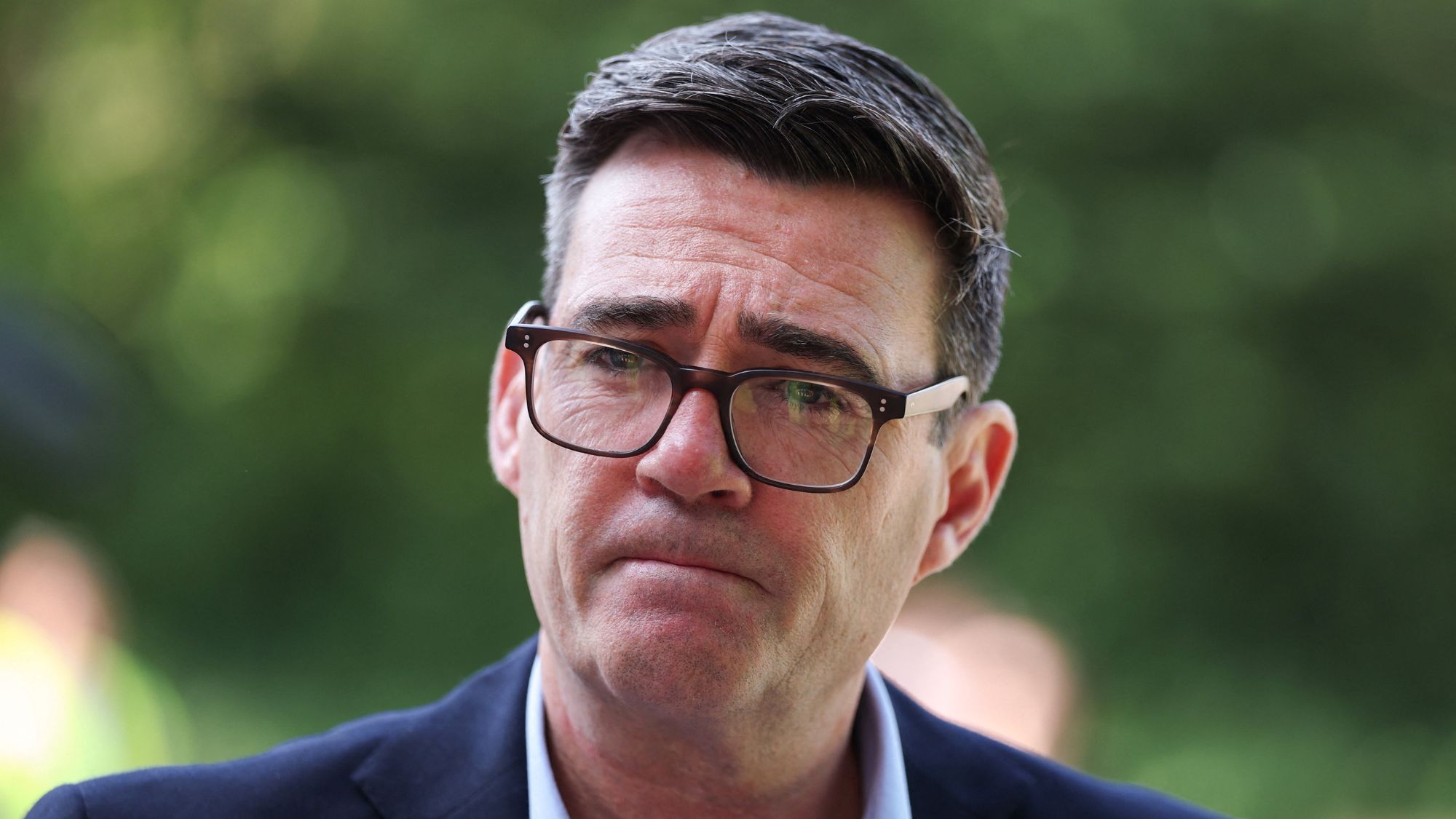
    Burnham wades into early prisoner release row

    What happened
    Andy Burnham has ordered a review of plans to release thousands of prisoners early from September after concerns that offenders convicted of serious crimes – including the killers of PC Andrew Harper – could qualify.

    The move follows criticism from Harper’s family, which said the proposed releases undermined the tougher sentencing principles established by Harper’s Law. The policy, introduced under the previous government to help relieve severe prison overcrowding, would allow some inmates to leave custody sooner than under existing rules.

    Who said what
    The new prime minister said he wanted to ensure that “everything has been looked at” before the next wave of releases takes place.

    But prison reform organisations have warned that abandoning the early release scheme could trigger a capacity crisis in the nation’s jails. Andrea Coomber, chief executive of the Howard League for Penal Reform, said the prison system was “on the verge of collapsing under its own weight”.

    Burnham has “stirred up a political row”, said Rajeev Syal and Alexandra Topping in The Guardian. The “early release crisis has engulfed Labour”, said Danny Shaw and Charles Hymas in The Telegraph. “What started as an emergency response to overcrowded prisons has given Andy Burnham a major headache in his first days as PM.”

    What next?
    The government will reassess the policy with Justice Secretary Alex Norris before September’s planned releases.


    Today’s food story

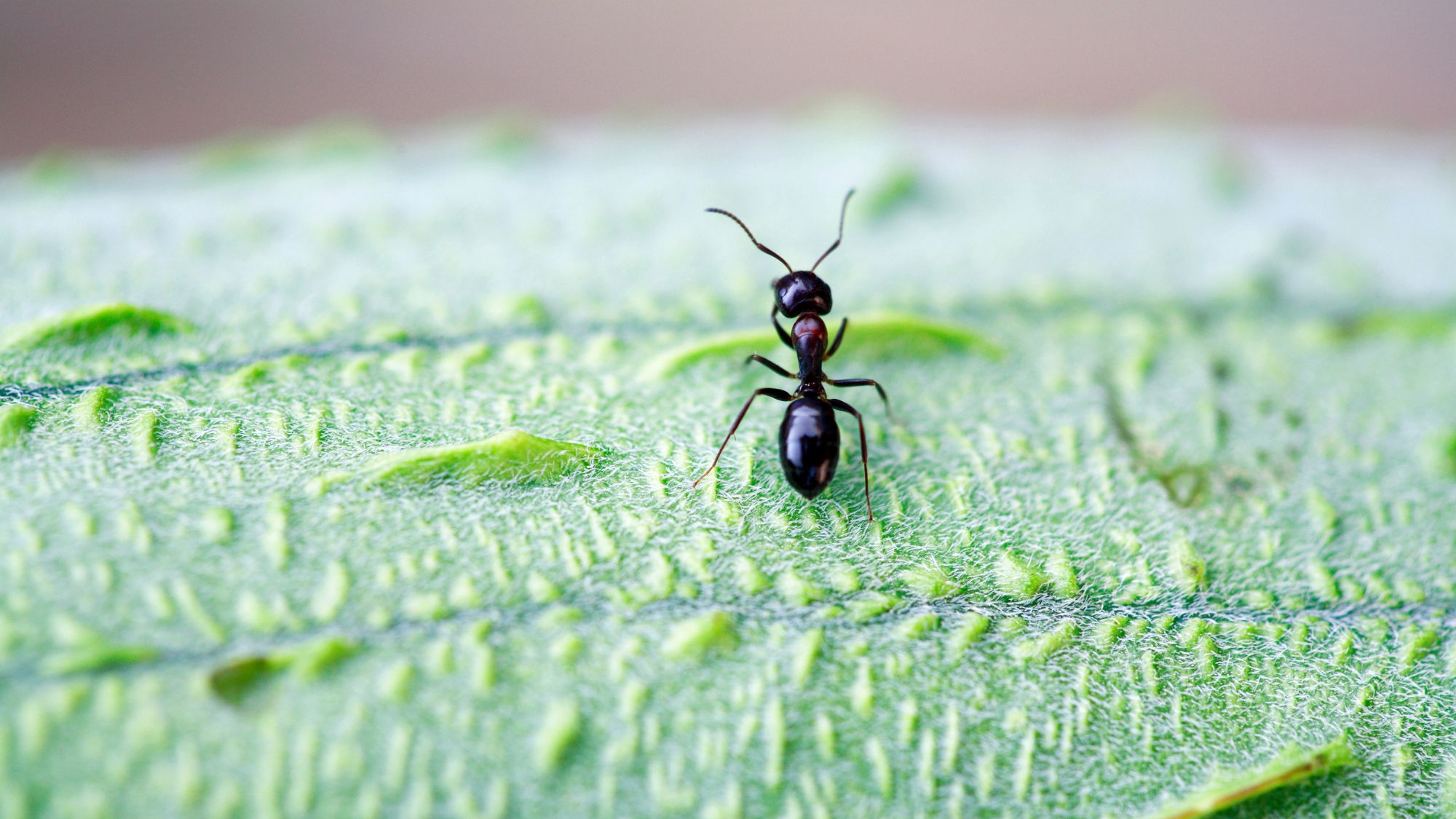
    Chef faces a year in prison for serving ants on desserts

    What happened
    The chef of a two-Michelin-star restaurant in South Korea could be sentenced to jail time for using ants as a topping for sorbet.

    Ants are not among the 10 insect species approved for human consumption under the country’s laws. The celebrity chef, “whose identity has been withheld, but who reportedly appeared on a Netflix cooking reality competition”, according to The Times, could spend up to a year in prison over the dessert dish.

    Who said what
    Prosecutors put the total number of individual ants served at roughly 49,000 and health authorities said the restaurant had used ants that “contained up to 55 times more heavy metals than typical edible insects”, according to a report in The Chosun Daily. Heavy metals are dangerous in larger quantities, particularly for pregnant women and children.

    It was “reportedly explained to prosecutors that the restaurant’s chef had used ants to add acidity to dishes while working in the US and Europe”, said The Guardian. The chef had then not realised that doing so was illegal in South Korea.

    What next?
    Prosecutors are also seeking a 20 million won (£10,000) fine for the restaurant. The court will deliver its verdict on 2 September.


    It’s not all bad

    Thousands of people with multiple sclerosis will gain free access to the first NHS drug specifically designed to improve walking. Fampridine, available in England from today, helps damaged nerves send signals to muscles more effectively, with clinical trials showing faster walking speeds in 43% of patients. About 5,000 people are expected to benefit in the first year and doctors say the treatment could help many sufferers stay independent and active for longer.


    under the radar

    Scientists could soon live beneath the sea

    A new underwater research facility is making waves. Deep, a British ocean engineering company, has installed a subsea human habitat more than 18 metres below the surface in the Tennessee Reef, part of the Florida Keys National Marine Sanctuary. Called Vanguard, the habitat allows for four aquanauts to live in a dry environment underwater for five days without needing to resurface. And it is just the first of a proposed network of underwater facilities by the company.

    Deep’s Vanguard is “providing extended access to the ocean for research, conservation and training”, said the company’s website. The facility is the “first open-ocean human habitat built, tested and deployed in the United States in four decades”, said Vice. Deep hopes to enable permanent underwater living by as soon as next year.

    Living underwater exploits a “strange loophole in human biology”, added Vice. “It’s like you have been scuba diving for a really long time and your tissues and blood get saturated with nitrogen, the inert gas that you are breathing,” Dawn Kernagis, the director of scientific research at Deep, told Science Alert. “Essentially, once you are saturated, you could stay down there for weeks, months at a time.”

    The goal of Vanguard is to allow scientists to conduct marine science research, mainly related to “coral reef restoration, long-term monitoring, climate impact studies, human performance research and training for extreme environments”, said Deep in a statement. And the deployment of the Vanguard habitat within the marine sanctuary “creates additional opportunities for marine science and builds on research infrastructure”.


    on this day

    23 July 2010

    The boy band One Direction was formed during the “X Factor” TV talent show as Niall Horan, Harry Styles, Liam Payne, Zayn Malik and Louis Tomlinson came together. This month, at his final Wembley show, Styles paid tribute to Payne, who died in October 2024, calling him a “dear friend”.


    Today’s newspapers

    ‘Prison row’

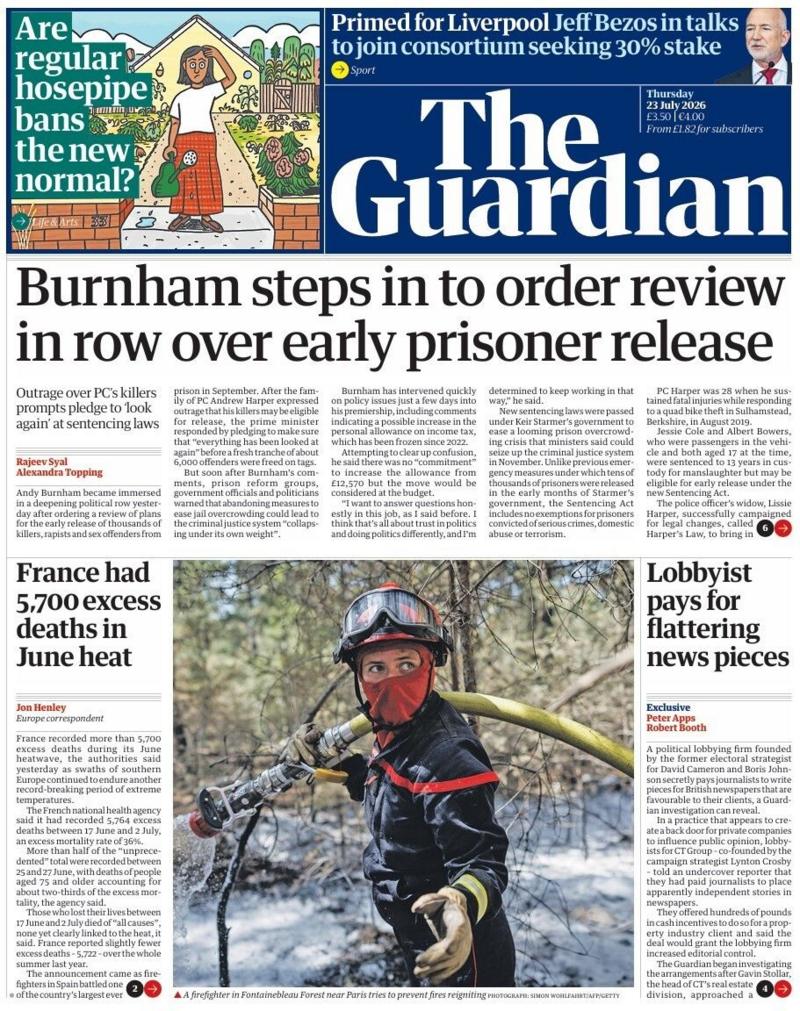
    “Burnham steps in to order review in row over early prison release”, says The Guardian, amid outrage that two of three men jailed for a policeman’s death could be released after serving only half of their sentence. “My Andrew and every victim deserves better”, says his widow in the Daily Express. “Moral millionaires” say “make us pay more tax”, says The Mirror. It’s “Gary’s back of the net tax”, says the Daily Star, as Gary Lineker fronts the campaign. There’s “fear for winter supplies drives gas prices near Iran war peaks”, says the Financial Times. “Is ‘me time’ the new relationship battle?” wonders The Times. 

    See the newspaper front pages


    tall tale

    Milking it for a cause

    An agricultural worker will try to milk 10,000 cows in 10 days to raise money for a farming charity. Marie Stephenson, from Lancaster, will tour the UK on her milking mission next month, starting in Cornwall and finishing in Scotland. The 45-year-old says she wants to encourage conversations about the mental and physical demands of farming, while supporting the Royal Agricultural Benevolent Institution, a charity that provides support for farmers in England and Wales. Stephenson will be using rotary machinery to milk the cows and “there is somebody going to be stood there just in case I get shoulder cramps or anything”.


    Morning Report was written and edited by Arion McNicoll, Jamie Timson, Devika Rao, Ross Couzens and Chas Newkey-Burden, with illustrations by Stephen P. Kelly.

    Image credits, from top: Win McNamee / Getty Images; Toby Melville – WPA Pool / Getty Images; Zeno0620 / Getty Images; Illustration by Stephen P. Kelly / Getty Images / Shutterstock.

    Morning Report and Evening Review were named Newsletter of the Year at the Publisher Newsletter Awards 2025
     

    Recent editions

    • Evening Review

      ‘The North Korea of Latin America’

    • Morning Report

      Zelenskyy dismisses Ukraine’s army chief

    • Evening Review

      A new front in the Middle East conflict?

    VIEW ALL
    TheWeek
    • About Us
    • Contact Future's experts
    • Terms and Conditions
    • Privacy Policy
    • Cookie Policy
    • Advertise With Us
    • FAQ
    Add as a preferred source on Google Add as a preferred source on Google

    The Week UK is part of Future plc, an international media group and leading digital publisher. Visit our corporate site.

    © Future Publishing Limited Quay House, The Ambury, Bath BA1 1UA. All rights reserved. England and Wales company registration number 2008885.