The Week The Week
flag of US
US
flag of UK
UK
https://cdn.mos.cms.futurecdn.net/skoGBi9qKFoUtnNWkovjJQ.jpg

SUBSCRIBE

Try 6 Free Issues

Sign in
  • View Profile
  • Sign out
  • The Explainer
  • Talking Points
  • The Week Recommends
  • Podcasts
  • Newsletters
  • From the Magazine
  • The Week Junior
  • More
    • Politics
    • World News
    • Business
    • Health
    • Science
    • Food & Drink
    • Travel
    • Culture
    • History
    • Personal Finance
    • Puzzles
    • Photos
    • The Blend
    • All Categories
  • Newsletter sign up Newsletter
  • The Week Evening Review
    Republicans waffle on health care, Epstein’s email associates, and RFK Jr.’s new project

     
    TODAY’S BIG QUESTION

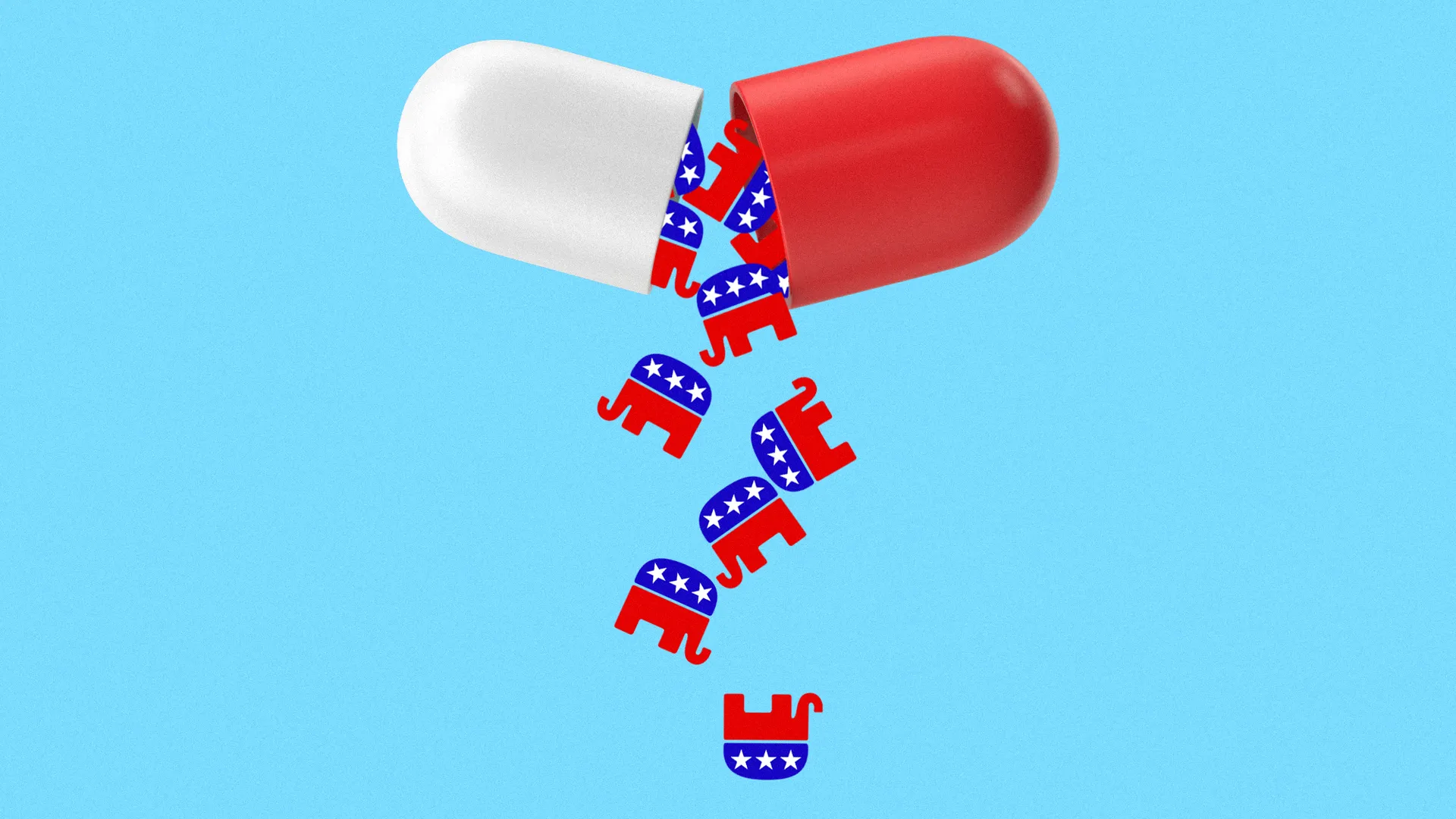
    Are Republicans going to do a deal on health care?

    Republicans are sending mixed signals about extending the Affordable Care Act subsidies due to expire at year’s end. President Donald Trump has suggested both that he would do a deal and that he would “rather not.” At stake is health care for up to 20 million Americans.

    Trump said last week that he’s “open” to extending the subsidies a year to give Congress time to replace Obamacare, said Politico. An extension “may be necessary to get something else done,” said Trump. 

    But any action will come grudgingly. “I would rather not extend them at all,” he said to reporters. The White House planned, then canceled, the announcement of a two-year extension of subsidies “with new limitations favored by conservatives,” said Politico.

    What did the commentators say?
    Republicans are playing tug-of-war. “Pushback from some Republican lawmakers” stalled the White House announcement, said Scripps News. Obamacare “keeps requiring more and more tax dollars to prop it up,” said Rep. Don Bacon (R-Neb.). But a “small cadre of politically vulnerable Republicans” is pushing for an extension rather than face the wrath of voters who will see their health costs skyrocket, said The New York Times. 

    Republicans “need to get serious about health care,” said the Bloomberg editorial board. Without a subsidy extension, as many as “4 million people will become uninsured,” while others will see their out-of-pocket premiums double. Lawmakers need to work on long-term plans to rein in “America’s soaring health care costs,” but in the short term, they must “soften the shock of lost subsidies.” 

    Trump is once again discovering that “health care policy is hard,” said Jonathan Cohn at The Bulwark. The “conflicting signals” coming from the GOP should “sound familiar” to anyone who follows health care politics. Republicans have repeatedly promised a “better alternative” to Obamacare. But their plans “almost never materialize,” and the plans that do emerge are “deeply unpopular” because they would leave “many millions of Americans without insurance.” Now, that scenario is “playing out yet again.”

    What next?
    The “real moment of truth” may come when government funding is due to run out in late January, said Axios. It’s “not out of the question” that a bipartisan agreement could emerge before the end of December, but a “major push” from Trump would be needed to make that happen. “That seems far off at the moment.”


    QUOTE OF THE DAY

    ‘It wasn’t the brain because I took a cognitive test and I aced it. I got a perfect mark, which you would be incapable of doing.’ 

    Trump responding to CBS News' Weijia Jiang on Air Force One, after Democrats including Gov. Tim Walz (D-Minn.) called for him to release the results of an October MRI. Walz stated that the president is “fading physically” and questioned his “mental capacity” in an interview on NBC's “Meet the Press.”


    IN THE SPOTLIGHT

    The powerful names in the Epstein emails

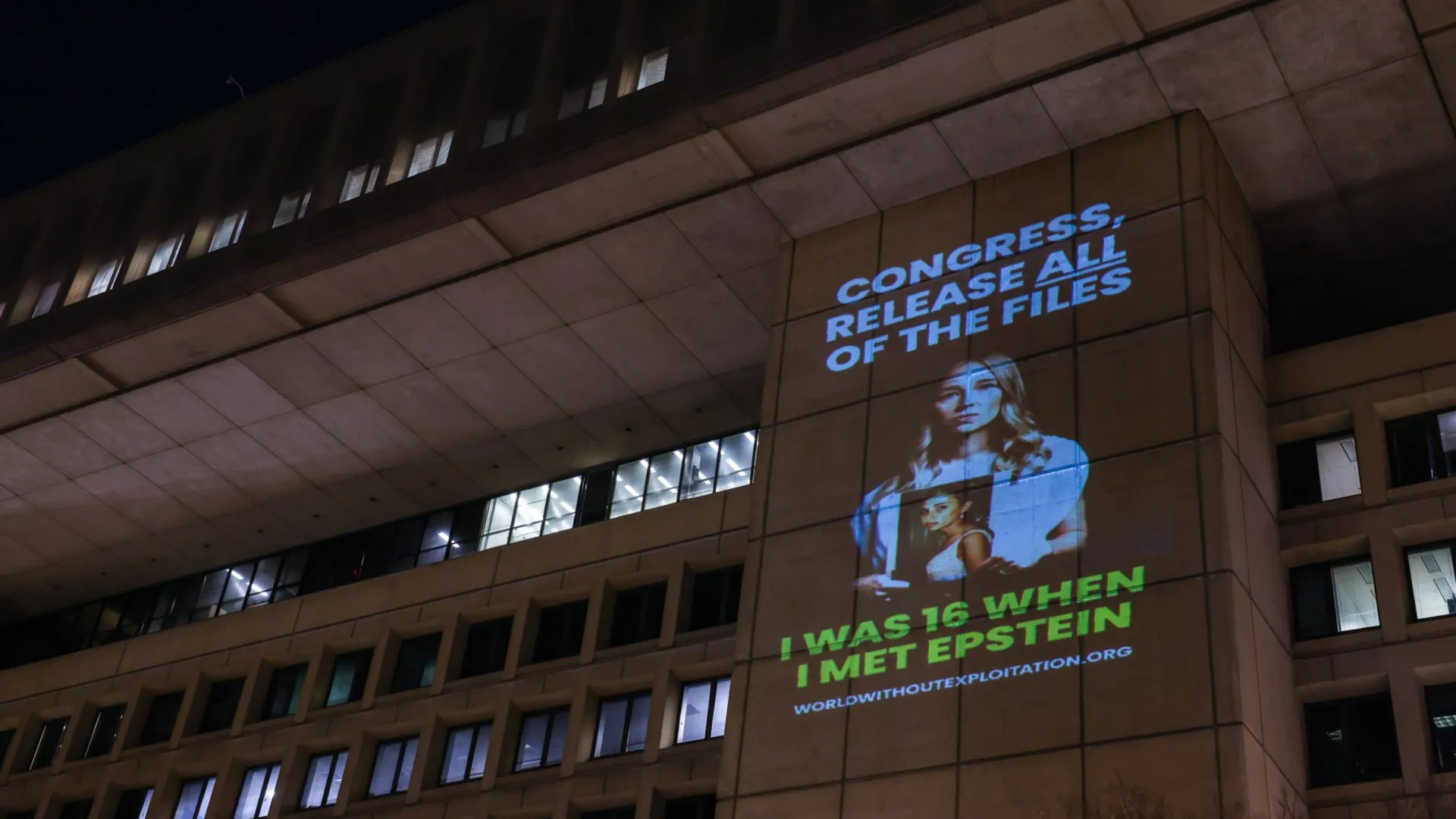
    Much has been made of convicted child sex offender Jeffrey Epstein’s alleged ties to Donald Trump, but the president is only one of numerous people with connections to the disgraced financier. The latest revelations, courtesy of a massive batch of Epstein’s emails released by the House Oversight Committee, show that many famous public figures had significant ties to Epstein, who died by suicide in 2019.

    While these communications do not necessarily prove guilt, they have raised more questions as the Epstein scandal continues to brew. Notably, all of these email exchanges “took place years after Epstein became a registered sex offender in 2008,” said USA Today.

    Larry Summers
    A former Treasury secretary during the Clinton administration who was also once president of Harvard University, Summers was shown to have corresponded with Epstein over at least seven years. After the emails were made public, Summers announced he was stepping back from most of his public positions, including resigning from the board of OpenAI and his professorship at Harvard. 

    Steve Bannon
    Presidential adviser turned MAGA influencer Bannon was found to have been “workshopping legal and media strategies to protect Epstein from the legal and publicity quagmire that enveloped him in the last year of his life,” said The Guardian. There was also evidence that Bannon used Epstein to strengthen his ties with global figures. 

    In one notable exchange from 2018, Epstein emailed Bannon to let him know “‘there are many leaders of countries we can organize for you to have one-on-ones’ with if Bannon agreed to spend eight to 10 days in Europe,” said Politico. In at least one email, Bannon, who has declined to comment on the relationship, refers to Epstein as an “amazing assistant.”

    Peggy Siegal
    Siegal is one of the most recognizable entertainment publicists and has spent decades crafting a media empire. The recent tranche of emails reveals that Siegal and Epstein may have had a closer relationship than many previously believed. In at least one newly revealed email, Epstein wrote to Siegal with a request: “Could she reach out to media mogul Arianna Huffington to enlist her help in clearing his name?” said Politico.

    Read more


    Statistic of the day

    17%: The percentage drop in the number of newly enrolled foreign college students this fall compared to last year, according to the Institute of International Education. This decline is expected to cost the U.S. economy at least $1.1 billion, a separate report from the Association of International Educators has found.


    the explainer

    RFK Jr. looks to link mass violence and antidepressants

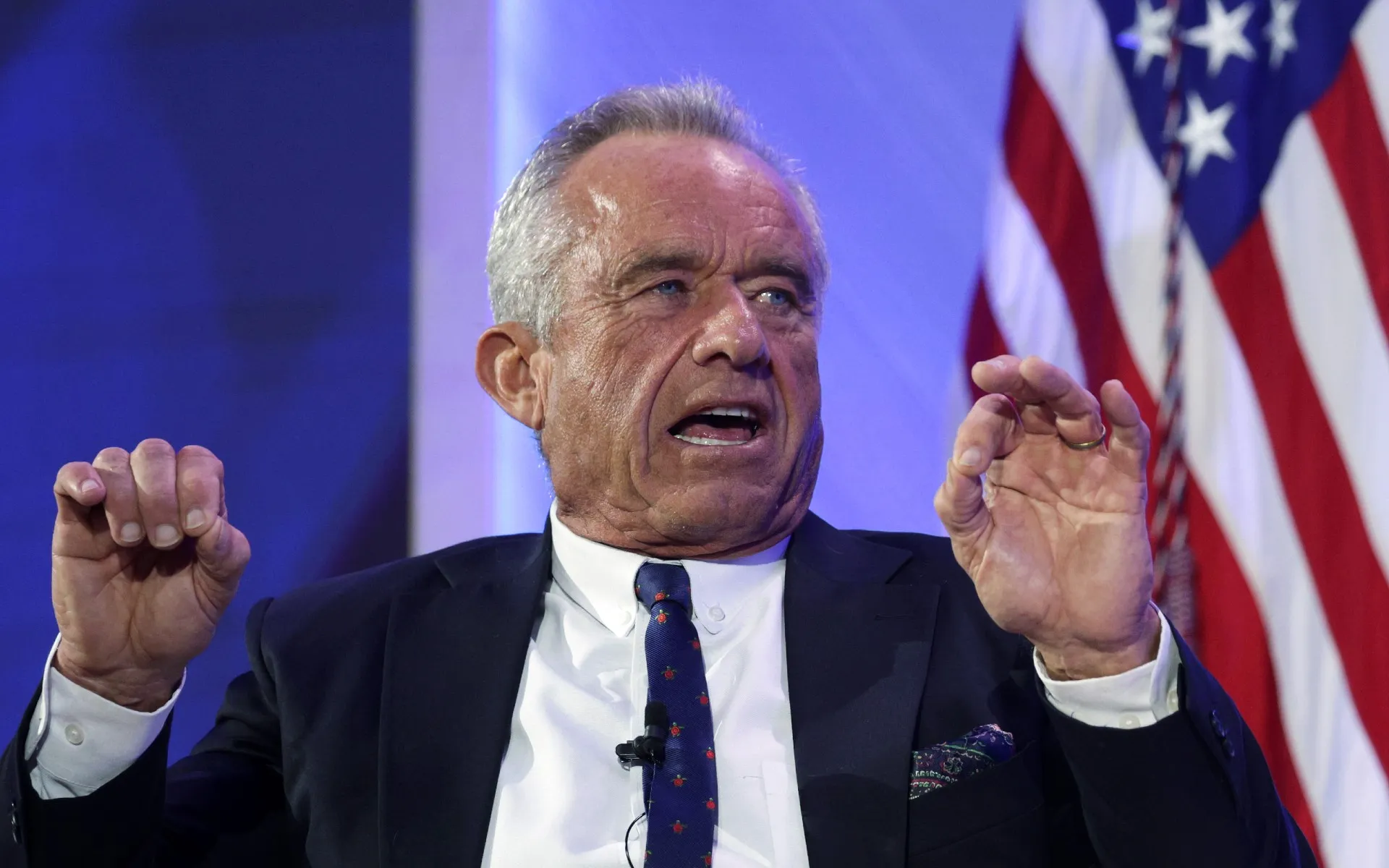
    In line with his claim that there could be a link between vaccines (and other medications) and autism, Secretary of Health and Human Services Robert F. Kennedy Jr. has turned his attention to a class of drugs he believes could be linked to acts of mass violence. He intends to study antidepressant medications, including selective serotonin reuptake inhibitors (SSRIs).

    Why is he scrutinizing these drugs?
    In November, Kennedy said on X that he would direct the Centers for Disease Control and Prevention to study the “long-taboo question of whether SSRIs and other psychoactive drugs contribute to mass violence.” Following an August mass shooting at a school in Minnesota, Kennedy evoked this purported link.

    Health officials have “long monitored the side effects of such drugs, which millions of people use,” said Politifact. While new research could supply fresh findings, “existing data points don’t reflect that SSRIs cause mass violence.”

    While Kennedy has claimed scientists are “afraid to study the topic,” several studies have “tried to look for a possible association between the use of these drugs and mass violence,” said Gizmodo. While none of the existing data support a causative link between the drugs and violence, suicidal ideation does appear to be a “substantial mental health factor.” 

    That could explain why some research has found a potential link between antidepressant use and violence in general, said Ragy Girgis, a professor of clinical psychiatry at Columbia University, to Gizmodo. People who are “suicidal or violent also have much worse depression” and are “more likely to be treated” with antidepressant medications. But it’s “not causative.”

    What do experts think of the claims?
    SSRIs are generally safe and effective medications, according to medical experts. And what’s most worrying about Kennedy’s remarks is that such statements can “scare people away from getting the care they need and deserve,” said the California State Association of Psychiatrists in a statement.

    Equating SSRI users with violence risks unnecessarily stigmatizing mental health conditions, said Keith Humphreys, a professor of psychiatry and behavioral sciences at Stanford University, to Axios. There are “depressed people, people with schizophrenia, anxious people in every other country,” but they can’t “get guns as easily as you can get them here,” he said. It’s a “distraction from the real issue.”


    Good day 🎶

    … for music. Playing calming instrumental music during surgery can improve a patient’s recovery, according to a study from India. Among patients undergoing gallbladder removal surgery, those who listened to music needed substantially less propofol (the go-to anesthetic used for sedation during medical procedures and general anesthesia) and fewer additional doses of fentanyl.


    Bad day 🖋️

    … for fonts. Olympic organizers unveiled a 12-foot sign at Salt Lake City International Airport, featuring the new transitional branding for the Utah 2034 Winter Olympics, to mixed reactions about the unusual font. It has “really brought people together, because everyone seems to not like it,” said Gov. Spencer Cox (R-Utah).


    Picture of the day

    Polar plunge

    A diver dressed as Santa Claus swims with a penguin at Tokyo’s Sunshine Aquarium as the museum launches its annual “Happy Holidays” celebrations. The aquarium holds different Christmas-themed events throughout December, including a show in which sea lions receive gifts.
    Kazuhiro Nogi / AFP / Getty Images


    Puzzles

    Daily crossword

    Test your general knowledge with The Week's daily crossword, part of our puzzles section, which also includes sudoku and codewords

    Play here


    The Week recommends

    Edible gifts to keep your loved ones fed and merry

    Arriving during the holidays at a friend’s house or family gathering armed with delicious food is a sure way to get on the nice list. These tasty offerings will wow any crowd.

    Bonilla a la Vista potato chips
    These “ultra-crispy” potato chips from Spain might just be the “best in the world,” said Food & Wine. There are three ingredients — potatoes, olive oil and sea salt — and while “perfectly delicious by the handful,” the chips are even better when “loaded with luxury extras” like caviar and crème fraîche. Keep the tin, and use it for kitchen storage. ($40, Citarella)

    Licorice.com Australian assortment gift box
    Anyone with a “sweet tooth” will find themselves reaching for one of the three licorice tubes in this set, said Oprah Daily. Australian licorice is known for its “soft, chewy texture” and deeper flavor, and this assortment includes Australian Red, Australian Black and Australian Mix, a tart blend of green apples, raspberry and mango. Each container holds one pound of licorice. ($49, Licorice.com)

    Point Reyes Farmstead Cheese Company Taste of Point Reyes gift pack
    For decades, this farm has been supplying the San Francisco Bay Area with extraordinary cheeses, including its famous Original Blue. This selection allows outsiders to try four cheeses, plus honey and candied pecans. (The set also comes with a cheese knife and reusable cooler.) You can keep the experience strictly cheesy or add a Journeyman Meat Co. Sonoma salami for a complete charcuterie moment. (starting at $90, Point Reyes Farmstead Cheese Company)

    Read more


    Poll watch

    Nearly one in 10 Americans (9.7%) report ever being diagnosed with cancer, according to a Gallup survey. In the poll of 16,946 adults, this is higher than in the period from 2010 to 2015, when over 7% of respondents reported having cancer. And rates have been climbing every year since. 


    INSTANT OPINION

    Today's best commentary

    ‘Europe needs a plan for decoupling from America’
    Martin Sandbu at the Financial Times
    Europeans are “facing the choice between being in control of their own affairs and their long-standing partnership with the U.S.,” says Martin Sandbu. Trump has “tried to bounce Ukraine into conceding to Russian demands for the sake of a superficial and unjust peace,” while Europeans have “scrambled to change the U.S. president’s mind on something they rightly see as existential. How many more lessons do they need to conclude that the transatlantic relationship is over?”

    ‘Pharmacy deserts make staying healthy harder’
    The Boston Globe editorial board
    Pharmacy closures “reflect changes in purchasing patterns, as more people turn toward mail-order prescriptions,” says The Boston Globe editorial board. But having a physical pharmacy nearby “provides health care access that mail order can’t always duplicate.” One way to “prevent closures is through payment reform to ensure that insurers compensate pharmacists — regardless of whether they are independent or part of a chain — a fair amount for dispensing drugs.” But payment reform “can’t be the only solution.”

    ‘The only sensible answer to Netanyahu’s pardon request: a resounding “no”’
    Haaretz editorial board
    The pardon request that Israel’s Prime Minister Benjamin Netanyahu submitted to the country’s President Isaac Herzog “stands out for its chutzpah,” says the Haaretz editorial board. Netanyahu “isn't willing to admit anything, and he doesn't accept responsibility for anything.” Even while he’s asking the president to pardon him, he “continues to imply that the cases against him were fabricated and to depict the law enforcement system as criminal.” Netanyahu “seeks to exploit the institution of the pardon to abolish justice.”


    WORD OF THE DAY

    FOFO

    The acronym for “fear of finding out” and the latest addition to an “ever-expanding lexicon of modern fears,” said Psychology Today. “FOFO” describes medical patients who avoid screening tests, but it’s “not limited to health.” It can apply to anything from credit card balances to performance reviews, where “oblivion is emotionally safer than awareness.”


    Evening Review was written and edited by Theara Coleman, Nadia Croes, Catherine Garcia, Scott Hocker, Justin Klawans, Joel Mathis and Summer Meza, with illustrations by Stephen Kelly and Julia Wytrazek.

    Image credits, from top: Illustration by Stephen Kelly / Shutterstock; Alex Wong / Staff / Getty Images; Tasos Katopodis / World Without Exploitation / Getty Images; Illustration by Julia Wytrazek / Getty Images
     

    Recent editions

    • Morning Report

      Reeves denies lying about UK finances

    • Sunday Shortlist

      A retrospective to delight ‘Wesophiles’

    • Saturday Wrap

      Was Farage a teenage racist?

    VIEW ALL
    TheWeek
    • About Us
    • Contact Future's experts
    • Terms and Conditions
    • Privacy Policy
    • Cookie Policy
    • Advertise With Us
    • FAQ
    Add as a preferred source on Google

    The Week UK is part of Future plc, an international media group and leading digital publisher. Visit our corporate site.

    © Future Publishing Limited Quay House, The Ambury, Bath BA1 1UA. All rights reserved. England and Wales company registration number 2008885.