The Week The Week
flag of US
US
flag of UK
UK
https://cdn.mos.cms.futurecdn.net/skoGBi9qKFoUtnNWkovjJQ.jpg

SUBSCRIBE

Try 6 Free Issues

Sign in
  • View Profile
  • Sign out
  • The Explainer
  • Talking Points
  • The Week Recommends
  • Podcasts
  • Newsletters
  • From the Magazine
  • The Week Junior
  • More
    • Politics
    • World News
    • Business
    • Health
    • Science
    • Food & Drink
    • Travel
    • Culture
    • History
    • Personal Finance
    • Puzzles
    • Photos
    • The Blend
    • All Categories
  • Newsletter sign up Newsletter
  • The Week Evening Review
    Dismantling the NCAR, changing politics with crypto, and making smaller cars

     
    In the Spotlight

    Trump aims to take down ‘mothership’ of climate science

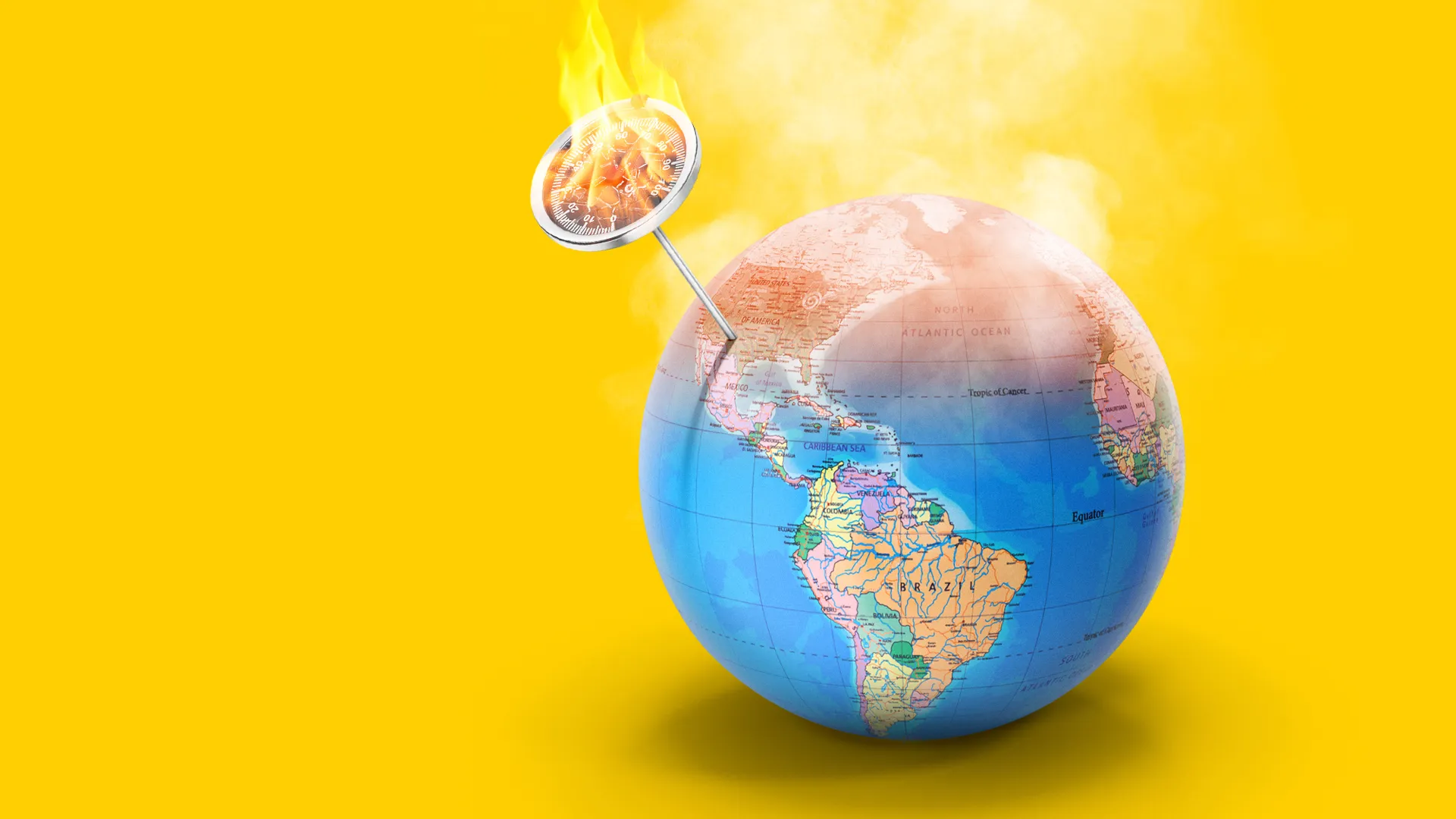
    For more than half a century, the National Center for Atmospheric Research in Boulder, Colorado, has been a premier hub for climate and planetary science. That stands to change, however, as the Trump administration announced plans this week to begin “breaking up” the facility for being “one of the largest sources of climate alarmism in the country,” said Office of Management and Budget Director Russell Vought on X. News of the center’s dismantling, however, has prompted fierce pushback from advocates who warn that closing the facility would mark a catastrophic milestone for the field of climate science.

    ‘Symbolic of the actual destruction of knowledge’
    The NCAR has been vital for critical research on “long-term atmospheric changes, global warming, air pollution, wildfires, extreme weather and geomagnetic storms,” said NBC News. Scientists there have also played “pivotal roles” in “improving weather forecasts, air-quality predictions, and models of wildfire behavior, flooding and drought risk.” By targeting “one of the world’s leading climate research labs,” the White House plans to “identify and eliminate what it calls green new scam research activities,” said USA Today.

    Closing the NCAR “very much undermines” the nation’s standing in climate sciences, said Michael Mann, the director of Penn Center for Science, Sustainability and the Media at the University of Pennsylvania, at Politico. It’s “symbolic of the actual destruction of knowledge.”

    The NCAR is “quite literally our global mothership,” said atmospheric scientist Katharine Hayhoe on X. Losing the center would be akin to “taking a sledgehammer to the keystone holding up our scientific understanding of the planet.”

    Possible political punishment
    The closure of the center dovetails with the White House’s ongoing effort to dismantle the nation’s scientific institutions at large. Still, climate researchers have “expressed suspicions that climate research is not the only reason NCAR has been targeted,” said CNN. The closure may stem from the White House’s “anger over Colorado Gov. Jared Polis’ (D) refusal to release” prominent 2020 election denier Tina Peters from prison. 

    Asked whether Trump’s frustration with Polis was a factor in the NCAR closure, the White House “did not deny the connection,” said CNN. “Maybe if Colorado had a governor who actually wanted to work with President Trump,” a White House official said to the network, “his constituents would be better served.”


    QUOTE OF THE DAY

    ‘I was taught that God is merciful and compassionate, and so must we be.’

    New York Gov. Kathy Hochul (D), in a Times Union op-ed, expressing support for a bill that allows terminally ill people “searching for comfort in their final months” to end their lives with prescribed medication, after reaching an agreement to include “guardrails” in the measure 


    Statistic of the day

    4.8 million: The projected number of deaths worldwide of children under 5 this year, according to the Gates Foundation. This is about 243,000 more children than last year, marking the first time in decades that child mortality has increased. The Gates Foundation attributes this to a 27% decline in global health aid.


    TODAY’S BIG QUESTION

    Could smaller cars bring down vehicle prices?

    President Donald Trump thinks he has found a solution to the skyrocketing price tags for vehicles: building smaller cars. These vehicles are extremely popular in Asia, where they are known as micro cars or kei cars. But many auto industry analysts say translating the success of Asia’s micro car market to the U.S. is an unrealistic goal.

    What did the commentators say?
    Trump has mused on social media that the U.S. should start producing these cars, which are “small fuel-efficient vehicles that are roughly 30% shorter” than a Toyota Camry and the same width as a Smart, said The Wall Street Journal. His affinity for the vehicles seemed to arise after a “recent trip to Japan to talk about trade and economic investments.”

    These cars are often much cheaper than standard vehicles, and can “cost as little as $8,000 or $10,000,” said CNN, while the average price of a new car in the U.S. is “currently around $50,000.” Manufacturing cars that are that cheap would be an “answer to affordability issues for many car buyers and a major political headache for Trump.” But these vehicles “don’t make sense en masse here, from existing regulations to the Trump administration’s own contradictory policies,” said Car and Driver.

    These cars “aren’t adapted to U.S. regulations and sold here because the demand simply doesn’t exist,” said the outlet. This is partially because Americans “barely buy cars anymore” and favor larger vehicles like trucks. The incentive for automakers to sell smaller cars has also “gone out the window” with regulations “now set to be relaxed” by the Trump administration on gas-guzzling trucks.

    These vehicles “would have to be redesigned and retested” to meet U.S. standards for safety, said Axios. Approving them for the U.S. would involve “stronger, heavier chassis and larger crumple zones to withstand crashes.” This would involve high price tags for automakers that would “defeat the cost and efficiency advantages of micro cars.”

    What next?
    Despite these concerns, Trump is seemingly pressing ahead with his micro-car plan. The president has “cleared them for production and is demanding that automakers manufacture them domestically,” saying on social media that the U.S. should “START BUILDING THEM NOW!”


    the explainer

    How cryptocurrency is changing politics

    Bitcoin has “proven to be one of the best-performing assets in modern history,” said Al Jazeera. With the value of cryptocurrency increasing “some 1,000 times” over the last decade, it was only a matter of time before governments and banks wanted in. 

    Bitcoin was widely dismissed as a “speculative asset with no intrinsic value” when it was launched after the 2008 global financial crisis. But it’s now being taken increasingly seriously by “governments, financial institutions and investors alike,” with far-reaching implications for politics, the economy, and the way we live. 

    How has crypto’s legitimacy grown?
    Several countries have “made big bets” on crypto in the last few years, said Al Jazeera. El Salvador holds more than “$600 million worth of bitcoin reserves” after becoming the first country in the world to accept the asset as legal tender in 2021. 

    In South Korea’s presidential election this year, both major candidates embraced pro-crypto policies in their campaigns. And in the U.K., Reform Party leader Nigel Farage is also an open “supporter of cryptocurrency” and has made his party the first in the country to “accept donations in bitcoin,” said the BBC. A $12 million donation to Reform from Thailand-based British businessman Christopher Harborne — the “largest ever single donation by a living person to a British political party” — has raised questions about the role that cryptocurrency investors may play in future elections. 

    Will the trend continue?
    In Washington, crypto is “ascendant,” said The Economist. President Donald Trump’s return to the White House triggered a shift toward recognition of crypto as a legitimate currency after years of crackdowns on the sector. His regulators are “more permissive,” and investors are “piling into it,” while pro-crypto lobbying groups are throwing their weight behind political candidates who support it. 

    In January, the launch of the $TRUMP coin, a cryptocurrency mostly owned by “companies associated with the Trump family,” pointed toward the president’s direct financial interest in crypto. And “clear conflicts of interest” could ultimately do “more harm than good” for the industry. 

    Ethics watchdogs have warned that embracing crypto could provide a means for corporate and foreign actors to influence the White House. And even industry “cheerleaders” are privately worried that painting crypto as a “vehicle for the president’s influence-peddling will make it impossible for legislators to support favorable legislation,” said The Economist.


    Good day 🧀

    … for cheese lovers. People who eat large amounts of high-fat cheese and creams are less likely to develop dementia in 25 years than those who eat little or none, according to a study published in the journal Neurology. No association was found between dementia risk and reduced-fat dairy products.


    Bad day ⛷️

    … for skiers in Italy. Hundreds of people were stranded for hours at the top of an Arabba-Marmolada ski resort in the Dolomites after snow turned to muddy slush amid unseasonably warm temperatures, forcing the slopes’ closures. Skiers experienced long waits for a lift to take them back down, just weeks before Italy hosts the Olympics.


    Picture of the day

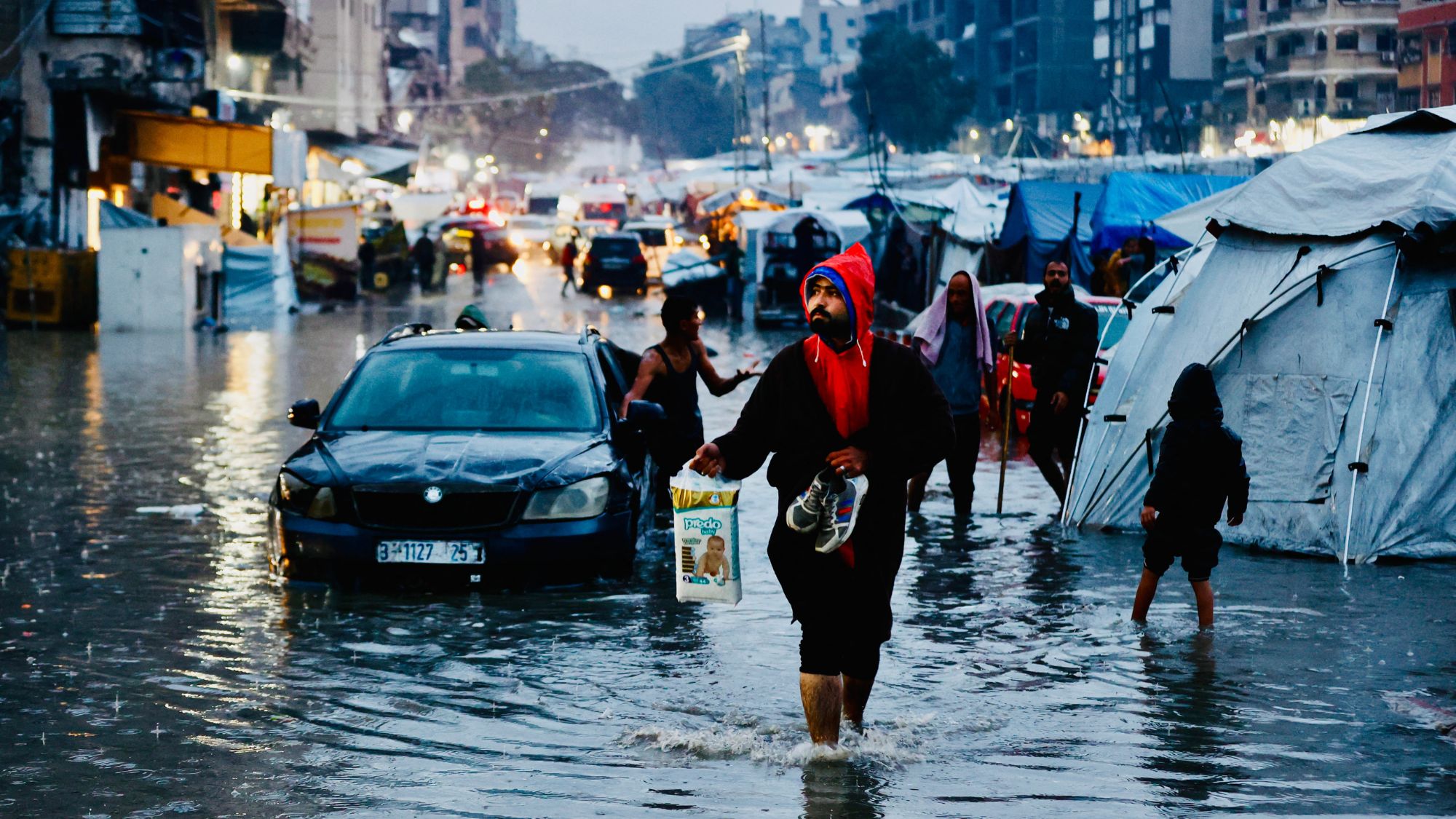
    Weathering another storm

    Days of intense rainfall have caused flooding in Gaza, further worsening conditions for homeless Palestinians. Floodwaters have swept through camps and informal shelters, damaging tents and personal belongings and forcing many families to move yet again.
    Omar Al-Qattaa / AFP / Getty Images


    Puzzles

    Daily crossword

    Test your general knowledge with The Week's daily crossword, part of our puzzles section, which also includes sudoku and codewords

    Play here


    The Week recommends

    2025’s most notable music

    The year is coming to an end, and it has seen some big-name artists drop new albums. From one of the biggest pop superstars of the 21st century to a familiar Beatles face, here are some of 2025’s biggest LPs. 

    Mac Miller, ‘Balloonerism’
    The celebrated rapper died in 2018 but is still providing fans with new gifts. “Balloonerism,” the artist’s second posthumous LP, was recorded in 2014 but wasn’t released after he died. The album is a “project that was of great importance” to Miller, and it “showcases both the breadth of his musical talents and fearlessness as an artist,” Miller’s estate said on Instagram.

    Ringo Starr, ‘Look Up’
    The legendary drummer for the Beatles is continuing to pump out music even at age 85 and released his 21st studio album, “Look Up,” in 2025. However, this album is a bit different from the Scouser’s normal rock classics, as “Look Up” will be a country LP. While not normally associated with the genre, Starr is a longtime fan and has “always loved country music,” the drummer said in a press release. And for the avid listener, country influences can be heard in many of his prior songs.

    Counting Crows, ‘Butter Miracle, The Complete Sweets!’
    The San Francisco rock band released its eighth studio album, “Butter Miracle, the Complete Sweets!,” marking its first LP in more than 10 years. One of the notable singles from the LP, “Spaceman in Tulsa,” is “about metamorphosis — the way music breaks down who we were and spins us into something new,” said frontman Adam Duritz in a statement.

    Read more


    Poll watch

    Fewer than three in 10 Americans (29%) describe their mental health as “excellent,” according to a Gallup survey of 1,321 adults. It’s a significant drop from the 43% who felt this way in 2019 and the first time it has dropped below 30%.


    INSTANT OPINION

    Today's best commentary

    ‘Kast’s victory is a political and ethical earthquake’
    Ariel Dorfman at The New York Times
    Augusto Pinochet, the “strongman who imposed a reign of terror on Chile from 1973 to 1990, must be smiling in his grave,” says Ariel Dorfman, because his “brazen defender and admirer José Antonio Kast has just been elected president of Chile.” Kast’s victory is “not necessarily a public endorsement of his veneration for Pinochet.” But the “rehabilitation of one of the continent’s most infamous autocrats is a particularly agonizing setback” in Chile’s “long struggle for democracy.”

    ‘Why young people are struggling to communicate’
    Rachel Konrad and Matt Abrahams at Time
    Communication skills are “essential for creating healthy relationships, maintaining mental health, fostering civic engagement, and building a successful career,” say Rachel Konrad and Matt Abrahams. But while teenagers today are the “most connected generation in history,” they are also the “least prepared to communicate with depth, confidence and empathy.” The “environments where students develop communication skills are collapsing,” and the “bottom line is that young people are at risk of losing the communication skills that connect us.”

    ‘You can say that again’
    Christian Schneider at the National Review
    Every generation has its “own lingo, and this shift in language irritates every generation that came before,” says Christian Schneider. We “shouldn’t bemoan the way language bends, stretches and pulls; we should celebrate its flexibility.” It’s not that young people are “silly or flippant.” As society “progresses both culturally and technologically, new terms emerge to describe people’s feelings, and the best ideas rise.” New words or phrases “shouldn’t scare anyone, and criticizing language innovation is simply ragebait.”


    WORD OF THE DAY

    mori

    The ancient Celtic word for “sea,” which evolved into “mor” in Welsh and “muir” in Old Irish. “Mori” is among the words in a dictionary of ancient Celtic being compiled by linguists from Aberystwyth University, using sources ranging from Julius Caesar’s account of his conquests in northern Europe to ancient memorial stones.


    Evening Review was written and edited by Theara Coleman, Nadia Croes, Scott Hocker, Alex Kerr, Justin Klawans, Summer Meza and Rafi Schwartz, with illustrations by Stephen Kelly and Julia Wytrazek.

    Image credits, from top: Illustration by Stephen Kelly / Shutterstock / Getty Images; Edgar Su / Reuters; Ian Maule / Shutterstock; BMG / Roccabella / Warner
     

    Recent editions

    • Morning Report

      Starmer tells Abramovich to release Chelsea sale funds

    • Evening Review

      Trump vs. BBC: what’s at stake

    • Morning Report

      UK will return to Erasmus exchanges from 2027

    VIEW ALL
    TheWeek
    • About Us
    • Contact Future's experts
    • Terms and Conditions
    • Privacy Policy
    • Cookie Policy
    • Advertise With Us
    • FAQ
    Add as a preferred source on Google

    The Week UK is part of Future plc, an international media group and leading digital publisher. Visit our corporate site.

    © Future Publishing Limited Quay House, The Ambury, Bath BA1 1UA. All rights reserved. England and Wales company registration number 2008885.