The Week The Week
flag of US
US
flag of UK
UK
https://cdn.mos.cms.futurecdn.net/skoGBi9qKFoUtnNWkovjJQ.jpg

SUBSCRIBE

Try 6 Free Issues

Sign in
  • View Profile
  • Sign out
  • The Explainer
  • Talking Points
  • The Week Recommends
  • Podcasts
  • Newsletters
  • From the Magazine
  • The Week Junior
  • More
    • Politics
    • World News
    • Business
    • Health
    • Science
    • Food & Drink
    • Travel
    • Culture
    • History
    • Personal Finance
    • Puzzles
    • Photos
    • The Blend
    • All Categories
  • Newsletter sign up Newsletter
  • The Week Evening Review
    The next shutdown fight, whiskey woes, and airplane stowaways

     
    TODAY’S BIG QUESTION

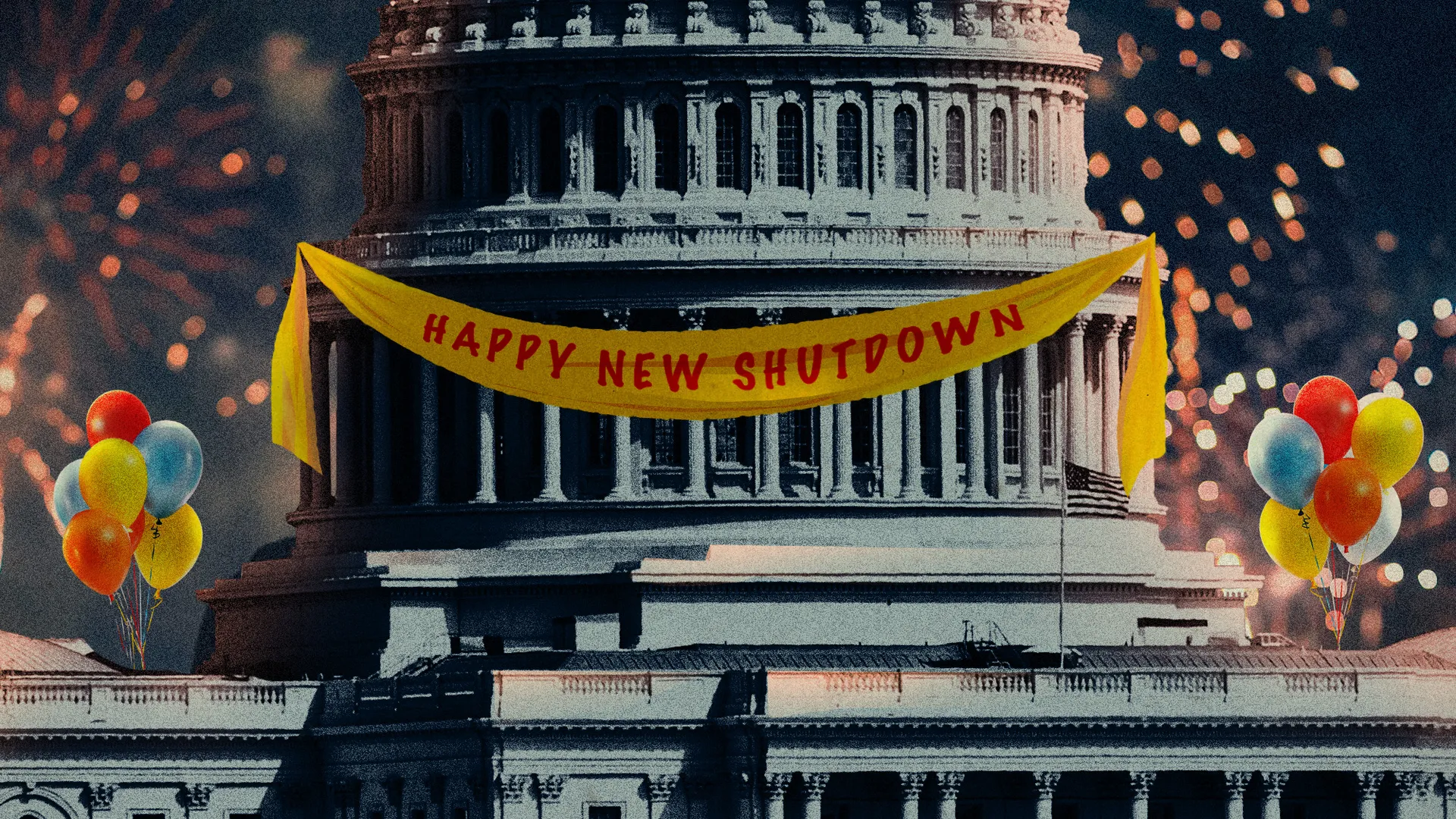
    Will the new year bring a new shutdown?

    The last federal government shutdown ended just a few weeks ago. And the next may start just a few weeks from now. Congress’ deadline to avoid another shutdown will be “here sooner than you think,” said Politico. Despite a month of work to find a deal that can appease both sides, the Senate last week “gave up on passing a spending package” and adjourned for its holiday recess ahead of the Jan. 30 funding deadline. GOP hardliners in the House want to hold the line on spending and “could start making threats” to Speaker Mike Johnson (R-La.) if they do not get their way.

    Some Democrats will want to use the deadline as leverage. But Senate Minority Leader Chuck Schumer (D-N.Y.) believes there “aren’t enough Democrats willing to plunge into another shutdown,” said Punchbowl News. The problem is that “both chambers are far behind schedule” on full-year funding bills for 2026 and “key disagreements remain.”

    What did the commentators say?
    Congress has “learned nothing,” said The Boston Herald editorial board. Lawmakers should have learned from the recent shutdown the “level of pain it inflicted on the American people.” The suspension of SNAP benefits left families “panicked and scrambling.” A “kick-the-can-down-the-road mentality” meant Congress avoided dealing with the issue of health care subsidies for a few years until the issue became “leverage” for the latest round of funding fights. American voters “deserve better than this.”

    Government shutdowns are a “relatively recent phenomenon” created by a “broken political environment,” said Scott Minkoff  and Josh Ryan at The Hill. The fix may be a two-year budget cycle with “automatic funding when legislators fail to act.” That will not solve all of Congress’ budgeting problems because “deficits, spending priorities and taxation” are always going to spark debate. But the rush of constant deadlines is too easily weaponized. A two-year budget cycle would “restore some sanity.”

    What next?
    There’s “little appetite” for another government shutdown, but Democrats are weighing their demands anyway, said NOTUS. Appropriations bills in the Senate need 60 votes to pass, which means that seven Democratic votes are necessary for any successful bill. That gives those Democrats sway “in theory,” but they forced the fall shutdown for the fight over Obamacare subsidies and ended up with “very little to show for it.” 


    QUOTE OF THE DAY

    ‘It’s not just about me and what happened. I fear for the little girl who’s calling the FBI right now and asking for help.’

    A Jane Doe, in an interview with CNN, on her name being unredacted in the Epstein files. It “haunts me to my core” that the Justice Department allegedly allowed the names of the victims to leak, she added. 


    IN THE SPOTLIGHT

    Tariffs put US whiskey distillers on the rocks

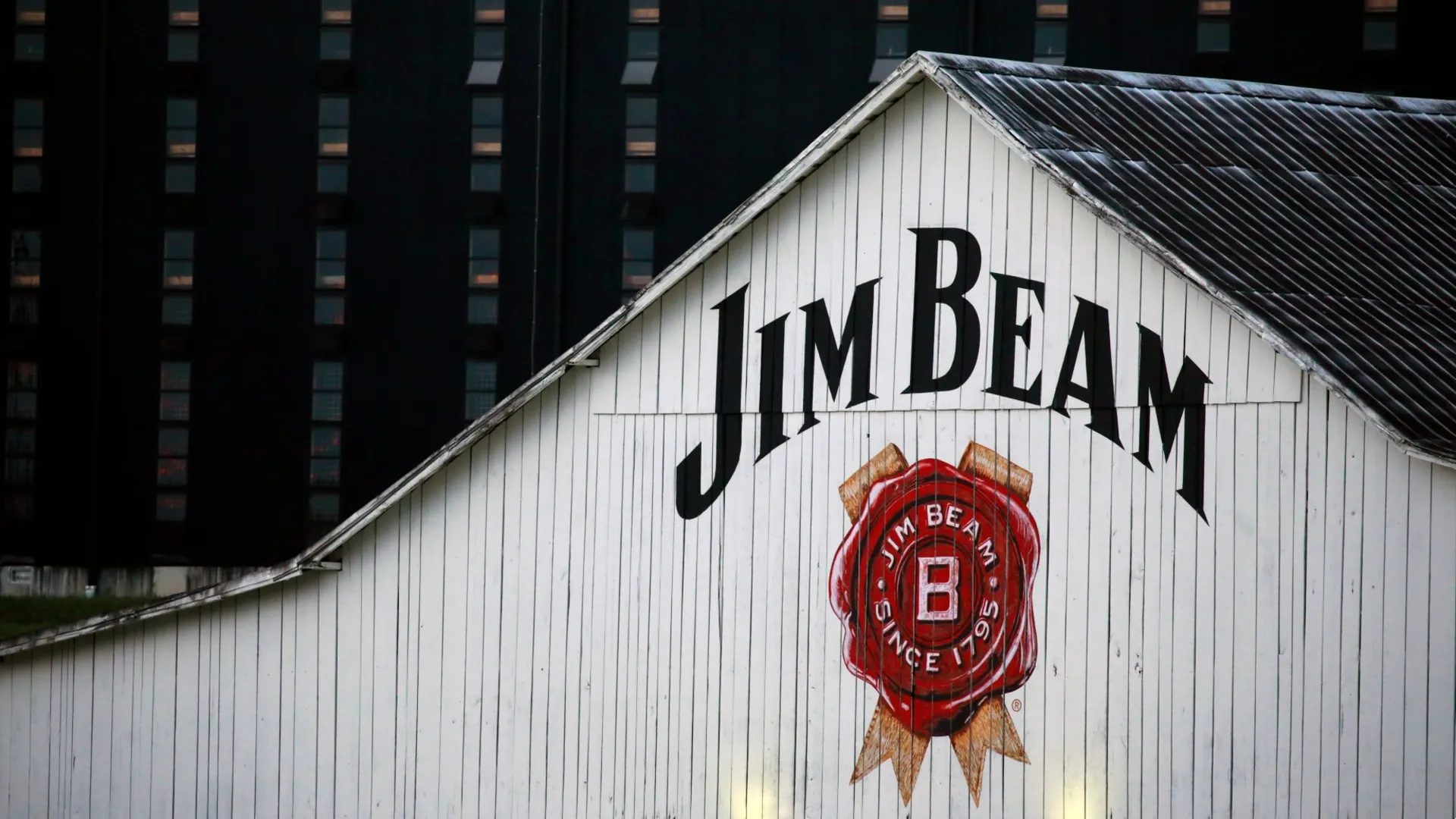
    Americans may find themselves paying more for a bourbon neat these days. U.S. whiskey distillers throughout the liquor industry are facing financial hardship lately, and economic experts are pointing to the Trump administration’s tariffs as a major cause. This includes Jim Beam, whose troubles have led to a drastic step: closing its distillery.

    What brands are being impacted?
    The economic slump has affected several iconic brands. This includes Jack Daniel’s, Old Forester and Woodford Reserve, which are owned by parent company Brown-Forman. The company previously announced it was “laying off about 650 employees, or 12% of its workforce, in the face of declining demand,” said The New York Times. Several other whiskey brands, including Garrard County Distilling Co. in Kentucky and Uncle Nearest in Tennessee, have been placed into receivership in 2025.

    But Jim Beam, the country’s largest bourbon manufacturer, has taken perhaps the most extreme move by announcing it would halt production at the plant’s main distillery in Clermont, Kentucky, for an entire year. This distillery produces “about a third of the company’s annual output of approximately 26.5 million gallons,” said the Times.

    How are tariffs causing these issues?
    The ongoing challenges “straining the liquor industry” are “part of the fallout of Trump’s trade war,” said CBC News. These tariffs (and subsequent countertariffs from countries like Canada) led to a trade deficit as “overall exports of American spirits fell 9% in the second quarter of 2025 compared to the same period last year.” Boycotts of American alcohol brands have also contributed to this decline.

    Overall demand for whiskey and bourbon has decreased, which has “caused an oversupply of whiskey,” said Bloomberg. Sales have slumped as consumers “rein in spending and drinking” during downward economic times. And much of the available product can’t even be sold. Most of the 16.1 million barrels of bourbon currently being aged “won’t be ready to bottle until after 2030.”

    Even so, Kentucky politicians place the blame on the Trump administration’s shoulders. It’s “hard to overstate just how devastating Trump’s tariffs are for America’s signature spirit,” said Rep. Morgan McGarvey (D-Ky.) on X, referring to the Jim Beam closure. “Thousands of Kentuckians power the bourbon industry — we will all feel the impact of this.”


    Statistic of the day

    20: The number of weeks that Mariah Carey’s “All I Want for Christmas Is You” has been No. 1 on the Billboard charts, breaking the record for weeks spent occupying the top spot. The song has become a Christmas classic since its 1994 release.


    the explainer

    The strangely resilient phenomenon of stowaways

    Ticket inspections, passport control and further checks at the gate are just three of the barriers that illegitimate plane passengers have to evade, yet some are still managing it. A man boarded a Heathrow flight to Norway without a ticket, boarding pass or passport, in one of the latest cases of sky-high stowaways. 

    What happened? 
    The unnamed passenger slipped onto a British Airways flight to Oslo on Dec. 13. Having “tailgated his way through the automatic gates at Terminal 3,” said The Telegraph, he passed through “full security screening” before reaching the gate. There, he pretended to be travelling with a family and boarded the Airbus A320. Once on board, he kept moving seats as the plane filled up before the cabin crew realized he wasn’t a legitimate passenger and removed him. 

    How are they getting through? 
    Stowaways often take advantage of “bottlenecks where passenger processing occurs,” Damian Devlin, an aviation management lecturer at the University of East London, said to The Telegraph. The situation “creates sufficient distraction,” with staff “so focused on a particular task and on maximizing passenger throughput” that they “fail to notice tailgating taking place.” 

    An American woman, Marilyn Hartman, was dubbed the Serial Stowaway after she allegedly boarded at least 20 commercial flights without a ticket, including a 2018 British Airways flight from Chicago to Heathrow. It was “crazy” that she was able to get onto flights by simply “following someone,” she said to CBS News in 2021. 

    Will breaches continue? 
    We “don’t always know exactly how it happens,” because if a breach involves “lapses” at security checkpoints, the “relevant agencies” might not want to “broadcast their vulnerabilities,” said USA Today. But as technology is increasingly used in the airport security process, it will be “less likely” that “sneaking onto an aeroplane is possible,” said Thrillist. 

    Technology is “continuously improving and continuously making it more and more difficult for people who have ill intent to accomplish what they are trying to do, whether it’s X-ray machines, metal detection, liquid detection, all of the above,” said Rich Davis of security company International SOS.


    Good day 🐬

    … for alliances. Killer whales and dolphins have been found hunting together for the first time, developing a “strategic alliance” in deep water, according to a study published in the journal Scientific Reports. Dolphins locate large fish, while orcas follow, then kill and eat the fish and leave scraps for the dolphins.


    Bad day 🌎

    … for the environment. This year, artificial intelligence has generated as much carbon pollution as New York City has and consumed as much water as people worldwide have from water bottles, according to estimates published in the journal Patterns. And the study presents a “conservative picture of AI’s environmental impact,” said The Verge.


    Picture of the day

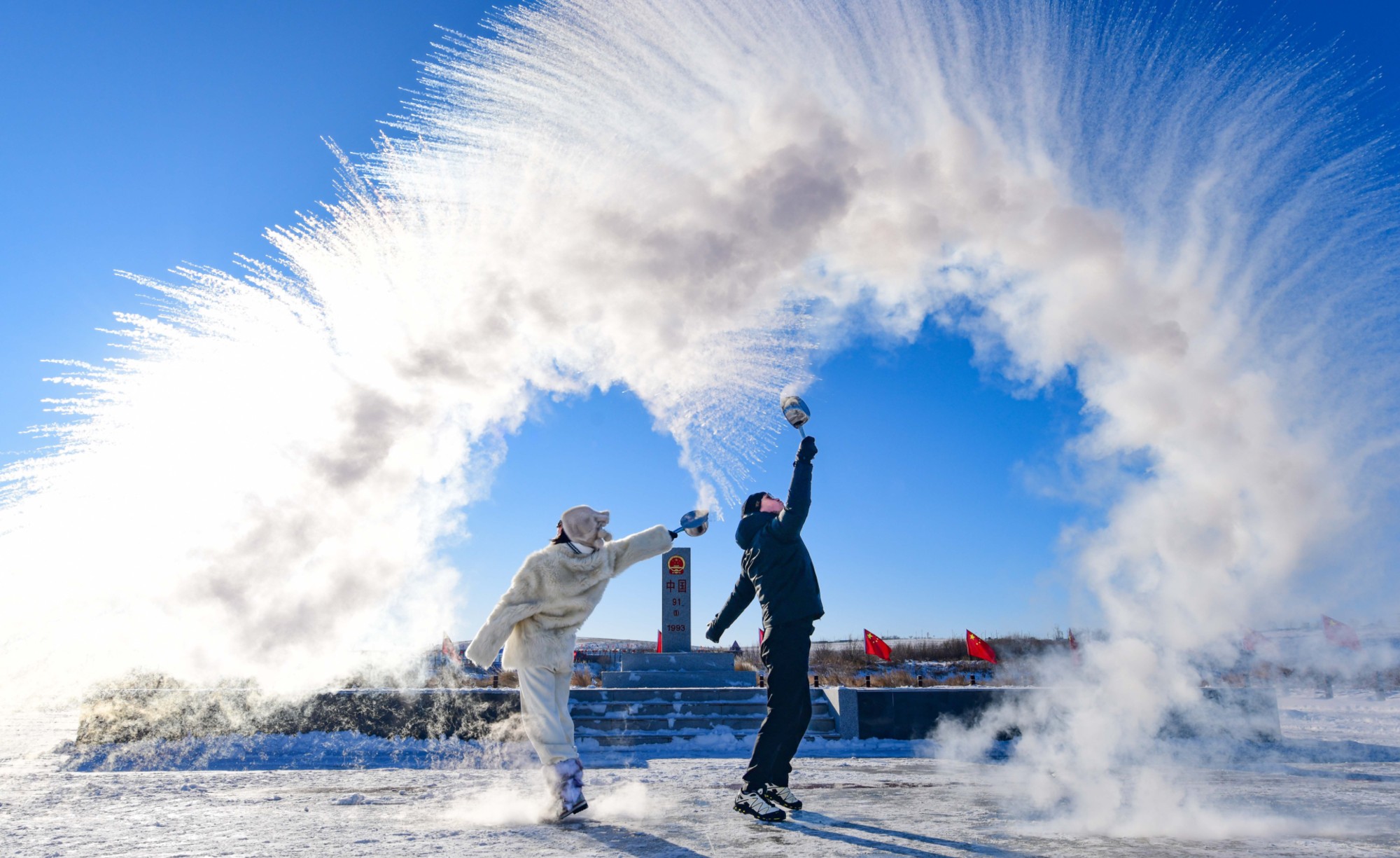
    Flash freeze

    People throw hot water into the air to see it instantly turn into ice crystals in the city of Ergun, in northern China’s Inner Mongolia region. Other local winter pastimes include ice sculpting and snow carving. 
    CFOTO / Future Publishing / Getty Images


    Puzzles

    Daily crossword

    Test your general knowledge with The Week's daily crossword, part of our puzzles section, which also includes sudoku and codewords

    Play here


    The Week recommends

    Comedians who help you laugh your way through winter 

    This year has brought its fair share of gloomy news headlines, so it’s no surprise that people might need a solid laugh. As the calendar transitions to 2026, you can check out some of the most popular comedians starring in a series of winter stand-up tours.

    Hannah Berner
    After getting her TV start on Bravo’s “Summer House,” she became more recognizable thanks to her Netflix special, “We Ride at Dawn,” and two popular podcasts. Berner will perform stand-up shows in the U.S. and Canada starting next year. Her tour comes as she has “made herself ubiquitous in the internet ecosystem, disarming viewers with her unfiltered humor and confessions,” said The New York Times. (through March)

    Josh Johnson
    While Johnson (pictured above) first made a name for himself as a staff writer on “The Daily Show,” his stand-up has established him as one of the best comedians working today. His YouTube shows have been so well-received that he’s now the “funniest guy on the internet,” said Wired. (through May)

    Nimish Patel
    Patel made comedy history in 2017 when he became the first Indian American writer on “Saturday Night Live.” Over the last few years, Patel has become an up-and-coming name in the stand-up world, and if you are eager to catch his act, he will be touring the U.S. starting next year. (through May)

    Read more


    Poll watch

    Less than a quarter of Americans (24%) are satisfied with the direction of the country, according to a Gallup survey. The poll of 1,016 adults found that almost half (47%) describe the economy as poor — a seven-point increase from last month and the highest figure since September 2024. 


    WORD OF THE DAY

    nitrification

    A microbial process in which ammonia or ammonium turns into nitrite, which then turns into nitrate. Nitrification helps plants absorb carbon. But according to a UC Riverside study, warmer rainforest soils have experienced moisture loss, which has reduced the ammonium supply needed for this process. And with forests absorbing less carbon via nitrification, climate change can accelerate. 


    INSTANT OPINION

    Today's best commentary

    ‘The Heritage Foundation blows up’
    The Wall Street Journal editorial board
    The debate over the “direction of the post-Trump right is underway, and one of the first casualties is the Heritage Foundation,” says The Wall Street Journal editorial board. Some of its “most important conservative scholars and their policy departments said they are leaving.” The foundation might still “play a role under new leadership, but its board has been slow to appreciate the internal dissatisfaction.” It “abandoned its principles, it’s losing its people, and soon there might not be much left.”

    ‘When the AI bubble bursts, humans will finally have their chance to take back control’
    Rafael Behr at The Guardian
    Artificial intelligence represents a “synthetic pseudo-reality mediated by the sycophantic mechanical offspring of narcissist Silicon Valley oligarchs,” says Rafael Behr. The “real bubble is not stock valuations but the inflated ego of an industry that thinks it’s just one more data center away from computational divinity.” When the “correction comes, when the U.S.’s Icarus economy hits the cold sea, there will be a chance for other voices to be heard on the subject of risk and regulation.”

    ‘How Trump’s war on wind reveals a broken government’
    Hayes Brown at MS NOW
    The Trump administration will “pause leases for ongoing offshore wind farm construction projects,” which is “another example of the administration’s ongoing war on clean energy production,” says Hayes Brown. This has “all the markings of a federal government geared to reverse-engineering justifications for acting on President Donald Trump’s obsessions.” The “scramble to scuttle wind farms at a time like this only serves to underscore how much Trump’s vendettas are costing this country.”


    Evening Review was written and edited by Theara Coleman, Nadia Croes, Scott Hocker, Justin Klawans, Joel Mathis, Summer Meza and Chas Newkey-Burden, with illustrations by Stephen Kelly and Julia Wytrazek.

    Image credits, from top: Illustration by Julia Wytrazek / Getty Images; Luke Sharrett / Bloomberg / Getty Images; Jaime Reina / AFP / Getty Images; Rick Kern / Getty Images
     

    Recent editions

    • Morning Report

      Denmark furious as Trump appoints Greenland envoy

    • Evening Review

      Why is Trump redacting Epstein files?

    • Morning Report

      Israel expands West Bank settlements

    VIEW ALL
    TheWeek
    • About Us
    • Contact Future's experts
    • Terms and Conditions
    • Privacy Policy
    • Cookie Policy
    • Advertise With Us
    • FAQ
    Add as a preferred source on Google

    The Week UK is part of Future plc, an international media group and leading digital publisher. Visit our corporate site.

    © Future Publishing Limited Quay House, The Ambury, Bath BA1 1UA. All rights reserved. England and Wales company registration number 2008885.