The Week The Week
flag of US
US
flag of UK
UK
https://cdn.mos.cms.futurecdn.net/skoGBi9qKFoUtnNWkovjJQ.jpg

SUBSCRIBE

Try 6 Free Issues

Sign in
  • View Profile
  • Sign out
  • The Explainer
  • Talking Points
  • The Week Recommends
  • Podcasts
  • Newsletters
  • From the Magazine
  • The Week Junior
  • More
    • Politics
    • World News
    • Business
    • Health
    • Science
    • Food & Drink
    • Travel
    • Culture
    • History
    • Personal Finance
    • Puzzles
    • Photos
    • The Blend
    • All Categories
  • Newsletter sign up Newsletter
  • The Week Evening Review
    ICE pressure on businesses, measles’ return, and an audiobook debate

     
    In the Spotlight

    Businesses are caught in the middle of ICE activities

    Ever since a surge of Immigration and Customs Enforcement agents descended on Minneapolis, businesses big and small across the city are feeling the effects, and many now find themselves mixed up in the conflict. Even as reports indicate ICE is partially pulling out of the city, businesses here and in other cities across the U.S. are being forced to reckon with this new normal.

    Range of impact
    Businesses from “family-run cafes to retail giants” are “increasingly coming into the crosshairs of President Donald Trump’s mass deportation campaign,” said The Associated Press. This pressure has taken on many forms in recent months, from “public pressure for them to speak out against aggressive immigration enforcement” to the businesses themselves becoming targets of ICE raids. 

    Following a surge of ICE activity in Portland, Maine, businesses in the city are “afraid to attract attention to their establishments, especially when restaurants operated by and primarily serving immigrants have been targets of immigration enforcement,” said the Portland Press Herald. Black Owned Maine, a nonprofit for minority business owners, announced on Facebook that it was taking down its website to protect the privacy of its network.

    Even as ICE appears to be shifting its strategies, some business owners remain unsettled. ICE is “using my business as a hunting ground,” said Milissa Silva-Diaz, the CEO of a Mexican supermarket in St. Paul, Minnesota, to CNN. “This is not sustainable. It makes you wonder: How do we survive this?”

    Their response
    While some businesses have criticized ICE, others have worked directly with the agency. This includes AT&T, which was awarded a $90.7 million contract in 2021 to supply ICE with IT infrastructure. Other companies working with ICE include FedEx, which has a $2.3 million contract with the agency through 2027; Deloitte, which has a $24 million contract through 2027; and Palantir, a Trump-aligned data company that was awarded a $139.3 million contract.

    Many other businesses and “lower-level employees have publicly taken a stand against the ICE crackdowns,” said Modern Retail. A petition released this month, signed by more than 400 employees from companies like Google, Amazon and Meta, urges tech CEOs to join their workers in “demanding ICE out of all of our cities.”


    QUOTE OF THE DAY

    ‘The world has changed. Washington has changed. There’s almost nothing normal in the US now, and that’s the truth.’

    Canadian Prime Minister Mark Carney at his Parliament. He “rejected U.S. Treasury Secretary Scott Bessent’s contention” that he, in a phone call with Trump on Monday, “aggressively walked back” comments made at last week’s World Economic Forum, said The Associated Press.


    TODAY’S BIG QUESTION

    Is the US about to lose its status on measles?

    One of the big victories of American science in the last few decades was conquering measles. But that achievement is being reversed, as the U.S. now stands on the brink of losing its measles elimination status.

    Measles cases are “skyrocketing” across the country, with cases reported in nine states, and “hundreds” of patients were quarantined in South Carolina in late December, said Axios. Some of the surges are happening in places where the measles vaccination rate is under the 95% level that public health officials say is “necessary to contain the virus’ spread.” A “record share” of kindergartners were exempted from the vaccine last school year, said CNN.

    The Pan American Health Organization will review America’s measles elimination status in April, said USA Today. The designation is “more symbolic than anything” but still carries some meaning. The designation is a “significant public health signal,” said the group. 

    What did the commentators say?
    The South Carolina quarantines are “just a taste of what’s coming” under the anti-vaccine stewardship of Health and Human Services Secretary Robert F. Kennedy Jr., said The Washington Post editorial board. It might be easy to dismiss the loss of measles elimination status, but outbreaks “almost certainly will become more frequent and more intense in the coming years” thanks to the loss of vaccination coverage. Other vaccine-preventable diseases like whooping cough and chicken pox will also surge. 

    Measles is a “nasty virus,” said Children’s Hospital of Philadelphia in a blog post. Most people survive an infection, but it can cause “many different complications,” including blood clotting. The larger problem is that measles is “usually the first, but not the only, pathogen to show itself” when vaccination rates drop. If vaccines are “cast aside, it will not be the only disease to return.”

    What next?
    Public health authorities consider a virus endemic “after one year of continuous transmission,” said NBC News. That status will be achieved in the U.S. if the current measles outbreaks can be traced back to the first West Texas measles case a year ago. That possibility is astonishing to some health experts. It’s “unheard of to lose your elimination status,” said Amira Albert Roess, a professor of global health and epidemiology at George Mason University, to NBC, “unless it was a war-torn, collapsing country.”


    Statistic of the day

    330,000: The number of Chinese tourists to Japan in December — a 45% drop from the previous year, according to the Japanese transportation ministry. But while China and Japan face a diplomatic row over Taiwan, Japan remains a popular choice for foreign travelers overall, with 42.7 million visiting last year.


    TALKING POINTS

    Do audiobooks count as reading?

    “Once scorned by purists as the fake Rolexes of the reading world,” audiobooks are now booming, said Nilanjana Roy at the Financial Times. But questions remain about whether listening to a book instead of poring over its pages counts as reading.

    ‘Little mental sojourns’
    Many people don’t think audiobooks “qualify” as proper reading, said Brian Bannon, the chief librarian at the New York Public Library, at The New York Times. There’s a “pride, even a snobbishness, to being well read.” Telling someone that you have listened to a book instead of reading the physical copy often “comes out sounding like an apology.”

    Our minds sometimes “wander” when we are reading or listening, said David Daniel, a psychology professor at Virginia’s James Madison University, to Time. But snapping out of these “little mental sojourns” and finding your place in the text isn’t as easy when you are listening to a recording, especially when “grappling” with a complex piece of writing.

    ‘Parallel way to read’
    We need to “reframe what it means to be a reader,” moving past the “traditional hierarchical values” that still put physical books at the top, said Debbie Hicks, the creative director at the U.K. nonprofit Reading Agency, to The Guardian. When it comes to reading, “content” is more important than the “medium.”

    To suggest that reading books is the “only kind of reading that counts” does a “disservice” to the “many dyslexic or visually challenged booklovers among us,” said Nilanjana Roy at the Financial Times. Audiobooks should be seen as a “parallel way to read,” not dismissed as inferior.

    The “destigmatizing” of audiobooks could offer a “path to a more nuanced way of thinking about literacy,” said Bannon. “We need more readers, however they get there.” After “struggling to read as a kid, audiobooks were my lifesaver,” said Miranda Larbi at Stylist. They turned out to be a “gateway for physical books — a key for unlocking a world that felt totally inaccessible.”


    Good day 🔬

    … for human guts. Barnacles have become an “unusual source” for tackling inflammatory bowel disease, said New Scientist. Researchers in China have genetically engineered an E. coli strain that makes “cement proteins” that barnacles use to attach to underwater surfaces. This “living glue” could eventually be used as an “anti-inflammatory seal against bleeding wounds” in the gut.


    Bad day 🪓

    … for Amazon employees. The tech company is laying off 16,000 people in its “second round of large-scale job reductions” as it “fights to improve its standing in the battle for AI supremacy,” said CNN. Amazon is working to “strengthen our organization by reducing layers, increasing ownership and removing bureaucracy,” said Beth Galetti, Amazon’s SVP of People.


    Picture of the day

    Splash zone

    A bird cools down in a birdbath in Kandos, Australia, during soaring temperatures across much of the country. South Australia faced yet another day of a record-breaking heat wave that has topped 118°F in some towns.
    Mark Evans / Getty Images


    Puzzles

    Daily sudoku

    Challenge yourself with The Week’s daily sudoku, part of our puzzles section, which also includes guess the number

    Play here


    The Week recommends

    Dive right into these moving underwater adventures

    You spend enough time on land. For your next vacation, consider heading under the sea. Swap your shoes for fins and clothes for swimsuits, then embark on an aquatic escapade. 

    Explore the Museum of Underwater Art in Australia 
    Snorkelers and scuba divers glide by dozens of underwater art installations at the Museum of Underwater Art in the Great Barrier Reef Marine Park. It features work by eco-sculptor Jason deCaires Taylor that brings “greater awareness to our threatened oceans,” said Afar. Highlights include “Coral Greenhouse,” the world’s largest underwater art structure.

    Stay in the Underwater Room at Manta Resort Pemba Island in Tanzania
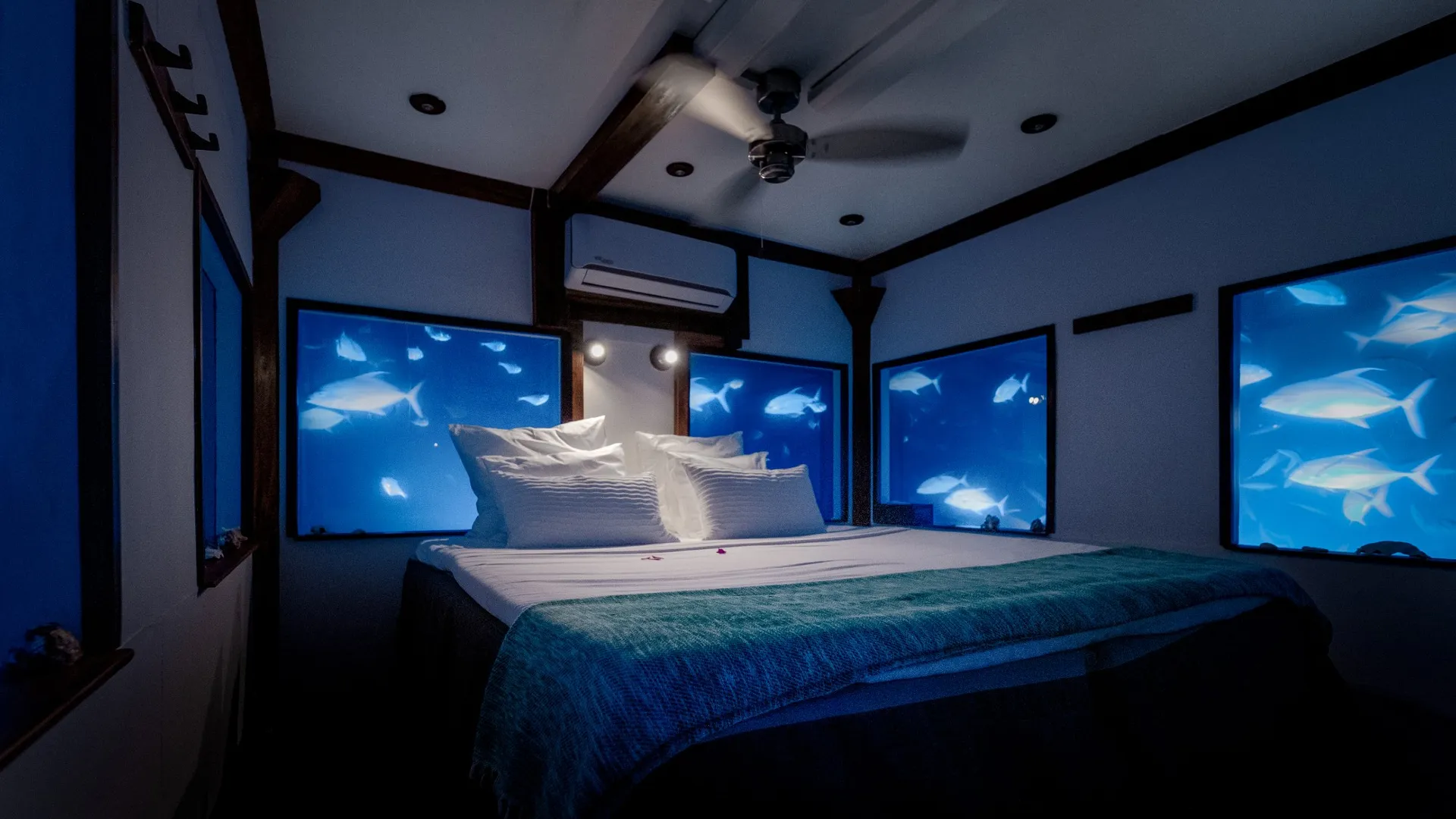
    It doesn’t get more immersive than this. The “one-of-a-kind” Underwater Room at Manta Resort Pemba Island is a three-level floating suite about 800 feet from shore, with the bedroom below the surface of the Indian Ocean, said Travel and Leisure. The bed is surrounded by almost 360 degrees of glass, and schools of fish, octopus and squid regularly travel by. (At night, dim lights are activated to attract nocturnal marine life.) 

    Swim with humpbacks in Mo’orea
    Whales are respected in French Polynesia, and the island of Mo’orea is a “prime destination for swimming with the gentle giants,” said the BBC. Guided tours are available for small groups, with strict protections in place for the safety of the whales. The peak season is July through November, and those lucky enough to come across a majestic humpback on their tour can expect an "otherworldly" and “humbling” opportunity to “witness the magnificence of nature.”

    Read more


    Poll watch

    Exactly two-thirds of Americans believe it’s important to discuss U.S. historical successes, while two-thirds also believe the same about the country’s failures and flaws. Among the 10,357 adults polled, Democratic college graduates (85%) are the largest demographic to think talking about failures is important. 


    INSTANT OPINION

    Today's best commentary

    ‘Our children are traumatized by ICE. Here’s how the legislature could help.’
    Anil B. Hurkadli at The Minnesota Star Tribune
    How can “any young Minnesotan — whether a victim, a bystander or simply one aware of what’s happening in their community — not be profoundly changed in some way by these calamities”? says Anil B. Hurkadli. These are “complex challenges that don’t just resolve themselves, and parents, caregivers and teachers are doing what they can.” Minnesota legislators should “invite youth harassed or arrested by federal agents to share their experiences in a safe and nonextractive way.”

    ‘Kalshi needed a bigger win from the Mamdani race’
    Aaron Brown at Bloomberg
    New York City’s mayoral race was an “ad campaign made in heaven for prediction market Kalshi Inc.,” says Aaron Brown. But “less successful is the platform’s study of minute-by-minute pricing of that race to test one of the main claimed benefits of prediction markets: that they promote better decision-making by aggregating the wisdom of crowds with more accuracy and precision.” But experts can be “out-of-touch and, in any event, reflect a narrow slice of knowledge.”

    ‘I’m a figure skater. It’s not too late to save Olympic ice sports.’
    Jasmine Wynn at USA Today
    Ice sport “decision-makers have an obligation to save the temperate foundation of our sport for the sake of other Winter Olympic sports and, most important, our planet,” says Jasmine Wynn. The Winter Olympic Games in Milan will “likely use 85 million cubic feet of artificial snow to address declines in snowfall due to warming temperatures,” but artificial snow production is “notoriously water-resource intensive.” Acting “sooner rather than later to decarbonize skating can help preserve the frosty origins of our sport.”


    WORD OF THE DAY

    phatic

    A type of communication popular on Meta’s WhatsApp that initiates or maintains social connection and conveys “sociability rather than thoughts or ideas,” said The New Yorker. WhatsApp, which rolled out yesterday an advanced security mode to protect against hackers in exchange for more restrictions, is “phatic before it’s anything else.” 


    Evening Review was written and edited by Theara Coleman, Nadia Croes, Irenie Forshaw, Catherine Garcia, Scott Hocker, Justin Klawans, Joel Mathis and Summer Meza, with illustrations by Stephen Kelly and Julia Wytrazek.

    Image credits, from top: Illustration by Stephen Kelly / Shutterstock / Getty; Jan Sonnenmair / Getty Images; thomas-bethge / Getty Images; Manta Resort Pemba Island
     

    Recent editions

    • Morning Report

      Reform candidate sparks Britishness row

    • Evening Review

      What’s at stake for Starmer in China?

    • Morning Report

      Tories retract Braverman mental health claim

    VIEW ALL
    TheWeek
    • About Us
    • Contact Future's experts
    • Terms and Conditions
    • Privacy Policy
    • Cookie Policy
    • Advertise With Us
    • FAQ
    Add as a preferred source on Google

    The Week UK is part of Future plc, an international media group and leading digital publisher. Visit our corporate site.

    © Future Publishing Limited Quay House, The Ambury, Bath BA1 1UA. All rights reserved. England and Wales company registration number 2008885.