The Week The Week
flag of US
US
flag of UK
UK
https://cdn.mos.cms.futurecdn.net/flexiimages/jzblygzdxr1769609154.gif

SUBSCRIBE

Try 6 weeks free

Sign in
  • View Profile
  • Sign out
  • The Explainer
  • Talking Points
  • The Week Recommends
  • Podcasts
  • Newsletters
  • From the Magazine
  • The Week Junior
  • More
    • Politics
    • World News
    • Business
    • Health
    • Science
    • Food & Drink
    • Travel
    • Culture
    • History
    • Personal Finance
    • Puzzles
    • Photos
    • The Blend
    • All Categories
  • Newsletter sign up Newsletter
  • The Week Evening Review
    Tech firms’ trial, Greenland’s diplomatic hub, and GLP-1s’ environmental cost

     
    TODAY’S BIG QUESTION

    Are Big Tech firms the new tobacco companies?

    Doomscrollers are familiar with the addictive properties of social media. Should Big Tech companies be legally liable for the way their products affect users’ mental health? A trial underway in California could set an important precedent.

    A now-20-year-old plaintiff known in court documents as KGM says Meta and YouTube are “intentionally creating addictive platforms,” said CNN. Those companies’ algorithmic decisions caused her to “develop anxiety, body dysmorphia and suicidal thoughts” when she was younger, said her lawsuit. (Snap and TikTok settled her case before it went to trial.) 

    Tech companies have “engineered addiction in children’s brains,” said lawyer Mark Lanier at trial this week. The verdict could influence the resolution of 1,500 similar cases, said CNN.

    Meta, in particular, has long been “compared to Big Tobacco,” said The Atlantic. Now, the company’s day in court has come. Its defense argues researchers have found only “weak and inconsistent correlations” between mental health and social media use. 

    What did the commentators say?
    The “infinite-scroll” apps that loom so large in teen social life “might soon be a thing of the past,” said Casey Newton at Platformer. Millions of children are “bullied and harassed” on social media or are “introduced to groomers and predators.” 

    Platforms will have a hard time defending themselves. American politics may be polarized, but child safety issues are “increasingly the one thing that partisans of every stripe can agree on,” said Newton. The California trial or some other regulatory action may force a shift. “Change is in fact coming.”

    Personal injury lawyers “never let a cultural problem go to waste,” said The Wall Street Journal editorial board. It’s difficult to prove that social media is at fault for society’s ills when “personal experience, personality and online exposure” all vary. States and countries should continue passing legislation to restrict children’s use of social media. Lawsuits against Big Tech firms “won’t help teens.”

    What next?
    Meta and YouTube are pushing back. Evidence at the trial will show KGM averaged 29 minutes a day on YouTube, said The Associated Press. That shows that “infinite scroll is not infinite,” said defense attorney Luis Li to jurors. But more trials are coming, including a federal case in June involving school districts, said the AP. KGM’s trial and the cases that follow will be a “reckoning for social media and youth harms.”


    IN THE SPOTLIGHT

    Nuuk becomes ground zero for diplomatic straits

    Greenland’s capital is hardly what most people would consider a geopolitical hot spot or a hot spot of any kind, with average summer temperatures hovering in the low 40s F. Nevertheless, the city of just 20,000 residents has quickly become one of the most closely watched diplomatic hubs on earth. Both Canada and France have bolstered their ambassadorial presences in Nuuk with newly opened consulates, all under the shadow of President Donald Trump’s outspoken imperial ambitions for the Danish territory.

    ‘Everyone in the world looking at us’
    Greenlanders are “curious about the expanding diplomatic presence” in their capital, said CTV News. Canada’s and France’s new outposts “double the number of nations that hold consulates on the island,” which previously hosted only Greenland and the U.S. “We get everyone in the world looking at us,” said Nuuk resident Gaba Christiansen to CTV. 

    Canada, in particular, has “obvious reasons for wanting a diplomatic toehold” in Nuuk, including geographic proximity and shared Inuit populations, said The New York Times. France’s connection to Greenland is “less clear,” although French officials have “positioned their move as part of Europe’s pushback” to Trump’s expansionist aspirations.

    ‘Ill-timed’ and ‘performative’
    Canada will “stand together” with Greenland on “defense and security, on economic resilience and bilateral ties, on issues relating to climate change and also Arctic cooperation,” said Canadian Foreign Affairs Minister Anita Anand at the flag-raising ceremony outside the newly opened consulate last week. But not all of Canada is as enthusiastic about deepening ties with Nuuk while relations with the U.S. remain frosty.

    Pushing ahead with the consular opening is “ill-timed,” serving only to “further distance us” from the U.S.,” said The Winnipeg Sun. Opening the consulate is a “silly, performative action” that has taken “virtue signaling to a new level.”

    For the French, whose consulate opening follows a “high-profile visit” by President Emmanuel Macron in December, Canada is a “partner and a friend here,” said one French diplomat to Politico. “We have a very constant dialogue with them.”


    QUOTE OF THE DAY

    ‘In light of your excellent service in Chicago, you have much yet left to do!’

    Gregory Bovino, the former Border Patrol commander-at-large, in an October email to Charles Exum, the agent who shot Marimar Martinez during an immigration crackdown in Chicago that month. Martinez, a U.S. citizen, was charged with a felony, but the charge was dropped after it was determined that Border Patrol exaggerated claims about the incident. 


    Statistic of the day

    4.6%: The expected economic growth across sub-Saharan Africa in 2026 and 2027, according to the International Monetary Fund. This marks the first time that Africa will outpace Asia, as the Asian economy is expected to grow by only 4.1%.


    the explainer

    The cost of GLP-1s on the environment

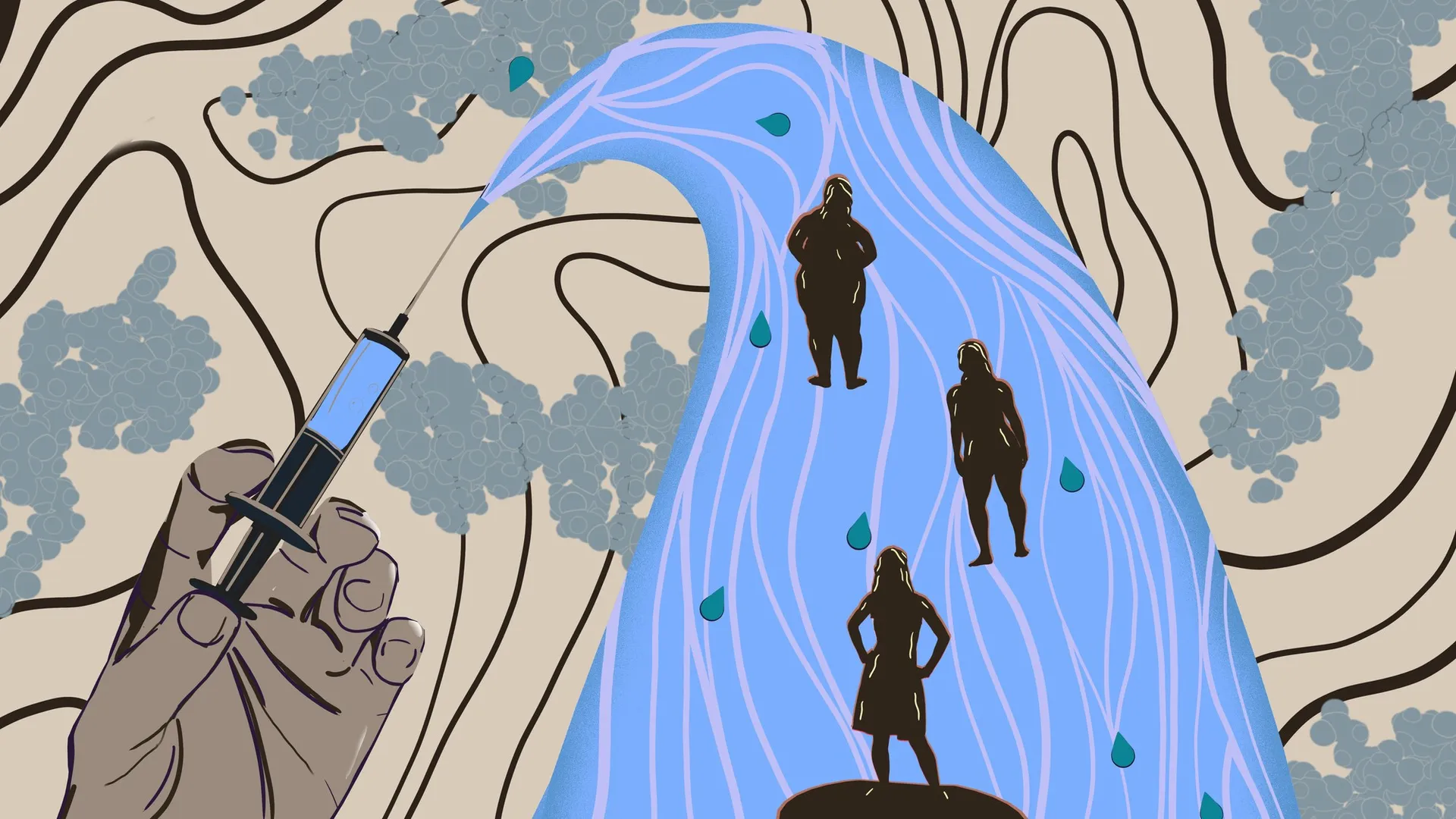
    Ozempic, Wegovy, Mounjaro and other GLP-1s have been touted as miracle drugs with a myriad of health benefits. However, they come at a high environmental cost. The manufacturing of these weight-loss medications can produce toxic byproducts that end up in waterways and increase plastic waste. So scientists are working to clean up the process.

    How do they affect the environment?
    GLP-1s are peptide drugs that produce “unsustainable volumes of toxic waste and nondegradable solid supports,” said a study published in the journal Nature Sustainability. Peptide manufacturing uses a method called solid phase peptide synthesis, which “anchors the first amino acid building block to a synthetic resin, such as polystyrene beads,” said Futurism. Then, toxic solvents, “including dimethylformamide, a component of paint strippers,” are used to “add each amino acid one by one, which can then leak into the water supply.” 

    Peptide drugs are also “cold chain dependent,” which means “every unit must be refrigerated from factory to pharmacy shelf, multiplying emissions across the supply chain,” said IDR Medical. Along with the manufacturing process, the use of the drugs creates its own waste. Patients who take GLP-1 injectables self-inject once per week, sending millions of disposable auto-injectors to landfills.

    Could it be cleaner?
    The increased usage of GLP-1s may help the environment in some ways, however. By treating diabetes and obesity, they could “reduce the incidence of cardiovascular disease, kidney failure and other conditions, each of which carries a heavy environmental cost through surgeries, hospitalizations and long-term drug use,” said IDR Medical. 

    Even so, unless “manufacturing and delivery evolve, the environmental gains from healthier populations could be offset by the waste created to get there,” said IDR Medical. Luckily, a better way to produce peptide drugs may be on the horizon in the form of water-based synthesis. The method pairs amino acids with specific salts, making them water-soluble. 

    Certain cancer treatments, as well as crop treatments, veterinary drugs and cosmetic ingredients, also require peptide synthesis. “Why are we still making life-saving medicines using chemical processes that produce mountains of toxic waste?” said study author John Wade. “Could water, the cleanest and most familiar solvent of all, offer a way out?”


    Good day 📈

    … for gaining employment. The U.S. economy added 130,000 jobs last month — a significant increase from the 50,000 added in December — while unemployment fell to 4.3%, according to the Bureau of Labor Statistics. The revised January job numbers, which include more comprehensive survey data, have not yet been released.


    Bad day 🇺🇦

    … for honoring the dead. Ukrainian skeleton racer Vladyslav Heraskevych has been disqualified from the Olympics after insisting on wearing a helmet that pictures Ukrainians who died in the war with Russia. The International Olympic Committee has also stripped him of his accreditation. “Emptiness,” the 27-year-old said to the BBC when asked how he felt.


    Picture of the day

    Taking cover

    Demonstrators shield themselves from a water cannon with wooden boards amid clashes between police and demonstrators during a workers' union protest in Buenos Aires, Argentina. The protesters oppose labor law reform, led by President Javier Milei's administration, that would restrict the right to strike and roll back employee protections.
    Tomas Cuesta / Getty Images


    Puzzles

    Daily sudoku

    Challenge yourself with The Week’s daily sudoku, part of our puzzles section, which also includes guess the number

    Play here


    The Week recommends

    The best superhero movies of all time

    Superhero films aren’t for everyone, but a core of dedicated fans that seems to replenish itself when each new generation reaches adolescence keeps the category at the top of Hollywood’s box office hierarchy. It certainly wasn’t always this way, but these smashes helped put the superpowered on top.

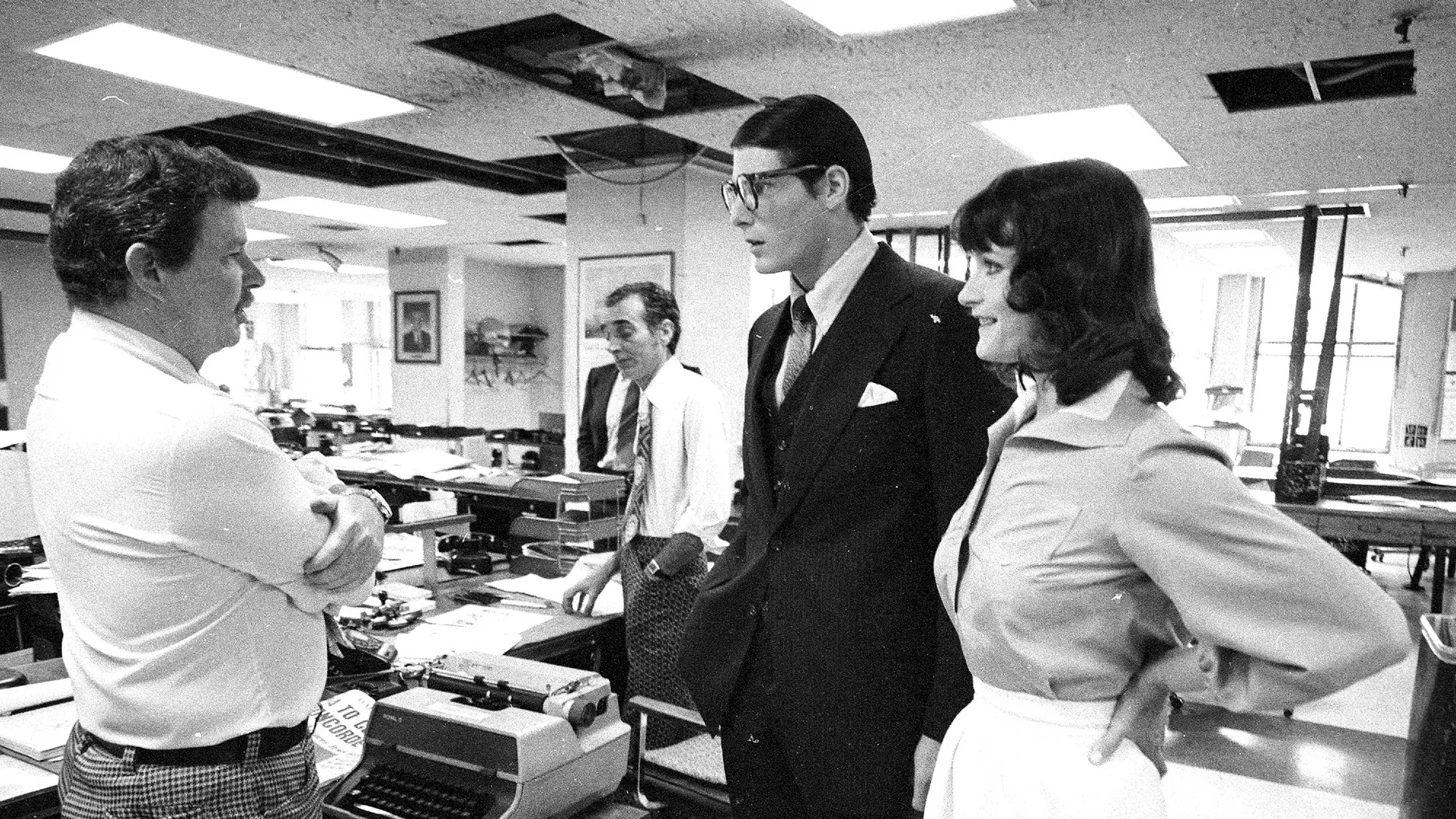
    ‘Superman: The Movie’ (1978)
    While its pacing feels positively laconic by modern standards, the original “Superman” was a groundbreaking feature, giving the superhero category its patina of seriousness and Hollywood credibility. It’s an effective effects-driven film that “pointed the way for a B-picture genre of earlier decades to transform itself into the ruling genre of today,” said Roger Ebert in 2010. (HBO Max)

    ‘Iron Man’ (2008)
    The culmination of Robert Downey Jr.’s return to stardom after years of substance abuse and personal struggles, “Iron Man” cemented his Hollywood superstar status and turned the films into his own vehicle. His performance is the “beating heart that makes the whole movie tick,” said Tim Brayton at Alternate Ending. (Disney+)

    ‘Black Panther’ (2018)
    One of a handful of superhero movies to break category containment and influence the broader culture, director Ryan Coogler’s “Black Panther” was a genuine sensation. Its vision of a “black utopia, a place at the root of all blackness, self-sufficient and untouched by slavery or colonialism,” is part of what made it an international sensation, but it was also Marvel’s “first genuine masterpiece,” said K. Austin Collins at The Ringer. (Disney+)

    Read more


    Poll watch

    More people in NATO countries view the U.S. as an unreliable ally rather than a reliable one, according to a Politico survey of 8,000 respondents (2,000 from each nation). Most Canadians (57%) view the U.S. as unreliable, followed by Germany (50%), France (44%) and the U.K. (39%). 


    WORD OF THE DAY

    logorrhea

    Excessive and incoherent talkativeness. Trump has the “world’s most consequential case” of untreated logorrhea, said Susan Glasser at The New Yorker. Americans are more or less used to his “manic political performance art,” proof that millions are “all right with having a clearly disturbed leader who cannot control what he says.”


    INSTANT OPINION

    Today’s best commentary

    ‘Make lifesaving care affordable for new moms’
    Gwen Moore at Newsweek
    Nearly every U.S. family has experienced the “ravages of addiction or mental health struggles,” and “during pregnancy and in the postpartum period, too many mothers face these battles alone,” says Rep. Gwen Moore (D-Wisc.). While society “broadly accepts the premise that children are our future,” the U.S. is “failing to keep mothers healthy.” Congress “should play a direct role in helping to build a society where every mother receives the care she needs, where no one suffers in silence.”

    ‘Tomb raiders pose a challenge in preserving Mexico’s history’
    Jude Webber at the Financial Times
    Two “major pre-Hispanic discoveries came to light in Mexico last month that have both stunned and stung local archaeologists,” says Jude Webber. The problem with the first discovery was that the tomb was “full of artifacts but they had been removed by locals.” The problem with the second tomb was that it was “empty.” Mexico is “replete with still undiscovered treasures from its ancient civilizations,” but “keeping them intact can be a challenge.”

    ‘Most insurance claim denials are due to clerical error. The system needs to be simplified.’
    The Boston Globe editorial board
    Adjudicating what health care services are “necessary and paying for them is a core function” of an insurance company, but insurance claims are “mostly rejected for what amount to clerical errors,” says The Boston Globe editorial board. Resubmitting them is a “waste of time and money. Even worse, the delays caused by the need to fill out more forms can harm patients, who may need to wait for the treatments they need.” Insurers and providers “need to work together.”


    Evening Review was written and edited by Theara Coleman, Nadia Croes, David Faris, Scott Hocker, Justin Klawans, Joel Mathis, Summer Meza, Devika Rao and Rafi Schwartz, with illustrations by Stephen Kelly and Julia Wytrazek.

    Image credits, from top: Illustration by Stephen Kelly / Shutterstock; Ida Marie Odgaard / Ritzau Scanpix / AFP / Getty Images; Thom Leach / Science Photo Library / Getty Images; New York Daily News Archive / Getty Images
     

    Recent editions

    • Morning Report

      Starmer urged to appoint woman to senior post

    • Evening Review

      How much more rain can the UK endure?

    • Morning Report

      Shootings at Canadian school and home claim 10 lives

    VIEW ALL
    TheWeek
    • About Us
    • Contact Future's experts
    • Terms and Conditions
    • Privacy Policy
    • Cookie Policy
    • Advertise With Us
    • FAQ
    Add as a preferred source on Google

    The Week UK is part of Future plc, an international media group and leading digital publisher. Visit our corporate site.

    © Future Publishing Limited Quay House, The Ambury, Bath BA1 1UA. All rights reserved. England and Wales company registration number 2008885.