Sign up to get Today’s Best Articles in your inbox
Join 350,000+ subscribers and keep yourself informed with a selection of
The Week’s most interesting, enlightening and entertaining stories - plus daily puzzles.
You are now subscribed
Your newsletter sign-up was successful
Want to add more newsletters?
An account already exists for this email address, please log in.
Greenland’s capital becomes ground zero for the country’s diplomatic straits
A flurry of new consular activity in Nuuk shows how important Greenland has become to Europeans’ anxiety about American imperialism
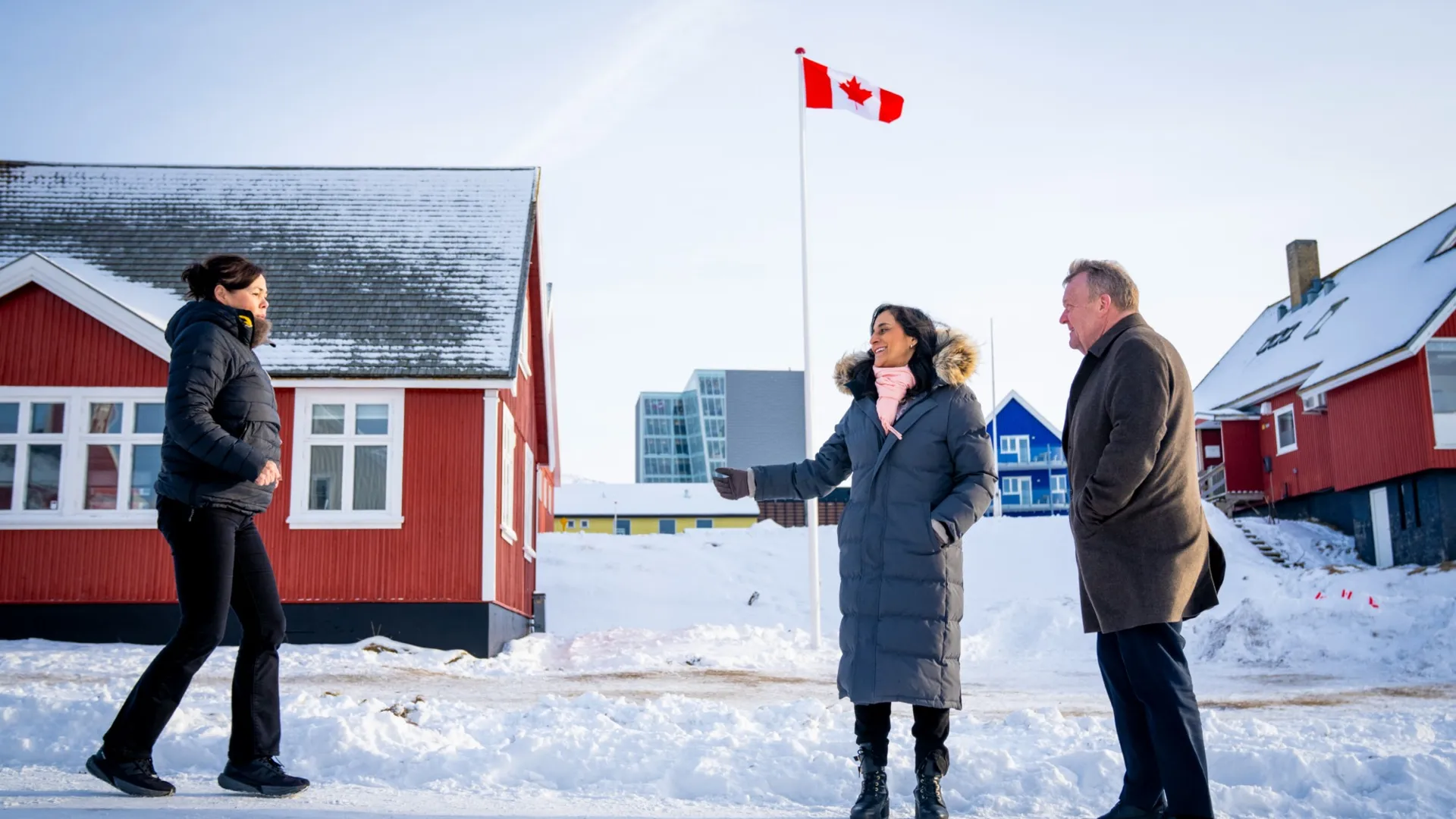
Nuuk is hardly what most people would consider a geopolitical hot spot or a hot spot of any kind, with average summer temperatures hovering in the low 40s F. Nevertheless, the city of just 20,000 residents has quickly become one of the most closely watched diplomatic hubs on earth. Canada and France have bolstered their ambassadorial presences in Greenland’s capital with newly opened consulates, all under the shadow of President Donald Trump’s outspoken imperial ambitions for the Danish territory.
‘Everyone in the world looking at us’
While efforts to establish a Canadian consulate in Nuuk have “been in the works for over a year,” the “timing” of the opening this month amid Trump’s saber-rattling is “not lost on anyone here,” said Politico. With America reorganizing its global role, “into that vacuum arrives Canada,” working to establish global bona fides by “building alliances and offering security guarantees that they once left to the United States.” It’s a new geopolitical strategy “taking shape in Nuuk.”
Greenlanders, meanwhile, are “curious about the expanding diplomatic presence” in their capital, said CTV News. Canada's and France’s new outposts “double the number of nations that hold consulates on the island,” which previously hosted only Greenland and the United States. “It’s positive [that] Donald Trump is doing this,” said Nuuk resident Gaba Christiansen to CTV. “Then we get everyone in the world looking at us.”
The Week
Escape your echo chamber. Get the facts behind the news, plus analysis from multiple perspectives.
Join more than 350,000 subscribers and keep yourself informed with a selection of The Week’s most interesting, enlightening and entertaining stories - plus daily puzzles.
Join more than 350,000 subscribers and keep yourself informed with a selection of The Week’s most interesting, enlightening and entertaining stories - plus daily puzzles.
Canada, in particular, has “obvious reasons for wanting a diplomatic toehold” in Nuuk, said The New York Times, including geographic proximity and shared Inuit populations. France’s connection to Greenland is “less clear,” although French officials have “positioned their move as part of Europe’s pushback” to Trump’s expansionist aspirations.
It’s “really important” for residents of Nuuk to “know that we are not alone in this, that we actually have people from other countries who care about us,” Nuuk Mayor Avaaraq Olsen said to UPI. Greenlanders are “scared, and they are more and more concerned” with Trump’s threats toward their home.
Is Canada ‘poking the polar bear’?
Canada will “stand together” with Greenland on “defense and security, on economic resilience and bilateral ties, on issues relating to climate change and also Arctic cooperation,” said Canada’s Foreign Affairs Minister Anita Anand at the flag-raising ceremony outside the newly opened consulate last week. But not all of Canada is as enthusiastic about deepening ties with Nuuk while relations with the United States remain frosty.
Pushing ahead with the consular opening is “ill-timed,” said The Winnipeg Sun, serving only to “further distance us from the United States.” Opening the consulate is a “silly, performative action” that’s taken “virtue signaling to a new level.”
Sign up to get Today’s Best Articles in your inbox
A free daily email with the day’s biggest news and analysis – and the best features from TheWeek.com
Nuuk, with its new geopolitical importance, has emerged as an “unlikely magnet for provocateurs” and self-promotors, Politico said. The “attention economy has come to the Arctic.” So too has a sense of shared priorities and goals. For the French, whose consulate opening follows a “high-profile visit” by President Emmanuel Macron in December, Canada is a “partner and a friend here,” said one French diplomat to Politico. “We have a very constant dialogue with them.”
Rafi Schwartz has worked as a politics writer at The Week since 2022, where he covers elections, Congress and the White House. He was previously a contributing writer with Mic focusing largely on politics, a senior writer with Splinter News, a staff writer for Fusion's news lab, and the managing editor of Heeb Magazine, a Jewish life and culture publication. Rafi's work has appeared in Rolling Stone, GOOD and The Forward, among others.