Sign up to get Today’s Best Articles in your inbox
Join 350,000+ subscribers and keep yourself informed with a selection of
The Week’s most interesting, enlightening and entertaining stories - plus daily puzzles.
You are now subscribed
Your newsletter sign-up was successful
Want to add more newsletters?
An account already exists for this email address, please log in.
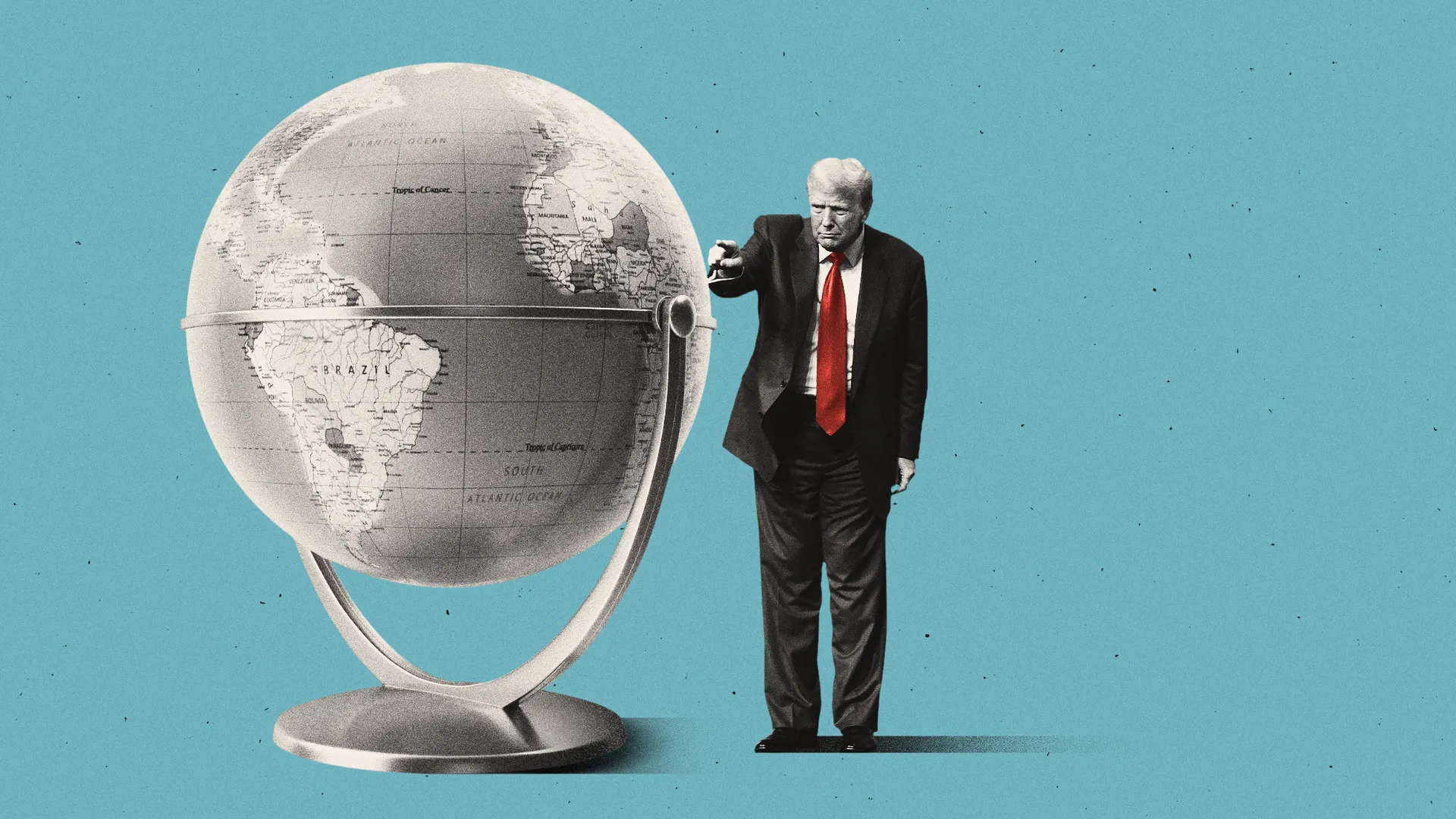
Greenland, Colombia, Cuba: where is Donald Trump eyeing up next?
Ousting Venezuela’s leader could embolden the US administration to exert its dominance elsewhere
Following the stunning extraction of Nicolás Maduro from Venezuela, Donald Trump has suggested the US could take military action against other countries in Latin America – or even Europe.
The US president has threatened Colombia and its “sick man” president, Gustavo Petro, warned Mexico’s leaders to “get their act together”, and said Cuba is “ready to fall”. He’s told Iran that America is “locked and loaded and ready” to rescue “peaceful protestors” against the regime. And, speaking on Air Force One yesterday, he said “we need Greenland from the standpoint of national security” – drawing criticism from European leaders, including Keir Starmer.
America’s new goal is to “protect commerce and territory and resources that are core to national security,” Trump said at his press conference announcing Maduro’s capture – echoing the words of the recently revised US national security strategy to restore “American pre-eminence” in the Western hemisphere. “These are the iron laws that have always determined global power and we’re going to keep it that way.”
The Week
Escape your echo chamber. Get the facts behind the news, plus analysis from multiple perspectives.
Join more than 350,000 subscribers and keep yourself informed with a selection of The Week’s most interesting, enlightening and entertaining stories - plus daily puzzles.
Join more than 350,000 subscribers and keep yourself informed with a selection of The Week’s most interesting, enlightening and entertaining stories - plus daily puzzles.
“The attack on Venezuela and the capture of Maduro herald the decoupling of Trump’s United States from the rules-based international order” and the crumbling of the “liberal order as a whole”, said Juan Luis Manfredi, professor of journalism at Spain’s University of Castilla-La Mancha, on The Conversation. “A new international order is now emerging, based on the use of force, revisionism and security on the American continent.”
There are two ways to view all this, said Simon Tisdall in The Guardian. “A benign interpretation is that in matters of war and peace,” Trump “has no idea what he is doing – no strategy, no clue” and he is making up policy as he goes along. “The sinister interpretation” is that “he knows exactly what he’s at” and that “more and worse is to come”.
In the “heady rush to instant criticism” that can divorce policy “from its historical contexts”, it is important to remember that Trump’s policies are “in line with long-standing patterns of American behaviour, not least with the idea of forward defence against possible foreign threats”, said historian Jeremy Black in The Telegraph.
America’s policies “clash with notions of the national sovereignty of others” but these notions also can “protect dictatorships and oppression”, as was the case with Maduro, and is still “seen in many other states, including Iran and North Korea”.
Sign up to get Today’s Best Articles in your inbox
A free daily email with the day’s biggest news and analysis – and the best features from TheWeek.com
Trump’s foreign policy moves have a “common thread”: as we’ve already seen in Ukraine, Yemen and the Israel-Gaza conflict, this is the “focus on short-term achievements over more complicated, longer-term questions about governance and stability”, said Courtney Subramanian and Kate Sullivan on Bloomberg.
But this is “a philosophy that could backfire on American interests”. China could use the “Trumpian approach” as a template “to take back Taiwan”, or Russia could feel emboldened “to renew its efforts to topple” Ukraine’s Volodymyr Zelenskyy.
What next?
The “axis of authoritarians”, particularly in Moscow and Beijing, “may feel additional urgency to prove their value” in the face of US pressure on their allies in Venezuela, said Ryan Berg, a Latin-American specialist at the US Center for Strategic and International Studies think tank, on Politico.
As for Trump, what happens next will greatly depend on how the situation plays out in Venezuela over the coming weeks and months. Success could encourage the US administration “to expand its pressure campaign to Cuba or other disfavoured regimes”, Latin America geoeconomics analyst Jimena Zuniga told Bloomberg. But “failure could temper its appetite for intervention”.