Sign up to get Today’s Best Articles in your inbox
Join 350,000+ subscribers and keep yourself informed with a selection of
The Week’s most interesting, enlightening and entertaining stories - plus daily puzzles.
You are now subscribed
Your newsletter sign-up was successful
Want to add more newsletters?
An account already exists for this email address, please log in.
EU Nordic expansion: why would Iceland and Norway want in?
Trump’s tariffs and threats to seize Nato ally Greenland are fuelling support for joining the bloc, with its implied security as well as economic benefits
In the face of geopolitical uncertainty and US hostility, “momentum for EU enlargement appears to be growing”, said Politico.
Iceland and Norway, founding members of Nato, have access to the EU’s single market via its European Economic Area, but are the only Nordic countries outside the bloc. Donald Trump’s tariffs and threats to Nato ally Greenland have, however, significantly increased support for joining the EU in both countries.
Last year, Reykjavík’s new governing coalition promised a referendum by 2027 on whether to restart frozen membership talks. That’s “being sped up”. Reykjavík will announce the date of the ballot within the next few weeks, sources told Politico.
The Week
Escape your echo chamber. Get the facts behind the news, plus analysis from multiple perspectives.
Join more than 350,000 subscribers and keep yourself informed with a selection of The Week’s most interesting, enlightening and entertaining stories - plus daily puzzles.
Join more than 350,000 subscribers and keep yourself informed with a selection of The Week’s most interesting, enlightening and entertaining stories - plus daily puzzles.
Iceland applied to join the EU in 2009 after its financial crisis. But when the economy stabilised and flourished, an incoming centre-right government froze membership talks in 2013. But the EU “has changed a lot” since then, Iceland’s foreign minister told Bloomberg. The world is also a “different place now”, said Þorgerður Katrín Gunnarsdóttir. In that context, she will submit a bill on the referendum “before the summer”.
Iceland would benefit from expanding its access to free trade agreements, said Bloomberg. Its economy, reliant on fishing and tourism, is “prone to booms and busts”.
But shockwaves caused by the US president’s threats to neighbouring Greenland are pushing Iceland “closer to the EU”, said Xenia Heiberg on Euractiv. Icelanders are being forced to evaluate bloc membership “not as an economic choice”, but as a “question of long-term defence and geopolitical alignment”.
“All of the arguments that the US is bringing forth as reasons for why they must acquire Greenland, would apply to Iceland as well,” said Eirikur Bergmann, politics professor at Iceland’s Bifrost University.
Sign up to get Today’s Best Articles in your inbox
A free daily email with the day’s biggest news and analysis – and the best features from TheWeek.com
Iceland is the only Nato member without an army, relying on a defence agreement with the US for security. That, more than the economic benefits, is “warming public attitudes” about joining the bloc, said Politico. Trump mentioned Iceland four times in his speech at the World Economic Forum in Davos, which “focused minds”, as one anonymous EU official told Politico. His nominee for ambassador to Iceland also joked that the strategically important Arctic country would “become the 52nd US state”. That “increased the urgency”.
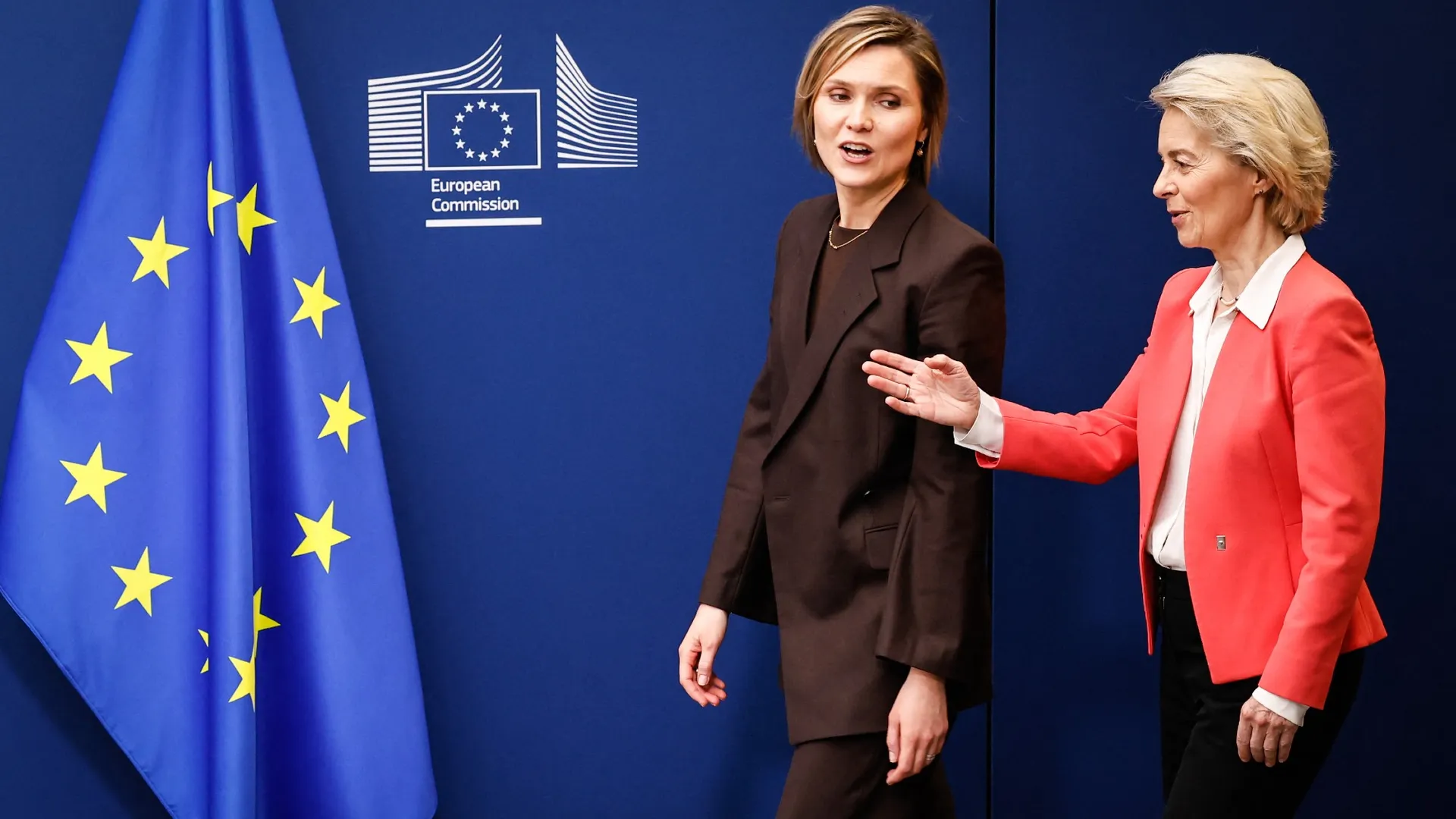
There has since been a “flurry of visits” from EU politicians to Iceland and vice versa. European Commission President Ursula von der Leyen hosted Iceland’s Prime Minister Kristrún Frostadóttir in Brussels last month, saying their partnership “offers stability and predictability in a volatile world”.
Norway, the “closest non-member country to the EU”, has voted no in two referendums on joining the bloc, said the Financial Times. But Trump’s tariffs and the war in Ukraine mean Norway is suffering by staying out of the EU, according to its foreign minister. “We are acutely aware that the delta between EU membership and EEA membership is increasing,” said Espen Barth Eide last year.
Its security had long been “based on the assumption” that the US would “guarantee its safety”, said Minna Ålander, associate fellow of Chatham House’s Europe Programme. But Trump’s threats to the territory of neighbouring Denmark clarified that “previously close relations” guarantee nothing. Support for EU membership has since “risen considerably”. The majority of the public still opposes it, but now supports holding a new referendum on it. In a multipolar world order, EU membership is “crucial for any small European state, including Norway”.
The “common thread” between Iceland and Norway is a pivot away from “domestic considerations” toward the framing of the EU as an “existential geopolitical and security anchor, should Nato reliability erode”, said Daniel Hegedüs, Central Europe director for The German Marshall Fund of the United States (a Berlin-based think-tank). The EU should use the Greenland crisis to “go on the geopolitical offensive” and “reinvigorate the Nordic enlargement” of the bloc, he wrote on EUobserver.
What next?
Iceland’s path to EU membership “isn’t straightforward”, said Politico. Even if Icelanders vote yes in a referendum on restarting talks, there would be another on membership. That could be a “high bar to clear”.
Norway’s leadership has, for now, “ruled out a renewed EU debate”, said Ålander in Chatham House. But it is watching Iceland’s referendum closely. The eight Nordic-Baltic countries have emerged as a “new centre of gravity in northern Europe”; six are EU members. Adding Norway and Iceland would help “boost regional cohesion”.
A new European security architecture is “beginning to take shape”. Inclusion may no longer be “delineated by Nato membership, but rather along the borders of the EU”.
Harriet Marsden is a senior staff writer and podcast panellist for The Week, covering world news and writing the weekly Global Digest newsletter. Before joining the site in 2023, she was a freelance journalist for seven years, working for The Guardian, The Times and The Independent among others, and regularly appearing on radio shows. In 2021, she was awarded the “journalist-at-large” fellowship by the Local Trust charity, and spent a year travelling independently to some of England’s most deprived areas to write about community activism. She has a master’s in international journalism from City University, and has also worked in Bolivia, Colombia and Spain.