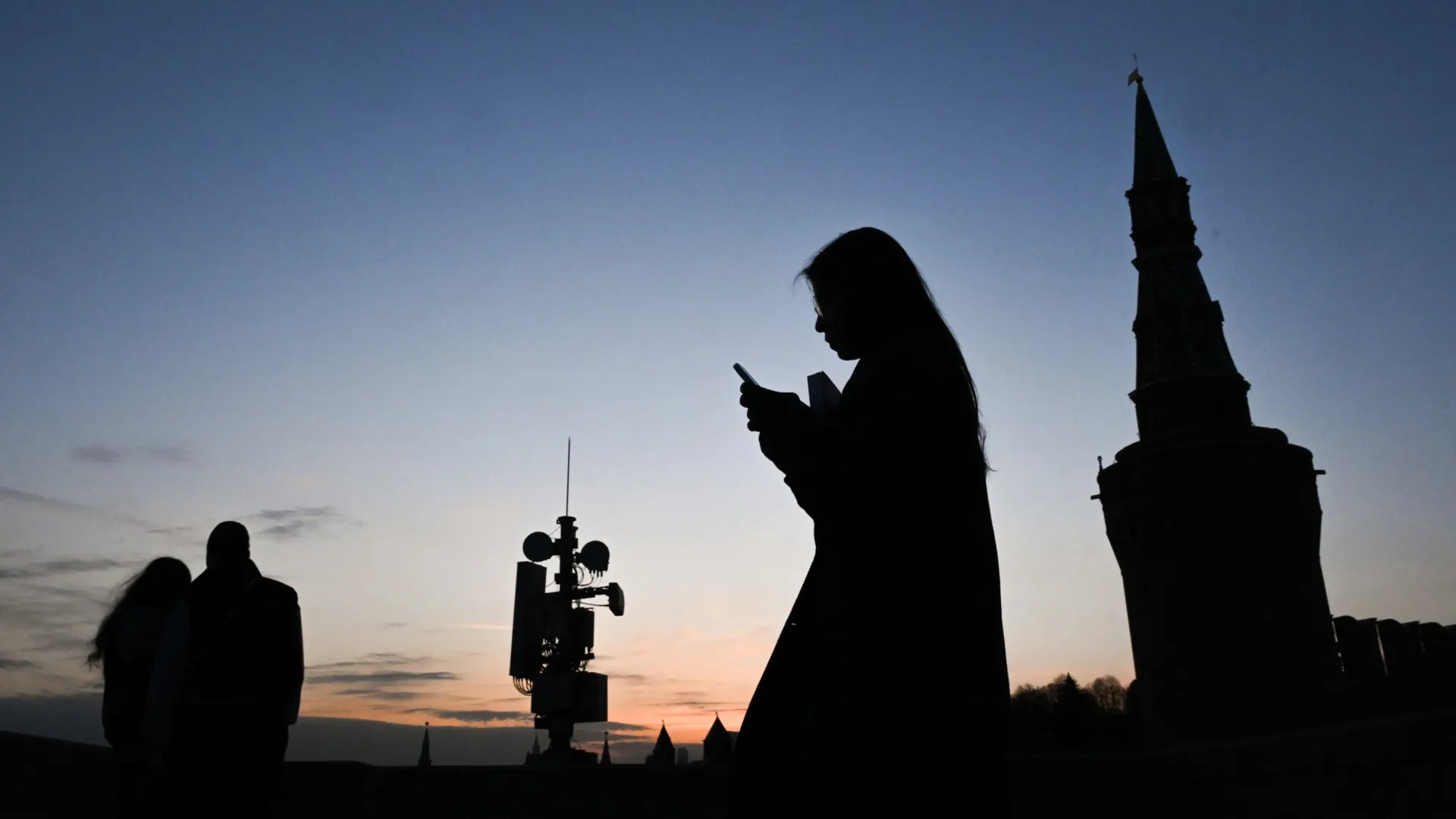
Even though it has long been known that Russia engages in citizen censorship, recent experiments in Moscow are raising fears that the Russian government is augmenting its information blockade. This new era of suppression, which involves blacking out internet communications other than approved websites, has raised concerns in Russia and among outside observers.
Government portals approved
Throughout March, people in Moscow have “found themselves without connectivity on their phones” due to internet outages created by the Kremlin, said NBC News. These blackouts have “disrupted the daily lives of millions of residents and hit businesses that rely on mobile internet.”
Certain “websites and apps, including government portals and banking services, may remain accessible through ‘whitelists,’” said Business Insider. Beyond government portals, some of the sites on these Russian whitelists may also include “state media outlets and Russian homegrown apps such as Max, a messaging platform controlled by the government,” said The Wall Street Journal.
This effort to control internet access is not new. Russia has been “honing and testing similar infrastructure for the past year,” said the Journal. Many officials believe these rolling blackouts will “likely be in place until the end of the war.”
‘Massive headache’
As the Kremlin continues to clamp down harder, many Russians, particularly those in the workforce, say they are having trouble going about their lives. The outages are a “massive headache,” Dmitry, a consultant in Moscow, said to The Guardian.
Muscovites who run “cafes, restaurants and shops that rely on mobile internet have suffered massive losses as customers have been unable to pay for the services,” said The Associated Press. Businesses in the city “lost between 3 and 5 billion rubles ($38 million to $63 million) in five days of shutdowns.”
Many are turning to more low-tech options, with Russians buying old-school technology like walkie-talkies and pagers. Muscovites are also looking for less high-tech ways to navigate the area. “Sales of road maps increased by 170% in physical units, foldable maps by 70% and Moscow maps by 20%,” said Russian news outlet RBC. |